Boston’s Most Macabre Treasure
Massachusetts has no shortage of historic firsts — the first lighthouse, the first subway, the first chocolate chip cookie, even the first telephone call. But tucked away on Beacon Street, inside the quiet, book‑scented halls of the Boston Athenæum, sits an artifact that makes all those milestones feel downright ordinary.
It’s a book.
Bound in human skin.
And yes, you can actually see it.
A Highwayman, a Deathbed Confession, and One Very Unusual Request
The story begins with James Allen, also known by several aliases, including George Walton — a 19th‑century highwayman who spent his life robbing travelers along the Boston Post Road. He wasn’t a glamorous outlaw; he was a gritty, stubborn one, constantly in and out of prison, and eventually mortally wounded during an escape attempt.
On his deathbed in 1837, Allen dictated his life story — a short memoir titled Narrative of the Life of James Allen. But he didn’t stop there. He made a final request that would cement his place in Massachusetts lore:
He wanted copies of the book bound in his own skin.
One copy was to be given to a man who had once fought him off during a robbery attempt — a man Allen respected for his bravery. Another copy went to the Boston Athenæum, where it remains today.
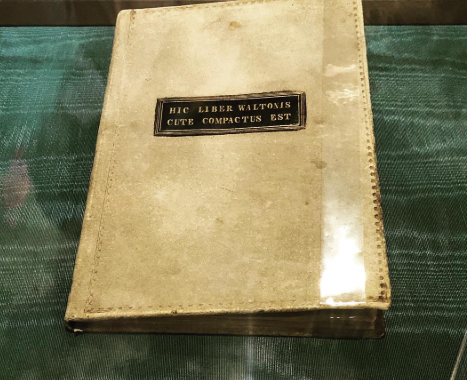
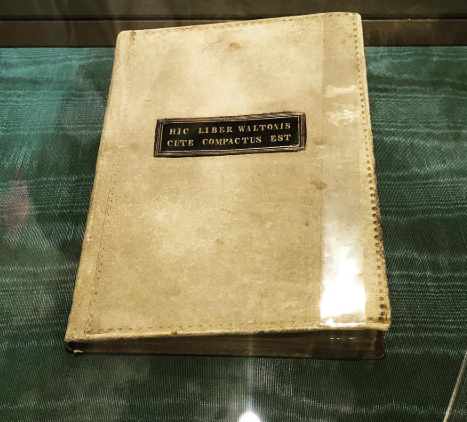
On the cover, stamped in gold, is the Latin inscription:
“Hic Liber Waltonis Cute Compactus Est.”
This book is bound in the skin of Walton.
Subtle? No.
Unforgettable? Absolutely.
Anthropodermic Bibliopegy: A Real (and Rare) Practice
As bizarre as it sounds, binding books in human skin — anthropodermic bibliopegy — was a real, if extremely uncommon, practice in the 18th and 19th centuries. Most examples come from:
- Medical schools (anatomy students memorializing cadavers)
- Criminal confessions
- Personal mementos with a macabre twist
But Allen’s book stands out because it wasn’t done to him — it was done at his own request. A final act of control? A strange attempt at immortality? A criminal’s version of a legacy? Historians still debate it.
What’s certain is that the Athenæum’s copy is one of the most famous examples in the world.
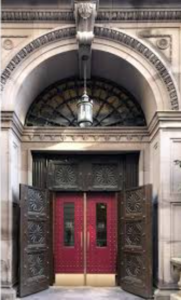
Behind the Red Doors of the Boston Athenæum
The Athenæum itself is a treasure — one of the oldest independent libraries in the United States, founded in 1807. Its reading rooms feel like stepping into a different century: marble busts, oil portraits, polished wood, and the soft hush of serious book lovers.
The human‑skin book isn’t on open display. It’s kept in a secure, climate‑controlled room, brought out only for researchers or curious visitors by appointment. Staff are used to the request — it’s one of the most asked‑about items in their collection — but they treat it with the same respect as any rare artifact.
In recent years, scientific testing confirmed what the inscription claimed: the binding is, in fact, human skin.
Boston history is full of surprises, but this one still manages to raise eyebrows.

A Story That Sticks With You
 What makes this such a compelling Massachusetts tale isn’t just the shock factor. It’s the layers:
- A criminal who wanted his story preserved — literally.
- A library that has safeguarded it for nearly two centuries.
- A piece of history that blurs the line between the macabre and the meaningful.
- A reminder that Boston’s past isn’t just revolutionary — it’s downright strange.
You can walk past the Athenæum’s iconic red doors a hundred times and never guess that one of the rarest, most unusual books in the world sits quietly inside.
But that’s Massachusetts for you.
Just when you think you’ve heard every story, it hands you one bound in human skin.