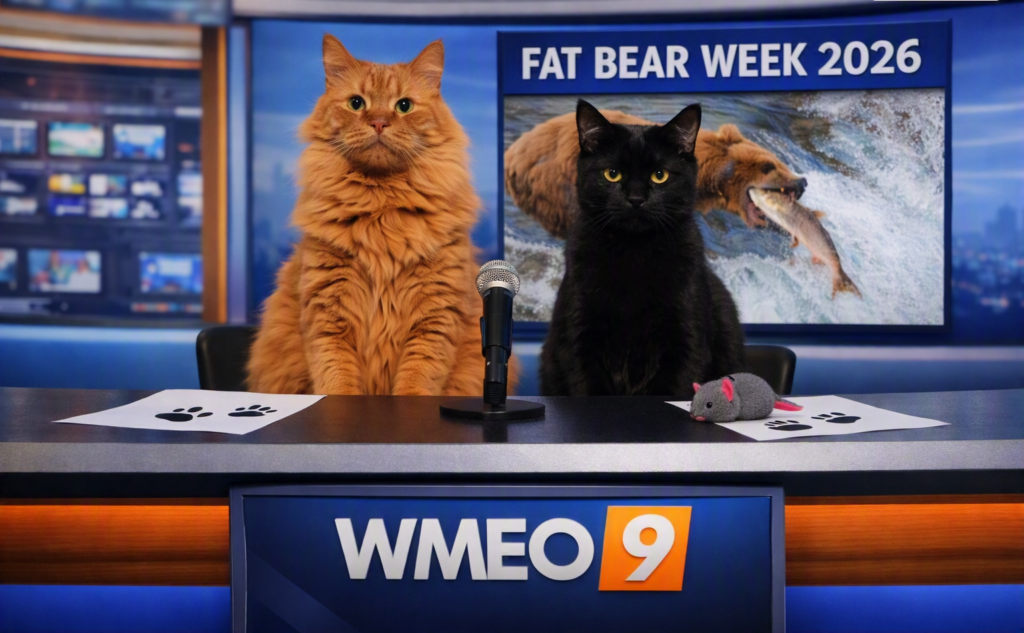
WMEO SPECIAL REPORT — FAT BEAR WEEK 2026
Live from the Nature Desk, This is WMEO 9 We Meow-You Listen
Banner : Taunton, we have breaking news. The votes are in, the salmon have been counted, and the people have spoken. Your 2026 Fat Bear Champion is… 89 BACKPACK.
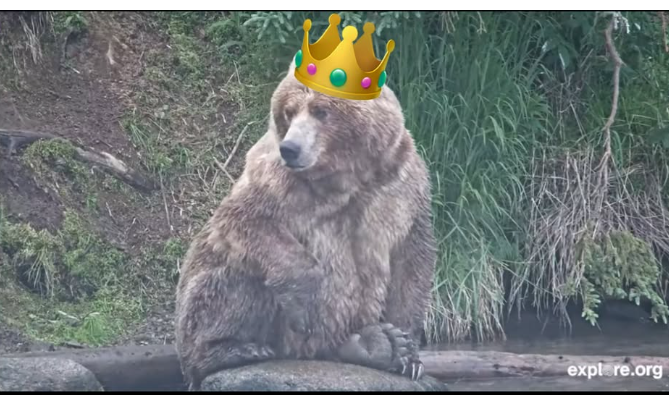
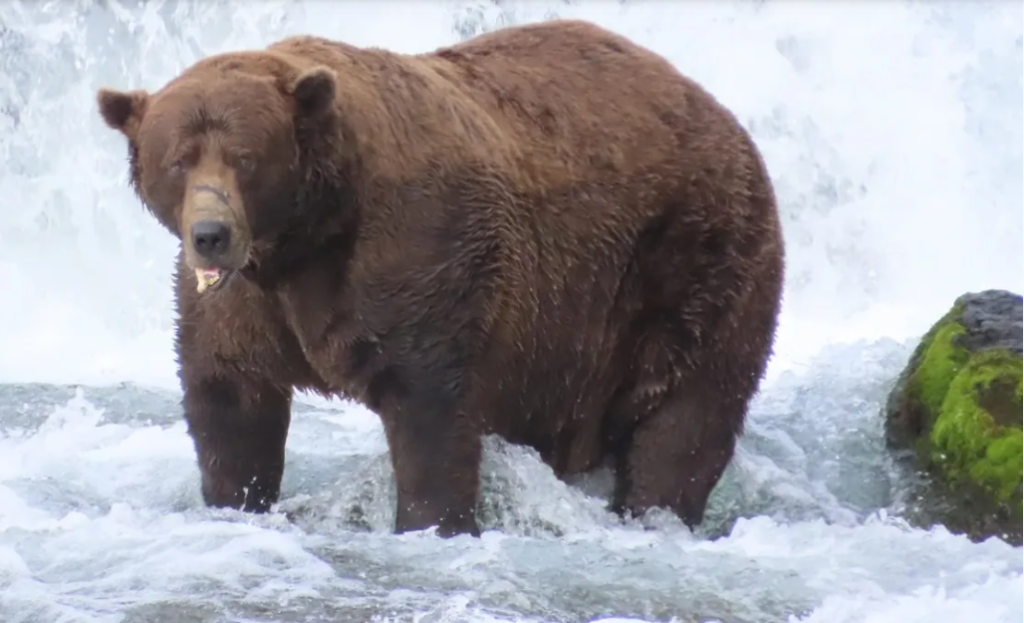
Backpack accepts his crown
Balboa (field commentary):
“Backpack didn’t just eat salmon — he demolished salmon. He approached that river like it was an all‑you‑can‑eat buffet and he had coupons.”
Banner:
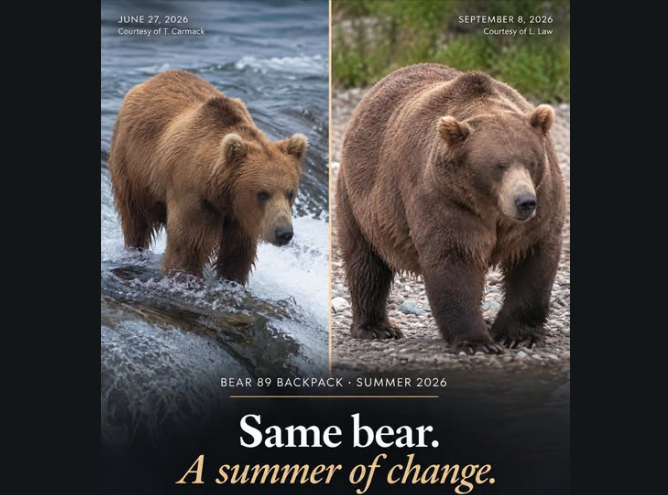
“WMEO has obtained exclusive images showing Backpack at the start of the season — lean, scrappy, optimistic — and Backpack now, a fully upholstered bear with deluxe padding.”
Banner:
“And now, we go to our roving reporter, Pumpkin Spice, who is on location with the new champ.”
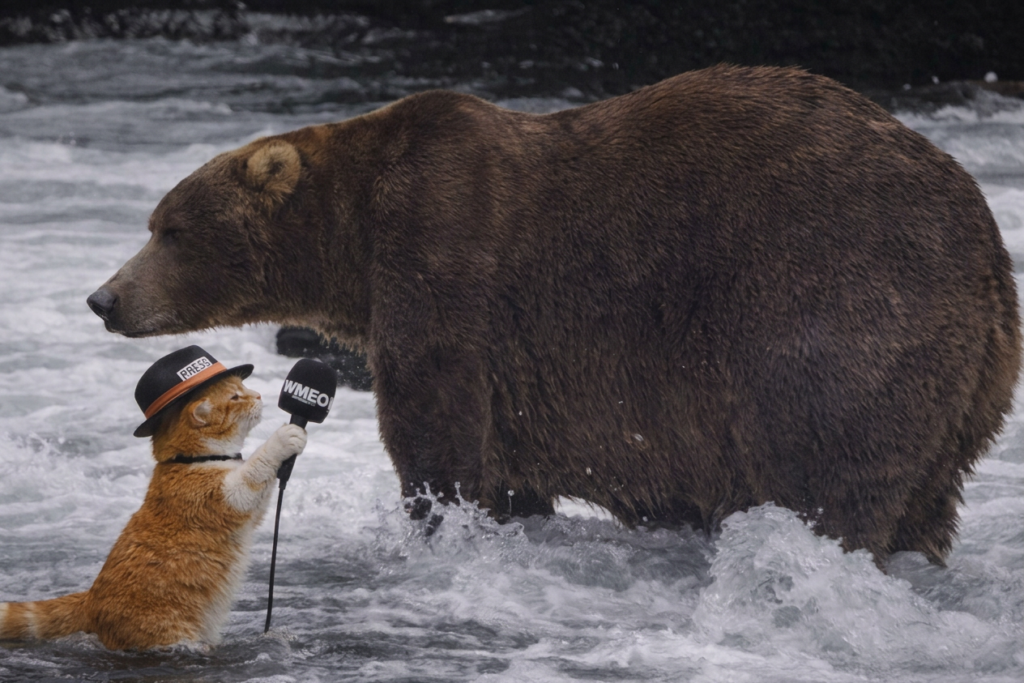
Pumpkin Spice:
“Backpack, you must be thrilled. You’re continuing a proud tradition started by your mother. How do you feel about establishing a dynasty?”
Backpack: Growl.
Balboa (off‑camera, losing it): “PUMPKIN SPICE, GET OUT OF THERE! You’re just the right size for dessert!”
Pumpkin Spice does not flinch. He is a professional.
Banner :
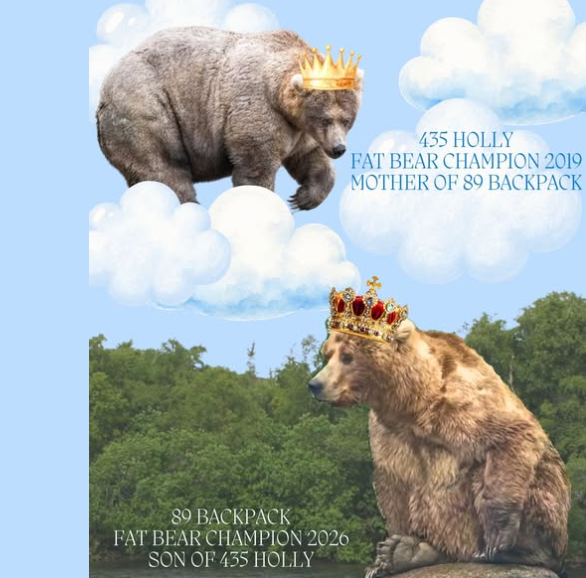
“And that growl confirms it — the dynasty is real. Backpack’s mother, 435 Holly, was the 2019 Fat Bear Champion. Backpack followed in 2026. And now,the crown returns to the family.”
Long live the champ. Long live the dynasty.
“This has been an exciting update from Katmai. Fat Bear Week has a new champion, and the dynasty continues. So until next year… Thanks for watching WMEO 9 — We Meow, You Listen.”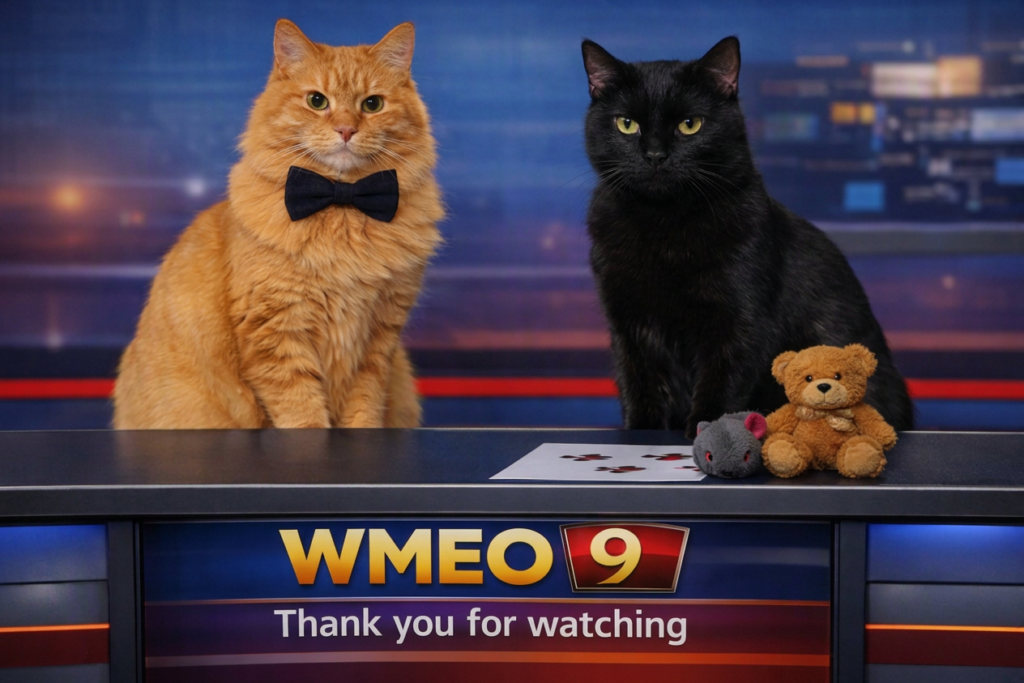
Share this:
- Share on Tumblr (Opens in new window) Tumblr
- Print (Opens in new window) Print
- Share on X (Opens in new window) X
- Share on Facebook (Opens in new window) Facebook
- Share on Pinterest (Opens in new window) Pinterest
- Share on Reddit (Opens in new window) Reddit
- Share on LinkedIn (Opens in new window) LinkedIn
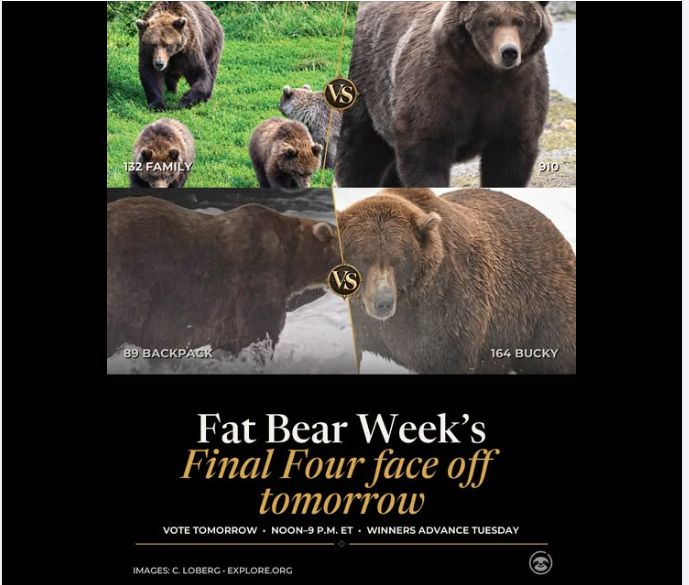
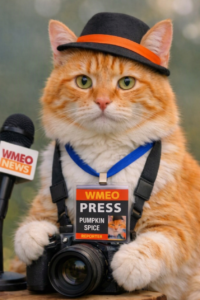 Pumpkin Spice (field reporter): I attempted to interview the Final Four. One ignored me. One stared at me. One drooled on me. And one tried to sit on my notebook. Journalism is dangerous.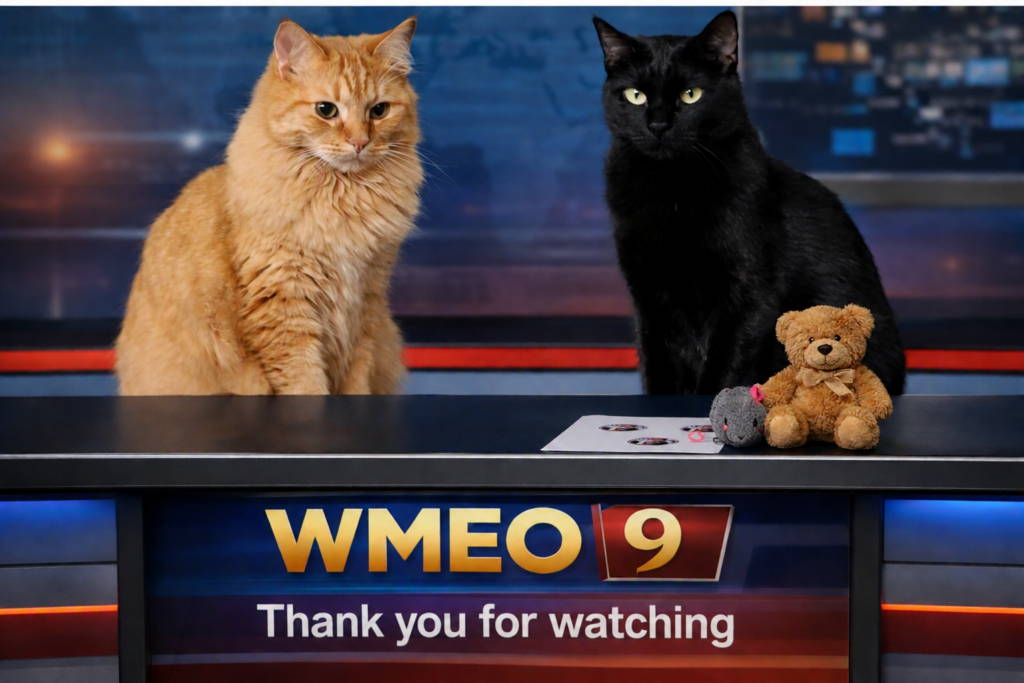
 Growing Up on Dusty Roads
 A Sky Without Streetlights
 Sleeping Under the Northern Lights