Say What? A Stroll Through American Slang

A hand holding a marker writes the words “SLANG LANGUAGE” in bold black letters, with a red line drawn underneath on a plain white background.

Finding Fresh Ways to Say It

As someone who writes daily, I’m always looking for ways to say things that don’t sound like the same old, same old. Which brings me to today’s topic — American slang. It’s a huge pool, and we’ll only scratch the surface, but let’s dive in and explore a few of our most familiar expressions.

OK — The Universal Word

Don’t tell me you don’t use it. Everybody says “OK.” The funny thing is, nobody really knows how it started. Most linguists believe “OK” came into use in the 1830s after it appeared as an abbreviation in a Boston newspaper. Then Martin Van Buren used it as a key part of his presidential campaign — and as they say, the rest is history. Honestly, I can’t imagine a world without “OK.”

Cool — Or Wicked, If You’re From Boston

This one slides in and out of favor but never disappears. “Cool” started with the jazz culture of the early 20th century. Those black‑shirted, beret‑wearing hipsters used it to describe anything the opposite of flashy or hot. Now it’s just part of everyday vocabulary. Of course, if you’re from Boston, you probably say “wicked.” Same vibe, different accent. (How about “Wicked Cool?”)

The Whole Nine Yards

Truth is, no one knows where this one began. Explanations range from ammunition belts to fabric yardage. Whatever its origin, we all know what it means — going all in. (Or if you prefer, the whole enchilada.)

Hands Down

If someone wins “hands down,” they win easily, without real competition. The phrase comes from horse racing, where a jockey comfortably ahead could relax, lower the reins, and coast across the finish line. So if you won that round fair and square — hands down — you’ve earned bragging rights.

Cops — Not Just Constables on Patrol

Ever wonder why we call those men and women in blue “cops”? Despite the popular myth that it stands for “constable on patrol,” that’s a modern backronym. The real origin likely traces back to the verb cop, meaning “to catch or seize,” which dates to 17th‑century English slang.

Barking Up the Wrong Tree

If you say someone is “barking up the wrong tree,” you’re telling them they’re misinformed or chasing the wrong idea. The phrase comes from hunting dogs — coon hounds that, after chasing a raccoon, would bark furiously at the base of the wrong tree. Oops.

Food for Thought

American slang is colorful, creative, and constantly evolving. It’s part of what makes our language so lively.

I wrote this with my ESL teacher friend in mind — because if slang confuses native speakers, imagine trying to explain it to someone learning English from scratch. No wonder her students look at her like she’s speaking Martian. This one’s for you, Nancy.

Let me know what your favorite slang expressions are. I’d love to hear the ones that make your conversations cool, wicked, or just plain OK.


Finding Silver Linings in Strange Places

Sunset over Cadillac Mountain in Maine, with warm orange light spreading across layered hills and a forested foreground beneath a glowing sky.

When Life Hands You a Plot Twist

Sometimes life hands you a plot twist you never asked for. Not the kind you get when your plane is delayed and you’re stuck at the airport with a $12 sandwich and a dying phone battery. I mean the kind that knocks you sideways, steals your plans, and leaves you staring at a ceiling wondering what comes next.

And yet, every so often, those detours end up pointing us somewhere unexpectedly beautiful. You may have to dig a little to find the silver lining — sometimes with a shovel — but I really do believe it’s there if you look.

Little Richard Starkey and the Sanatorium Drum

I learned today that in 1953 Ringo Starr — yes, that Ringo Starr, the famous drummer for the Beatles — spent two years in a sanatorium after developing tuberculosis. Back then he was just little Richard Starkey, a kid from Liverpool whose world had suddenly shrunk to the size of a hospital ward. The staff tried to keep the children from sinking into boredom and loneliness, so they handed out simple percussion instruments. A triangle here, a drum there.

And that’s where Ringo first fell in love with drumming. A sick child, stuck in a hospital, discovers the thing that will carry him through the rest of his life. The thing that will make him famous. The thing that will make millions of people smile.

Stephen Hawking and the Two‑Year Diagnosis That Lasted 50 Years

It reminded me of another story — Stephen Hawking. Diagnosed with ALS at 21 and told he had two years to live. Instead, he lived more than five decades. His illness didn’t make him brilliant, but it forced him to think differently, to work differently, to focus on the kind of deep theoretical questions that don’t require a lab — just a mind sharp enough to wander the universe. And wander it he did.

Harrison Ford: Rejection, Carpentry, and a Chance Encounter

And then there’s Harrison Ford. Today he’s Indiana Jones, Han Solo, and a real-life hero who once flew a helicopter into Yellowstone to help rescue a missing boy. But before all that, he was told by a studio executive that he had no talent and would never make it in Hollywood. The exec even said, “When Tony Curtis walked into this office, I knew he was a star.” Ford’s reply? “I thought he was supposed to be a waiter.” Dry, sharp, and pure Harrison Ford.

He took the rejection, became a carpenter to support his family, and that detour put him in the right place at the right time. His carpentry work led him to George Lucas, who hired him to build cabinets… and then cast him in American Graffiti, and later Star Wars. The door slammed shut, and he climbed in through the workshop window.

The Quiet Truth Behind These Stories

All three stories hum with the same quiet truth: Bad things don’t magically become good. But humans are astonishingly good at finding light in dark places.

My Own Chapters and Silver Linings

And when I look at my own life, I see it as a series of chapters. When one ends, something else always seems to come along. Different decisions would have led to different results — who knows where I’d be today if I’d finished college and gotten my degree, or if I’d changed direction earlier and started writing sooner?

But my life today is good. It’s full. Everyday is an adventure, And as Elton John sings, I’m still standing — and as long as I am, there’s time for silver linings.

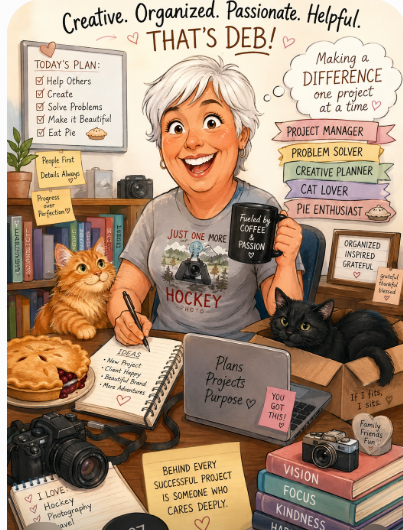
Deb’s Ready to Dive


The Daylight Saving Time Debate Continues


Why Are We Choosing This Time?

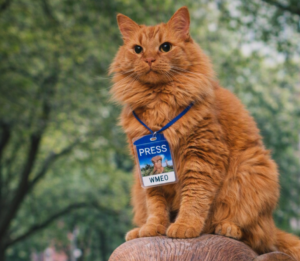
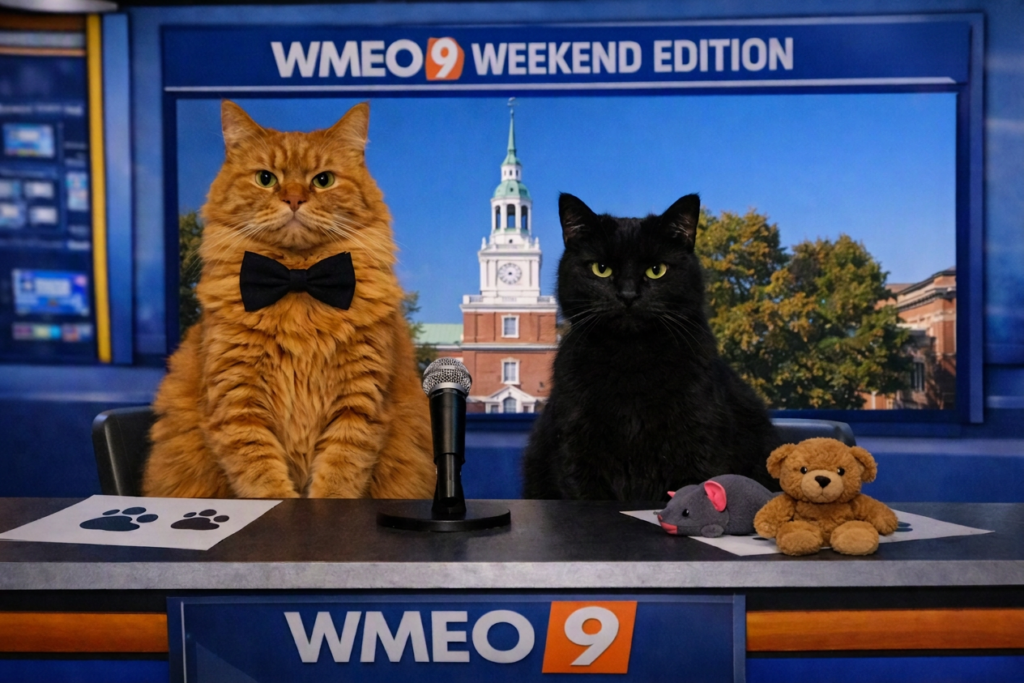
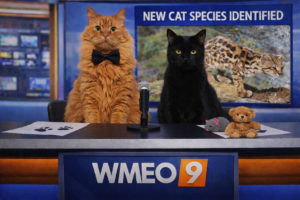
Recently, our intrepid reporters at the Feline Desk   at WMEO brought you the news that Congress has moved a bill one step closer to making Daylight Saving Time permanent. No more springing forward or falling backward. No more fussing with the clocks that refuse to update themselves (looking directly at you, stove and microwave).

But I have a question… why DST? Why not make standard time permanent instead?

I’m not the one who has to get up in the middle of “it’s still dark out” to go to work, but millions of people — and schoolchildren — would have to do exactly that. I remember growing up (pre‑1966, before DST was enacted) and getting ready for school in the dark. All I can say is: yuck.

What’s Science Say?

Sleep scientists say permanent Daylight Saving Time might actually be bad for our health. Less morning light means fewer benefits for our mood, energy, alertness, and productivity. And more daylight later in the day could negatively affect sleep — and most Americans aren’t exactly getting enough of that as it is. Permanent DST would only make that trend worse.

Fun fact: In the 1970s, former President Richard Nixon briefly instituted permanent DST. It didn’t go well. People weren’t thrilled about pitch‑dark mornings.

I don’t know how true all the claims are, but I do know I won’t miss “springing forward” every March. The older I get, the less “spring” I have — and the longer it takes me to adjust. And the cats don’t like it either.

Daylight Saving Time or Standard Time… honestly, it makes no difference to me. Let’s just pick one and keep it all year ’round. Neither springing nor falling is good for us senior types.

“A cartoon person hangs onto the minute hand of a large clock pointing straight up, as if being lifted by it, humorously showing the struggle against Daylight Saving Time.”


Breaking News from the Feline Desk – Daylight Saving Time Moves Ahead

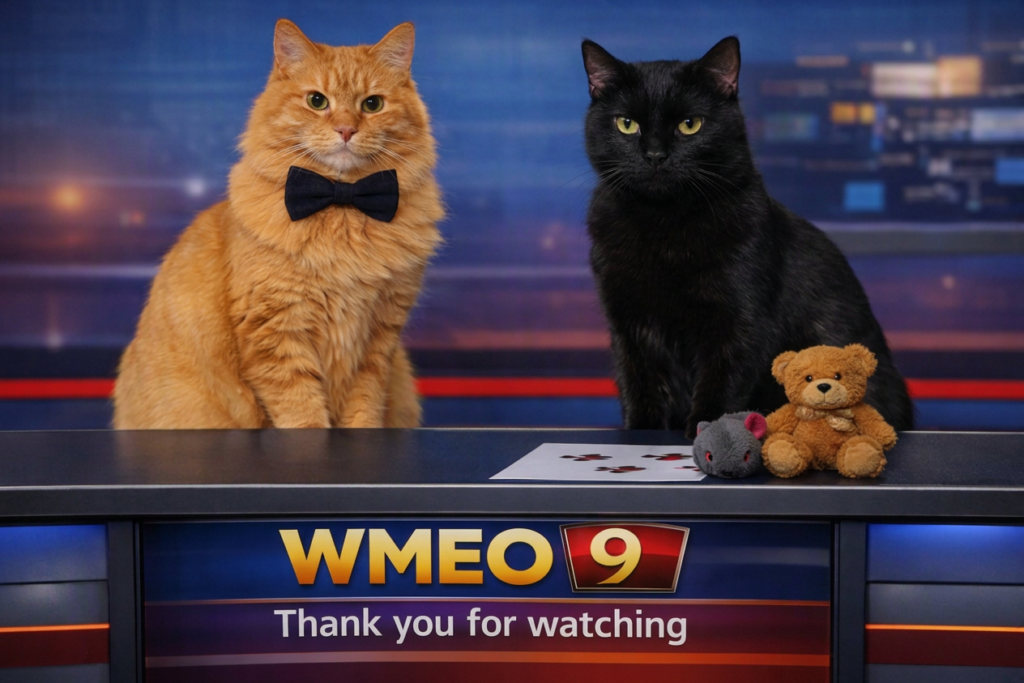
Banner and Balboa perched in front of the TV, one orange and fluffy, one black and sleek, looking like feline news anchors.

DST Déjà Vu

Well… here we go again. The House has once more nudged a bill forward to make Daylight Saving Time permanent. It’s not a done deal — it would still need to pass the full House and Senate — but the committee pushed it to the next step. We’ve been down this road before, so consider this another lap around the track.

Critics say keeping time saving daylight as a permanent fixture would mean darker mornings, groggy commutes, and kids waiting for buses in the shadows. Proponents counter that lighter evenings mean fewer accidents and a little more sunshine in our day.

Banner and Balboa have weighed in, of course. They love springing forward — earlier breakfast is a win in their book. But as for the concept of Daylight and Saving Time, “falling back”? Absolute chaos. Too many delays. Too much waiting. Feline outrage everywhere.

So what do you think? Would you want to keep Saving Time Daylight all year: good idea, bad idea, or “haven’t we talked about this every few years since the dawn of time”?

And finally, as Daylight Saving changes come up yet again, inquiring minds want to know your opinion.

Why We Celebrate the 4th of July

A rectangular 4th of July cake decorated like the American flag, with blueberries and small white star-shaped frosting in the top-left corner and alternating rows of raspberries and white frosting forming the stripes. The cake sits on a wooden surface with patriotic napkins and red, white, and blue striped straws in the background.

Hooray for the Red, White, and Blue!

The 4th of July always sneaks up right when summer starts feeling real — flags on porches, parades gearing up, cookouts firing, and someone in the neighborhood already testing fireworks like they’re running quality control. It’s festive, it’s loud, and it’s very American. But behind all the fun, there’s a real story about why we celebrate this day.

The Declaration of Independence

July 4th marks the anniversary of the Continental Congress adopting the Declaration of Independence — the moment the colonies officially said, “We’re done here,” to British rule. Thomas Jefferson wrote most of it, and the delegates spent time editing and debating before approving the final version.

What Actually Happened on July 4, 1776

Here’s the twist: the vote for independence happened on July 2nd, not the 4th. John Adams even predicted July 2nd would be the holiday we celebrated every year. Only two men signed the Declaration on July 4th — John Hancock and Charles Thompson. Hancock famously signed his name large enough for King George to read without his spectacles, which is how we ended up with the phrase “put your John Hancock on it.”

The big parchment with all 56 signatures didn’t come until August 2nd.

Early Independence Day Celebrations

The very first celebrations included mock funerals for King George III. (Americans have always had a flair for dramatic symbolism.) George Washington marked the first anniversary by giving his soldiers extra rum — probably the most popular tradition of all.

The First Fireworks

By 1777, Boston and Philadelphia were lighting up the sky with cannons and fireworks. Boston, of course, claimed another “first,” because that’s just what Boston does.


How the Holiday Grew

After the War of 1812, Independence Day really took off. It became a federal holiday in 1870 and a paid one in 1941. From there, the celebrations got bigger, louder, and more delicious.

A few fun facts:

  • Three presidents died on July 4th: John Adams, Thomas Jefferson, and James Monroe.
  • Americans spend about $1.5 billion on fireworks every year.
  • Around 150 million hot dogs get eaten on the 4th.
  • Fireworks send roughly 10,000 people to the ER annually — so maybe don’t stand too close to Uncle Bob’s “custom” firework setup.

A Modern American Tradition

Today, the 4th of July is a blend of history, community, food, and things that go boom in the sky. It’s imperfect, messy, and uniquely ours — a celebration of choosing our own future.

So enjoy the parades, the parties, the cookouts, and all the red‑white‑and‑blue desserts your heart desires. Just be safe around those fireworks.

Happy 4th of July!