Good morning, Dear Readers.
As is my habit, I was browsing headlines for something interesting to chat with you about when I stumbled across this dramatic proclamation:
“The microchip era is ending… here’s what comes next.”
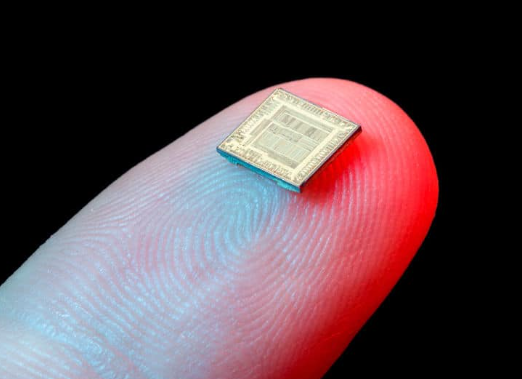
Well, that certainly got my attention.
For a moment, I wondered what we had here. Did they finally locate all the Crystal Skulls and unlock the key to unlimited cosmic knowledge? You know — those legendary artifacts said to store the wisdom of the universe like some ancient, mystical supercomputer, if only humanity could figure out how to boot them up.
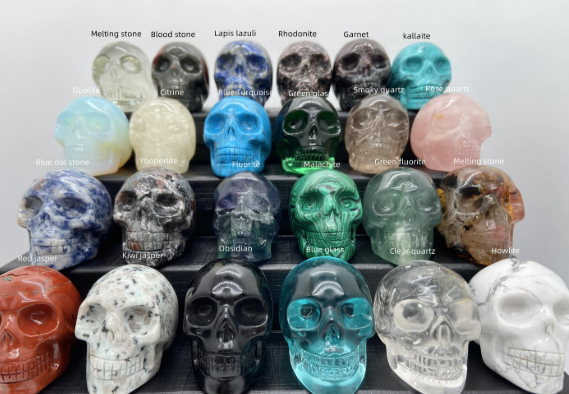
Alas… no Crystal Skulls.
But the truth might actually be stranger than the myth.
Science has been making some remarkable strides in the world of computing — the kind of breakthroughs that sound like science fiction until you realize they’re already being tested in labs. Here are just a few of the technologies researchers are exploring:
1. Photonic Chips
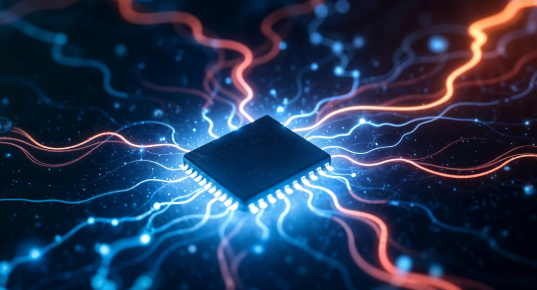
These chips compute with light instead of electricity.
Photons move faster, generate almost no heat, and can carry far more information than electrons. Some early photonic processors already exist, and they look like something straight out of a futuristic glass sculpture.
 2. Quantum Chips
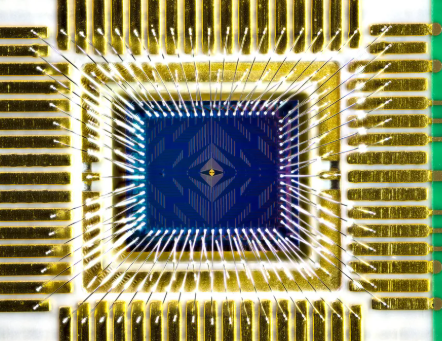
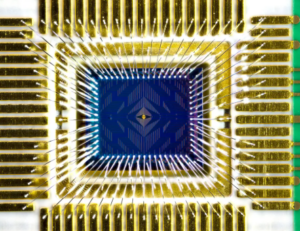
Quantum computers use qubits, which can be 0 and 1 at the same time. I sometimes wonder if they ever have an identity crisis.
They’re built from exotic systems like superconducting circuits, trapped ions, and even diamond defects. They won’t replace your home computer anytime soon, but they’re already solving specialized problems in chemistry and cryptography.
3. Cryogenic Chips
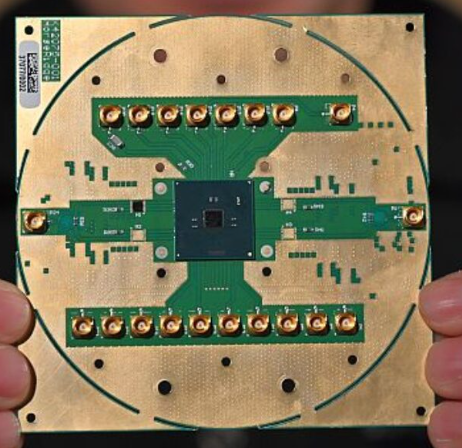
Intel Cryogenic control chip
These operate at temperatures just above absolute zero.
Why so cold? Because superconducting materials behave beautifully in that environment — almost no electrical resistance, ultra‑low noise, and blazing‑fast switching speeds. NASA and IBM are both experimenting with them.
4. Neuromorphic Chips
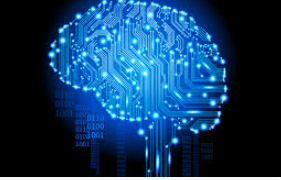
Inspired by the human brain, these chips use components that act like neurons and synapses.
They’re built from materials such as memristors and phase‑change crystals, allowing them to “learn” patterns the way biological brains do. Think of them as early prototypes of artificial intuition.
5. Wafer‑Scale Chips
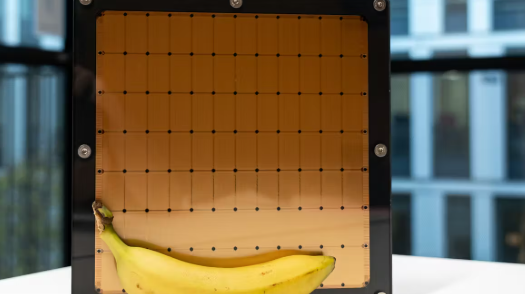
This is the one behind that headline.
Instead of slicing a silicon wafer into hundreds of tiny chips, engineers use the entire wafer as one enormous processor. Companies like Cerebras and Tesla are already building these dinner‑plate‑sized computing beasts.
So no, the Crystal Skulls haven’t been unearthed… but the technologies emerging today are astonishing in their own right.
So that’s my geek‑out for today. At this rate, I’m half expecting a Starfleet recruitment booth to pop up at the mall — and if anyone spots a transporter pad being installed at Target, please report back immediately!
Beam Me Up Scotty