Tower in the Sea

Rising from the waves like a sentinel of stone, Boon Island Light is New England’s tallest lighthouse—and one of its most haunting maritime landmarks. With a nod to my sister’s enduring love of lighthouses and a dash of wanderlust, I invite you to explore the story of this remote Maine beacon, where history, hardship, and the sea converge.
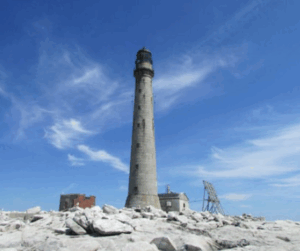
 

🌊 A Tower in the Sea: Introduction to Boon Island Light

Located 6.5 miles off the coast of York, Maine, Boon Island Light is the tallest lighthouse in New England, rising 133 feet from a barren outcrop in the Atlantic. Its isolated perch and storm-battered silhouette have made it a symbol of resilience and maritime vigilance.

🕰️ From Shipwrecks to Signals: A Storied Past
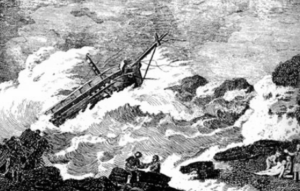
Drawing of the Nottingham Galley shipwreck

The island’s name may stem from early fishermen who left provisions for shipwrecked sailors—a “boon” in desperate times. But its most infamous tale is the 1710 wreck of the Nottingham Galley, whose crew resorted to cannibalism to survive. This tragedy sparked calls for a permanent warning beacon.

Builders erected the first lighthouse in 1811, but relentless storms repeatedly tore down those early structures. In 1855, they completed the current granite tower, outfitting it with a second-order Fresnel lens and a fog horn that still sounds every 10 seconds.

🛠️ Automation and Preservation

After a devastating blizzard in 1978 washed away all keeper dwellings, the station was automated in 1980. Today, Boon Island Light remains an active aid to navigation, owned by the U.S. Coast Guard and leased to the American Lighthouse Foundation, though it’s in need of major restoration.

🚫 Remote and Inaccessible—Yet Irresistible

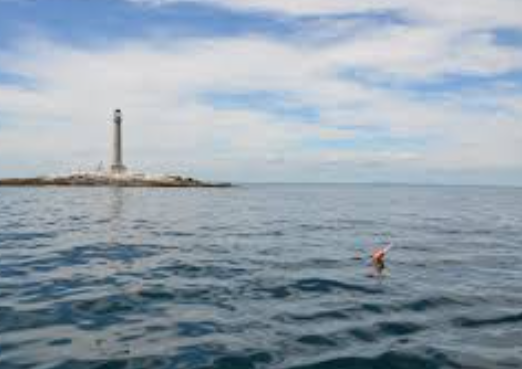
Boon Island is not open to the public, and its rocky terrain makes landings treacherous. Still, its allure draws lighthouse enthusiasts and historians. Scenic boat tours occasionally pass by, offering distant glimpses of this stoic sentinel.
📚 Legacy in Literature and Lore

The lighthouse’s grim history inspired Kenneth Roberts’ novel “Boon Island”, and its stark beauty has been described as “an eternal exclamation mark” by 19th-century writer Samuel Adams Drake. It’s a place where nature, history, and human endurance collide.


The Day has A Seal of Approval

The Seals of Cape Cod

Nothing like spending a day with herd of gray seals in Chatham, Cape Cod. I confess I didn’t just want to see the seals. I thought there might be a small chance that I’d get a glimpse of a Great White Shark. It’s been 7 years since I’ve been back to see the seals so I figured it was about time. Of course it meant another weekend drive over one of the bridges but I was hoping I’d be going against the traffic. Turns out I was. The Sunday exodus from the Cape had route 6, the Cape Highway, backed up for miles leaving the cape.

Beachcomber Seal ToursYellow beachcomber boat

I’d called Beachcomber Seal Tours before I started for the cape. They said they had room for me on the 12 pm tour. I knew it would be close but I jumped in the car and headed off. With luck and traffic on my side I arrived with 10 minutes to spare! The folks at Beachcomber Seal Tours are very warm and welcoming. They make sure the children are fitted with life jackets and everyone gets a “pit stop” before we are all loaded onto a bus for the trip to the marina.

Chatham Light House

Chatham Harbor and waterways

The little orange boat holds about 29 people. We boarded by climbing a little step stool and stepping over the side. The captain stands at a center console to pilot the boat. It makes it a little hard to hear his commentary but the fresh sea air in your face on a sunny day is a pretty awesome way to spend a summer afternoon.

Sleeping SealSeals, seals and more seals

We passed Nauset Beach, recently the scene of a Great White sighting. As we swung toward North Beach the seals were suddenly right in front of us. They looked like they were piled on top of each other but our captain explained that each one has it place. A steady moaning sound came from the piles of seals. A few were in the water. They would rise up from the bottom and then sink back down. This is how they sleep. True enough, none of them had their eyes open!


Pile of seals

Before heading back we took a run past the shark buoy and Lighthouse Beach.

Shark ping buoy


Too soon it was time to return to the dock. The very successful 90 minute tour was at an end. No great whites but lots of seals.

Pride of Maui

The Pride of Maui was my afternoon whale watch. I was surprised to find that I was really tired even before we headed out. This fun in the sun can really knock the wind out of your sails!

The morning whale watch had returned around 11 am so I had plenty of time to get a snack. I didn’t want to eat too much because this trip included lunch and a snorkel stop.

Maalaea Harbor

Maalaea Harbor

The way I felt as I waited for the Pride of Maui to return from their morning excursion I was seriously doubting I was going to go snorkeling.  Still I had my bathing suit on so I figured I could make that decision when the time came.

The “Pride” was another catamaran but much larger than the one we were on for the morning trip. Reef safe sunscreen was being passed around. It was really thick and everyone was coated in white. It reminded me of the zinc oxide ointment the life guards used to put on their noses when I was a kid.

dsc_4435a

Finally the ship was in, the morning tour unloaded and we began to move up the gangway.

dsc_4449a

Although this was billed as a whale watch, and we certainly saw whales, it felt as if the emphasis was on the snorkeling part of the trip.

Whales' Tail

dsc_4456a

Flukes

We stopped at a place along the shore that the crew referred to Coral Gardens. It wasn’t that far south of the lookout. I spotted the tunnel on Rt 30. We were given our gear and instructions. There was 1 hour set aside for the snorkel part of the trip. While everyone was in the water the crew fired up grills and began cooking hot dogs, hamburgers and grilled chicken. Quite a feast considering it was all done on the boat.

Coral Gaeden

I did decide to go snorkeling. I thought the cold water might perk me up. I’m glad I did too. I saw a tiny little, yellow pipefish and while I was watching it a brown blob that I thought was a stone started to move. It was a tiny little octopus! It was really fun watching that little guy and I followed him for a good portion of my snorkel time. The parrot fish and yellow butterfly fish that we always saw around were everywhere but that octopus was the high point for me.

yellow

dsc_4440a

Back on board we were just casting off after the nice lunch when we were surrounded by a pod of spinner dolphins. What a great way to wrap up our day.

dsc_4445a

By the way, this was a 3 hour tour. Remember Gilligan’s Island? They went on a 3 hour tour too but we came back!

dsc_4460a


Graves Light

Yesterday I mentioned Graves Light that marks the North Channel into Boston Harbor. It isn’t as “pretty” as Boston light but its history is just as colorful.

dsc_4216-2-copy

The lighthouse gets it’s ghoulish names from the tiny island it’s situated upon. “The Graves” is the outermost island of the Boston Harbor Islands National recreation Area, 9 miles off shore of downtown Boston.

dsc_4211-3-copy

The lighthouse is the tallest lighthouse in the approach to the Port of Boston and until 1975 it was the most powerful lighthouse in New England. It is currently lit with a modern , solar-powered lamp that doesn’t compete with the original giant Fresnel Lens.

graves-light

The Lighthouse was built in 1905 and equipped with a first-order Fresnel lens that shown with a 350,000 candlepower beam across the harbor. That lens was removed in 1975. Although not on display at this time it remains in the possession of the Smithsonian Institution. Any classic film buffs may remember that this light was the setting for the climatic storm in the 1948 movie “Portrait if Jennie”.

 portrait-of-jennie

In recent years many lighthouses have gone up for public auction and Graves Light was no exception. In June of 2013 the lighthouse was put on the auction block. The starting bid was $26,000 but by the time the gavel dropped it had reached a record $933,888, the highest bid ever paid for  a U.S. Lighthouse.

dsc_4217-3

In 2014 the new owners began a major restoration project that has been features on the s television show, This Old house.

Graves Light is listed on the National Register of Historic Places. The lighthouse is still being used for navigational purposes and will remain so under the terms of the sale.

The lighthouse includes 2 bedrooms, a kitchen and a study but landing is difficult and entering the building requires crossing a 40 –foot ladder shown in this archival photo.

graves_1956

Still who wouldn’t want to own a real lighthouse?

Boston Light

Boston Light is a lighthouse located on Little Brewster Island in the outer Boston  Harbor.

dsc_4199-2-copy

The original lighthouse was built on this site in 1716 making it the first lighthouse to be built in what became the United States.

This first light house was held by the British during the American Revolution and subsequently burned down by the American forces, not once but twice. When the British withdrew in 1776 they blew up the tower completely destroying it.

dsc_4171-2-copy

In 1783 the new lighthouse was constructed with a 75 foot tower, the same as the original. In 1856 the tower was raised to its present height of 98 Ft. A new lantern room was added along with a 12 sided second order Fresnel Lens.

In 1998 Boston Light was automated but is still staffed by a resident Coast Guard Keeper. The current keeper is Sally Snowman who, along with volunteers from the Coast Guard Auxiliary act as interpretive tour guides for visitors.

week-3-002e-copy

The current light still uses the 2nd order Fresnel lens, one of only four left in use and the only one in Massachusetts. It flashes white every 10 seconds and is visible for 27 nautical miles.

To reach the safety of Boston Harbor, ships had to navigate the dangerous channel through numerous rocks, shoals and islands so Boston Light was an important navigational aid.

In more recent times the channel has been dredged  and larger vessels have shifted to the North Channel marked by Graves Light.

Boston Light is designated a National Historic Landmark and is the second oldest working lighthouse in the US today.