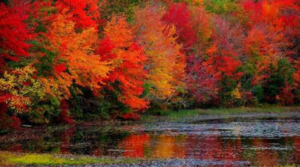
Happy Earth Day


A Day to Celebrate Our Shared Planet

Every April 22, the world pauses—just for a moment—to honor the only home we’ve ever known. Earth Day began in 1970 as a national call for environmental protection, but by 1990 it had grown into a global movement, with organized events in 141 countries and a shared understanding that caring for the planet is something we all hold in common.

The Photo That Changed How We See Earth

One of the sparks that helped shape the early environmental movement wasn’t a speech or a law. It was a photograph.

In 1968, during the Apollo 8 mission, astronaut Bill Anders captured the now‑iconic “Earthrise” image: our blue planet rising above the gray lunar horizon. Small. Bright. Fragile. That single picture changed how millions of people saw the world. It reminded us that everything we love—every ocean, every forest, every city, every memory—exists on this one shimmering sphere floating in the dark. It’s hard not to feel something when you look at it.

More than 50 years after it was shot, Earthrise continues to be seen as one of the most iconic environmental photographs ever taken.

Earthrise photo by Bill Anders

Earth Day Close to Home: The Forever Farm

Closer to home, Earth Day feels a little more grounded.

The Forever Farm holds a special place in my heart. It was founded by my friend — and former supervisor — Nichole Botelho, one of those rare people who turns life’s lemons into something far sweeter. When the pandemic brought an unexpected layoff, she didn’t shrink from it. She dreamed bigger. What started as a quiet idea she once mentioned to me has grown into a thriving sanctuary for farm animals who deserve a second chance.

Celebrate Earth Day With the Forever Farm

And these aren’t the typical “cute and cuddly” rescues you see on posters. Nichole opens her arms to donkeys and pigs, chickens and roosters, and even a miniature horse named Miracle. Watching her take a dream and build it into a place of safety, healing, and hope has been nothing short of inspiring. The Forever Farm is a reminder that caring for the planet isn’t just about oceans and forests — it’s also about the creatures who share our daily world.

Small Actions, Big Impact

Earth Day doesn’t ask us to be perfect. It simply asks us to pay attention. To notice the beauty around us. To care a little more today than we did yesterday. And to remember that even small choices — recycling, planting, supporting local farms, protecting green spaces — add up when millions of people make them together.

A Moment to Reflect and Recommit

So here’s to Earth Day.
To the big blue marble in the sky.
To the places we love.
And to the people, like Nichole, who turn compassion into action and make this planet a little kinder for all who call it home.


Massachusetts’ Quiet Wildlife Spectacle- the Herring Run

“Close‑up of river herring packed together as they swim upstream through shallow, rippling water during the Massachusetts herring run.”


The Herring Run in Massachusetts: Spring’s Quiet Wildlife Spectacle

Every spring in Massachusetts, something ancient stirs beneath the surface of our rivers. As the water warms, thousands of river herring — alewives and blueback herring — return from the Atlantic to the exact freshwater streams where they were born. This annual migration, known simply as the herring run, is one of New England’s most reliable signs that winter is finally loosening its grip.

It’s a small miracle that happens in plain sight, and once you know it’s happening, you start to notice the subtle excitement in the air: the gulls gathering, the osprey circling, the water suddenly alive with silver flashes.


What Exactly Is a Herring Run?

River herring are diadromous fish, meaning they split their lives between saltwater and freshwater. They hatch in ponds and streams, spend their early months growing there, then head out to sea. After several years in the Atlantic, instinct pulls them back home to spawn the next generation.

Massachusetts sees two species:

  • Alewife (early spring)
  • Blueback herring (late spring)

The run typically begins in late March or early April and peaks through mid‑May, depending on water temperature.


Why the Herring Run Matters

The run isn’t just a quirky local event — it’s a cornerstone of the coastal ecosystem. River herring are a crucial food source for:

  • Osprey
  • Herons
  • Striped bass
  • Bluefish
  • Seals
  • River otters
  • And now, increasingly, bald eagles

When the herring return, everything else wakes up too. It’s the ecological equivalent of turning the lights back on after winter.


🦅 Bald Eagles and the Herring Run

One of the most exciting changes in recent years has been the return of bald eagles to southeastern Massachusetts. After disappearing from the state for decades, they’ve made a dramatic comeback thanks to conservation efforts — and the herring run is one of the seasonal events that draws them in.

During the run, eagles:

  • perch in tall riverside trees
  • watch for slowed or struggling fish
  • swoop down to grab herring near the surface
  • occasionally steal fish from gulls (which the gulls do not appreciate)

Seeing an eagle over the river in April has become one of those “I can’t believe this is Massachusetts” moments.


A Tale of Two Coasts: Herring Run vs. Salmon Run

If you’ve ever watched the dramatic salmon runs in Alaska or the Pacific Northwest — the leaping fish, the roaring rivers, the bears lined up like they’re at a sushi conveyor belt — you might assume the herring run is the same thing on a smaller scale.

It is similar… but also wonderfully different.

🐻 Pacific Northwest: Bears

Salmon runs attract grizzlies who stand in the river and casually pluck salmon out of the air. It’s peak nature‑documentary energy.

🕊️ New England: Seagulls

Here?
We get seagulls. Loud, pushy, unapologetic seagulls.
They’re not majestic, but they are extremely committed to the drama.

It’s less “National Geographic” and more “local gossip at the river.”

💀 Salmon die after spawning — herring don’t

Pacific salmon make one heroic, exhausting journey upstream and then die, feeding the ecosystem.

River herring?
They spawn, shake it off, and head back to sea. They can repeat the trip several times over their lifespan.

📏 Scale: Epic vs. Intimate

Salmon runs can look like the river is made of fish.
Herring runs are quieter — thousands, not millions — and concentrated at fish ladders and narrow channels. You can stand a few feet away and watch individual fish make their climb.

🗓️ Timing

  • Herring: early spring
  • Salmon: late summer into fall

So while the Pacific Northwest is gearing up for berry season and bears, we’re pulling on light jackets and heading to the fish ladder with coffee.


Do People Eat River Herring?

Historically, yes — they were smoked, salted, pickled, and even used as fertilizer. But today, harvesting river herring is banned in Massachusetts due to population declines.

So the only ones feasting during the run are:

  • gulls
  • osprey
  • herons
  • bald eagles
  • stripers waiting downstream

It’s a wildlife buffet, not a human one.


Where to See the Herring Run

Some of the best spots in Massachusetts include:

  • Oliver Mill Park, Middleboro — one of the most popular and photogenic
  • Mystic River & Mystic Lakes Dam, Medford
  • Parker River, Newbury
  • Town Brook, Plymouth

Each has fish ladders, viewing platforms, and plenty of opportunities for photos.

I’ve been watching the herring run for years, and every spring it feels like the river wakes up all at once. The gulls start screaming, the water churns, and suddenly you realize winter is officially over.


Boston Marathon

And They're off. The runners start the grueling 26 mile Bosotn Marathon


A Brief History of the Boston Marathon

The Boston Marathon isn’t just a race — it’s a piece of living Massachusetts history. First run in 1897, it holds the title of the world’s oldest annual marathon, inspired by the marathon event at the first modern Olympic Games in 1896. What began with just 15 runners has grown into one of the most iconic road races in the world, drawing elite athletes, charity runners, and more than half a million spectators every year.

Milestones That Shaped the Race

1918: A Military Relay

During World War I, the marathon wasn’t run in its traditional form. Instead, it became a 10‑man military relay, a patriotic adaptation that kept the spirit of the race alive during wartime.

1969: The Move to Patriots’ Day Monday

In 1969, organizers shifted the race from its traditional April 19 date to the third Monday in April, bringing it in line with the modern Patriots’ Day schedule. That’s how Marathon Monday was born.

1972: Women Officially Allowed to Compete

Although Roberta Gibb completed the race unofficially in 1966 and Kathrine Switzer famously ran with a bib in 1967, 1972 marked the first year women were officially welcomed into the field. It changed the race forever.

1980: The Rosie Ruiz Scandal

One of the most infamous moments in marathon history came in 1980, when Rosie Ruiz was initially crowned the women’s winner — only to be disqualified after it was discovered she hadn’t run the full course. It remains one of the most talked‑about sports scandals in Boston lore.

Heartbreak Hill

No discussion of Boston is complete without Heartbreak Hill, the legendary climb in Newton. The name dates back to 1936, when defending champion Johnny Kelley caught up to Ellison “Tarzan” Brown on the hill — only for Brown to surge ahead and win. Kelley’s heartbreak gave the hill its name, and runners have been bracing for it ever since.

2013: The Marathon Bombing

The darkest chapter in the race’s history came in 2013, when two bombs exploded near the finish line, killing three people and injuring more than 260. The city’s response — resilience, unity, and the now‑famous “Boston Strong” — became part of the marathon’s identity. The race has carried that spirit forward every year since.

2020: A Virtual Marathon

For the first time in its history, the Boston Marathon was not held in person in 2020. Due to the COVID‑19 pandemic, the race shifted to a virtual format, allowing runners to complete 26.2 miles on their own routes. It was a reminder that the marathon is as much about determination as it is about location.

Why the Boston Marathon Endures

The Boston Marathon is more than a race — it’s a tradition woven into the fabric of Massachusetts. From Hopkinton to Boylston Street, every mile carries stories of determination, heartbreak, triumph, and community. It’s a race that honors its past while evolving with the times, and every April, it reminds us what endurance — and Boston — are made of.


A Typically Boston Conclusion

The Boston Marathon is a really big deal in a city that loves its sports with its whole heart. From the Red Sox to the Bruins to the Celtics to the Pats, Boston shows up — loudly, loyally, and without hesitation. And on Marathon Monday, the city shows up in a way that feels almost sacred. Streets fill, cowbells ring, strangers cheer for strangers, and the whole region leans into one long, collective heartbeat.

It feels fitting that my Patriots’ Day post goes live on April 17, covering the full Lexington and Concord weekend, while this Marathon post lands on April 20 — right as runners are making their way toward Boylston Street. Two traditions, two days, each carrying its own history and emotion.

Patriots’ Day honors where Massachusetts began.
The Boston Marathon celebrates who we are now.

And honestly, only Boston could pull off a weekend where muskets at dawn and world‑class athletes share the same spotlight — and somehow, it all feels perfectly natural.


America Runs on Dunkin

Why America Runs on Dunkin. Move over Starbucks


☕ Dunkin’ vs. Starbucks: A Very Boston Love Story

Why Dunkin’ Is Practically a State Symbol

In Massachusetts, “grabbing a coffee” is basically code for “heading to Dunks.” We don’t even bother with the full name anymore — it’s just Dunks, like it’s a cousin we see every day. And with close to 1,100 Dunkin’ locations across the state, outnumbering Starbucks 4‑to‑1, it’s not exactly hard to find one. Honestly, you could blindfold someone, spin them around, and they’d still bump into a Dunkin’ before they hit a mailbox.

Starbucks? That’s for Visitors

Look, Starbucks has its place… mostly in airports and places where people say “cof-fee” instead of “caw-fee.” But here? In Boston? Walking into a Starbucks feels like announcing you think Tom Brady was “pretty good, I guess.” It’s not wrong, but it’s definitely suspicious.

Starbucks drinks come with names longer than the Mass Pike. Meanwhile, Dunkin’ gives you a medium regular and sends you on your way. No dissertations required.

Dunks Is a Lifestyle, Not a Beverage

Dunkin’ is woven into the daily rhythm of New England life — early‑morning commutes, post‑game pick‑me‑ups, and that comforting moment when the person behind the counter knows your order before you open your mouth. It’s the only drive‑thru where you’ll see someone in pajama pants, a Bruins hoodie, and flip‑flops in January, and no one bats an eye.


The Commercials Are Basically Local Cinema

And the ads? Pure gold.
We’ve got Gronk and Big Papi singing like they’re auditioning for a musical nobody asked for.

We’ve got Ben Affleck showing up like the unofficial mayor of Dunkin’, running the drive‑thru, handing out orders, and looking like he’s living his best life. And yes, yes that is Tom Brady.  These aren’t commercials — they’re documentaries of the Boston soul.

So… Who Wants a Dunks Run

Starbucks may have its fans, but here in Massachusetts, Dunkin’ isn’t just coffee. It’s identity. It’s culture. It’s home.

And now I kinda want a donut.


Patriots’ Day 2026

A modern soldier and two Revolutionary War reenactors symbolizing centuries of American service. Taken on the Lexington Battle Green on Patriots Day

A Weekend of History in Lexington & Concord

Patriots’ Day doesn’t always line up neatly with Marathon Monday — and in 2026, it definitely doesn’t. If you live in Lexington or Concord, the celebration stretches across an entire weekend, with events beginning Friday night and continuing through Tuesday morning. Strangely enough, the actual date of Patriots’ Day — April 19 — is the one day with nothing scheduled.

Friday, April 17: The Weekend Begins

The spectaors line up for the Battle of Lexington.. 2011

The Crowd Gathers- 2011

Festivities kick off Friday evening with awards ceremonies and speeches, but the real highlight is Paul Revere’s Ride at 9 PM. Watching the rider thunder into town under the night sky feels like stepping straight into 1775.

Saturday, April 18: The Big Reenactment

Most of the major events happen Saturday. If you’re brave enough to get up before dawn, you can catch the famous 5:15 AM reenactment on Lexington Green. I did it once, back in 2011, and it’s an experience I’ll never forget. I left the house at 4 AM and still found parking tough and the crowd already deep. People even brought step ladders so they could see over everyone’s heads.

When the Redcoats marched down the main street, their uniforms looked astonishingly authentic. And the muskets — I had no idea they were that loud. The smoke from the black powder hung in the air like fog. I’m glad I went once, though I don’t feel the need to repeat the 4 AM wake‑up call.

After the battle, everyone heads to one of the three pancake breakfasts happening around town. I skipped it in 2011 and still regret that choice. If you’re already up before sunrise, you might as well reward yourself with pancakes.

Smoke from the musket fire drifts over the redcoats

Sunday, April 19: The Quietest Patriots’ Day

Here’s the odd part: Sunday is the actual date of Patriots’ Day, but there are no scheduled events. Maybe because it falls on a Sunday this year — who knows. But it creates a natural pause between Saturday’s reenactment and Monday’s festivities.

Monday, April 20: Patriots’ Day Meets Marathon Monday

Events pick back up Monday morning at 9:30 AM, with activities continuing until Paul Revere’s arrival at 12:30 PM on the Battle Green. By the time Revere completes his ride, the Boston Marathon will already be well underway. Two Massachusetts traditions, running side by side — literally.

Tuesday, April 21: A Ceremony Worth Noting

The weekend wraps up with something truly special: a Naturalization Ceremony at 11 AM on the Battle Green. Imagine becoming a U.S. citizen on the very ground where the country was born. If I were one of the new citizens, that moment would move me deeply.