WMEO 9 – GOOD NEWS ALERT- Shell‑ebration on Cape Cod

🐾 Sea Turtles Released on Cape Cod!

Anchor: Banner, WMEO Nature Desk

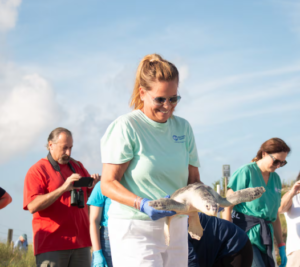
A person wearing gloves and a light blue shirt with a logo gently holds a sea turtle near a coastal area, preparing to release it. Several people stand nearby, some taking photos, as part of a wildlife conservation effort to return rehabilitated sea turtles to the ocean.Good evening, viewers. Banner here with a splash of good news straight from the shores of Cape Cod. The New England Aquarium has just released four rehabilitated sea turtles back into the ocean after months of specialized care. That’s right — Dumpling, Jumble, Lucky, and Old English are officially back where they belong: gliding free in the Atlantic!

These Kemp’s ridley sea turtles — one of the most endangered species under the U.S. Endangered Species Act — were rescued last winter after washing ashore cold, weak, and injured. Thanks to the dedicated staff at the Sea Turtle Hospital in Quincy, each turtle received treatment for pneumonia, dehydration, and trauma. Now, they’re healthy, strong, and ready to swim again.


Field Correspondent: Balboa, Reporting Live from the Box

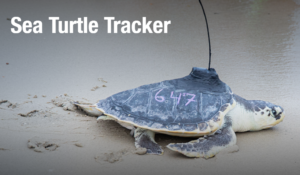
Thank you, Banner. Balboa here, tail twitching with excitement! Scientists from the Anderson Cabot Center for Ocean Life have fitted Lucky and Dumpling with tracking tags to monitor their adventures — collecting data on habitat, behavior, and survivorship. And yes, some of these turtles will appear on the Aquarium’s Sea Turtle Tracker, so the public can follow their journey in real time.

That’s right, folks — you can cheer them on from your couch while they paddle toward new horizons. WMEO calls that science with heart.

Banner (closing)

With 38 turtles released this summer, the ocean is feeling a little more hopeful tonight. From the WMEO newsroom, we salute the rescuers, the scientists, and the turtles themselves — proving once again that compassion makes waves.

End of bulletin. Please resume your regularly scheduled purring.


Shark Week Is Over, But Breton Didn’t Get the Memo

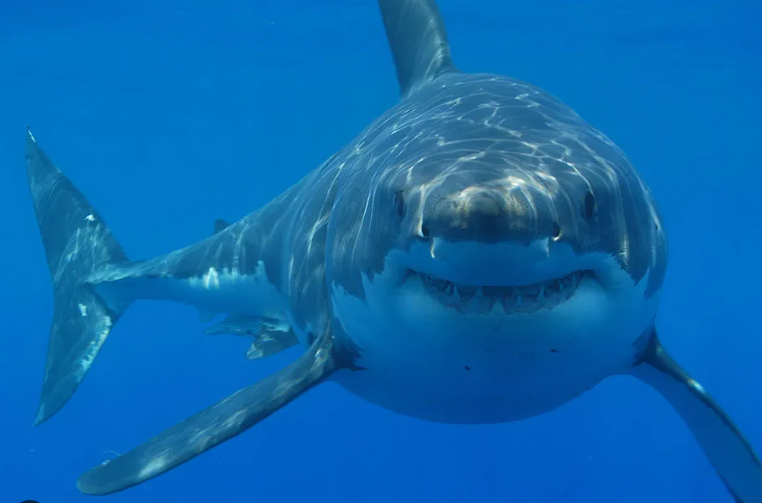
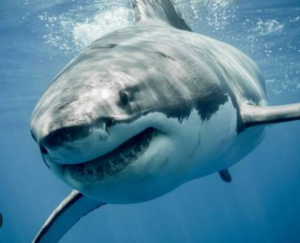
A great white shark swims directly toward the camera in clear blue water, its pointed snout, large body, and visible teeth illuminated by shimmering light patterns from the surface.

A New Englander’s Fascination With Sharks

I’m from New England, and sharks fascinate me — especially now that they’ve returned to Cape Cod waters in such big numbers. So every now and then, I like to check in on what’s happening with our top newsmakers. This year, the headline grabbers are Contender and Breton. Let’s check in with them, shall we.

Contender Makes Headlines

If you’ve been watching shark news lately, you’ve probably seen Contender splashed across the headlines. He’s huge, he’s dramatic, and he moves like he owns the entire Atlantic. Every time he pings, the internet lights up. He’s the kind of shark that makes people stop scrolling and say, “Whoa.”

Most Great Whites Head North for Summer

By late July, most of the great whites tagged off the East Coast have already left Florida behind. They follow cooler water, chase prey, and avoid the Florida bathtub temperatures. It’s the standard summer migration: northward, predictable, sensible.

But sharks don’t read the rulebook.

Enter Breton: Florida’s Surprise Visitor

While most of the great whites are enjoying their summer vacation in New England and Canada, Breton — one of the most famous sharks ever tagged — decided Florida was still on the menu.

He pinged off the Florida coast recently, surprising everyone who follows shark movements. Breton has always been a bit of a wildcard, but showing up in Florida in late July? That’s bold even for him.

It’s like he said,

“Shark Week is over, but I’m not done.”

And here’s the cool part: Contender, Breton, and dozens of other sharks and sea animals can be tracked in real time using the free OCEARCH Global Shark Tracker app. If you’ve never watched a 1,500‑pound shark take a summer road trip up the East Coast, you’re missing out.

You can find the app here

Shark Tracker: Where Are They Now?

If you check the tracker today, you’ll see something interesting: Contender’s last ping on 7/11 was off the coast of Maine.

So while he’s been dominating the headlines, he’s actually cruising the cooler northern waters like a seasoned summer traveler.

Breton, meanwhile, is the wildcard — popping up off Florida when almost every other great white has already headed north. It’s classic Breton behavior: unpredictable, dramatic, and guaranteed to make shark watchers sit up a little straighter.

The Real Shark Story Isn’t on TV

Shark Week comes and goes. The sharks keep moving.

And sometimes, they surprise us — like Breton cruising Florida while everyone else heads north, or Contender quietly pinging off Maine while the headlines shout his name.

I

Breaking News From WMWO- Lion’s Mane on Cape Cod

🚨 WMEO Channel 9 SPECIAL REPORT

We Meow… You Listen.

Banner: Attention Cape Cod beachgoers! This is a breaking news alert from your intrepid feline reporters, Banner and Balboa, broadcasting live from the Feline Desk at WMEO Channel 9.

Balboa: And trust us… this one’s a doozy.


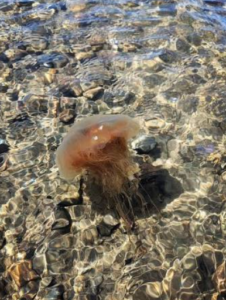
🦁 LION’S MANE JELLYFISH INVADE CAPE WATERSA translucent jellyfish with a soft pink bell floats in shallow, clear water. Sunlight creates rippling patterns on the sandy, pebble‑covered bottom, and long thin tentacles trail gently beneath the jellyfish.

As if sharks weren’t enough to keep humans on their toes, Cape Cod has seen a noticeable increase in Lion’s Mane jellyfish drifting into local waters this season.

Banner: These aren’t your average jelly blobs.

Balboa: They’re the largest jellyfish species on Earth.

Their bells can reach 8 feet wide, and their tentacles can stretch an astonishing 100–120 feet—longer than Banner’s list of grievances.

Since May, these gelatinous giants have been drifting into Cape Cod waters with the tides, showing up in coves, beaches, and anywhere warm currents carry them.

⚠️ FELINE WARNING:

Balboa: If you see one—alive or dead—stay far, far away.

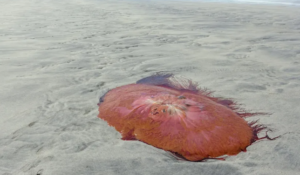
Banner: Their tentacles can still sting even when the jellyfish is basically a melted ghost on the sand.

🌡️ WHY THEY’RE HERE

Warming ocean temperatures this year have created perfect jellyfish conditions. As long as the water stays warm and winds blow onshore, Lion’s Manes will continue to appear.

Banner: Translation: don’t expect them to disappear anytime soon.

Balboa: We’ll be monitoring the situation from our climate‑controlled command center. With snacks.

🐾 THIS HAS BEEN A WMEO CHANNEL 9 SPECIAL REPORT

From the Feline Desk, your reporters Banner & Balboa are signing off.

Banner: Stay safe out there, humans.

Balboa: And remember—We Meow… You Listen.

End of bulletin. Please resume your regularly scheduled scrolling.

Nantucket: Small Island, Long Story

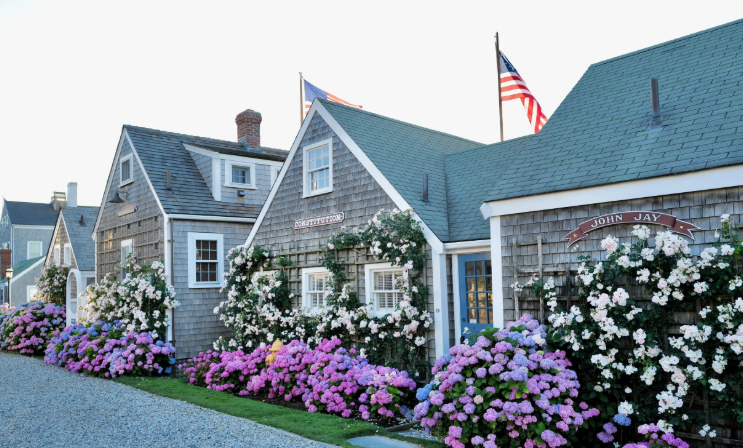
A row of weathered gray shingled cottages with green roofs, white trim, and climbing summer flowers in pink, purple, and white. Small signs reading “Constitution” and “John Jay” hang on the buildings, and American flags fly above them. The scene looks like a tidy, historic seaside village.

Nantucket: The Little Grey Lady of the Sea
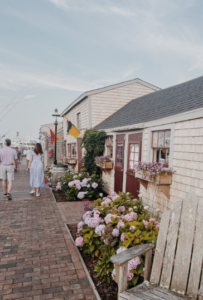
Before we leave the coast of Massachusetts behind, there’s one more island waiting out there in the Atlantic — small in size, enormous in history. Like Martha’s Vineyard, Nantucket has no bridge or roadway connecting it to the mainland. You reach it the old‑fashioned way: by sea or by air. Ferries glide across the Sound from Hyannis, Harwich Port, and New Bedford, and small planes touch down at the island’s airport, delivering summer travelers to a place that feels both remote and familiar.

And then, once you arrive, Nantucket reveals itself.

Nantucket is one of those places that feels familiar long before you ever set foot on it — a name that drifts through novels, travel magazines, and summer conversations like sea spray. Thirty miles south of Cape Cod, this tiny island has earned its nickname, The Little Grey Lady of the Sea, thanks to the weathered cedar shingles that cloak nearly every building. They fade to a soft, silvery grey, giving the whole island a muted, timeless palette.

I haven’t been to Nantucket yet, but researching it feels like paging through an old maritime diary. Cobblestone streets. Rose‑covered cottages. Lighthouses standing guard over dunes and surf. And beneath it all, four centuries of maritime history — whaling captains, Quaker merchants, shipwrecks, and the quiet heroism of life‑saving crews.

A Seaport Frozen in Time
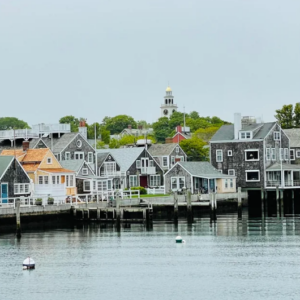
Nantucket is the southeasternmost town in Massachusetts, but it feels older than the state itself. More than 800 buildings predate 1850, and the National Park Service calls it the finest surviving example of an 18th‑ and early 19th‑century New England seaport town. Walk its streets and you’re essentially walking through a living museum — one that smells like ocean air and sunscreen.

The town center is a postcard: wharves lined with restaurants and boutiques, steepled churches rising above the rooftops, and those famous cobblestones that look charming until you try to roll a suitcase over them. In summer, the population swells to around 80,000, transforming the quiet off‑season island into a bustling colony of vacationers, seasonal residents, and day‑trippers stepping off the ferry with iced coffee in hand.

Before the Whalers: The Wampanoag Story

Long before the cedar shingles and whaling captains, Nantucket belonged to the Wampanoag people. They lived on the island for thousands of years, organized into groups led by sachems, with a population that may have reached three thousand. Their story is woven tightly into Nantucket’s early history — and into its whaling legacy.
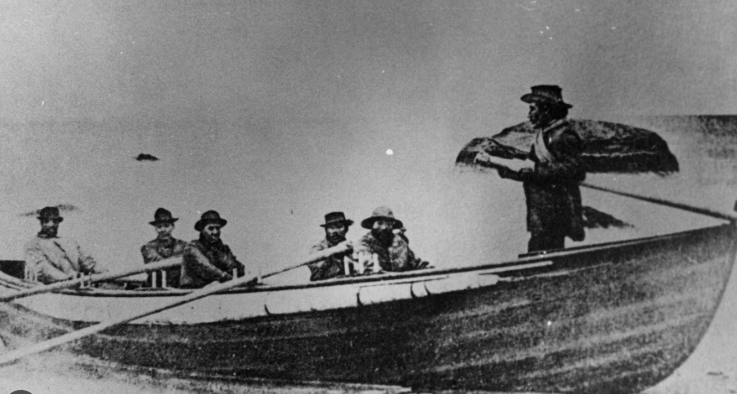
When English settlers arrived in 1659, they persuaded two sachems to relinquish their rights to the island for 66 pounds sterling. The Wampanoag later petitioned, arguing the sachems didn’t have the authority to sell the land, but the courts upheld the deeds. Sound familiar? Manhattan’s story echoes here — “sold” in 1626 for trinkets and trade goods, another moment where Native land shifted into colonial hands under deeply uneven circumstances. It’s a familiar American story — one of displacement, adaptation, and resilience.

The Wampanoag became carpenters, weavers, and eventually whalers. By the early 1700s, whaling boats launched from Nantucket’s shores were crewed mostly by Wampanoag men. A typical seven‑meter whaleboat had five Wampanoag oarsmen and one white man steering. Without them, Nantucket’s whaling industry — the one that would eventually dominate the world — simply wouldn’t have existed.
The Island That Ruled the Sea

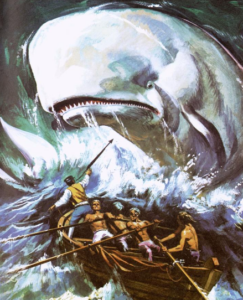
By the 18th and 19th centuries, Nantucket was the beating heart of the global whaling industry. Herman Melville captured the swagger of it in Moby‑Dick: “Two thirds of this terraqueous globe are the Nantucketer’s.”

The tragedy of the whaler Essex — rammed and sunk by a sperm whale — inspired Melville’s novel. Characters like Ahab and Starbuck were written as Nantucketers, shaped by the island’s culture of grit, danger, and ocean‑bound ambition.

Whaling wealth built the island’s grand homes, funded its churches, and shaped its identity. Even today, the Whaling Museum stands as one of Nantucket’s most important landmarks, telling the story of the industry that once made this tiny island the center of the maritime world.

Modern Nantucket: Salt Air and Summer Crowds

Today, Nantucket is a summer destination with a price tag to match — the average sale price for a single‑family home was $2.3 million back in 2018, and it hasn’t exactly gone down. But the island’s charm isn’t about exclusivity. It’s about atmosphere.

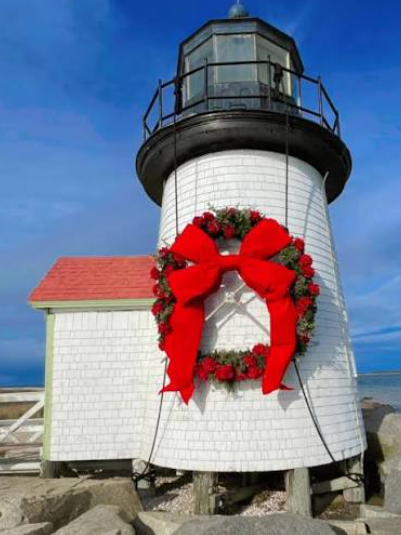
Fog rolls in like a soft blanket. Salt and sunscreen hang in the air on a July afternoon. Roses climb over cottage doorways in full bloom. It’s the lighthouses — Brant Point, Sankaty Head, Great Point — standing like old friends who’ve seen every storm.

Nantucket feels curated, but not artificial. Preserved, but not frozen. A place where history and summer coexist, each giving the other a little more meaning.

Leaving the Grey Lady Behind

And just like that, our time with the Little Grey Lady comes to an end. Nantucket may be small, but its story is anything but — a place shaped by wind, water, and centuries of human hands. As the ferry pulls away and the island softens into the horizon, you carry a little of its quiet dignity with you.

From Cape Cod’s sandy arm to Martha’s Vineyard’s rolling farmland to Nantucket’s weathered shingles, this stretch of Massachusetts coastline is a tapestry of islands, each with its own personality. Nantucket is the one that lingers — the one that feels like a whispered chapter in a much larger maritime tale.

Someday I’ll go. I’ll walk those cobblestones myself. I’ll see if the shingles really are as grey as everyone says. And I’ll bring back my own stories — the kind that only come from being there.

 

Martha’s Vineyard: Summer Colony, Sharks, and Storylines

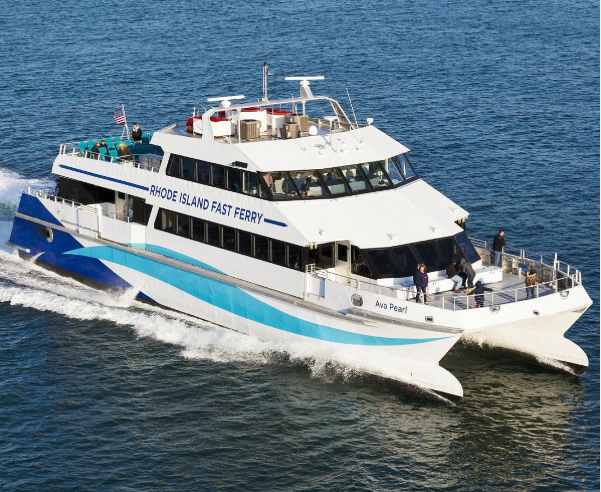
A high‑speed passenger ferry named “Ava Pearl” cuts across the water on a sunny day, carrying travelers on its open upper deck. The white and blue catamaran creates a wide wake behind it as it heads toward Martha’s Vineyard.

A Little Spin Around Martha’s Vineyard
We’re about to leave the Cape — at least for now — but before we go, there’s a little hook worth tugging on. Around here you’ll often hear people say “The Cape and the Islands.” Now, “the Islands” refer to Martha’s Vineyard and Nantucket, but here’s the fun twist: neither one is actually part of Cape Cod. They’re simply spoken together because that’s how locals frame the region.

So let’s start with the Vineyard — Martha’s, that is.

Getting There Is Half the Fun

When people say getting there is half the fun, they mean it literally. There’s no bridge, no road, no secret tunnel. Martha’s Vineyard is a true island. You either board a ferry or hop on a plane, and that’s the whole point — you choose to go, and the island rewards you for the effort.

The ferry ride takes about 45 minutes, and on a sunny day it’s as relaxing and pretty as coastal New England gets. Ferries run year‑round, but once May arrives your options multiply. Seasonal passenger service pops up from Falmouth, Hyannis, New Bedford, Quonset Point in Rhode Island, New York City, and northern New Jersey.

You can’t catch a ferry from Boston, but you can fly. Logan offers daily year‑round flights, and between May and October the schedule expands with routes from American Airlines (Washington, D.C.), Cape Air (multiple cities), Delta (LaGuardia), and JetBlue (Boston and JFK).

A Summer Colony With a Long Memory

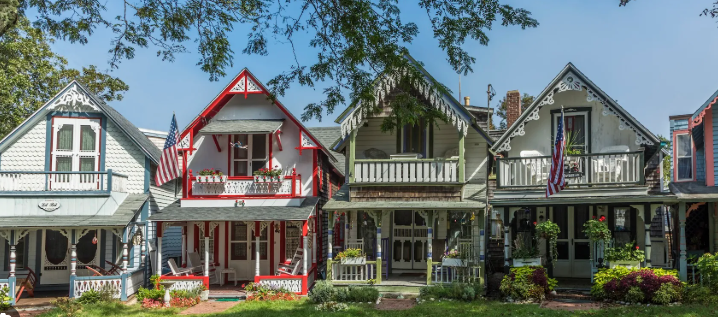
The Vineyard’s reputation as a summer escape stretches back more than a century. Families return year after year, building traditions that last generations. Oak Bluffs became famous for its gingerbread cottages — tiny, colorful homes that look like someone dusted a Victorian village with powdered sugar.


Edgartown grew into the elegant counterpoint: white clapboard captain’s houses, quiet streets, and that postcard‑perfect New England calm.


Jaws Put the Island on the Big Screen

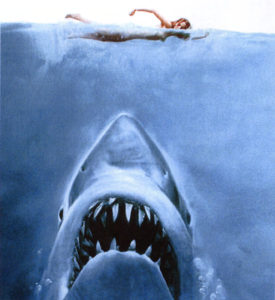
If the scenery feels familiar, it’s because Jaws was filmed here in 1974. Spielberg turned the Vineyard into “Amity Island,” and locals still point out filming spots. Say hi to Bruce while you’re at it. The movie changed the island’s identity forever — suddenly Martha’s Vineyard wasn’t just a summer colony; it was the shark island. (Fun fact: Amity means friendship. Just ask the mayor)

And Yes… the Sharks Are Real

Back when Jaws was filmed, great whites were rare in Vineyard waters. That’s changed. As the ocean warmed and the seal population exploded, the sharks followed the buffet. Today great whites are regular summer visitors around both the Vineyard and Nantucket. Researchers tag them, track them, and occasionally name them, and every summer brings a fresh round of “shark spotted off South Beach” headlines. Islanders take it in stride. Sharks are just part of the neighborhood now.

A Place Where Friendships Form Easily

Locals talk about “Vineyard friendships” — the kind that form over shared ferry benches, sunset drinks at Menemsha, or long walks on State Beach. Something about being on an island makes people open up. Maybe it’s the slower pace. Maybe it’s the salt air. Or maybe it’s the fact that once you’re there, you’re all in it together until the next boat leaves.

A Tragic Footnote: JFK Jr.

The Vineyard is also tied to one of the most heartbreaking moments of the 1990s. John F. Kennedy Jr.’s plane went down in the waters off the island in July 1999 as he was flying there for a family wedding. Islanders still remember that night — the search lights sweeping the water, the quiet that settled over the community.

The Island Today

Despite the fame, the sharks, the movies, and the history, Martha’s Vineyard still feels like a place where you can exhale. Beaches, bookstores, ice cream shops, bike paths, seafood shacks — it’s summer distilled. You arrive by boat, you leave by boat, and in between you get a little taste of island time.