Saratoga: From Mineral Springs to Racing Royalty

The iconic entrance to Saratoga Race Course, complete with jockey statues and the flowered fountain that signals you’ve arrived at racing season.

Growing Up North of Saratoga — Where the Springs Smelled Like Rust and Trouble

I grew up just north of Saratoga, in the quieter world of Bolton Landing — close enough to feel the pull of the big summer scene, far enough away to keep our own identity. Saratoga was a big deal in my youth. The crowds, the buzz, the racing, the whole ritual of it. And of course, the smell.

Before I ever cared about who was closing on the outside, Saratoga meant mineral springs, bathhouses, and that unmistakable tang of iron and carbonation rising from the ground. People came to “take the waters,” to stroll the grand hotels, to sip from springs that tasted like everything from crisp seltzer to rusty nails.

I’ll be honest: I always thought Saratoga stunk. That sulfur‑metal smell hit you long before you ever saw the water. Some people swore it was healing; I just wanted to get upwind.

But Saratoga didn’t stay just a spa town. As the crowds arrived for the waters, they wanted entertainment — and the entertainment they wanted was horses. By the 1860s, racing had taken root, and the town evolved into something bigger: a place where the elegance of the spa era met the electricity of the racetrack. Health, history, horses wasn’t just a slogan; it was the rhythm of the region I grew up in. And somewhere in that mix, the seeds of my own love for horse racing were planted.


How the Triple Crown Actually Became the Triple Crown

The Races Existed Long Before Anyone Connected Them

Gallant Fox Triple Crown Winner

We talk about the Triple Crown today like it’s some ancient, sacred tradition, but the truth is far messier — and much more interesting.

  • Belmont Stakes: first run in 1867
  • Preakness Stakes: first run in 1873
  • Kentucky Derby: first run in 1875

For decades, they were just three important races on the calendar. No one thought of them as a set. No one talked about a sweep. No one whispered the words “Triple Crown.”

That didn’t happen until the 1930s, when a sportswriter used the phrase after Gallant Fox won all three in 1930. Only then did the idea catch fire. Before that, a horse who won all three was simply… a horse who won three big races.

The Schedule Wasn’t Always Set in Stone

Even after the Triple Crown became “a thing,” the races weren’t always run in the same order or on the same timeline. The spacing we think of as traditional — Derby in early May, Preakness two weeks later, Belmont three weeks after that — is really a mid‑20th‑century standard, not a sacred commandment.

Which brings us to today’s debate.


Why This Year’s Triple Crown Conversation Is Different

Golden Tempo comes from behind to win the Kentucky Derby

Golden Tempo, Napoleon Solo, and a Missing Middle Jewel

Napoleon Solo wins the Preakness

This year’s storyline took a sharp turn right after the roses were handed out. There will be no Triple Crown in 2026. The Kentucky Derby winner, Golden Tempo, did not run in the Preakness — leaving the second jewel wide open for Napoleon Solo (yes, like The Man from U.N.C.L.E.) to swoop in and take Baltimore.

With no sweep on the line, the conversation shifted from “Who will win all three?” to “Should the series itself change?”

The Modern Debate: Is Two Weeks Too Short?

Trainers say today’s horses need more recovery time.
Traditionalists say the tight spacing is the whole point — the test of stamina, grit, and resilience that makes the Triple Crown so rare.

Some want the Preakness pushed back to three or even four weeks after the Derby.
Others argue that changing the spacing would rewrite the very identity of the series.

Either way, the debate is louder than ever, and it’s rolling straight toward the Belmont Stakes in June, even if the crown itself is already out of reach.


Closing Thoughts: A Bolton Landing Kid With Saratoga in Her Bones

Even though I didn’t grow up in Saratoga, it loomed large from my little perch in Bolton Landing — close enough to feel the excitement, close enough to know when something big was happening, and definitely close enough to smell those springs whether I wanted to or not. I may not have loved the scent, but the place itself worked its way into me anyway. Those early trips south planted the seeds for a lifelong fascination with horse racing — a fascination that still pulls me back every spring, every Derby, every Preakness, every Belmont. Even now, all these years later, Saratoga remains a big deal in my world… smell and all.

See You June 6 in Saratoga for The Belmont Stakes!


The Whitehall Bigfoot

The Whitehall Bigfoot: A Hometown Legend That Refuses to Fade

If you’ve been following my recent posts about Colorado and the curious Bigfoot sighting near the Durango & Silverton railroad, you already know I’ve been deep in a cryptid rabbit hole. Maybe it’s just that Bigfoot stories make excellent comfort reading, but my mind drifted back to a place much closer to home: Whitehall, New York.

For anyone who grew up in that corner of the Adirondacks, Bigfoot isn’t just a campfire tale — it’s practically local history. And one night in 1976 cemented Whitehall’s place on the cryptozoology map forever.


A Quiet Town, a Strange Night

Whitehall is the kind of small town where people know each other’s dogs, never mind each other’s business. But in late August 1976, something happened on Abair Road that no one could quite explain.

Multiple witnesses — including law enforcement officers — reported seeing a tall, broad, hair‑covered figure standing near the tree line. Not a bear. Not a prankster. Something… else.

The creature was described as:

  • Around 7–8 feet tall
  • Covered in dark hair
  • Broad‑shouldered and muscular
  • Moving with surprising speed

Officers later said the encounter left them shaken in a way they couldn’t easily dismiss. When seasoned police officers admit they were rattled, people tend to listen.


Why the 1976 Sighting Still Matters

Plenty of Bigfoot reports fade into folklore, but the Whitehall incident has staying power. Here’s why:

  • Multiple credible witnesses
    This wasn’t one person seeing something in the dark. Several individuals — including trained observers — reported the same thing.
  • Consistent descriptions
    The accounts line up in uncanny ways, even decades later.
  • Ongoing activity
    Whitehall still gets sightings. Enough that the town now hosts an annual Sasquatch Festival.
  • Cultural identity
    Whether you believe or not, Bigfoot is part of Whitehall’s personality. It’s woven into the local storytelling tradition.


A Personal Connection

Growing up near Whitehall, the 1976 sighting wasn’t just a story — it was the story. Kids whispered about it on school buses. Adults mentioned it with that “I’m not saying it was Bigfoot, but…” tone. It was part of the landscape, like the mountains and the fog.

So after writing about Colorado’s mysterious figure, it feels natural to circle back to the place where my own fascination began.


Want to See More?

There’s a great YouTube video that breaks down the 1976 incident with interviews and reenactments.


If you’ve ever driven down Abair Road at dusk, you know how easy it is to imagine something watching from the trees. Whether Bigfoot is flesh and blood or folklore, Whitehall’s legend endures — and it’s one I’ll always have a soft spot for.

Where Were You That Morning? A Tribute to September 11

🕊️ A Morning Like No Other

Do you remember where you were on the morning of September 11, 2001?

📺 “Is This a Movie?

I remember it vividly—not in the way you recall a birthday or a vacation, but in the way your body remembers shock. I turned on the news, expecting the usual hum of morning chatter. Instead, I saw flames, smoke, and chaos. For a moment, I thought it was a movie trailer. Something surreal. Something scripted. But it wasn’t.

http://t1.gstatic.com/licensed-image?q=tbn:ANd9GcRySpddvMmJFPuEyCE2SFMWlzGpdI9kqGiJW_aYUNf5XSyKYZOcZc-GIsfX10aaraG0

Internet

🧊 Numbness and Silence

It was horrifying.

I remember how I felt. Numb. Just stunned. My mind couldn’t catch up to what my eyes were seeing. The towers—those iconic pillars of the New York skyline—were collapsing. Lives were being lost in real time. And across the country, hearts were breaking in unison.

🤝 A Nation United in Grief

In the days that followed, grief settled over us like a heavy fog. But so did something else: unity. Strangers became neighbors. Flags waved from porches and overpasses. First responders ran toward danger with a courage that defied comprehension. And in the quiet moments, we lit candles, whispered prayers, and held each other close.

Twenty-four years later, the pain hasn’t vanished. But neither has the resilience. Every September 11, the Tribute in Light rises over Manhattan—twin beams piercing the night sky, echoing the towers that once stood tall. It’s a symbol of remembrance, of hope, of the promise to never forget.

🚒 Heroes in the Ashes

To the families who lost loved ones, to the heroes who gave everything, and to the millions who carry the memory of that day in their hearts—you are not forgotten. Your stories live on in our reflections, our ceremonies, and our quiet moments of pause.

Fred George, Ash Wednesday, Dusk, 9/12/01, New-York Historical Society, Gift of Here is New York

Today, I remember. And I honor.


Raising the Flag at Ground Zero - Wikipedia

Raising the Flag at Ground Zero- Wikipedia

Natural Wonders of the USA part 10

More Natural Wonders by State

When we last visited our Natural Wonders list we had just wrapped up Kentucky. We’re ready for  # 35 on our Natural Wonders list. How many have you seen so far? Have you added any to your must-visit list?  Let’s see where we are going next!


#35 Ohio – Crystal Cave

Well My, my my- Another cave. Who knew that being underground could be so exciting? I guess its something Spelunkers have always known. This cave is the world’s largest known geode

The Crystal Cave was discovered while the land owner was digging a well for his winery. So today you can combine some wine with a cave tour and take a bottle home with you to help relive the memories. 

Photo via Crystal Cave Website

File:Celestite (Crystal Cave, South Bass Island, Lake Erie, Ohio, USA) 18  (8320050647).jpg - Wikimedia Commons

Image Via Pinterest


#36 Illinois – Starved Rock State Park

Starved Rock State Park is the biggest attraction in the state of Illinois. It features 13 miles of trails and numerous seasonal waterfalls that are especially active in the spring.

The Park is  known for its steep sandstone canyons formed by glacial meltwater. Several, including the St. Louis, French and Wildcat canyons, have waterfalls. A wooded trail leads to Lover’s Leap Overlook, with views of the river and Starved Rock Dam. Park wildlife includes white-tailed deer, bald eagles and migratory birds. 

St Louis Falls, Starved Rock State Park, Illinois | A glorio… | Flickr

St Louis Falls, Starved Rock State Park- Photo credit Flickr

#37 Pennsylvania – Pennsylvania Grand Canyon

Sometimes called the Pine Creek Gorge,  Pennsylvania’s Grand Canyon is 50 miles long and 1000 feet deep. Loaded with trees and wildlife, the area is a naturalist’s dream. You may even see a Bald Eagle. 

Photo – internet

#38 New York – The Adirondacks

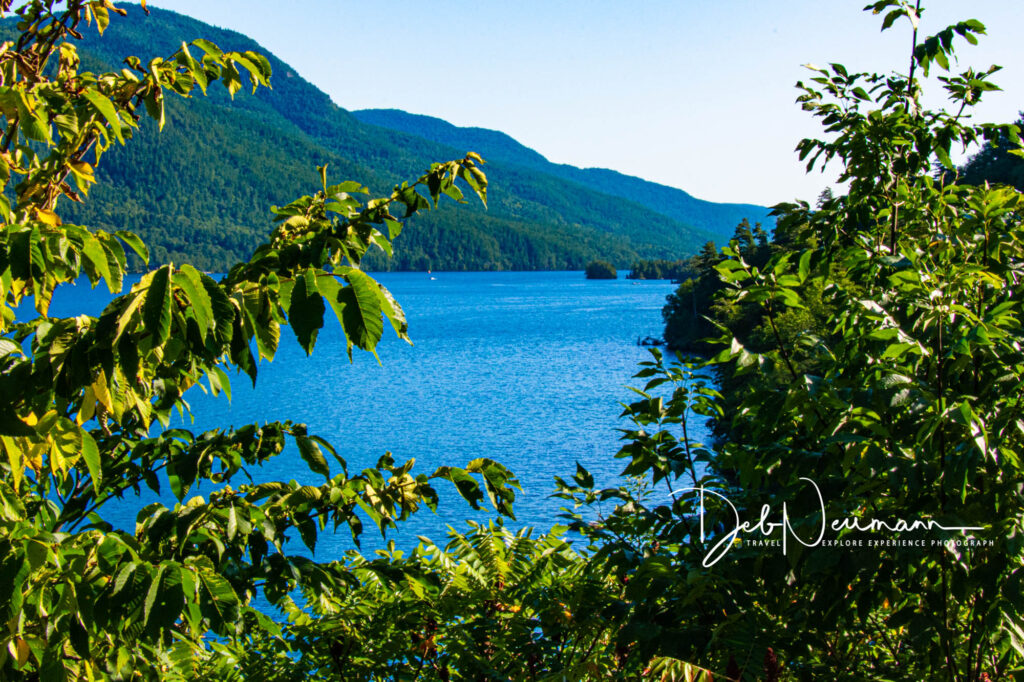
The Adirondacks, my home state! I can’t say my home town because the Adirondacks encompass around 5000 square miles of mountains, lakes and wilderness. The Adirondack Park was created in 1892 and is the largest publicly protected area in the US.  It’s greater in size than Yellowstone, Everglades, Glacier and The Grand Canyon National Parks combined. The park contains 6 million acres of “Forever wild” forest preserve.  It holds a special place in my heart so I’m happy to share one of my photos of beautiful Lake George to illustrate this wonder.

Lake George 2020 – photo credit Deb Neumann

Adirondacks 2020 – photo credit Deb Neumann

I admit I was surprised that Niagara Falls didn’t make the list but I haven’t been to Niagara in years and there is so much more in the Adirondacks than one big waterfall. 

Adirondack Balloon Festival 2014- Photo Credit Deb Neumann

Massachusetts State Parks

Massachusetts State Parks

If you are a Facebook user you may have seen advertisements for Nature Adventure books. When they first came out with them I ordered a couple. I ordered National Parks, Massachusetts State Parks and New England Lighthouses. I figure that the Massachusetts State Parks and The New England Lighthouses would give me plenty to do and I’d have the National Parks for when I travel out of state. COVID and personal health reasons made a major dent in my travel the last 2 years but it’s time to think about getting out and about again.

Oh The Possibilities

I pulled out the Massachusetts State Park Adventure Book and there are 305 parks listed. They aren’t just state parks, there are Reservations, Historic Sites, beaches, State Forests, and  Management Areas. So as a first step I decided to go through the list and see how many I’ve been to already. After all, this is the state where I’ve lived pretty much all of my adult life and I’ve always done a lot of exploring. I must have been to some of the places on the list! 

Bash Bish Falls State Park

The first one on the list that I spotted was Bash Bish Falls State Park. Of course I always mess it up and call it Bish Bash Falls. That just sounds better to me! I made the trek to Bash Bish Falls in June of 2017. Bash Bish Falls is located in the western part of Massachusetts on the New York state border. Located in the Town of Mount Washington it is also part of Mount Washington State Forest. 

You can choose to make the hike easy or hard. The trail head in MA is steep and rugged. Probably not too bad going down, if you’re careful, but I sure didn’t want to have to make my way back up at the end of the day so I went into New York and used the New York trail head to get to the falls. It may  be a little longer but it’s a gradual incline and it’s downhill going back. 

Bash Bish Falls is the highest waterfall in Massachusetts. The dramatic final pitch of Bash Bish Brook drops about 80 feet into an emerald plunge pool. It’s an enjoyable hike to experience the wonder and beauty of this deep, verdant gorge. https://youtube.com/shorts/-Vqd_OQmFsc?feature=share

If You Go

  • From Massachusetts Parking Lot: Difficult ability, about 0.6 miles round-trip. Shorter, more rugged, and strenuous.
  • From New York Parking Lot: Moderate ability, about 1.5 miles round-trip. Longer and gradual, but rocky and uneven.
  • Nearby, Taconic State Park in New York state offers more visitor amenities, picnicking, swimming, and camping.