Look Up! November’s Sky is full of Celestial Surprises

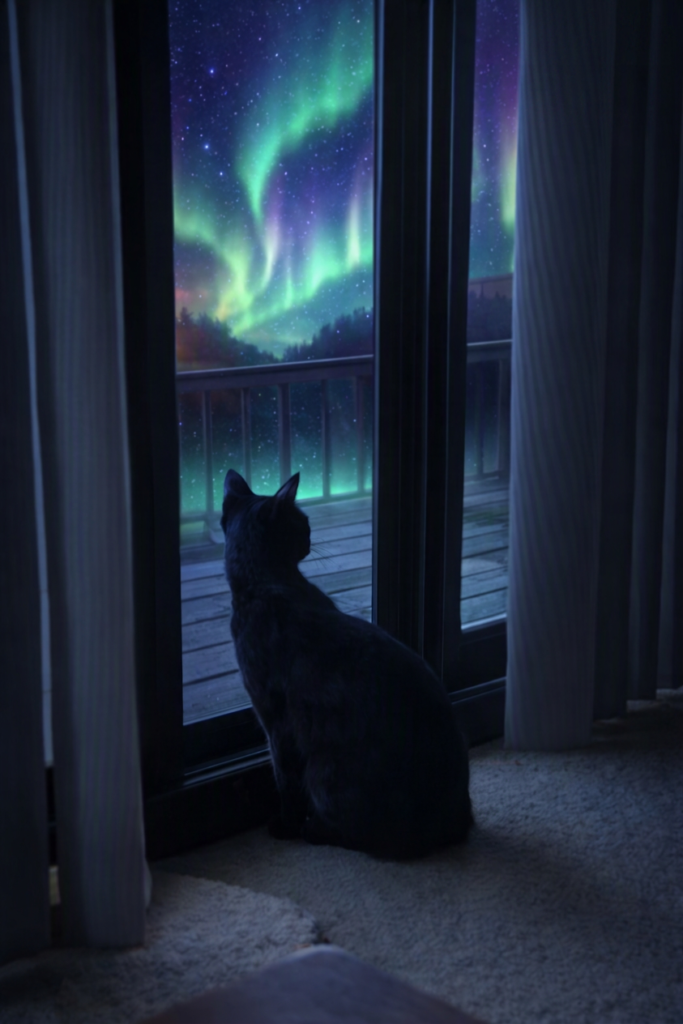
A silhouetted cat sits quietly by a sliding glass door, gazing at vivid green aurora borealis curtains dancing across a purple-blue, star-filled sky. The colorful glow reflects off the outdoor deck, while vertical blinds frame the peaceful nighttime scene.

Auroras and Meteor Showers Take Center Stage

Wow, November 2026 is shaping up to be a big month for stargazers.
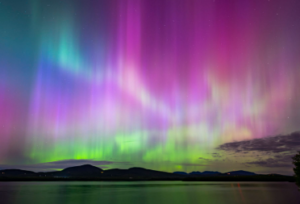
Bright aurora borealis in vivid shades of green, purple, and pink stretches across the night sky above a calm lake. Dark mountain silhouettes line the distant horizon, while the colorful reflections shimmer softly on the water beneath the glowing curtains of light.On deck this month is a strong possibility of auroras in the northern states. The culprit behind the potential uptick in Northern Lights activity is a large coronal hole on the sun.

Yes, we have a hole in the sun! I’m serious, even if it sounds more like something the WMEO crew would investigate.

This hole in the sun’s corona allows charged particles from the solar wind to escape more easily. As a result, skywatchers could be treated to enhanced aurora displays.

Meanwhile, as if that’s not enough, we’ve got multiple meteor showers on tap.

Meteor Showers, Planet Pairings and a Historic Journey

The nice thing about meteor showers is that they aren’t just a one-night event. Most are active for several days or evenA dark blue night sky filled with dozens of bright meteors streaking downward in long, luminous trails. Countless stars are visible across the sky, while a dark silhouette of grass and vegetation lines the horizon at the bottom of the image. One especially bright meteor near the center illuminates the scene, creating a dramatic celestial display that resembles a meteor shower. weeks, so even if you miss the peak, you still stand a chance of catching a few shooting stars or bright fireballs.
Here’s what’s on the skywatching agenda for November:

• Southern Taurids: Active September 20 to November 20. Peak Nov. 4-5. Known for slow-moving, bright fireballs.

• Northern Taurids: Active October 20 to December 10. Peak Nov. 11-12.

• Leonids: This is the big one, folks. We always hear about this one. In fact, one year I was driving on an overcast night when I noticed flashes lighting up the clouds on the horizon. At first, I thought it might be fireworks, but the flashes kept coming. Curious, I pulled over and spent nearly twenty minutes watching the sky. It turned out I was seeing the light from meteors illuminating the cloud cover. The sight reminded me of distant artillery flashes, and it’s something I’ve never forgotten. The Leonids are active from November 6-30 and peak on November 17-18. Under ideal conditions, observers may see up to 15 meteors per hour. Best viewed in the early morning hours after the moon has set. As for why I was driving around in the middle of the night, that’s a story for another day.

A Supermoon, Two Planets and Voyager’s Big Milestone
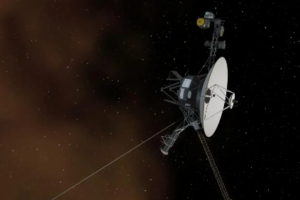
Illustration of a spacecraft in deep space with a large white dish antenna pointed outward. The probe is shown against a black star-filled background, with a faint orange-brown cloud or nebula along the left side of the image. A thin communication beam extends diagonally from the spacecraft into the distance. The spacecraft features a central instrument body, long support booms, and scientific equipment mounted above the dish, resembling a deep-space exploration probe.Moving on to the rest of the sky show Mother Nature has planned, there will be a close pairing of Mars and Jupiter along with a supermoon on November 24.

And one final note. NASA says Voyager 1 will reach a historic milestone this month. It will have traveled one light-day from Earth.

What’s a light-day, you ask?

That’s the distance light travels in 24 hours, about 16 billion miles (26 billion kilometers). Voyager 1 is expected to reach that mark on November 18, 2026.

Think about that for a moment. It’s taken Voyager 1 nearly 50 years to travel a distance that light covers in a single day.

Fifty years.

Imagine that!

So all you stargazers, November is serving up a cornucopia of celestial sights. From meteor showers and auroras to planetary pairings and a historic Voyager milestone, there’s plenty to keep your eyes pointed toward the night sky.
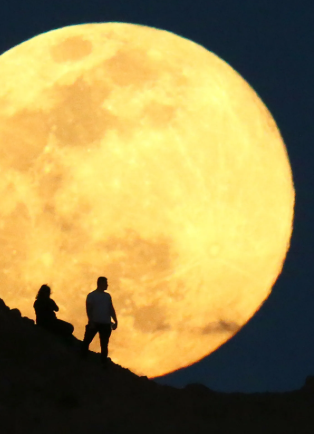
Two silhouetted figures pause on a hillside to admire a giant golden supermoon glowing against the night sky, highlighting the scale and wonder of the celestial scene.

A Poem Revisited

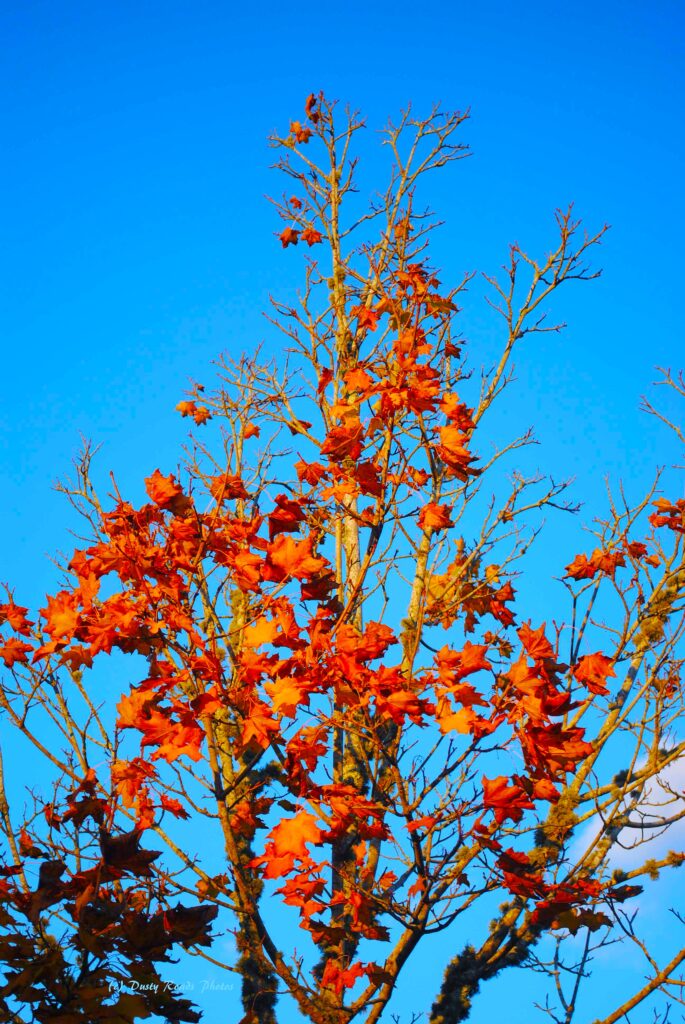
 Bright orange and red autumn leaves on a tall tree set against a vivid blue sky, capturing the color and clarity of early fall.

⭐  “October’s Bright Blue Weather”

Some things stay with you your whole life. When I was in fifth grade, we had to memorize October’s Bright Blue Weather by Helen Hunt Jackson for English class. At the time, I didn’t realize how deeply it would root itself in me — how those crisp images of autumn air and bright blue skies would follow me into adulthood.

All these many years later, it’s still one of my favorite poems. There’s something about the way Jackson captures October that feels exactly right: the clarity, the stillness, the sense of change in the air. Every time the calendar turns to fall, I find myself thinking of those lines again, remembering the rhythm of the words and the way they made the season feel bigger than the world I knew at ten years old.

And of course, Robert Frost’s “The Road Not Taken” sits right beside it in my heart — two roads diverging, choices made, paths followed. Both poems have stayed with me, shaping the way I see autumn, memory, and the quiet turning of the year.

October’s Bright Blue Weather

O suns and skies and clouds of June,
And flowers of June together,
Ye cannot rival for one hour
October’s bright blue weather;

When loud the bumblebee makes haste, Belated, thriftless vagrant,
And goldenrod is dying fast,
And lanes with grapes are fragrant;

When gentians roll their fingers tight
To save them for the morning,
And chestnuts fall from satin burrs
Without a sound of warning;

When on the ground red apples lie
In piles like jewels shining,
And redder still on old stone walls
Are leaves of woodbine twining;

When all the lovely wayside things
Their white-winged seeds are sowing,
And in the fields still green and fair,
Late aftermaths are growing;

When springs run low, and on the brooks,
In idle golden freighting,
Bright leaves sink noiseless in the hush
Of woods, for winter waiting;

When comrades seek sweet country haunts,
By twos and twos together,
And count like misers, hour by hour,
October’s bright blue weather.

O sun and skies and flowers of June,
Count all your boasts together,
Love loveth best of all the year
October’s bright blue weather

Helen Hunt Jackson

Some favorites never fade. They just deepen.


WMEO WEATHER UPDATE — PUMPKIN SPICE GOES FULL JIM CANTORE

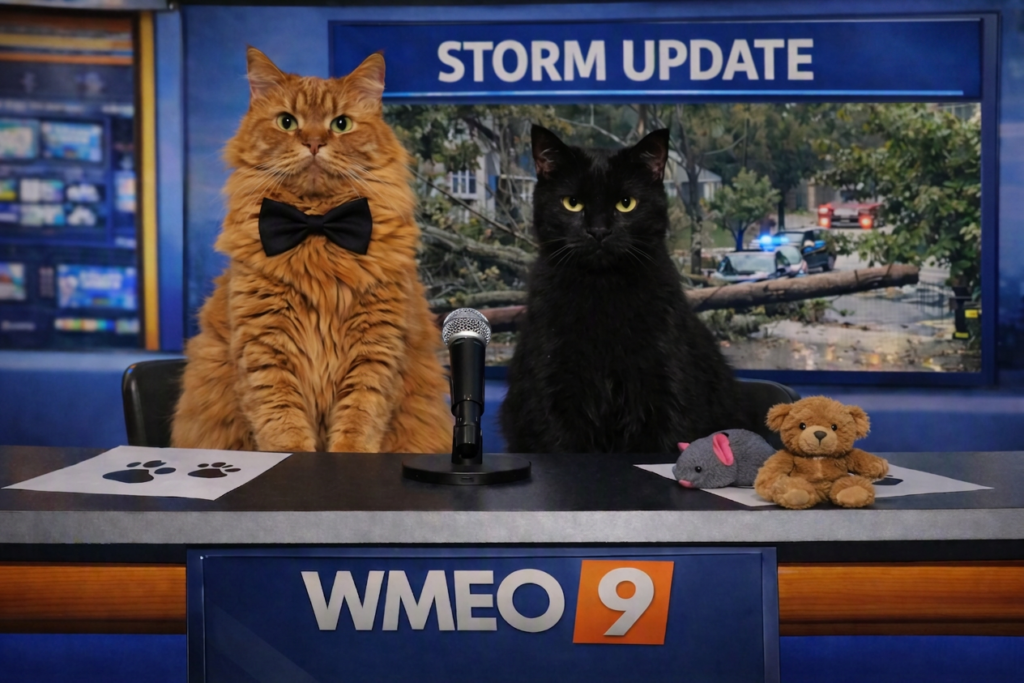
Two cats sit behind a blue WMEO 9 news desk, posed as TV news anchors. On the left, an orange long‑haired cat wearing a black bow tie looks toward the camera. On the right, a short‑haired black cat sits upright. A microphone is centered between them. On the desk are papers with paw prints, a small teddy bear, and a toy mouse. Behind them, a large screen displays the headline “STORM UPDATE” above a photo of a fallen tree blocking a residential street with emergency vehicles present.

Reporting Live from the WMEO 9 Weather desk. Storm Update.  We Meow- You Listen

 Banner: Good evening, Taunton  WMEO is tracking the aftermath of the nor’easter that tore through the region this past weekend. Streets are flooded, debris is scattered across neighborhoods, and reports of property damage are coming in in torrents. Cleanup crews are already out, but conditions remain hazardous — and one very determined field reporter insisted on “getting the real story.”

Balboa: We told him not to go outside. We all told him not to go outside.

Cut to Pumpkin Spice, live in the field:  A drenched orange cat wearing a black hat with an orange band and a blue bow tie stands outdoors in heavy rain. The cat holds a WMEO NEWS microphone and wears a soaked press badge labeled “WMEO PRESS PUMPKIN SPICE.” Behind him, large storm waves crash near coastal buildings under a dark, stormy sky.

Pumpkin Spice: “This is WMEO field reporter Pumpkin Spice, live on location. Conditions are… damp. Very damp. Extremely damp. I have seen wetter days, but only from inside the bathtub.”

Banner (back in studio): Pumpkin, why are you out there? The storm has already passed.

Pumpkin Spice: “Jim Cantore would be out here. I am honoring the tradition.”

Balboa: He said that with the seriousness of a cat applying for a mortgage.

Pumpkin Spice: “I attempted to open my umbrella. It immediately surrendered. I am now using it as a morale prop.”

Banner: Pumpkin, please come back inside. You’re dripping on the microphone.

Pumpkin Spice: “I will return when the situation stabilizes. Or when my fur dries. Whichever comes first.”

Balboa: So… never.

Banner: WMEO will continue monitoring cleanup efforts across the region. Please stay safe, avoid flooded streets and downed wires, and do not — under any circumstances — imitate Pumpkin Spice.

Pumpkin Spice : “I regret nothing.”

Two cats sit behind a WMEO 9 news desk as if hosting a broadcast. The orange cat on the left wears a dark blue bow tie, while the black cat on the right sits beside a small gray mouse toy and a brown teddy bear. A sheet of paper with red markings lies on the desk. The front of the desk displays the text “WMEO 9” in large yellow letters and “Thank you for watching” in white. The blurred newsroom background features blue and red tones.

WMEO Winter Forecast 2026–2027

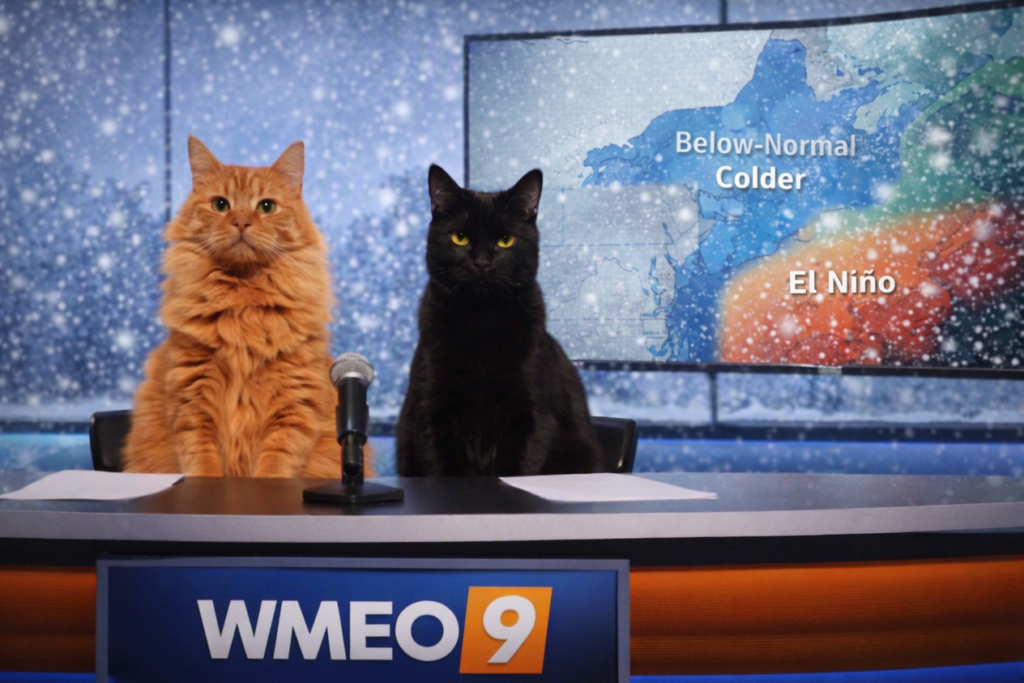
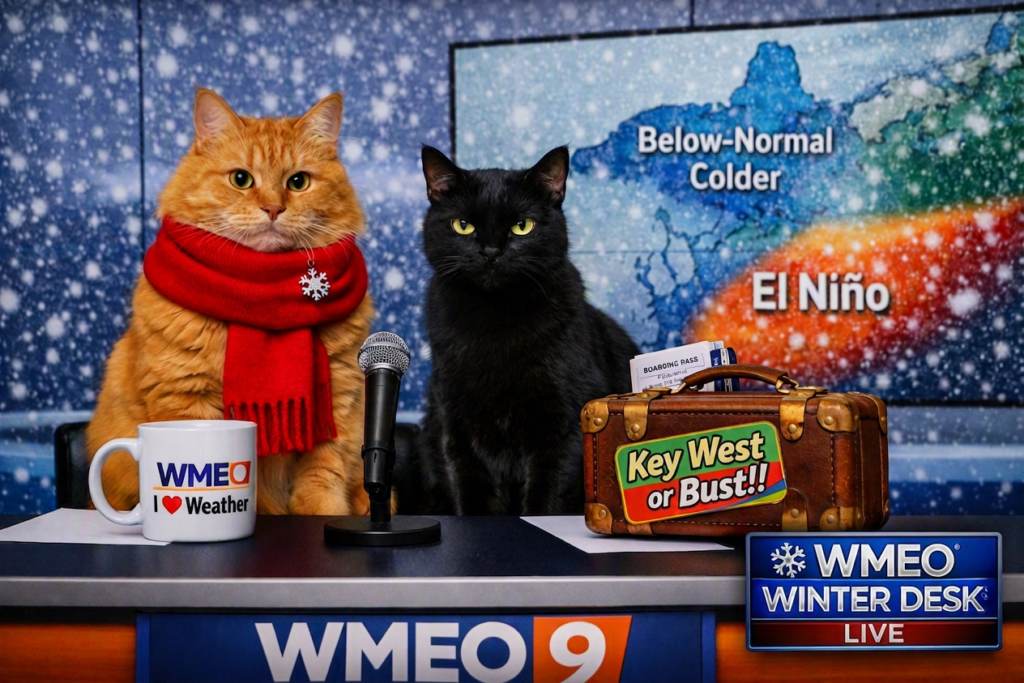
 “Two cats sit behind a WMEO 9 news desk delivering a winter weather forecast. The orange tabby wears a red scarf with a silver snowflake pin and has a white mug labeled ‘WMEO I ♥ Weather’ in front of him. The black cat sits beside a vintage suitcase with a ‘Key West or Bust!!’ sticker and a boarding pass sticking out. Behind them, a snowy weather map shows ‘Below‑Normal Colder’ and ‘El Niño’ regions, with snow falling outside the studio window.”

❄️ Live From the WMEO Weather Desk — We Meow, You Listen

🌨️ Winter Is Coming to New England (Whether We Want It or Not)

Banner: Good morning, New England! The 2026 Old Farmer’s Almanac has released its winter predictions, and I’m here to confirm what we all already suspected: Cold. Snowy. Miserable. But let’s see what the “experts” have to say before Balboa starts complaining about frozen whiskers.

Balboa: The Old Farmer’s Almanac has a better-than-average prediction rate, which is impressive considering weather forecasting is the only job where you get praised for being wrong more often than you’re right. So what’s the verdict? Are we bracing for another blizzard, or is this just the annual “we’re not sure, but here’s a chart” routine?

🌡️ National Overview: El Niño Takes the Blame

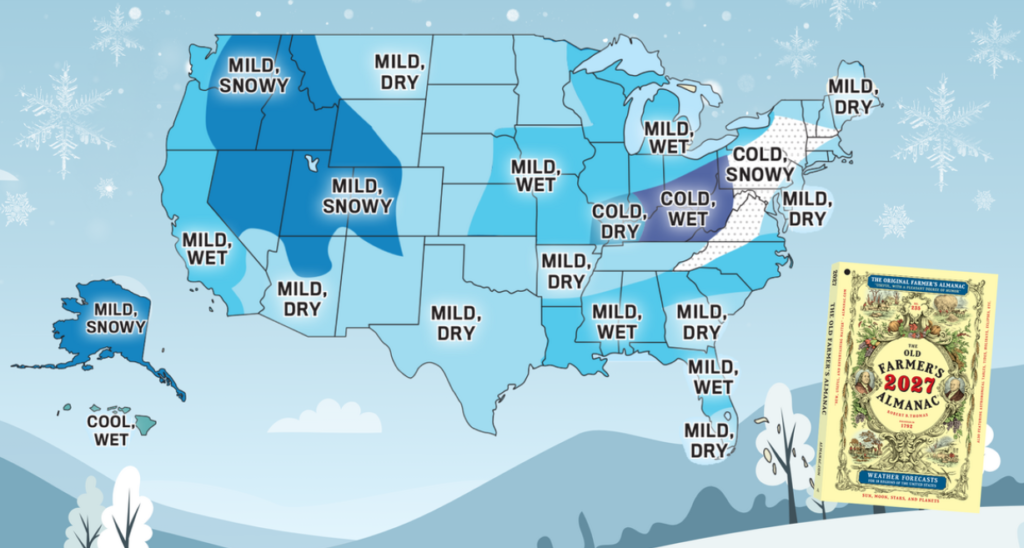
Banner: This year’s forecast reads like they’re trying to cover every possible outcome. Lots of “maybes,” “possibly,” and “El Niño made us do it.” Overall, they say most of the U.S. will experience temperatures near or above seasonal norms… But then come the exceptions. And guess who’s in the exceptions?

Balboa: Of course we are. We’re New England. We’re always the exception.

“Winter 2027 U.S. weather forecast map from The Old Farmer’s Almanac showing regions labeled mild, cold, snowy, wet, or dry in varying shades of blue. Alaska is marked mild and snowy, Hawaii cool and wet. A yellow Old Farmer’s Almanac 2027 cover appears on the right side of the image with snowflake graphics in the background.”

🧊 Central vs. Southern New England: Two Winters, One Region

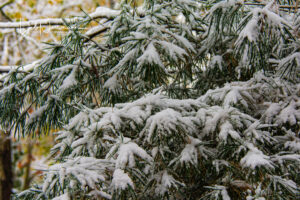
 “Close‑up of evergreen branches lightly covered in fresh snow, with green needles visible beneath the white layer. Soft autumn colors from distant trees appear blurred in the background, showing the transition from fall to early winter.”Central New England: Worcester, Prepare Thyself
Banner: Above‑average snowfall is expected across parts of the Northeast, the Appalachians, and higher elevations out west. But New England gets split into two zones:

  • Central New England: colder-than-normal temperatures
  • Southern/Coastal New England: milder breaks mixed in

The Almanac highlights a corridor from central New England down the Appalachians that will be colder than usual.

Balboa: I’m glad we don’t live in Worcester. I’m getting the shivers already.

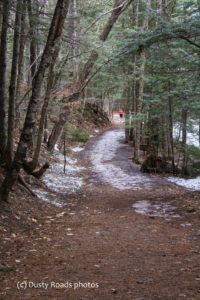
🌧️ Southern & Coastal New England: Slush Season Incoming “Snow‑dusted forest trail winding through tall trees with patches of snow on the ground. A person in a red jacket walks in the distance, surrounded by dense green foliage and soft winter light.”

Banner: Here in Southern New England, expect frequent mild breaks interrupting the cold — keeping coastal towns hovering right around freezing. Translation: More rain, sleet, and icy mix than clean, pretty snow.

Balboa: Great. Slush. My favorite. Nothing like stepping outside and instantly regretting every life choice.

🥶 The WMEO Bottom Line: Keep Everything Within Paw’s Reach

Banner: The Almanac’s advice for New Englanders? Keep your snow shovel, rain boots, and ice scraper close at hand. Sudden flips between cold rain, flash freezes, and heavy snow‑slush will define the season.

Balboa: Honestly, I think they’re tossing everything in so no matter what happens, they can say they “called it.” Classic.

🌴 WMEO Weather Desk Closing Thoughts (and a Tiny Key West Sigh)

Banner: So there you have it, New England — another winter is on the way. Cold, wet, unpredictable… basically the usual.

Balboa: mumbles while staring south on the map Key West is looking pretty good right about now.

Banner: quiet agreement Warm breezes… no slush… chickens instead of ice storms… Yeah. Key West is definitely looking good.

Balboa: Anyway — stay tuned, New England. Winter’s coming whether we like it or not.

Two cats pose as winter weather anchors at a WMEO 9 news desk. The orange tabby on the left wears a red scarf with a silver snowflake pin and sits beside a white ‘WMEO I ❤️ Weather’ mug. The black cat on the right sits next to a vintage brown suitcase with a ‘Key West or Bust!!’ sticker and a boarding pass sticking out. A microphone sits between them, and behind them a snowy weather map shows ‘Below‑Normal Colder’ and ‘El Niño’ regions with falling snow in the background.”

This has been a WMEO 9 Wather Update. You may  resume your regular scrolling. 

Ragweed Season


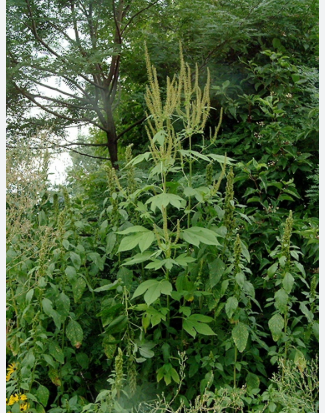
A tall green ragweed plant with spiky flower clusters standing among thick late‑summer vegetation.My Annual Allergy Showdown

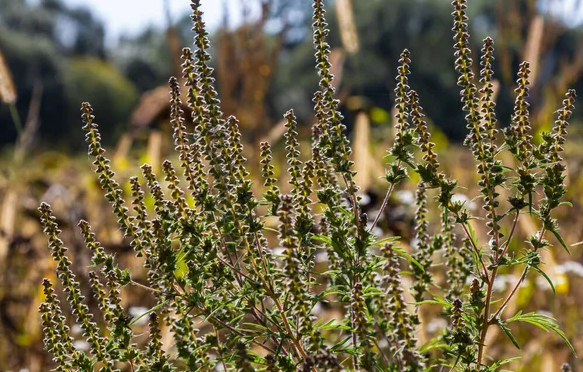
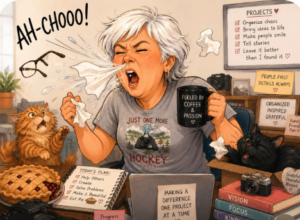
Ragweed season is creeping in again — not that it ever politely announces itself. One warm week, one good rain, and suddenly the air is full of tiny yellow pollen ninjas whose only mission is to make my eyes itch and my nose run. Every year I swear I’m going to write a poem about it, and this year? I finally did.

A Little Ragweed Poetry

Ragweed pops up after rain

like it’s been waiting for its cue.

My allergies go full Broadway—

sneezing in act one, itching in act two.

You’d think after all these years

we’d have reached some kind of truce—

but no, you come back stronger,

pollen with a point to prove.


A Ragweed Moment in the Wild

Just yesterday I was waiting for the Dial‑A‑Ride bus when out of nowhere I let out a sneeze — not a polite little ka‑choo, but a full‑body, from‑your‑toes‑to‑your‑eyebrows sneeze. The kind that echoes. The kind that makes strangers look up.

A man standing nearby said “God bless” and then started to laugh. All I said was, “Ragweed.” He understood immediately.

That’s the thing about ragweed season: it creates instant camaraderie among allergy sufferers. One word and you’re bonded by shared misery.

Why Ragweed Hits Hard in September

Ragweed may start in August, but September is when it really digs in its heels. It’s like it waits for Labor Day weekend to roll around and then says, “Showtime!” The kids go back to school, the pumpkin spice crowd wakes up, and ragweed decides to launch its annual attack.

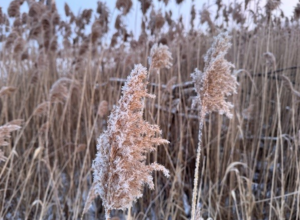
And if you’ve lived in New England long enough, you know the old rule: ragweed season ends with the first hard frost.

Except… we don’t get the hard frost when we used to. It’s that warmer weather — you know, from the climate change that doesn’t exist.

The season stretches longer now, creeping deeper into fall, and my sinuses are not amused. What used to be a few miserable weeks has turned into a full‑blown endurance test.

My Personal Ragweed History

I’ve been allergic to ragweed for as long as I can remember. It’s the one plant that can take me from “fine” to “why are my eyes leaking?” in under ten minutes. I can walk past a field of goldenrod without a single sniffle, but ragweed? One tiny puff of pollen and I’m done.

Every September I stock up on:

  • tissues
  • eye drops
  • antihistamines
  • and the eternal hope that maybe this year won’t be so bad

Spoiler: it’s always bad.

The Ragweed Reality Check

Ragweed doesn’t care if you have plans. It doesn’t care if you want to enjoy a crisp fall morning or take a walk without sneezing yourself into another dimension. It doesn’t care that you’ve already suffered through spring allergies and summer humidity.

It shows up, spreads its pollen like confetti, and dares you to complain.

So yes — I wrote a poem. Because if I’m going to be miserable, I might as well make it rhyme.

Here’s to Surviving Another Season

September 3 marks the unofficial start of my annual ragweed battle. I’ll be armed with tissues, tea, and a sense of humor. And maybe, just maybe, a hard frost will show up early this year and save us all.

But I’m not holding my breath. (Well… actually I am. Ragweed.)