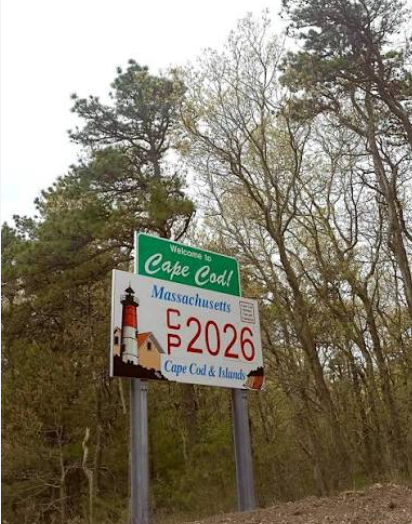
 Crossing the Bridge Into Cape Time
It’s summer in Massachusetts, and that means my brain automatically drifts east toward the Cape. Or Cape Cod for all of you visiting from away. Around here, we just say “the Cape,” and everyone knows exactly what we mean. We’re heading over the bridge—doesn’t matter if it’s Bourne or Sagamore—once you’re south of either one, you’ve officially crossed into Cape Time.
Lunch, Seals, and Fresh Catch
After weaving through the inevitable bridge traffic, the whole Cape opens up like a choose‑your‑own‑adventure book. One of my favorite early stops is Chatham Pier Fish Market. I swear, nothing tastes more like summer than fresh fish eaten with the sun on your shoulders and gulls arguing overhead. The fishing boats unload right in front of you, the seals pop up hoping for snacks, and I’m sitting there humming “Yummy Yummy Yummy” because yes—I’ve got fresh catch in my tummy and a whole day ahead of me.
Heading Into the National Seashore
With lunch behind me, I can wander anywhere along the Cape Cod National Seashore. Miles of dunes, beaches, and history—yes, history. Cape Cod isn’t all sun and sand and sharks. It played a very real part in developing the wireless technology we rely on every single day.
Marconi Beach: Where Wireless Communication Was Born
A Little Science, A Little Drama
Guglielmo Marconi built the world’s first successful wireless transmitter—basically the ancestor of every text message you’ve ever sent. Thanks to his invention, the RMS Carpathia heard the Titanic’s SOS and raced to help, saving more than 700 people. Not bad for a guy tinkering with radio waves.
Why Cape Cod?
To send signals across the Atlantic, Marconi needed stations positioned just right. He built them in Poldhu, England; Glace Bay, Nova Scotia; and—surprise—South Wellfleet, Massachusetts. Yes, right here on the Cape. On January 18, 1903, the South Wellfleet station made history by completing the first two‑way wireless communication between Europe and America. Before long, ship‑to‑shore messages became big business. You could send a social note or a business update for fifty cents a word, which makes today’s texting bills look pretty good.
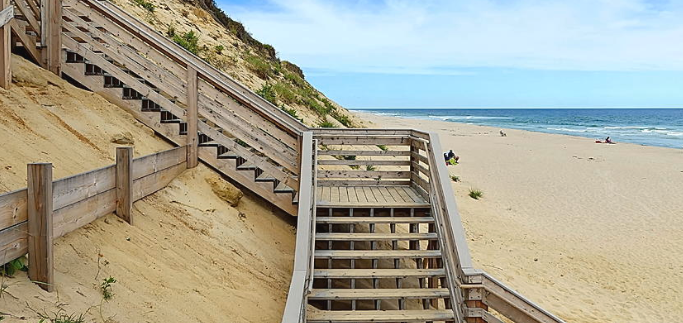
Cape Cod: The First “Voice of America”
For about fifteen years, the South Wellfleet station was the powerhouse of North American wireless communication. Skilled telegraphers tapped out messages at about seventeen words a minute, and the station—known by its call sign “CC” for Cape Cod—became the unofficial voice reaching out across the ocean.
Erosion, War, and the End of an Era
Nothing on the Cape stays still for long, especially the coastline. The cliff under Marconi’s station was eroding at roughly three feet a year, inching the towers closer to disaster. By 1917, with World War I underway and new technology replacing spark‑gap transmitters, the Navy shut the station down for security reasons. It never reopened, and by 1920 the whole operation was dismantled.
What Remains Today
Most of the original site has been claimed by the Atlantic—those cliffs don’t play around. But the surrounding land is protected as part of the Cape Cod National Seashore. If you stand on the bluff on a cold winter day, looking out over the ocean, it’s easy to imagine the crackle of early radio signals leaping across the waves. This quiet stretch of coastline is where global wireless communication truly began.
Share this:
- Share on Tumblr (Opens in new window) Tumblr
- Print (Opens in new window) Print
- Share on X (Opens in new window) X
- Share on Facebook (Opens in new window) Facebook
- Share on Pinterest (Opens in new window) Pinterest
- Share on Reddit (Opens in new window) Reddit
- Share on LinkedIn (Opens in new window) LinkedIn