Fall in New England Means One Thing: Apple Season

 A New England apple orchard with rows of trees full of ripe red apples, green grass between the rows, and a soft, partly cloudy sky overhead.

Welcome to Peak Apple Season in New England
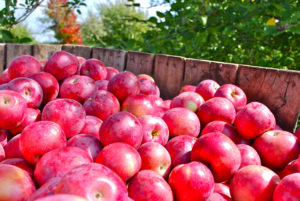
A wooden bin filled with freshly picked red apples, with green orchard trees in the background.You gotta love Fall in New England. The gardens may be past their prime — no more tomatoes, cucumbers, or carrots — but the squash and zucchini are still hanging in there. And now the other seasonal stars have moved in to take over. I’m talking about cranberries and apples.

Apple orchards are everywhere in New England, so crisp fresh apples are in abundance, whether you’re picking your own, stopping at a farm stand, or just walking into your local grocery store. With that in mind, I thought this would be the perfect time to revisit one of my favorite fall recipes.

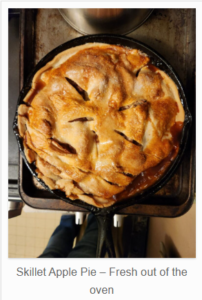
I learned this one last year. Before that, I made it in a regular old pie pan, but being the cast‑iron fanatic that I am, when I found a skillet version I had to try it — and oh my, what a success. So back by popular demand is my Easy Skillet Apple Pie. Yes, I cheated and used refrigerated pie dough, and yes, it still came out amazing.

Easy Skillet Apple Pie

Ingredients:

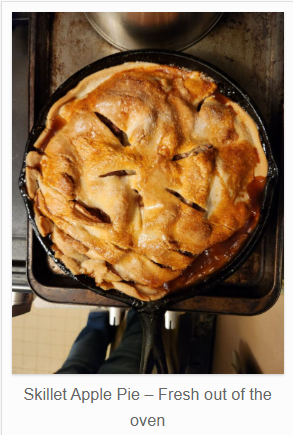
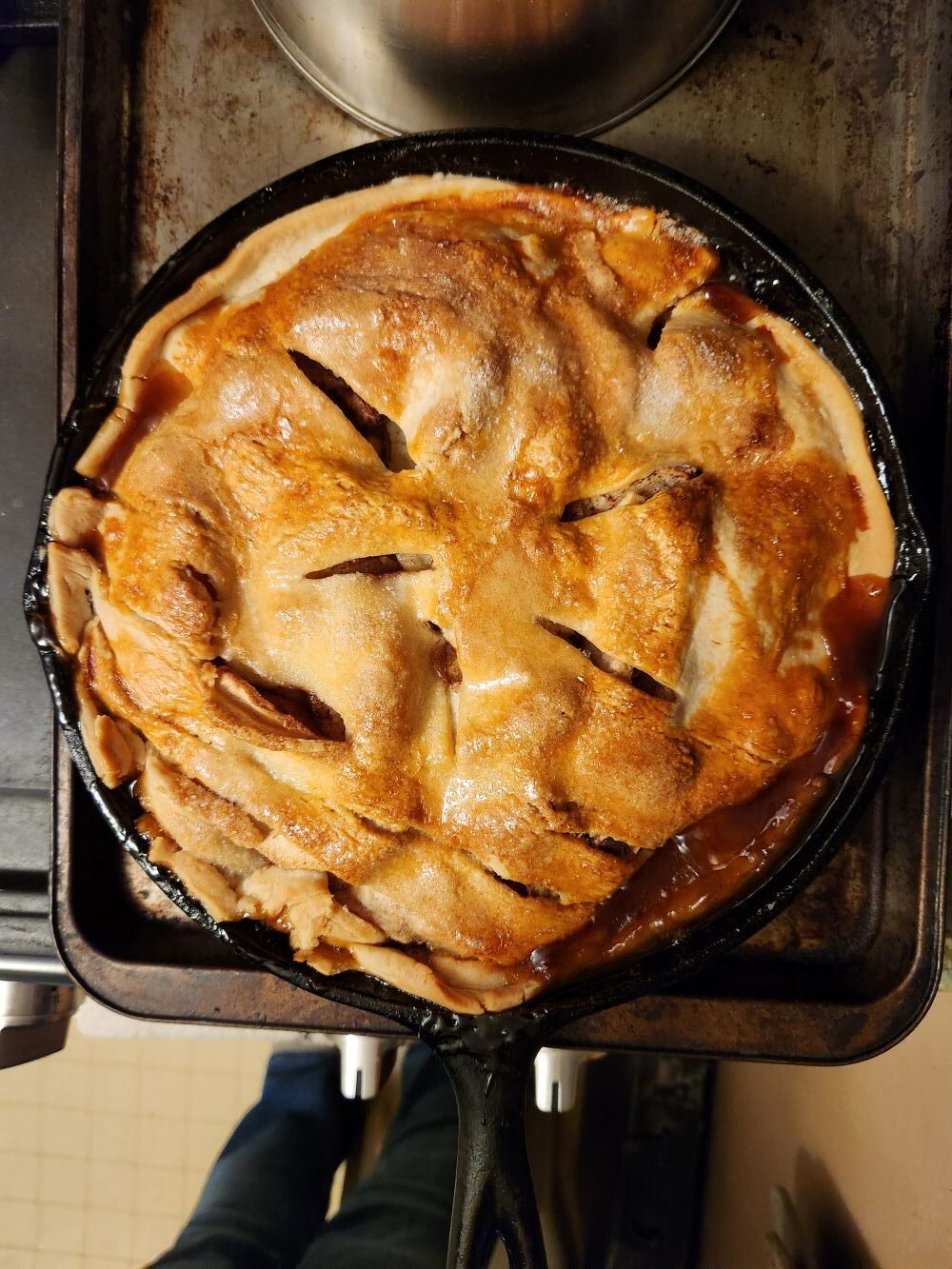
  • 2 lbs. Granny Smith applesA golden‑brown apple pie baked in a cast iron skillet, with slits in the top crust and bubbling filling around the edges.
  • 2 lbs. Braeburn apples (I used McIntosh)
  • 1 tsp ground cinnamon
  • ¾ cup granulated sugar
  • ½ cup butter
  • 1 cup firmly packed brown sugar
  • 1 (14 oz) package refrigerated pie crust (2 crusts)
  • 1 egg white
  • 2 Tbsp granulated sugar
  • Ice cream or sharp cheddar cheese (optional)

A golden‑brown apple pie in a round baking dish with a slice removed, showing the warm fruit filling inside.Directions

Step 1: Prepare the Apples Preheat oven to 350°F. Peel apples and cut into ½‑inch wedges. Toss with cinnamon and ¾ cup granulated sugar. Set aside.

Step 2: Prepare the Crust Melt butter in a 10‑inch cast iron skillet over medium heat. Add brown sugar and stir constantly for 1–2 minutes until dissolved. Remove from heat and place one pie crust over the brown sugar mixture.

Step 3: Add the Filling Spoon apple mixture evenly over the crust.

Step 4: Add the Top Crust Top with the second pie crust. Whisk egg white until foamy and brush over the top. Sprinkle with 2 Tbsp granulated sugar. Cut 4–5 slits in the top to allow steam to escape.

Step 5: Bake Bake at 350°F for 1 hour to 1 hour 10 minutes, or until golden brown and bubbly. Shield with foil during the last 10 minutes if needed to prevent over‑browning. Cool on a wire rack for 30 minutes before serving.

Serve with ice cream or a slice of sharp cheddar cheese.
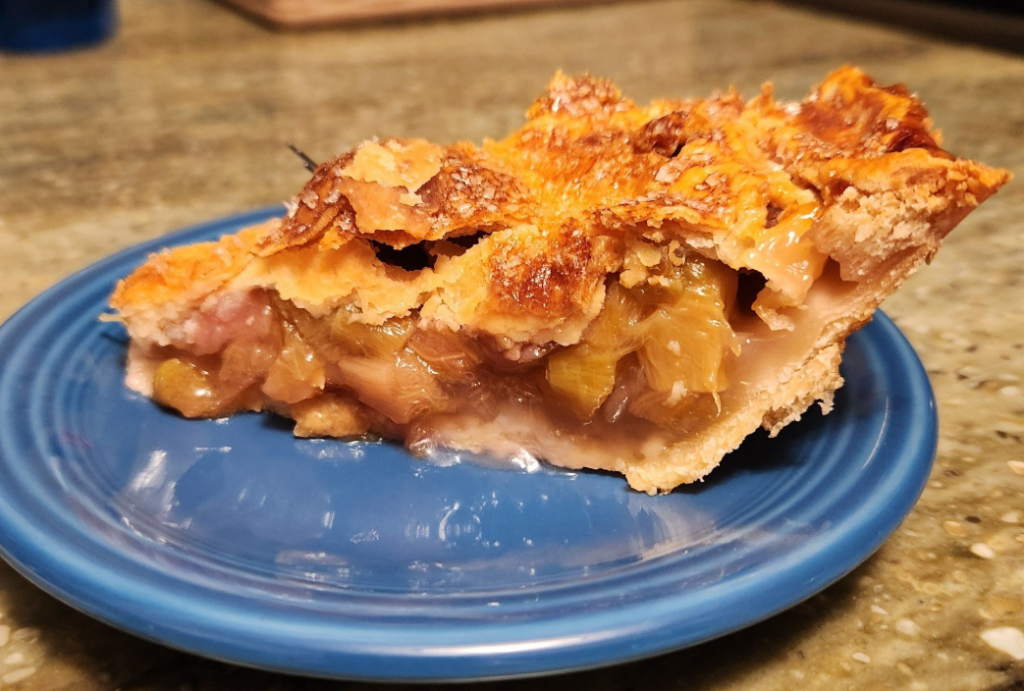
A slice of fruit pie with a golden, flaky crust on a blue plate, showing the warm, juicy filling inside.

Notes & Tips

  • Use a drip pan or line the bottom of your oven with foil — this pie will bubble over, and cleanup without protection is no fun.
  • Surprisingly, the tougher refrigerated crust holds up beautifully against the gooey filling.

Now I’m stuck with a delicious 10‑inch apple pie. Guess I’ll just have to take one for the team. I’m going to enjoy every bite — and I hope you do too.


A Little Cast Iron Review

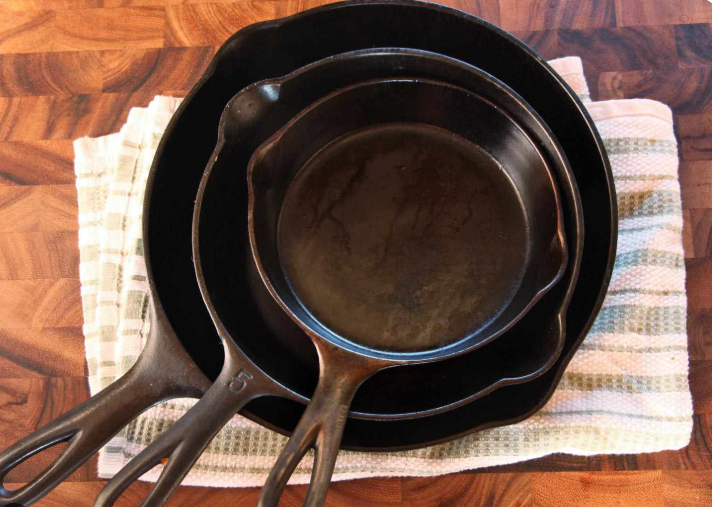
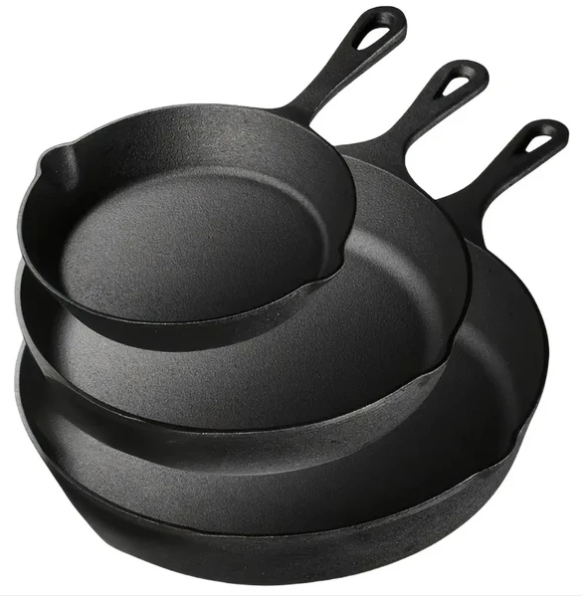
Three cast iron skillets of different sizes stacked inside one another on a striped kitchen towel resting on a wooden countertop.

Cast Iron Care: A Simple, Honest Guide

Good morning, my friends.

It’s time for a little cast‑iron cooking review. We’ve talked about cast‑iron cookware and how to care for it before, but there are always more questions. I’m no expert, but I am a die‑hard cast‑iron lover. I’d say 90% of my meals are made in a cast‑iron skillet, so I’ve learned that proper care is the difference between a kitchen workhorse and a rusty headache. And trust me — I’ve ruined more than one skillet over the years through neglect or pure stupidity. The good news? With patience and elbow grease, I’ve restored every single one.

So let’s talk about that humble hero of the kitchen: the cast‑iron skillet.

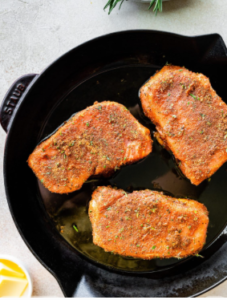
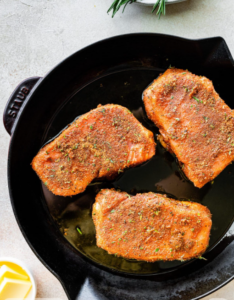
  Three seasoned pork chops arranged in a black cast‑iron skillet, coated with a reddish-brown spice rub and ready to cook, with a sprig of rosemary nearby on a light surface.

Seasoned Pork chops ready for frying

Choosing Your Skillet

I have a full set — from a tiny 6‑inch up to a hefty 12‑inch — but my favorites are my two 9‑inch skillets. They’re smooth, glossy, nonstick, and easy to clean… but that finish didn’t happen overnight.

If you’ve just bought a shiny silver cast‑iron pan, or someone gifted you one, please don’t cook with it yet. And whatever you do, don’t scrub it to “keep the shine.” That shine is actually bare metal, and it needs seasoning before it becomes usable.

If you’re restoring an old, rusted, dinged‑up pan, you’ll also need to scrub it down to the base surface. It won’t look shiny, but it will smooth out, and the rust will come off.

Seasoning: The Step You Cannot Skip

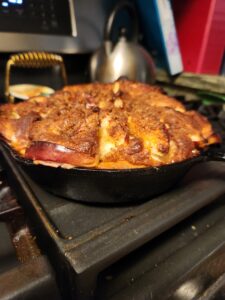
A golden, puffed‑up apple pancake baked in a black cast‑iron skillet on a stovetop, with crisp edges and a risen center, surrounded by everyday kitchen items in the background.

High Rise (puff) apple Pancake

Seasoning is what creates that beautiful nonstick surface. It’s the step most people try to skip — but don’t. If you want a pan that lasts forever, this is where the magic happens.

Gather your tools: Water, soap, a scrub brush, steel wool, and a neutral cooking oil.

Yes, soap. Yes, water. and yes, even steel wool. You’re starting fresh.

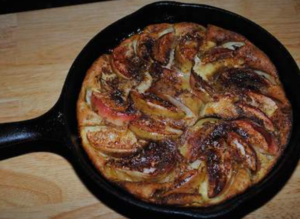
A classic Bickford‑style apple pancake baked in a black cast‑iron skillet, with thin apple slices arranged in a circular pattern over a golden, custardy base and lightly dusted with cinnamon and sugar.

Bickford’s‑style baked apple pancake

Step 1: Clean the Skillet

If you just used it, let it cool, rinse with warm water, and wipe out any food bits.

If you’re restoring an old skillet, get ready to work. This is where the steel wool comes in. Scrub until the rust is gone and the surface feels even.

Step 2: Scrub Thoroughly

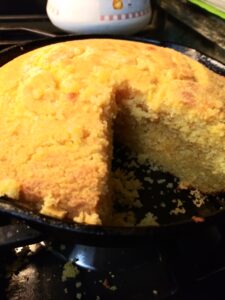
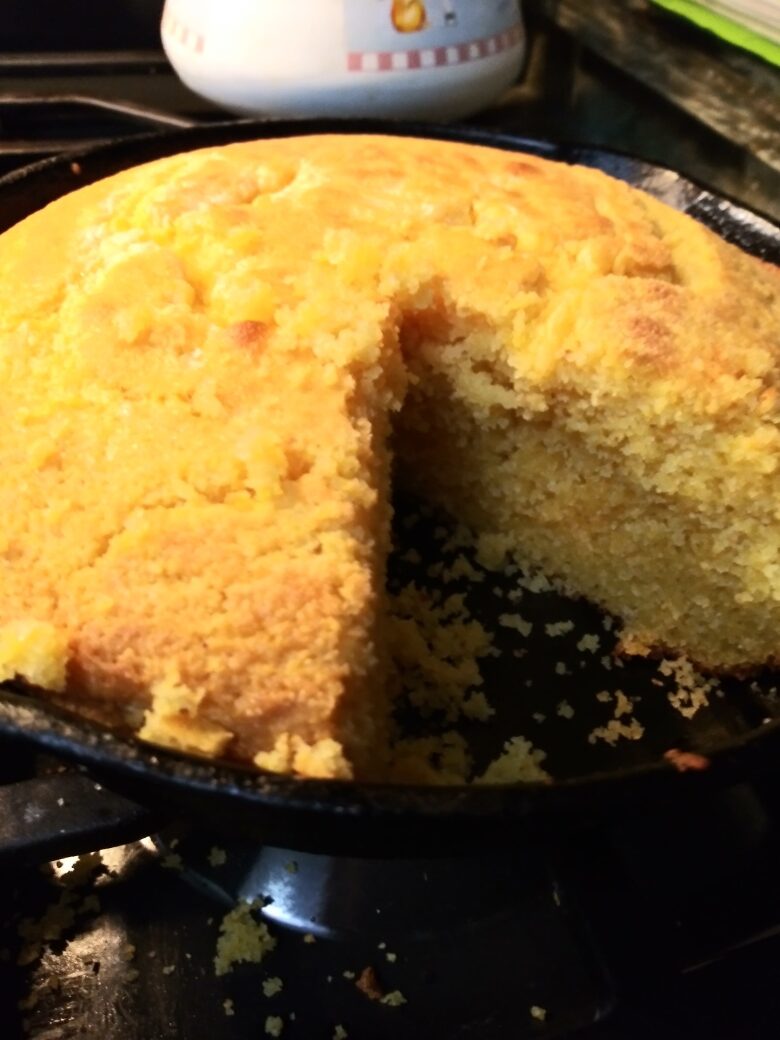
  Golden cornbread baked in a black cast‑iron skillet, with a large wedge cut out to show its moist, crumbly interior, sitting on a stovetop.

Skillet Corn Bread

Use warm, soapy water and your scrub brush to remove stubborn bits. Use steel wool for anything that feels gritty or raised. You want the surface smooth — no sandpaper texture. Rinse well.

Step 3: Dry It Completely

Dry every inch of the skillet — the cooking surface, the sides, the handles, the bottom. Cast iron rusts fast, and moisture is the enemy. I use paper towels and make sure it’s bone‑dry.

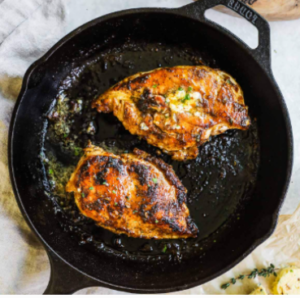
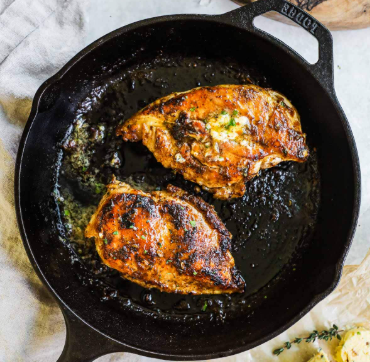
  Two golden, oven‑roasted chicken breasts resting in a black cast‑iron skillet, lightly browned with melted butter and herbs, set on a cloth-covered countertop.

Oven Roasted in cast iron pan chicken breast

Step 4: Oil the Pan

Add a drop or two of neutral oil. Wipe it around the entire pan and wipe off any excess. Too much oil will puddle, get sticky, and send you right back to Step 1.

I put the oil directly on the paper towel so I can control the amount.

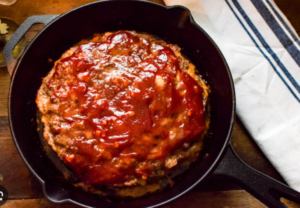
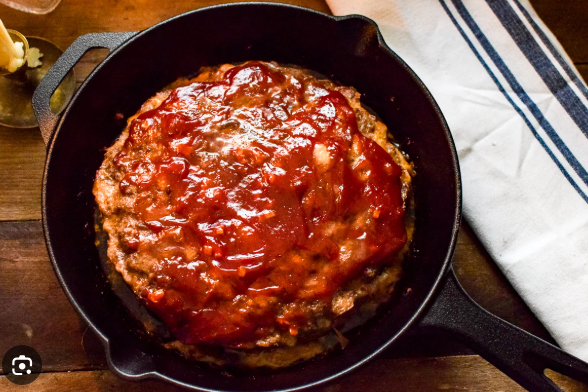
A freshly baked meatloaf in a black cast‑iron skillet, topped with a glossy red ketchup glaze, resting on a wooden surface beside a striped kitchen towel.Step 5: Heat It — Two Different Ways
For Maintaining a Seasoned Skillet

Set your oven to 200°F. Place the lightly oiled skillet face down on the center rack with a drip pan underneath. Heat for 30–40 minutes. This sets the oil and removes any lingering moisture.

For Building a New Seasoning Layer

If your pan is brand new or freshly stripped, you need a strong base layer.

Set your oven to 450–500°F. Bake the pan for 1 hour, then let it cool in the oven. You may need to repeat this a few times until the surface turns dark, smooth, and slightly glossy. You’ll see the difference — it becomes slippery, slidey, and wonderfully nonstick.

Cooking With Cast IronA golden, freshly baked apple pie in a black cast‑iron skillet, with a flaky crust and steam vents on top, resting on a stovetop.

I make everything in my skillets — pies, apple pancakes, roast chicken breasts, meatloaf. I fry, bake, and sauté.

The one thing I don’t make is tomato sauce. Experts say you can, just don’t let it sit in the pan. The acid can damage the seasoning you worked so hard to build. I’ve learned that lesson the hard way.

But for almost everything else? Cast iron is unbeatable. My skillet apple pie is legendary, and I wouldn’t dream of making an apple pancake in anything else.

A Final Thought

Remember, you’re seasoning your skillet every time you cook. Many pans come “pre‑seasoned,” meaning the manufacturer started the process for you. You can cook with them right away, but good maintenance will keep that seasoning building. But always check the packaging to be sure.

Be patient. Once you develop that seasoned base, treat it kindly and your skillet will be your friend forever. Maybe someday your grandkids will still be using it in their own kitchens.

And you know… I haven’t tried baking a cake in a cast‑iron skillet yet — but maybe I should. If pies and cornbread come out this good, a cake might be my next great adventure.

A freshly baked pepperoni pizza in a black cast‑iron skillet, with a golden crust and melted cheese, sitting on a light cloth beside a metal pizza cutter


To Deep Fry or Not to Deep Fry

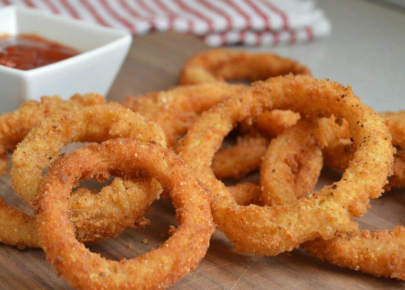
Golden, crispy onion rings piled on a wooden surface with a small dish of red dipping sauce in the background.”

Onion Rings & Other Adventures

I almost never deep fry anything, but the craving for onion rings hit hard this week. So I broke down, hauled out my trusty cast‑iron skillet, clipped a deep‑fry thermometer to the side like I knew what I was doing, and went for it.

They were pretty good — crisp, golden, and absolutely worth the trouble. The only downside? By the time I was done, the oil looked like a snow globe full of batter crumbs. Since I fry with Crisco, I had to strain it before it cooled or it would turn back into a solid brick. I remembered my mom straining hers through cheesecloth, which sent me on a whole mental scavenger hunt wondering where people even buy cheesecloth these days. (Answer: apparently everywhere except my kitchen.)

And now, a brief report from the Feline News Desk at WMEW — All Meow, All the Time:

Banner: “We observed the frying operation from a safe distance. The sizzling noises were concerning, but we remained brave.”

Balboa: “I would like to formally request onion rings be added to the treat rotation.”

Rocky (retired, reporting from the Rainbow Bridge editorial suite): “Deb, next time take pictures. The readers deserve visual proof of this chaos.”

No photos this time — just a craving, a skillet, and two cats who think they’re culinary experts.


Rediscovering Pork Chops: A Cast Iron Success Story


A Budget-Friendly Find at Hannaford

Hannaford had pork chops on sale this week. They also had sirloin steak on sale — and it looked beautiful — but even with the discount, one steak would have blown my entire food budget. Meanwhile, I could get eight center‑cut pork chops for seven dollars. As much as I love a good steak, the better value was pretty obvious.

My Complicated History with Pork Chops
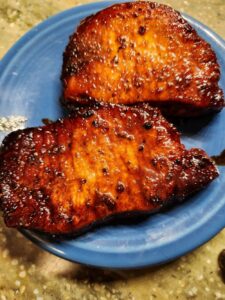
Here’s the thing: I’m not usually a pork chop person. I like pork, I love ham, but I’ve only had one pork chop recipe in my life that I’d rate five stars — a slow‑cooker recipe. Growing up, we ate pork chops often, always pan‑fried with lots of salt and pepper, and they always seemed tough. So I’ve never gone out of my way to cook them.

Could Cast Iron Save the Day?

But then I remembered how beautifully the cast iron chicken breast recipe turned out. That got me wondering… could I use the same method for pork chops?

I had a simple three‑ingredient recipe saved — the kind you bake in a foil‑covered dish — and I thought I might be able to adapt it to cast iron. And once I started, I decided it needed a gravy too. Egg noodles were already on the menu, so why not go all in.

A Major Success

Let me tell you: this was a winner.

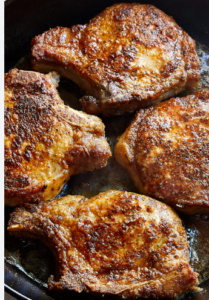
The whole meal came together fast. The noodles cooked while the chops finished in the oven, and the gravy took maybe five minutes — probably less, but I didn’t time it because I was too busy tasting it. The chops came out tender and moist, with that brown‑sugar‑Italian‑herb glaze that tastes like you fussed way more than you did.

And the gravy… oh my. So yummy.

Cleanup was a breeze too. The cast iron pan wiped right out — no sticking at all, even with the brown sugar.

I have a whole new outlook on pork chops now.


Cast Iron Italian‑Rub Pork Chops (with Easy Pan Gravy)

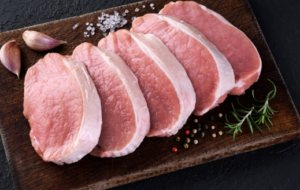
Boneless, center‑cut, about ¾‑inch thick

Bonless Center cut poek chops are the feature of this dish

Ingredients

Pork Chops

  • 4 boneless center‑cut pork chops (¾‑inch thick)
  • 1 packet dry Italian dressing mix
  • 2–3 tbsp brown sugar
  • 1–2 tbsp oil (for the pan)

Gravy

  • Drippings from the pan
  • 1 tbsp butter (optional)
  • 1–2 tbsp flour
  • ¾–1 cup chicken broth
  • Optional: splash of cream or milk
  • Pepper to taste

Instructions

1. Season the Pork

Mix the Italian dressing mix and brown sugar. Pat the pork chops dry and coat them on all sides.

2. Sear in Cast Iron

Heat a cast iron skillet over medium‑high and add a thin film of oil.
Sear the chops 1–1½ minutes per side until lightly browned.

3. Finish in the Oven

Transfer the skillet to a 400°F oven.
Bake 8–12 minutes, depending on thickness.
Remove when the internal temperature reaches 140–145°F and let rest 5 minutes.


Make the Gravy

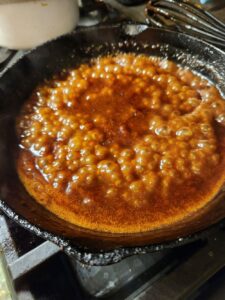
The gravy hits all the right notes and gets to simmer quickly

simmering gravy

  1. Remove the chops to a plate.
  2. Keep the skillet over medium heat.
  3. Add 1 tbsp butter if the drippings look sticky or sparse.
  4. Sprinkle in 1–2 tbsp flour and whisk to form a roux.
  5. Slowly whisk in ¾–1 cup broth until smooth.
  6. Scrape up all the browned bits.
  7. Simmer 2–3 minutes until thickened.
  8. Adjust seasoning with pepper or a splash of cream.

Serving Notes

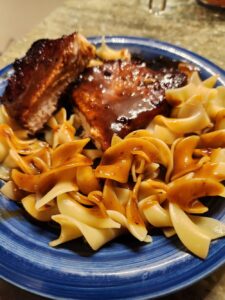
  • Spoon the gravy over egg noodles and let it run onto the pork chops.
  • Add parsley if you want a little color.
  • Leftovers reheat beautifully.


Let Me Know If You Try It

If you give this recipe a try, I’d love to hear how it turned out for you. Did the gravy win you over too? Leave a comment and let me know — I’m always curious how these cast iron experiments work in other kitchens.


Cast Iron 101: Easy Care for a Hard‑Working Pan

Skillet Deep Dish Pizza (Pepperoni of course)


Skillet apple pies look as good as they taste

Skillet apple Pie

Cast Iron Care: What Every Skillet Lover Should Know

If you’ve followed my recipes for more than five minutes, you already know I’m a cast‑iron girl through and through. Skillet pizzas, cornbread, seared chicken, cobblers — if it can be cooked, it’s probably been in my pan.

And because I use mine so much, I get a lot of questions about how to care for cast iron. So let’s talk about what actually matters, what’s just old folklore, and the one thing you should never do… which I learned the hard way. (Twice, actually — but we’ll get to that.)


🥘 Myth: Cast Iron Is Delicate

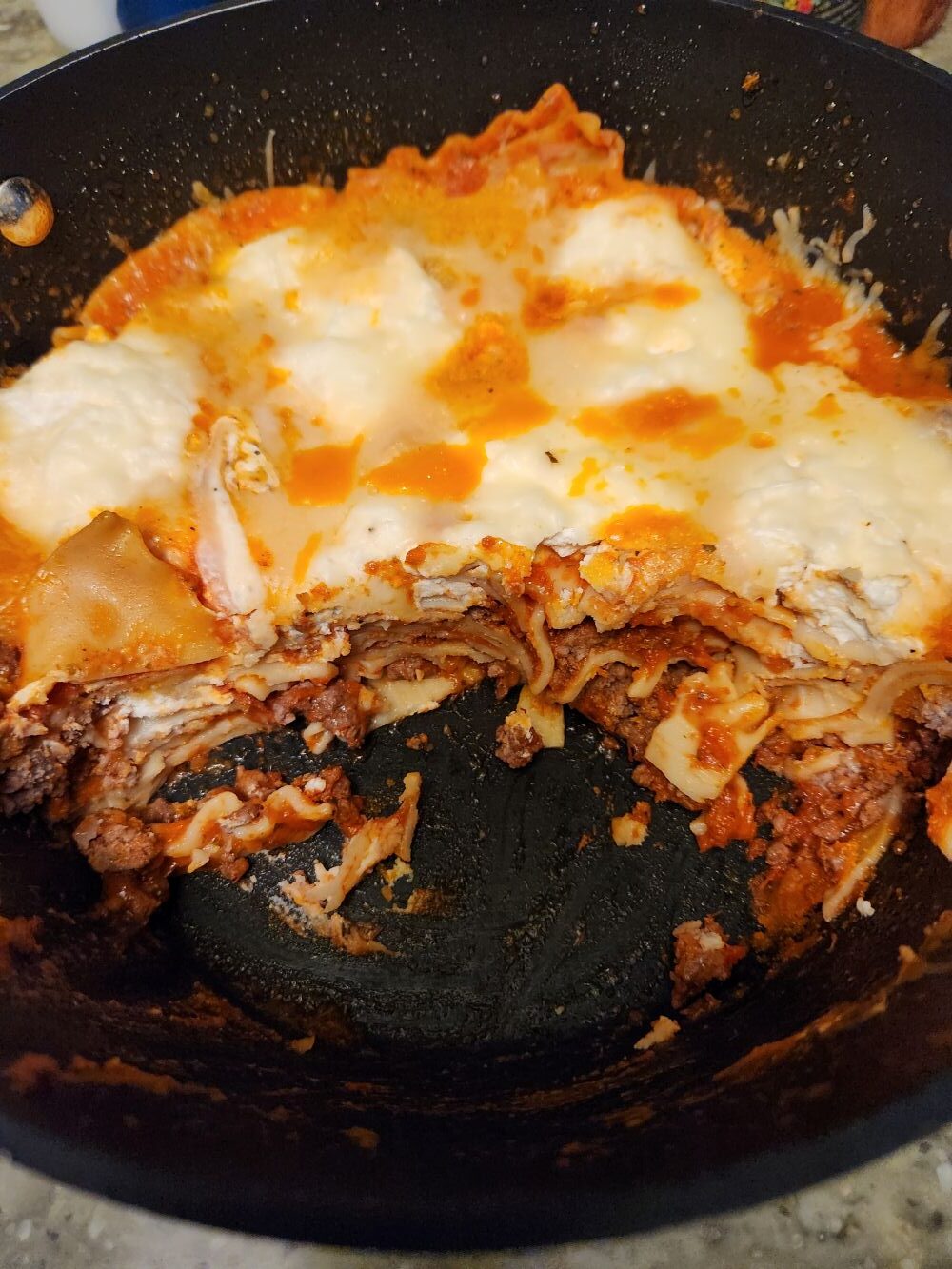
Skillet Lasagna

Reality: It’s basically indestructible.

Cast iron is iron — heavy, tough, and built to outlive us all. I have pieces that have survived generations, yard sales, rust, and one dramatic move where a skillet somehow ended up in a snowbank.

And speaking of snowbanks… once upon a time, a well‑meaning roommate overheated oil, panicked when it caught fire, and launched my cast‑iron pan — still flaming — straight into a drift outside. The pan survived. My blood pressure? Less so.

If that doesn’t prove cast iron’s durability, nothing will.


🧼 Myth: You Can’t Use Soap

Reality: You absolutely can.

A little mild soap won’t hurt your seasoning. That polymerized layer is bonded to the metal — it’s not going to wash off with a drop of dish soap.

If you’re worried about lingering flavors, a quick baking‑soda scrub (2 parts baking soda, 1 part water) neutralizes odors without harming the surface.

Skillet Meat Loaf ( My absolute favorite)


🍅 Myth: Acidic Foods Will Ruin It

Reality: Short cooks are fine.

A quick pan sauce with wine? Totally okay. A tomato‑heavy braise simmering for hours? Maybe choose another pot. But everyday cooking won’t hurt a well‑seasoned skillet.


🔥 How to Season Your Skillet (The Simple Way)

  1. Wash with hot water (and soap if needed).
  2. Dry completely — water is the real enemy.
  3. Rub on a tiny amount of neutral oil.
  4. Wipe it out until it looks like you wiped it all off.
  5. Heat it until it just begins to smoke.
  6. Cool. Repeat if you want a deeper layer.

The more you cook, clean, dry, and lightly oil it, the better it gets.


🧽 How to Clean Cast Iron After Cooking

  • Remove food bits (soap is fine). (or scrub with salt)
  • If the flavor was strong, give it a baking‑soda scrub.
  • Rinse and dry thoroughly.
  • Add a whisper of oil, wipe it out, and warm it for a minute.
  • Store with a paper towel between pans if stacking.

❌ The One Thing You Should Never Do

Put it in the dishwasher.

Ask me how I know.

That same helpful roommate once tossed one of my favorite skillets into the dishwasher thinking they were doing me a favor. It came out gray, dull, and rough — like it had aged 40 years in one cycle. I’ve re‑seasoned it multiple times, and while it’s usable, it has never quite returned to its pre‑dishwasher glory.

Between the flaming‑snowbank incident and the dishwasher debacle, I’ve learned one thing:
Cast iron can survive almost anything… but your roommates might not.

Skillet Corn Bread


❤️ Final Thoughts

Cast iron isn’t fragile. It’s a workhorse. Use it for sweet, savory, and everything in between. Clean it, dry it, oil it lightly, and keep it out of the dishwasher. Treat it well, and your grandchildren will still be flipping pancakes in it someday.

Skillet Roast Chicken Breasts