🌳 Saying Goodbye to a Living Legend
It’s always sad when someone — or something — passes away. We humans understand that our time on this earth is finite. We lose loved ones, we lose pets, from the humble goldfish to the faithful dog or cat who leaves a hole in our hearts.
But how often do we stop and think about the other living things around us?
The ones that stand quietly, century after century, asking nothing from us except space and sunlight?
 Trees, Time, and Childhood Imagination
Trees are surprisingly long‑lived. When I was growing up, I had quite the imagination. I can still remember debating with my next‑door neighbor about whether fairies were real. Oh, how I wanted them to be — delicate little beings with shimmering wings, flitting among the flowers.
And that brings me back to the trees.
I always imagined the fairies living in the woods, tucked into the roots and branches. I wondered what stories the trees could tell if they could talk. The giant sequoias, for example, have been alive since the time of the dinosaurs. They’ve watched humanity grow and evolve — from four legs to two, from naked wanderers to suits, ties, and haute couture.
Which brings me to the subject of today’s post.
Who Was Old Major?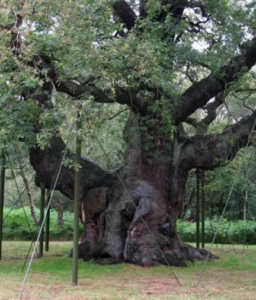
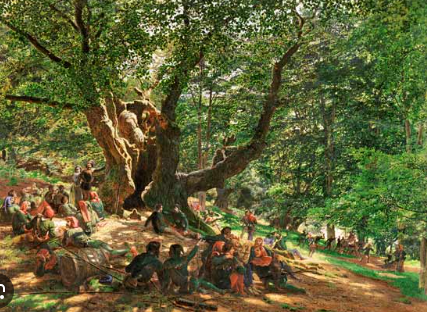
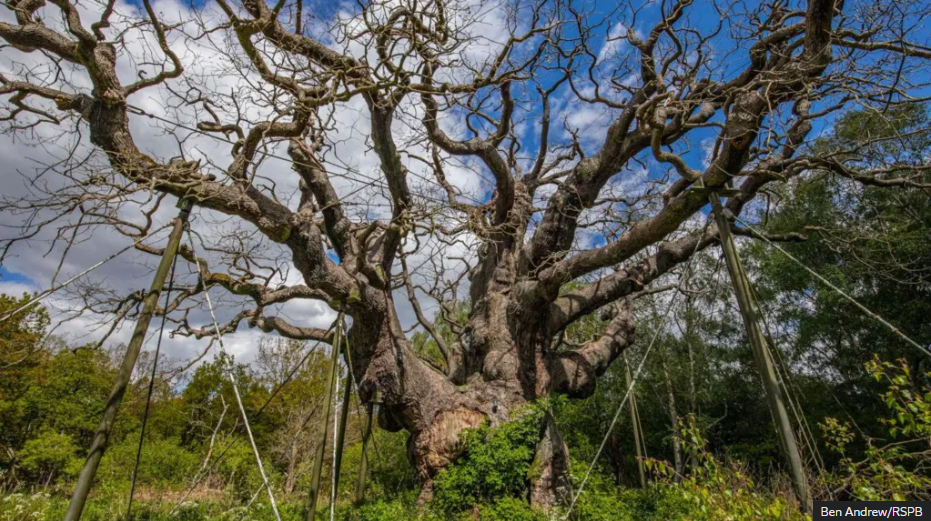
Old Major was an oak tree — a giant of a tree — estimated to be between 800 and 1,000 years old. He was a character in the Robin Hood legend, already ancient even in those stories. According to folklore, he sheltered Robin and his Merry Men inside his hollowed‑out trunk.
That’s what old oaks do. They grow and grow, and as they age, they begin to hollow out. Old Major was already entering his twilight years when Robin supposedly hid inside him. But he still had life left to give.
A Sentinel of Sherwood Forest
I don’t know how thick Sherwood Forest was in Robin’s time, but today Old Major stood alone — a massive sentinel in the clearing, drawing Robin Hood fans from around the world. He was the kind of tree you don’t just look at; you feel him.
Sadly, the old man of the forest has finally passed on.
The Final Spring
This spring, no leaves burst forth on any of his branches.
The horticulturists watched and waited, but no sap ran beneath the bark.
Old Major, the Robinhood Tree was dead. His long life had finally come to an end.
I don’t yet know what, if anything, is planned to memorialize Old Major. Sometimes new trees are grown from the acorns of the fallen, allowing another generation to begin. Perhaps that will be his legacy.
What Brought Him Down?
The usual things:
- Age
- Poor soil conditions
- And the big one: climate change
Ancient trees like Old Major evolved in a stable climate. The rapid changes of the last 50 years have hit these elders hard — hotter summers, sudden storms, droughts, and unpredictable temperature swings.
Even giants have limits.
A Life That Spanned Centuries
No matter the cause, it’s still hard to say goodbye to something that began life in Medieval England. Old Major survived:
- The Black Death
- The Industrial Revolution
- Two world wars
- The rise and fall of countless monarchs
And along the way, he became a character in a legend.
Not many living things can claim that.
A Final Farewell
So we say goodbye to Old Major — not just a tree, but a witness to history, a keeper of stories, and a quiet companion to generations who walked beneath his branches. He stood through plagues and wars, through kings and commoners, through centuries of change that would have bewildered the world he was born into.
In the end, he reminds us that even the oldest giants must eventually rest. But what a legacy he leaves behind: a place in legend, a place in memory, and a reminder that the living world around us has its own tales to tell, if only we pause long enough to listen.