How a Lost Cargo Became a Scientific Treasure Map
Every so often, the ocean hands us a story so strange and delightful that it sounds like fiction. The Great Rubber Duck Spill of 1992 is one of those tales — a mix of accident, adventure, and unexpected scientific discovery.
A Storm, a Ship, and 28,800 Floating Toys
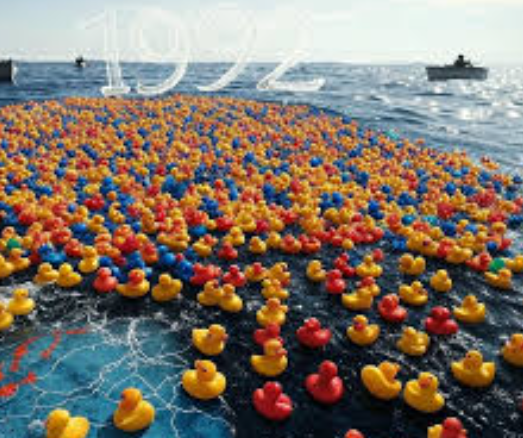
On January 10, 1992, the cargo ship Ever Laurel was crossing the North Pacific when it hit a powerful storm. Twelve containers went overboard, and one of them burst open, releasing 28,800 plastic bath toys into the sea. These weren’t just yellow ducks — the shipment included blue turtles, green frogs, and red beavers.
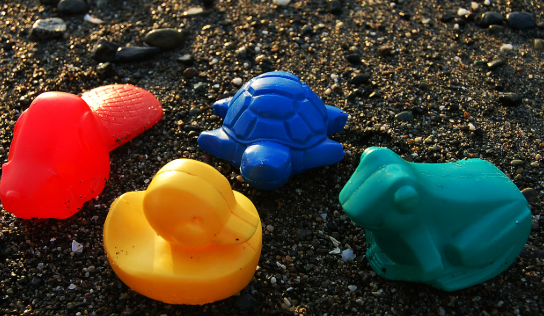
Because the toys had no holes, they didn’t sink. Instead, they bobbed along the surface, ready to drift wherever the currents carried them.
Why Scientists Paid Attention
Oceanographers quickly realized this spill was more than a quirky headline. It was a rare, real‑world experiment: thousands of identical floating objects released at a single point in the ocean. By tracking where the toys washed ashore, scientists could trace the movement of surface currents with surprising accuracy.
The toys became bright, plastic breadcrumbs that revealed how water circulates across the globe — especially in the vast, looping systems known as gyres.
What Exactly Is a Gyre?
A gyre is a massive, slow‑moving swirl of ocean currents, often spanning thousands of miles. Picture a gentle, continent‑sized whirlpool created by wind, Earth’s rotation, and the shape of the ocean basins. The Pacific has several major gyres, and many of the toys became trapped in these loops, circling for years before escaping or freezing into Arctic ice.
A Legacy Still Washing Ashore
Over the decades, sun‑bleached ducks and their colorful companions have appeared in Alaska, Hawaii, Japan, New England, and even the shores of the UK. Each one is a tiny reminder of how connected our oceans truly are — and how far a little plastic traveler can roam.
If you ever spot a weathered duck on a distant beach, you might just be meeting one of the world’s most famous accidental explorers.