Old Cape Cod: From Sand Dunes to Shark Apps
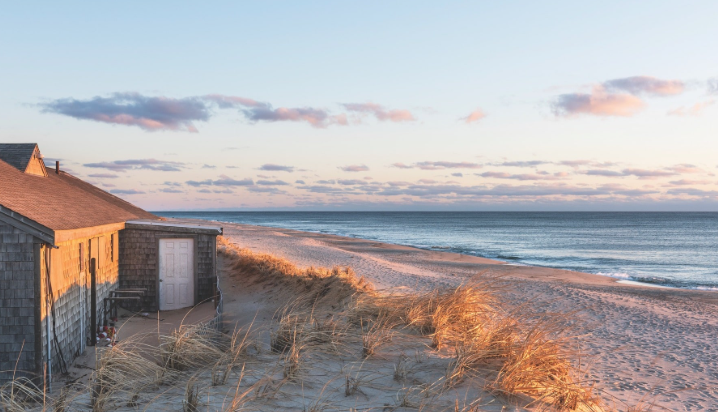
If you’re fond of sand dunes and salty air,
Quaint little villages here and there…
You’re sure to fall in love with old Cape Cod.
Patti Page sang those words in 1957, and the song didn’t just become a hit — it reshaped the Cape’s identity. That gentle, dreamy portrait of a sleepy peninsula helped launch Cape Cod into the national imagination. Tourists followed, then developers, and before long those “quaint little villages” gave way to strip malls, big‑box stores, and summer traffic that can test the patience of a saint.
But one thing never changed: the beaches. Crowded or not, they’re still the Cape’s heartbeat. And if we take a little walk through time, we can see just how much this place has transformed since Patti Page made musical history.
A Peninsula Born of Ice
Cape Cod is a hooked, sandy arm stretching 65 miles into the Atlantic — the leftover handiwork of the last Ice Age. It’s narrow in some places, wide in others, bordered by Cape Cod Bay, Buzzards Bay, and the waters of Vineyard and Nantucket Sounds. For centuries, life here revolved around the sea.
Nantucket, in particular, was once the whaling capital of the world. From the late 1600s through the mid‑1800s, whaling was its lifeblood. But as regulations tightened and the industry declined, Nantucket reinvented itself as a quiet retreat for the wealthy — a transformation that still defines the island today.
Preserving the Cape
On the mainland, conservation took center stage. In 1961, the federal government created the Cape Cod National Seashore, protecting miles of shoreline from development. Monomoy National Wildlife Refuge followed, safeguarding critical habitat for birds and marine life.
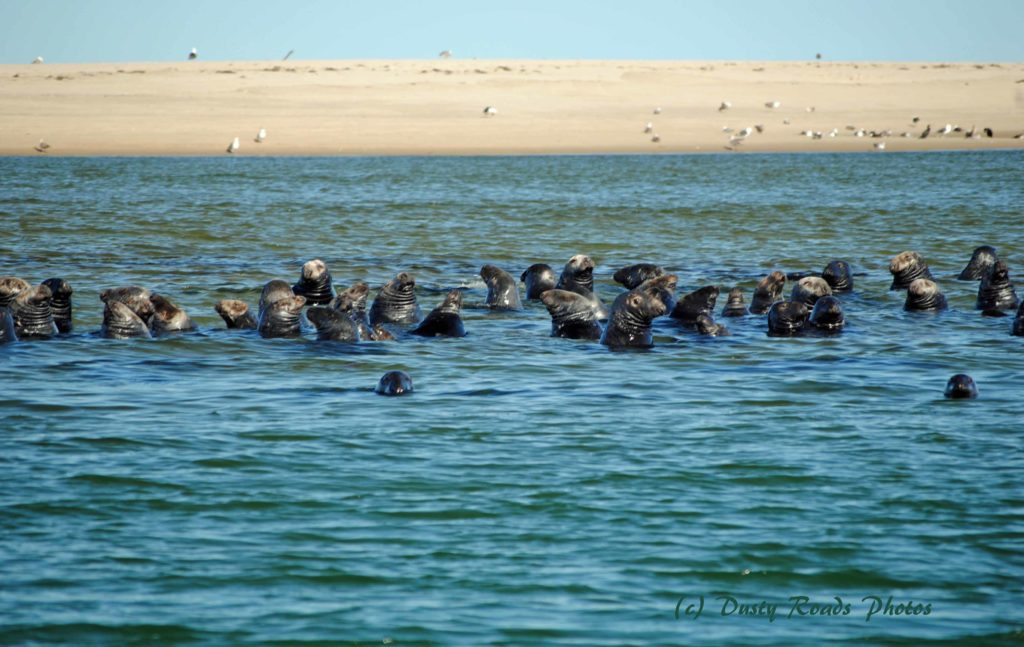
Then came a turning point: In 1972, the Marine Mammal Protection Act granted federal protection to seals.
That’s when the Cape’s story took a dramatic turn.
The Return of the Great Whites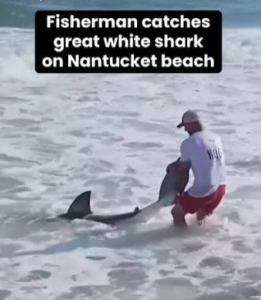
As the seal population exploded, so did interest from a very different kind of visitor. In 1975, the blockbuster Jaws gave the world a fictional taste of shark‑infused terror — but it also foreshadowed reality. Over the next few decades, great white sharks began returning to Cape waters in growing numbers, drawn by the booming seal colonies.
The shift became undeniable on September 15, 2018, when Arthur Medici, a 26‑year‑old from Revere, was fatally attacked while boogie boarding at Newcomb Hollow Beach. It was the first deadly shark attack in Massachusetts since 1936, and it marked the beginning of what many now call the new Cape Cod.
Today, great whites are summer regulars. We have:
- Spotter planes and research boats
- Electronic shark‑detection buoys
- Beach warnings near seal haul‑outs
- And yes — an app for that. The Sharktivity app lets you track shark sightings in real time.
Even whale‑watch boats report seeing sharks, and whenever a whale carcass washes ashore, you can bet the great whites will arrive shortly after.
And they’re not alone. In 2025, a fisherman off Mashpee reported the Cape’s first confirmed tiger shark sighting. Offshore charter captains share videos of sharks stealing fish right off the line. There’s even shark cage diving now — something once associated only with South Africa or Australia.
 A Personal Note: The Cape’s Own Shark Celebrity
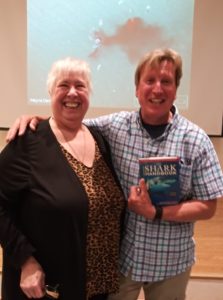
The Cape has its own celebrity in Dr. Greg Skomal, author, marine biologist, and the face of modern shark research in Massachusetts. He’s been a champion of the great white’s return and a pioneer in tagging and tracking them. You’ve probably seen him on Discovery Channel’s Shark Week, leaning over the bow of a boat with a tagging pole in hand.
I’ve had the privilege of meeting him and hearing several of his presentations. He’s charming, funny, and completely approachable — the kind of scientist who makes you feel like you’re part of the adventure. The sharks couldn’t ask for a better advocate.
Is This Still “Old Cape Cod”?
Somehow, the Cape feels less like Patti Page’s quiet seaside escape and more like a place where nature has reclaimed its throne. The dunes and salty air are still here, but the cast of characters has changed. Tourists still flock to the beaches — but so do apex predators.
Cape Cod isn’t sleepy anymore. It’s wild, unpredictable, and very much alive.
And maybe that’s part of its magic.
Share this:
- Share on Tumblr (Opens in new window) Tumblr
- Print (Opens in new window) Print
- Share on X (Opens in new window) X
- Share on Facebook (Opens in new window) Facebook
- Share on Pinterest (Opens in new window) Pinterest
- Share on Reddit (Opens in new window) Reddit
- Share on LinkedIn (Opens in new window) LinkedIn


 Seals, seals and more seals
