Desert Wings & Coal Mine Shadows

More Creepy Cryptids

Have you heard of the Van Meter Monster? Another flying menace. Is it similar to The Tombstone Thunderbird is Arizona? Could they be the same creature? 

🩅  The Tombstone Thunderbird vs. The Van Meter Monster

In the dusty pages of American folklore, two winged beasts flap their way into legend: the Tombstone Thunderbird of Arizona and the Van Meter Monster of Iowa. Though separated by over a thousand miles and a decade in time, both creatures share eerie traits—massive wings, bulletproof hides, and a knack for vanishing into myth. Let’s dive into their stories and explore what makes each cryptid so captivating.

đŸŒ” The Tombstone Thunderbird: Wild West Wonder

Date: April 26, 1890
Location: Tombstone, Arizona
Witnesses: Cowboys and prospectors
Legend: A giant bird—possibly featherless, with leathery wings like a pterodactyl—was allegedly shot down by six men and displayed against a barn wall. Its wingspan? Said to be 160 feet. The photo of this event? Never found, yet many swear they’ve seen it in old magazines.

In 1886, the Tombstone Epitaph (Arizona) published a ...

internet


Sensory Snapshot: Imagine the dry desert wind, the scent of gunpowder, and the awe of seeing a creature larger than a blue whale sprawled across a barn. The tale is stitched with Old West bravado and a hint of false memory syndrome—where vivid imaginations conjure images never truly seen.

đŸ•łïž The Van Meter Monster: Coal Mine Cryptid

Date: September 29–October 3, 1903
Location: Van Meter, Iowa
Witnesses: Town doctor, banker, teacher, and other respected locals
Legend: A nine-foot-tall creature with bat-like wings, a glowing horn, and a sulfurous stench terrorized the town for several nights. Bullets bounced off it, and it emitted blinding light. Eventually, two creatures were spotted near an abandoned coal mine and sealed inside.
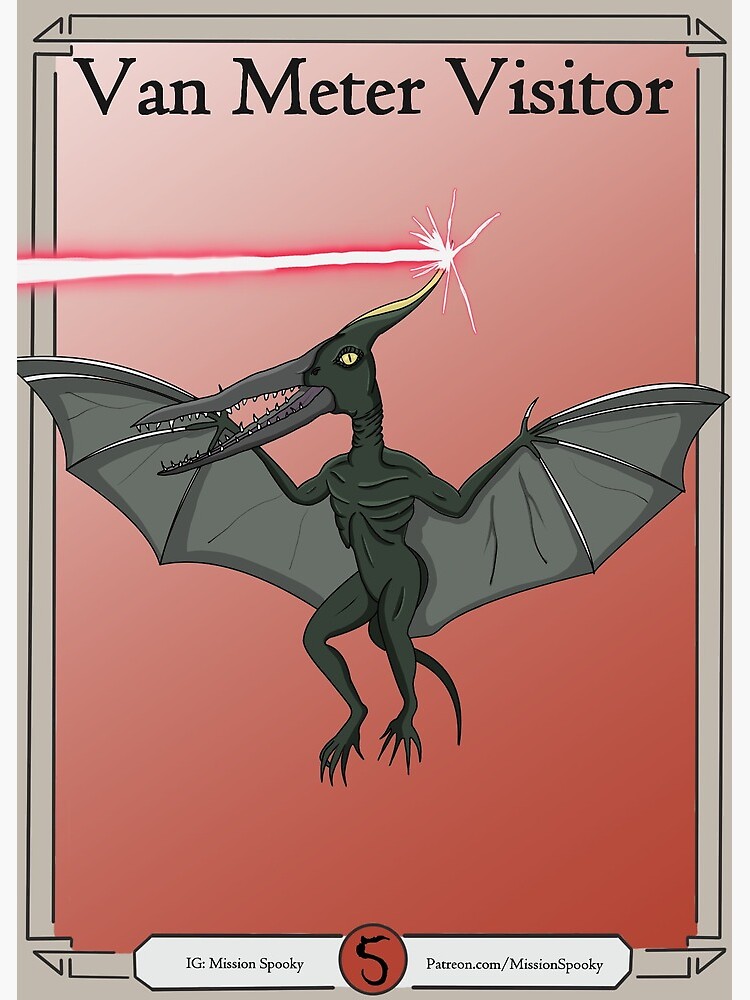
The Van Meter Visitor Greeting Card

Internet

Sensory Snapshot: Picture a quiet Midwestern town jolted awake by beams of unnatural light, the acrid smell of sulfur hanging in the air, and the thud of shotgun blasts echoing through the night. The Van Meter Monster feels more alien than avian—part devil, part dragon, part mystery.

🔍 Side-by-Side Comparison

Feature Tombstone Thunderbird Van Meter Monster
Wingspan Claimed 160 feet (likely exaggerated) Large bat-like wings
Appearance Pterodactyl-like, featherless Half-human, glowing horn, red eyes
Bulletproof? Allegedly shot and killed Immune to bullets
Smell Not mentioned Overwhelming sulfur stench
Setting Desert frontier Small-town coal mine
Legacy Photo legend persists Annual festival celebrates sightings

🧠 Folklore or False Memory?

Both legends thrive on the tension between belief and skepticism. The Tombstone Thunderbird’s tale is tangled in memory distortion—many claim to have seen a photo that likely never existed. The Van Meter Monster, meanwhile, boasts multiple eyewitnesses and consistent descriptions, yet no physical evidence remains.

đŸŽȘ Cryptid Culture Today

Van Meter hosts an annual festival celebrating its monster, complete with games, paranormal talks, and themed treats. Tombstone, ever the theatrical town, keeps its Thunderbird alive through ghost tours and Wild West reenactments. Both creatures have inspired books, podcasts, and cryptid merch—perfect for curious collectors or folklore fanatics.


Whether you’re drawn to the desert drama of Tombstone or the eerie glow of Van Meter’s visitor, these legends remind us that mystery thrives in the margins. They’re not just stories—they’re invitations to wonder.
 

Dive into the Depths of Myth and Mystery


🐉 National Sea Serpent Day: Dive into the Depths of Myth and Mystery

Today, we raise our binoculars, sonar devices, and imaginations to the elusive legends of the deep—it’s National Sea Serpent Day! Whether you’re a cryptid enthusiast, a folklore fanatic, or just someone who loves a good splash of mystery, this is the perfect day to celebrate the serpentine stars of lakes, oceans, and sailor tales.


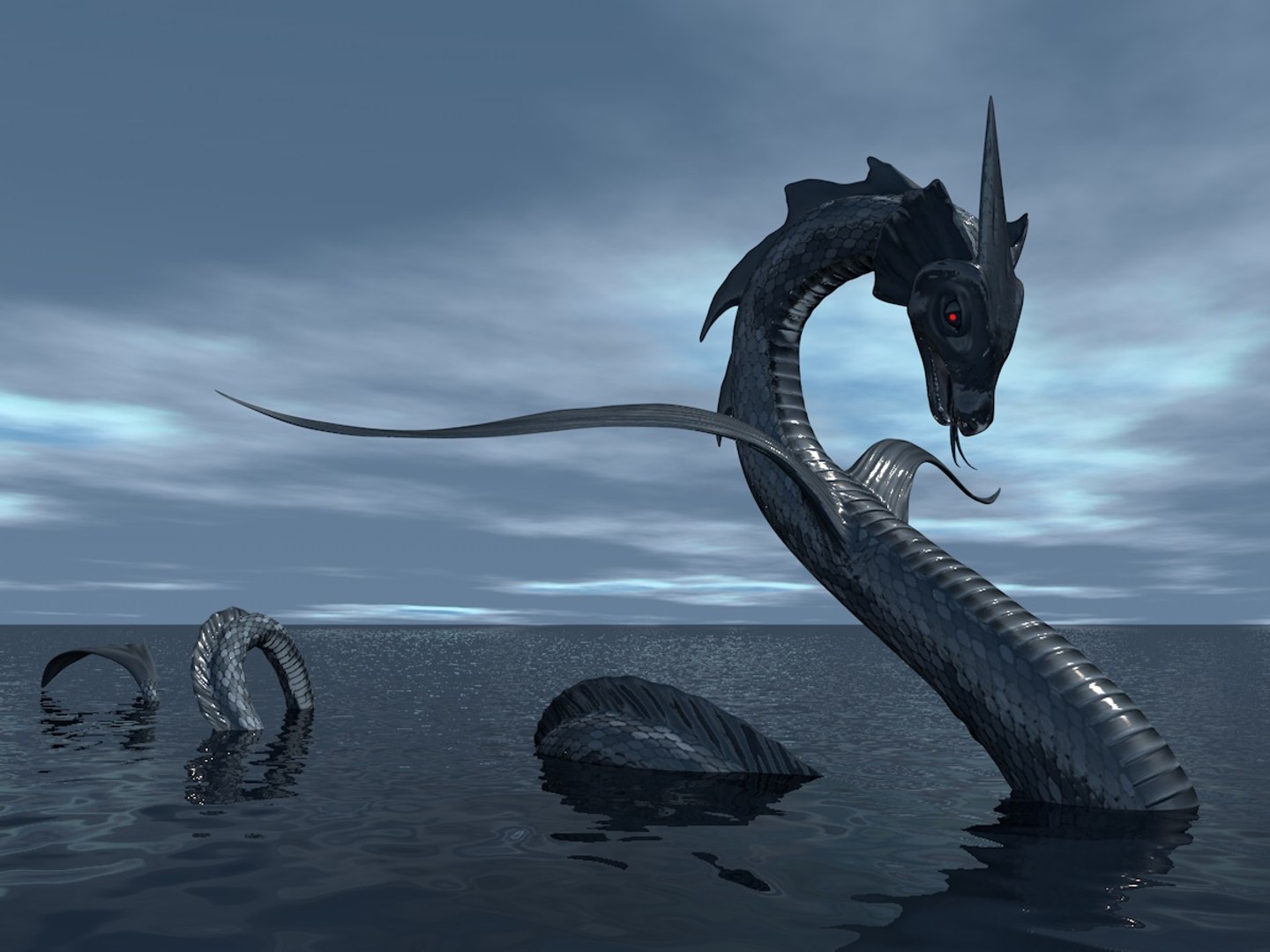
Sea Serpent C4d

sea serpent

🌊 Meet the Majestic Monsters

Let’s take a tour of some of the most famous aquatic enigmas:

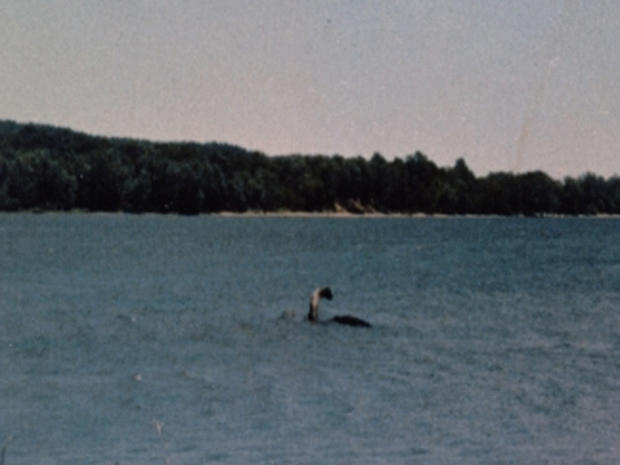
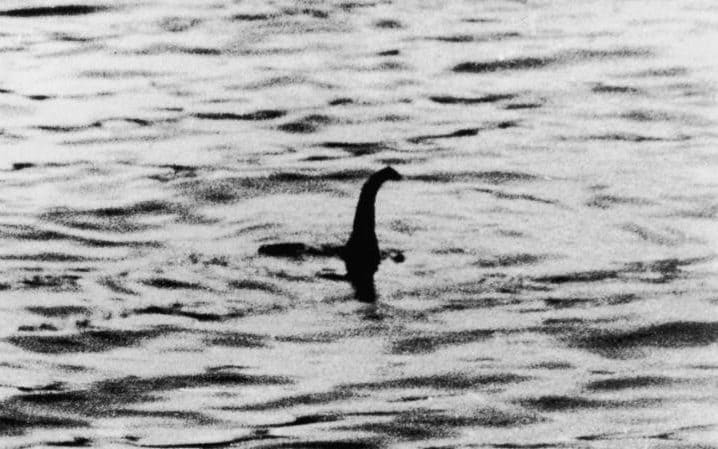
  • Loch Ness Monster (Scotland) Affectionately known as Nessie, this shy Scottish celebrity has been making waves since the 6th century. With her long neck and humps, she’s the queen of cryptid tourism. 

    Lock Ness Monster – The Surgeon’s Photo

  • Champ (Lake Champlain, USA/Canada)
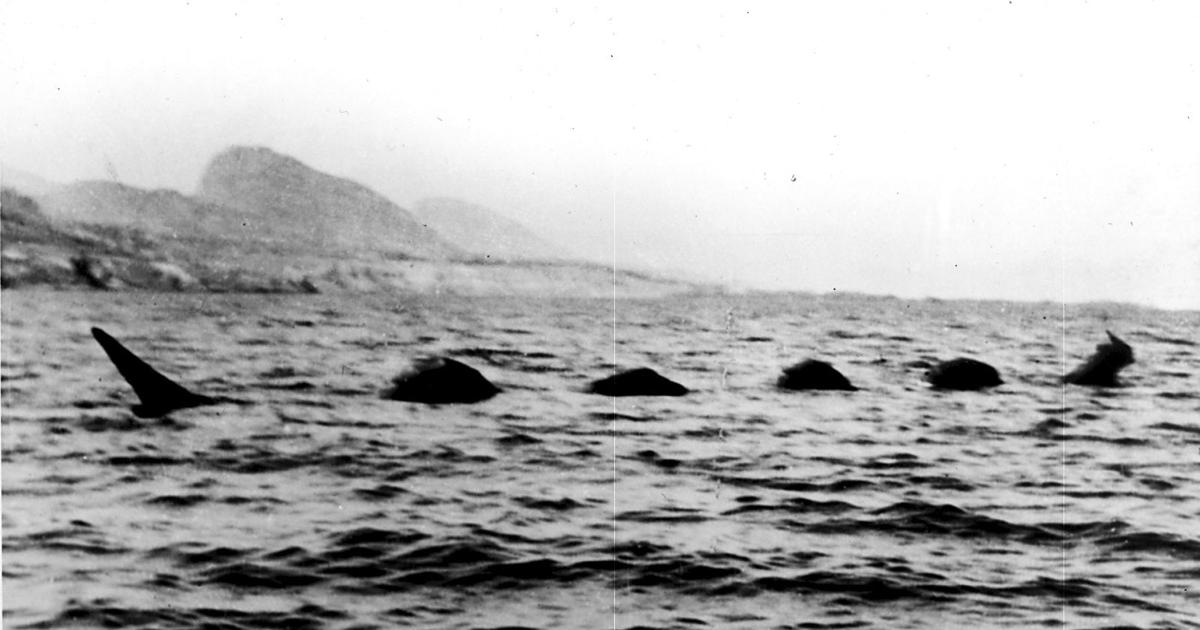
    America’s answer to Nessie, Champ has been spotted by hundreds of witnesses. The lake even has a Champ Day celebration—clearly, cryptids know how to party. 
  • es_lakechamplain_121911_1.jpg

    The Manci Photo of Champ

  • The Kraken (Nordic Seas)
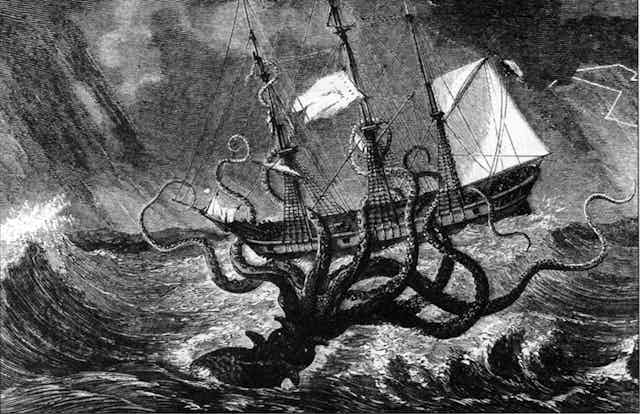
    Less cuddly, more colossal. The Kraken is a legendary sea monster said to drag entire ships into the abyss with its massive tentacles. Think giant squid meets sailor’s worst nightmare.
  • The real-life origins of the legendary Kraken

    The Kraken

  • Ogopogo (Lake Okanagan, Canada)
    A serpentine spirit with Indigenous roots, Ogopogo is said to be a guardian of the lake. Sightings continue to stir curiosity and debate.
  • Ogopogo still swims in our memories | News | pentictonherald.ca

    Ogopogo Canada’s Lake Monster

  • Mokele-Mbembe (Congo River Basin)
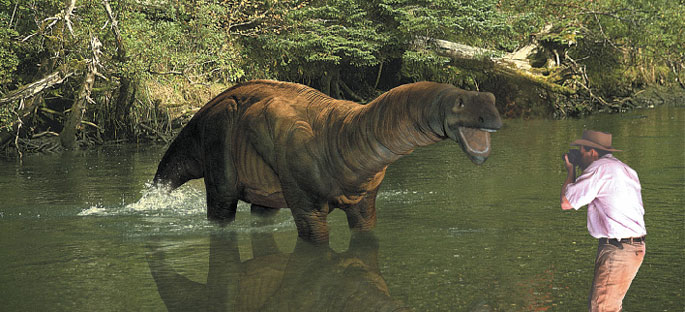
    Often described as a living dinosaur, this river-dwelling creature blurs the line between myth and prehistoric possibility.
  • Mokele-mbembe: a living dinosaur? · Creation.com

    Mokele-Mbembe of the Congo- A living Dino?

🧭 Why We Love Sea Serpents

There’s something irresistible about the idea that the world still holds secrets. Sea serpents remind us that not everything has been mapped, measured, or explained. They live in the liminal space between science and story, where wonder thrives.

  • They spark curiosity and exploration
  • They fuel local legends and tourism
  • They inspire books, movies, and art
  • They keep our imaginations swimming

đŸŸ Celebrate the Serpent

Want to honor these watery wonders today? Here are a few fun ideas:

  • Watch a cryptid-themed documentary or movie (hello, The Water Horse)
  • Read up on lake monster sightings in your region
  • Share your favorite sea serpent tale on social media
  • Create sea serpent-inspired art or poetry
  • Visit a local lake and keep your eyes peeled—you never know!

💬 Final Splash

Whether you believe in Nessie’s gentle glides or the Kraken’s crushing grip, sea serpents are a reminder that mystery still lurks beneath the surface. On National Sea Serpent Day, let’s celebrate the legends that ripple through time and imagination.

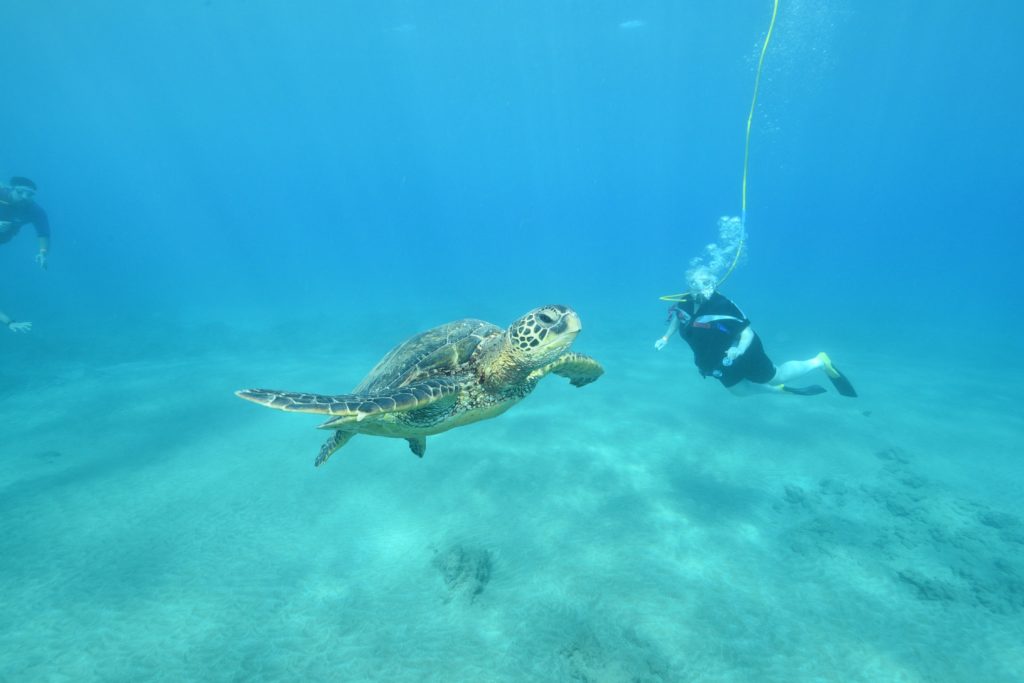
snuba at Turtletown 2020 (Here Nessie Nessie Nessie)


So tell me—if you could meet one aquatic cryptid, who would it be? And what would you ask it?


The Legend of Sweetheart Rock

Sweetheart Rock , Lanai

We were on our way to spend the morning on Lanai. As we passed a large cliff we could see waves crashing on a smaller rock at its point. Small is a relative term because this little rock is actually 80 ft. tall! Named Puu Pehe in Hawaiian, Sweetheart Rock is s recognizable landmark even for tourists like me. Like so many of Hawaii’s landmarks, this one has a legend attached to it too. 

The Legend of Sweetheart Rock

Once upon a time a beautiful young princess from Maui was captured by a young warrior from Lanai. He was so taken with her looks that he made her his wife and brought her back to his home island of Lanai. But the warrior was so jealous of her beauty that he was afraid to let any other man see her. To keep her secluded he confined her to a sea cave near the rock.

One day while the warrior was away a huge storm came up with the sea pounding the rock and flooding the sea cave. Frantic the warrior rushed back to the cave but it was too late. His beloved bride had drowned. With the help of the gods the heartbroken young warrior retrieved her body and took it to the top of the steep rock island. There he made a tomb to lay her to rest. Then, overwhelmed with grief, the young man jumped off the top of the island to his death. 

Puu Pehe’s Tomb

Puu Pehe is located between  Manele Bay and Hulopoe Bay .  If you look closely you may see a small mound at the top of the rock that could be a tomb. We were too far out in the channel to see but I’m told its there. Archaeologists who have studied the sea stack say the only bones are those of sea birds.  The legend is romantic and tragic but don’t let that draw you into exploring the rock. The sides are steep and treacherous and the waters surrounding the island are filled with strong currents and swift waves. 

Superstitious Time of Year

It’s October and everyone knows that this is the month that imaginations run wild. Little ghosts and goblins, witches and ghouls come knocking on your door demanding a treat or suffer a trick.

1214306-bigthumbnail

I thought today I’d take a break from the state countdown and visit some of the common superstitions, this time about cats and dogs. Most everyone is familiar with the belief that black cats bring bad luck or that a howling dog signifies that someone is about to die. (If that were truly the case, people would be dropping right and left every time an ambulance goes by with its siren blaring.) I’ve looked up some of the opinions about this, and believe me there are many, and thought I’d share a few today.

FloridaMexico 064a

Black cats bring good luck. In Britain, a bride and groom who encounter a black cat on their wedding day are ensured a happy marriage. Sailors, a notoriously superstitious lot, avoid saying the word “cat,” but having a black cat aboard ship is believed to bring good fortune. In fact, the wives of sailors used to keep black cats to ensure their husbands’ safe return.

cradle

A cat in the cradle protects babies. A well-known (and need I say unfounded) myth
is that cats will jump into a crib and suck a sleeping baby’s breath. In
Russia, however, new parents used to put a cat into a cradle to drive off evil
spirits that might harm the baby. Smart thinking! Who better than a loving and
protective cat with super night vision and an alert nature to ward off any
natural — or supernatural — meanies? (Of course, folklore notwithstanding, you
never want to leave any pet with a baby unsupervised.)

Kats 003 copy

Cats won’t run away if you take certain actions. Moving? Bring your cat into the new place through the window and he won’t leave (presumably because he doesn’t know where the door is). Or rub his paws with butter. The theory behind this one is that by the time he finishes licking all the butter off his paws, he’ll be used to the new place and won’t want to leave. My opinion…feed them. I never have any trouble getting them to stay. 🙂

And in the case of our Canine friends

Chase Holland 024e

The lick of a dog has healing powers. Ancient Greeks and Romans had temple dogs whose licks were believed to cure disease. Maybe they were onto something — we know today that petting a dog can lower blood pressure. Some dogs can also scent out cancers and other signs of illness such as high blood sugar.

Jack 041a copy

Dogs lead us to the next world. Cultures around the world associate dogs with the
path to heaven — or Hades. A three-headed dog named Cerberus guarded the
entrance to Hades, ensuring that no one went in — or out — who wasn’t supposed
to.

guide_dogwsf

Meeting a dog is good luck. I always think I’m fortunate whenever I meet a dog, and plenty of superstitions support that belief. According to folklore in various parts of the world, it’s good luck to meet a Greyhound with a white spot or a Dalmatian (spotted dogs must really be something special). If a strange black dog follows you home, you’ll have good luck. Seems to me that it would be even better luck for the dog if you decide to adopt him.

Dalmatian_and_Dobermann

Dogs and cats can predict the weather. For instance, if a dog retreats underneath your dining room table or curls up in a corner, cold weather is coming. The same is said of a cat sitting with his back to the fire: It’s a sure sign that frost is on the way.

206107

There’s more but maybe we should save some for another time. I seem to have run out of space. 🙂 Excerpts from Lifestyle Blog and Dr. Marty Becker, Vetstreet.com

The Story of Romeo

Ok I promised to tell you about Romeo so here it is.

This is the story of Romeo, the Mendenhall Glacier Wolf. I first heard it from our guide, Phil, but since then I have seen many children’s’ books. This version is condensed from The Alaska Cruise Companion.

Romeo’s story began one day in April 2003, when a young black wolf was struck and killed by a car within  1/4 mile of Mendenhall Visitor Center. Sad as this event was, park officials made the best of it  and retrieved the wolf so that at least  it could be prepared for display in the visitor’s center. They determined it was a female black wolf, which is a sub species of the gray wolf, and they also determined it was a young female. Young females will generally only leave a family pack with a new mate to start a family of their own, so park officials expected to see the mate in the area. Over the summer there was no sign but during the long, cold  winter nights of November that year, residents repeatedly heard howls of a lone wolf ringing across the wilderness of the lake.

The first sighting came shortly after the new year, in January 2004.  A local naturalist and author, Nick Jans , was skiing across  the Lake with his dog Dakota when he noticed a lone set of wolf tracks stretching across the lake. He took Dakota home and returned to the lake , and encountered the wolf for the first time.  It was alone and it was a young male black wolf.  A solitary wolf is unusual , especially in winter  when wolves typically regroup with their family packs  to ensure successful hunting, so when Jans reported the lone wolf sighting, wildlife officials presumed they had found the mate for the young female killed earlier in the year.

As the winter stretched on, the young wolf began to appear regularly  , even accompanying Jans and Dakota on their routings across the lake. The wolf would play with Dakota , just like any other dog might, and even took to following the duo home. There he waited outside  the house for the female lab to appear, leading to his nickname, Romeo. Unbelievably, this went on for many years. Romeo would disappear over the summer but return each winter once the visitors had left  and the lake was frozen over.

romeo

The iconic appearance  of a lone black wolf against the dramatic backdrop of the snow-white lake was enough to draw attention on it’s own , but Romeo was also sociable, and other visitors to the lake had the same experience  as Jans and Dakota.  Romeo would appear and play with the pets even fetching tennis balls. He didn’t become a pet. No one tried to feed him or pet him but he quickly became a living legend in the region.

In 2009, the story took a sad turn. Romeo failed to reappear that fall and in fact was not seen or heard of again. Eventually a wolf pelt surfaced that was identified as Romeo’s, and in May 2010, two hunters were charged with illegally shooting the protected wolf.

Although Romeo is gone now he dispelled many misconceptions about wolves and in so doing has become a legend.

For more details Nick Jans has written a new book, Glacier Wolf, about his encounters with Romeo.