Nantucket: Small Island, Long Story

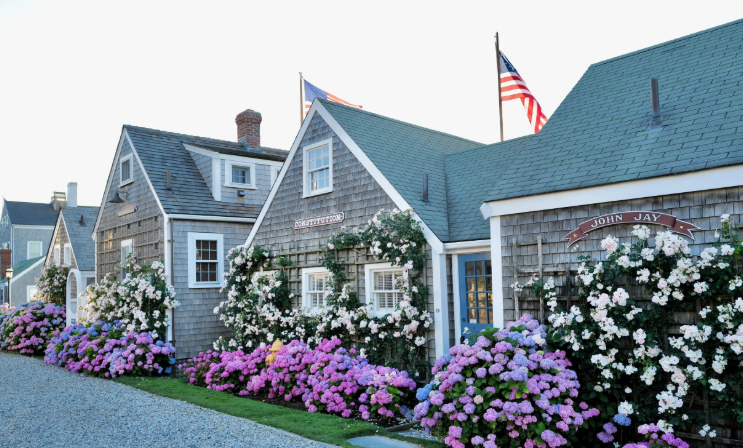
A row of weathered gray shingled cottages with green roofs, white trim, and climbing summer flowers in pink, purple, and white. Small signs reading “Constitution” and “John Jay” hang on the buildings, and American flags fly above them. The scene looks like a tidy, historic seaside village.

Nantucket: The Little Grey Lady of the Sea
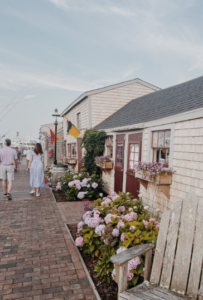
Before we leave the coast of Massachusetts behind, there’s one more island waiting out there in the Atlantic — small in size, enormous in history. Like Martha’s Vineyard, Nantucket has no bridge or roadway connecting it to the mainland. You reach it the old‑fashioned way: by sea or by air. Ferries glide across the Sound from Hyannis, Harwich Port, and New Bedford, and small planes touch down at the island’s airport, delivering summer travelers to a place that feels both remote and familiar.

And then, once you arrive, Nantucket reveals itself.

Nantucket is one of those places that feels familiar long before you ever set foot on it — a name that drifts through novels, travel magazines, and summer conversations like sea spray. Thirty miles south of Cape Cod, this tiny island has earned its nickname, The Little Grey Lady of the Sea, thanks to the weathered cedar shingles that cloak nearly every building. They fade to a soft, silvery grey, giving the whole island a muted, timeless palette.

I haven’t been to Nantucket yet, but researching it feels like paging through an old maritime diary. Cobblestone streets. Rose‑covered cottages. Lighthouses standing guard over dunes and surf. And beneath it all, four centuries of maritime history — whaling captains, Quaker merchants, shipwrecks, and the quiet heroism of life‑saving crews.

A Seaport Frozen in Time
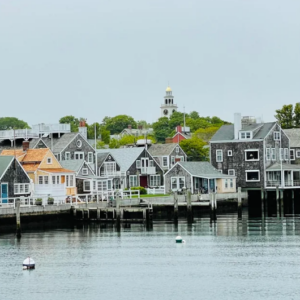
Nantucket is the southeasternmost town in Massachusetts, but it feels older than the state itself. More than 800 buildings predate 1850, and the National Park Service calls it the finest surviving example of an 18th‑ and early 19th‑century New England seaport town. Walk its streets and you’re essentially walking through a living museum — one that smells like ocean air and sunscreen.

The town center is a postcard: wharves lined with restaurants and boutiques, steepled churches rising above the rooftops, and those famous cobblestones that look charming until you try to roll a suitcase over them. In summer, the population swells to around 80,000, transforming the quiet off‑season island into a bustling colony of vacationers, seasonal residents, and day‑trippers stepping off the ferry with iced coffee in hand.

Before the Whalers: The Wampanoag Story

Long before the cedar shingles and whaling captains, Nantucket belonged to the Wampanoag people. They lived on the island for thousands of years, organized into groups led by sachems, with a population that may have reached three thousand. Their story is woven tightly into Nantucket’s early history — and into its whaling legacy.

When English settlers arrived in 1659, they persuaded two sachems to relinquish their rights to the island for 66 pounds sterling. The Wampanoag later petitioned, arguing the sachems didn’t have the authority to sell the land, but the courts upheld the deeds. Sound familiar? Manhattan’s story echoes here — “sold” in 1626 for trinkets and trade goods, another moment where Native land shifted into colonial hands under deeply uneven circumstances. It’s a familiar American story — one of displacement, adaptation, and resilience.

The Wampanoag became carpenters, weavers, and eventually whalers. By the early 1700s, whaling boats launched from Nantucket’s shores were crewed mostly by Wampanoag men. A typical seven‑meter whaleboat had five Wampanoag oarsmen and one white man steering. Without them, Nantucket’s whaling industry — the one that would eventually dominate the world — simply wouldn’t have existed.
The Island That Ruled the Sea

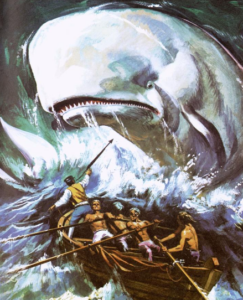
By the 18th and 19th centuries, Nantucket was the beating heart of the global whaling industry. Herman Melville captured the swagger of it in Moby‑Dick: “Two thirds of this terraqueous globe are the Nantucketer’s.”

The tragedy of the whaler Essex — rammed and sunk by a sperm whale — inspired Melville’s novel. Characters like Ahab and Starbuck were written as Nantucketers, shaped by the island’s culture of grit, danger, and ocean‑bound ambition.

Whaling wealth built the island’s grand homes, funded its churches, and shaped its identity. Even today, the Whaling Museum stands as one of Nantucket’s most important landmarks, telling the story of the industry that once made this tiny island the center of the maritime world.

Modern Nantucket: Salt Air and Summer Crowds

Today, Nantucket is a summer destination with a price tag to match — the average sale price for a single‑family home was $2.3 million back in 2018, and it hasn’t exactly gone down. But the island’s charm isn’t about exclusivity. It’s about atmosphere.

Fog rolls in like a soft blanket. Salt and sunscreen hang in the air on a July afternoon. Roses climb over cottage doorways in full bloom. It’s the lighthouses — Brant Point, Sankaty Head, Great Point — standing like old friends who’ve seen every storm.

Nantucket feels curated, but not artificial. Preserved, but not frozen. A place where history and summer coexist, each giving the other a little more meaning.

Leaving the Grey Lady Behind

And just like that, our time with the Little Grey Lady comes to an end. Nantucket may be small, but its story is anything but — a place shaped by wind, water, and centuries of human hands. As the ferry pulls away and the island softens into the horizon, you carry a little of its quiet dignity with you.

From Cape Cod’s sandy arm to Martha’s Vineyard’s rolling farmland to Nantucket’s weathered shingles, this stretch of Massachusetts coastline is a tapestry of islands, each with its own personality. Nantucket is the one that lingers — the one that feels like a whispered chapter in a much larger maritime tale.

Someday I’ll go. I’ll walk those cobblestones myself. I’ll see if the shingles really are as grey as everyone says. And I’ll bring back my own stories — the kind that only come from being there.
 

A Lighthouse Lover’s Guide to Cape Cod

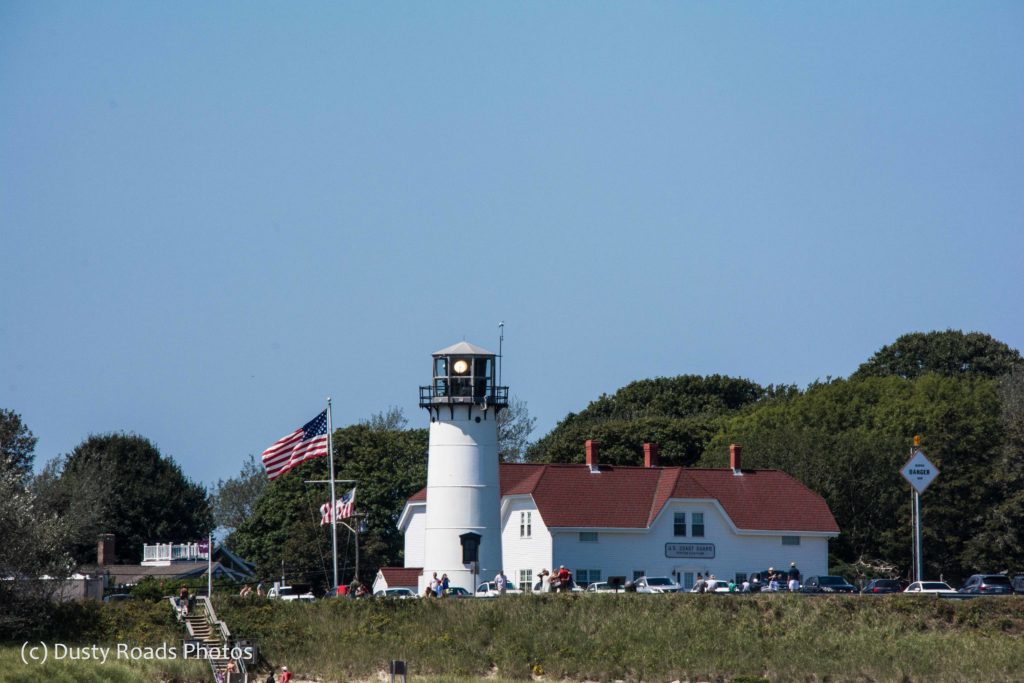
Chatham Light on a clear summer day, the white tower and red‑roofed Coast Guard station standing against blue sky and green trees, with visitors gathered out front.

Cape Cod’s Mighty Sentinels 

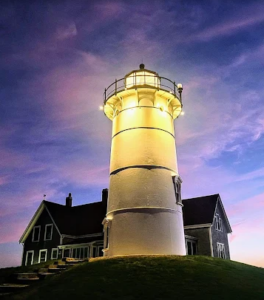
Nobska Light- Photo credit Linda Whitcomb

Some people are real lighthouse folks. They love them. Lighthouses have a mystique about them — they represent our relationship with the sea. They stand as guardians for sailors and provide a path of safety to snug harbors. They warn ships away from dangerous shoals.

If you’re one of those lighthouse people, this post is for you.

Cape Cod, with its hook into the Atlantic Ocean, presented a multitude of hazards. In response, we built lighthouses — lots of lighthouses — beacons to guide sailors home.

Today on Cape Cod you can visit eleven of these mighty sentinels. Not all allow interior tours, but all can be admired from the outside. I’ve started out many times to visit them all, but somehow I always run out of time or get sidetracked.

How many have you made it to?

Nobska Light (Falmouth/Woods Hole)

Nobska Light has watched over Vineyard Sound since 1829. Its original 30‑foot stone tower and whale‑oil lamp guided mariners through the tricky currents between Woods Hole and Falmouth. Over the years it evolved from a simple coastal beacon into one of Cape Cod’s most beloved landmarks. With its white tower, keeper’s house, and sweeping views toward Martha’s Vineyard, Nobska remains a place where history and beauty meet the sea.

Chatham Light (Chatham)

Chatham Light stands watch over one of the most dramatic stretches of coastline on Cape Cod, where shifting sands and powerful Atlantic surf have challenged sailors for generations. First lit in 1808, the station has evolved through storms, erosion, and countless rescues, yet it remains a steadfast symbol of the Coast Guard’s presence on the Cape. With its crisp white tower overlooking the restless waters of Chatham Bar, this lighthouse feels alive — a place where history, danger, and beauty meet at the edge of the sea. Even from the outside, you sense the weight of its duty and the stories it has seen.

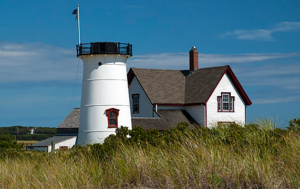
Stage Harbor Light (Chatham)

Stage Harbor Light sits quietly along the shoreline, a weathered sentinel overlooking the calm waters of Chatham’s southern coast. Built in 1880, it once guided fishing boats and coastal schooners through the harbor’s shifting channels, but today it stands retired, its lantern long dark. Yet the lighthouse still carries a certain grace — the kind that comes from decades of salt air, storms, and sun. Seen from the beach or by boat, Stage Harbor Light feels like a glimpse into an older Cape Cod, a place where time slows and the past lingers in the wind.

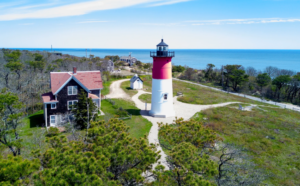
Nauset Light (Eastham)

Nauset Light is the lighthouse everyone recognizes — the bold red‑and‑white tower perched above the Atlantic, famous from the Cape Cod Potato Chips bag but even more striking in person. First built in 1877 and moved inland in 1996 to escape relentless erosion, it stands today as a symbol of the Cape’s constant dance with the sea. The surf below is never quiet, the wind never still, and Nauset feels like it’s holding its ground with quiet determination. Whether you catch it at sunrise or under a bright summer sky, this lighthouse carries the spirit of Eastham’s rugged coastline in every line of its silhouette.

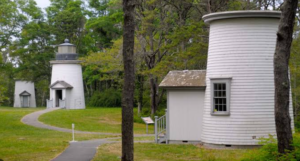
Three Sisters Lighthouses (Eastham)

The Three Sisters are unlike any other lights on Cape Cod — three small, weathered wooden towers set inland among the pines, quietly telling the story of a coastline that has shifted and reshaped itself over centuries. Built in the 1830s to guide mariners past Eastham’s treacherous outer bars, the original trio once stood proudly along the shore, their three lights forming a distinctive pattern at sea. As erosion claimed the bluff, the Sisters were moved, retired, and eventually restored, now standing together like old friends who have seen much and endured more. Visiting them feels less like seeing a lighthouse and more like stepping into a chapter of Cape Cod’s past that refuses to be forgotten.

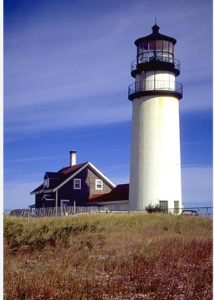
Highland Light (Truro)

Highland Light is the grand old sentinel of Cape Cod — the tallest, oldest, and perhaps most storied lighthouse on the peninsula. First lit in 1797 and rebuilt in 1857, it has watched centuries of ships pass along the treacherous “Backside” of the Cape, where deep ocean swells meet steep bluffs. In 1996, the entire tower was moved 450 feet inland to escape the relentless erosion that threatened to send it over the cliff, a dramatic reminder of how fragile this coastline can be. Standing beside Highland Light, you feel the sweep of history and the raw power of the Atlantic all at once. It’s a place where the past feels close, the horizon feels endless, and the lighthouse seems to hold its ground with quiet, unwavering dignity.

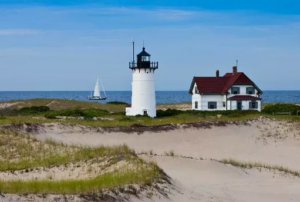
Race Point Light (Provincetown)

Race Point Light sits at the edge of Provincetown where the Cape feels wild and wide open, a place where sand, sea, and sky stretch out in every direction. First lit in 1816, it guided ships along the outer arm of the Cape, where strong currents and shifting sandbars made navigation treacherous. Reaching the lighthouse today often means a long walk through soft dunes, the wind in your face and the Atlantic roaring nearby — and that journey is part of its magic. When you finally arrive, Race Point Light feels both remote and welcoming, a sturdy white tower standing against the elements with quiet resilience. It’s one of those places where you can hear your own thoughts and feel the full sweep of Cape Cod’s untamed beauty.

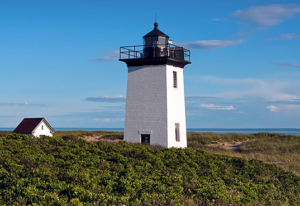
Wood End Light (Provincetown)

Wood End Light sits at the quiet edge of Provincetown, where the land thins into sand flats and tidal marshes before giving way to open water. Built in 1872, it guided ships past the tricky currents at the mouth of Cape Cod Bay, standing as a steady companion to Race Point and Long Point. To reach it, you cross the breakwater — a long granite path that disappears under high tide and feels almost otherworldly when the wind is calm and the harbor is still. When you arrive, Wood End Light feels peaceful and solitary, a simple white tower keeping watch over the shifting tides and the wide, empty horizon. It’s one of those places where the Cape feels both remote and deeply familiar.

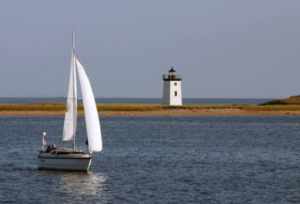
Long Point Light (Provincetown)

Long Point Light sits at the very tip of Cape Cod, where Provincetown’s sandy arm curls into the bay like a protective hook. Built in 1875, it guided ships past the harbor entrance and the shifting shoals that once made this stretch of water notoriously tricky. Reaching it today feels like traveling to the end of the world — a quiet walk across sand flats, gulls wheeling overhead, and the town shrinking behind you until all that’s left is sky, tide, and the steady white tower ahead. Long Point Light has a lonely beauty to it, a sense of isolation that’s peaceful rather than stark. It’s the kind of place where you can stand for a moment and feel the full sweep of the Cape’s geography, the curve of land meeting the open bay, and the lighthouse holding its solitary post with quiet grace.

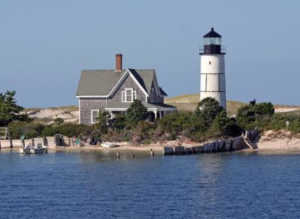
Sandy Neck Light (Barnstable)

Sandy Neck Light stands at the entrance to Barnstable Harbor, a quiet, dignified beacon tucked along one of the Cape’s longest and most beautiful barrier beaches. Built in 1857, it once guided schooners and fishing boats through the harbor’s narrow channel, but today it serves mostly as a picturesque landmark — privately owned, lovingly maintained, and best viewed from the water or the long, winding trail behind the dunes. There’s a peacefulness to Sandy Neck Light, a sense of calm that comes from its distance from the bustle of town. With the salt marsh stretching behind it and the harbor opening before it, the lighthouse feels like a gentle reminder of the Cape’s quieter side, where tides move slowly and the past lingers in the breeze.

Bass River Light (West Dennis)

Bass River Light is one of Cape Cod’s quiet treasures — a small, graceful lighthouse tucked beside the Lighthouse Inn in West Dennis, still shining each night as a private beacon. Built in 1855, it once guided vessels along the busy Bass River channel, its light reflecting off calm waters and salt marshes that haven’t changed much in more than a century. Today it feels almost like a secret, a lighthouse you stumble upon rather than seek out, with the inn’s white buildings and the river’s gentle tide giving it a peaceful, timeless charm. Bass River Light may not be as famous as some of the Cape’s larger towers, but it carries a lovely intimacy — a reminder that even the quieter corners of Cape Cod have stories worth telling.

Closing Thoughts

Cape Cod’s lighthouses are more than landmarks — they’re storytellers. Each one has weathered storms, guided sailors, and stood watch over generations of coastal life. Whether you’ve visited one or all eleven, each lighthouse offers its own moment of connection with the sea and the history of the Cape.

Note: Most of the photos were taken from the internet. If I was able to give a photo credit I have done so. Many thanks to the talented photgraphers that captured these images.

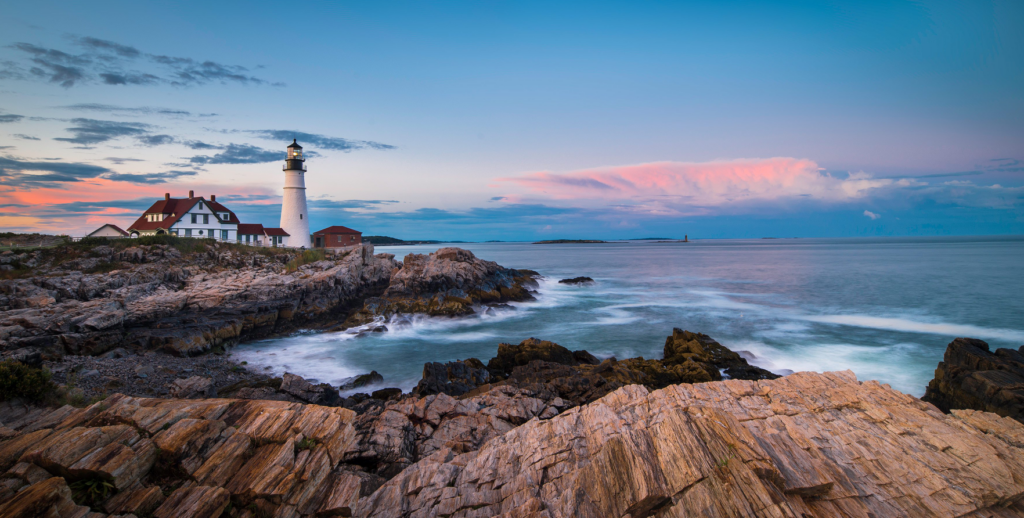
Bing Wallpaper does it again! Portland Head Light

Bing Wallpaper does it again!

Once again I have to sing the praises of Bing Photography. I’ve mentioned it here before — from razorbills to green sea turtles, their wildlife shots are breathtaking — but this morning they surprised me with an old friend on my desktop: a true New England icon.

Portland Head Light, the oldest lighthouse in Maine and one of the most photographed in the Northeast, was waiting for me when I logged on.

Portland Head Light an Iconic symbol of the rugges Maine Coastline

Here’s what greeted me this morning…
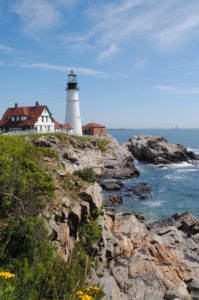
And here’s one of my photos of this spectacular lighthouse.

Not too shabby for an old amateur.”


Orange You Glad It’s a Shark?


Creamsicle Shark of Costa Rica: Nature’s Sweetest Surprise

Somewhere off the Caribbean coast of Costa Rica, nature whipped up a treat that’s part shark, part sherbet, and all spectacle. Meet the Creamsicle Shark—a nurse shark with a rare genetic twist that turned it a glowing shade of orange, like it swam straight out of a popsicle ad.

NATIONAL CREAMSICLE DAY - August 14, 2026 - National Today

Stock photo

Catch & Release- Its still out there

Local fisherman Garvin Watson reeled in the citrus-hued creature near Tortuguero National Park, and the reaction was pure delight. “It looked like an alien,” he said, as the crew snapped photos and squealed like kids spotting a unicorn in the surf. The shark was released unharmed, but its legend is just beginning.

Photo Credit (Garvin Watson/Parismina Domus Dei

Scientists later confirmed this was no ordinary catch. The shark had both xanthism (a condition that boosts yellow pigmentation) and albinism, making it a one-in-a-million marvel. It’s the first documented case of xanthism in a nurse shark—proof that even the deep sea has a flair for drama.

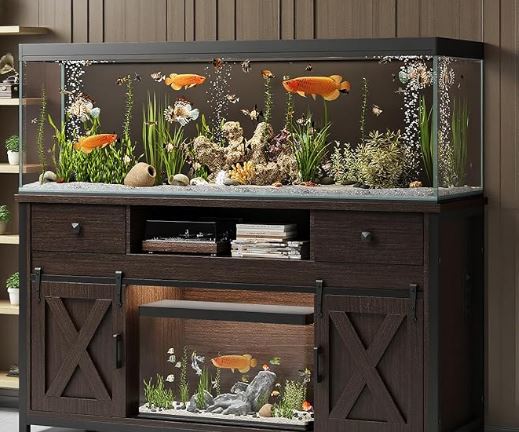
If this creamsicle-colored wonder has you dreaming of underwater worlds, why not bring a splash of the ocean home? A well-designed aquarium can be a tranquil centerpiece, a sensory escape, and a nod to nature’s whimsy. [Affiliate link to aquariums] 🐠

Amazon

Whether you’re a marine biology buff or just love a good sea story, the Creamsicle Shark reminds us that the ocean still holds sweet surprises. And sometimes, they come in orange.

____________________________________________________________________________________________________________

Affiliate Disclosure: Some of the links in this post are affiliate links, which means I may earn a small commission if you make a purchase—at no extra cost to you. I only recommend products I genuinely love and think you’ll enjoy too. Thanks for supporting Around Dusty Roads and helping keep the storytelling flowing

Aye Calypso The Places You’ve Been To

Aye Calypso, I sing to your spirit

Calypso is still tied to the dock. I’m 15 minutes late but that’s on time by Island time. Racing to the gangway I am nearly knocked over by the force of the wind. These are no gentle Island breezes. It’s gusting and blowing like a hurricane. “We’re not going out in this are we? ” I call out. Tony, the first mate, waves a release at me and promises it will only get better. I’m skeptical. No captain in his right mind would take a boat load of tourists out in this kind of gale in Boston. By now I’m the last to board. I have to make a decision. To go or not to go, that is the question.

To ride on the crest of a wild raging storm

Ok so I signed the release, grabbed my gear and climbed to the bow of the 2nd deck. Almost immediately we cast off. Calypso is a beautiful catamaran. Her double hulls are built for stability. She has 3 decks as well as glass panels in the floor for those land lubbers that want to see what all the snorkeling and diving is about. The crew not only manages the ship, they act a servers too bringing around plates of fruit, muffins, warm cinnamon rolls and even egg and cheese croissants! 

To sail on a dream on a crystal clear ocean

So they were not wrong! As soon as we cleared  Ma’alaea Harbor and went around the point the wind died. We were heading toward Molokini and it had turned into a beautiful day. We had to come to an idle at one point while a mama humpback  whale and her calf checked us out. If a whale comes within 100 yards of a boat it puts that boat into “whale jail” until the whale moves off. The trip was just getting better and better and we hadn’t gotten to Molokini yet!