Banner, My Little Helper


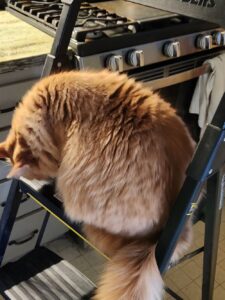
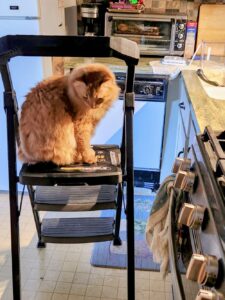
Banner the cat gets ready to start his day with a cup of Joe.

A Day in the Life (With Cats, of Course)

My days are pretty full. A “typical” day — if such a thing exists — might include some housework. Believe it or not, I love cleaning my kitchen. I spend so much time in there that making it sparkle feels like restoring my natural habitat.

Then come the smaller chores: taking out the trash, scooping the kitty litter, doing laundry. Somewhere in there I carve out an hour or two with my resident lap cat, Balboa, to read a chapter or two from whatever book currently has its claws in me.

And of course, I always make time to write. Sometimes it’s a full post, sometimes it’s just a snippet to be polished later. In between all that, I pay bills, run errands, and do the weekly grocery run.

This post contains support‑the‑blog links. If you choose to purchase through them, I may earn a small commission at no extra cost to you. Thank you for supporting Around Dusty Roads — it truly helps keep this little corner of the internet going.

The Chores I Don’t Love

What I do not enjoy are those little unplanned chores — the ones that ambush you. The smoke alarm starts chirping at 3 a.m. because the battery is dying. The toilet won’t stop running because it needs a new flapper (yes, I replace those too).

But the absolute worst offender?

Changing a light bulb.

The moment I drag out my ladder, all those ridiculous light‑bulb jokes start running through my head.
How many software engineers does it take to screw in a light bulb? None — it’s a hardware problem.
You know the type. How many have you heard?

My Ongoing Feud With the Ladder

So why does such a simple task bother me? One word: ladder. I can trip over my own feet with both of them firmly on the ground. When I use my step stool to reach the top shelf in the kitchen, I hold my breath. It’s only one step, but still…

The older I get, the more convinced I am that the ladder is out to get me. I even upgraded — tossed the old wooden one and bought a heavy‑duty rubber model that could probably support a small elephant. It’s sturdy, reliable, and still absolutely terrifies me.

Enter Banner: Supervisor of All Heights

But not my little helper.

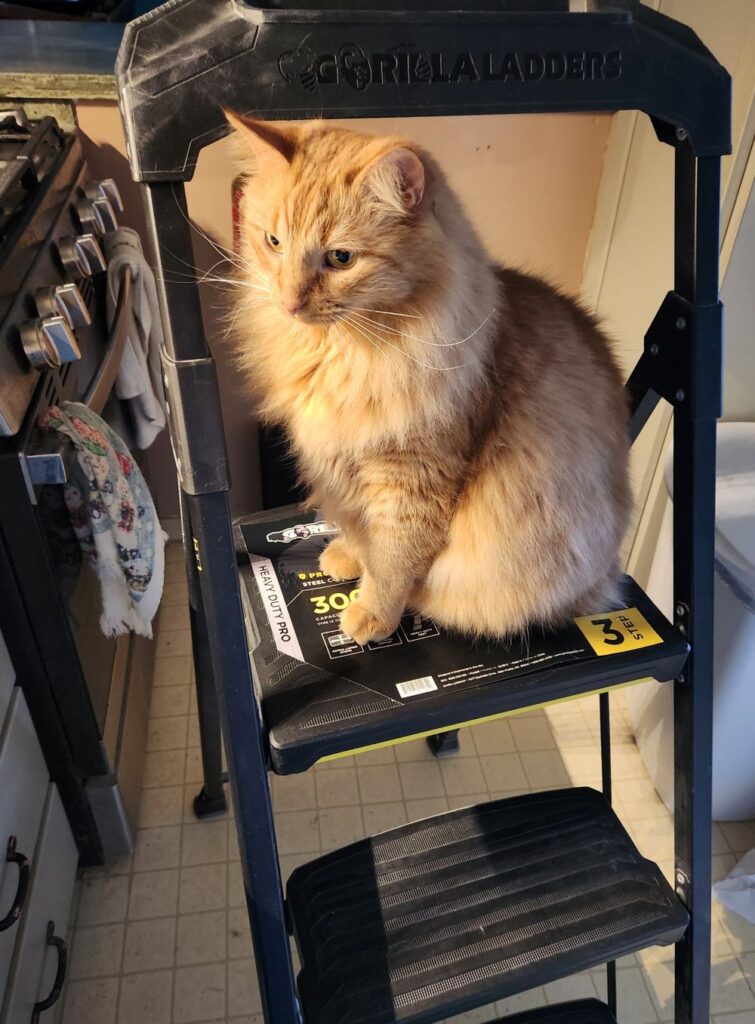
Banner is fascinated. The moment I lock the ladder open, he’s right under my feet. Hmmm… could this be part of why I fear falling? Once the ladder is set, I’m ready to climb — in theory. In reality, I suddenly discover dozens of “urgent” tasks at ground level. Procrastination is an art form, and I am a master.

Banner, however, is not. He inspects each step with great seriousness, climbing all the way to the top. Once there, he surveys the kitchen like a tiny orange foreman. It is now his personal domain, and he is the supervisor of all that happens here. If only he had hands and opposable thumbs.

The Light Bulb Gets Changed… Just Not by Me
Did the light bulb get changed?
Yes. Yes, it did — but not by me or Banner.

My much younger, very kind neighbor came to rescue the old lady in distress. In minutes, the old bulbs were out, the new ones were in, and the crisis was over. As he stepped off the ladder he said, “Nice ladder — where’d you get that? And can I pet the cat?”

And just like that, the job was done.

Travel Smart, Be Safe


When Travel Stories Skip the “Not‑So‑Great” Parts

When we talk about travel—or read the glossy blogs and glowing travelogues—we mostly hear how wonderful a place is. Sure, someone might mention bad weather or a disappointing meal, but the overall tone is usually sunshine and rainbows. I’m guilty of it myself. Except for my Road to Hana misadventure, I sing Hawaii’s praises every chance I get.

But every now and then, a little reality check is healthy.

The Comfort of a Timeshare… and the Trade‑Offs

For nearly twenty years, I traveled through my timeshare. It was one of the hardest things to give up when I retired, but the maintenance fees just didn’t fit my fixed income. While I had it, though? I traveled in style. Beautiful accommodations, attentive staff, and a sense of security—especially important because I often traveled alone.

Timeshares get a bad rap, and yes, getting out of one is neither painless nor easy. But if I ever hit the lottery, I’d consider it again. And here’s a tip: you can sometimes get the same perks without ownership by checking Redweek.com, where owners rent out their weeks to offset costs.

When a Destination Doesn’t Match the Hype

Even with all that comfort, not every trip felt safe. New Orleans is the one that stands out. Friends raved about the energy, the food, the parades—even outside Mardi Gras season. What they didn’t mention was the grime, the chaos, and the aggressive hustlers who thought nothing of following you down the street. I never felt unsafe anywhere else quite like I did there.

Other cities come with their own cautions. Detroit requires you to be mindful of the neighborhood you wander into. St. Louis consistently ranks among the most violent cities in the country. Oakland has seen a rise in break‑ins and street crime.

Nature Has Its Own Hazards

It’s not just cities. Even the most iconic outdoor destinations can be dangerous if you’re unprepared. Death Valley, for example, is one of the deadliest national parks due to extreme heat and dehydration risks.

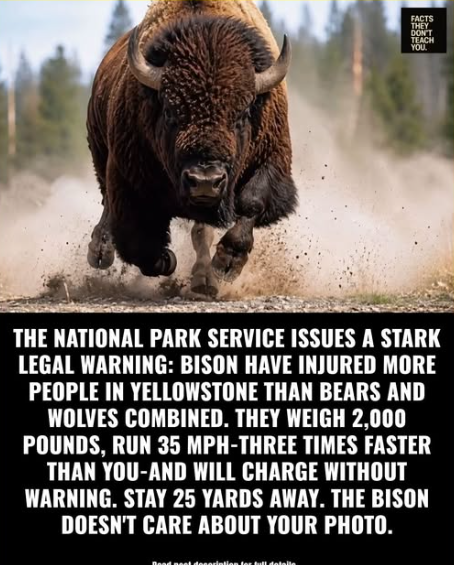
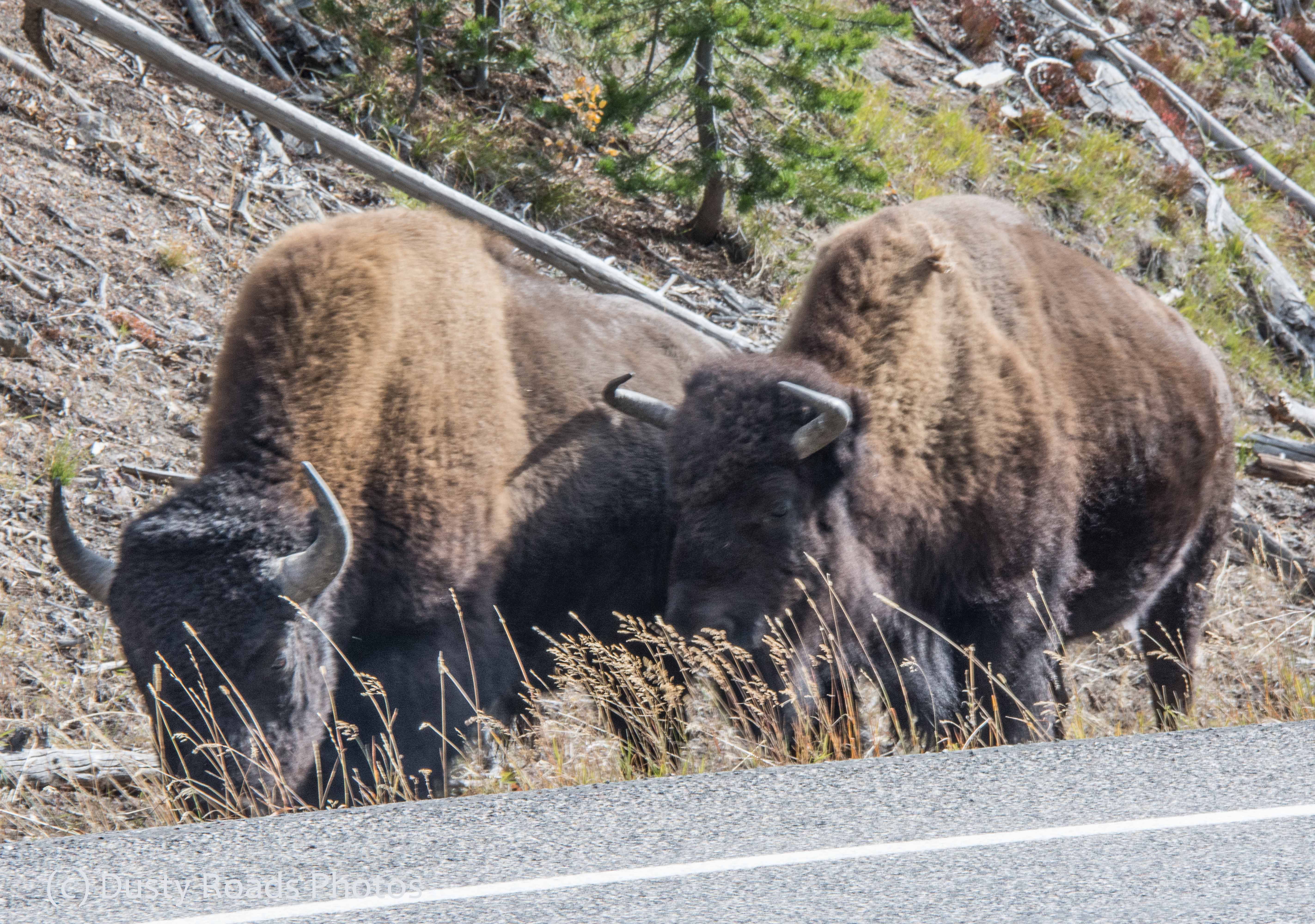
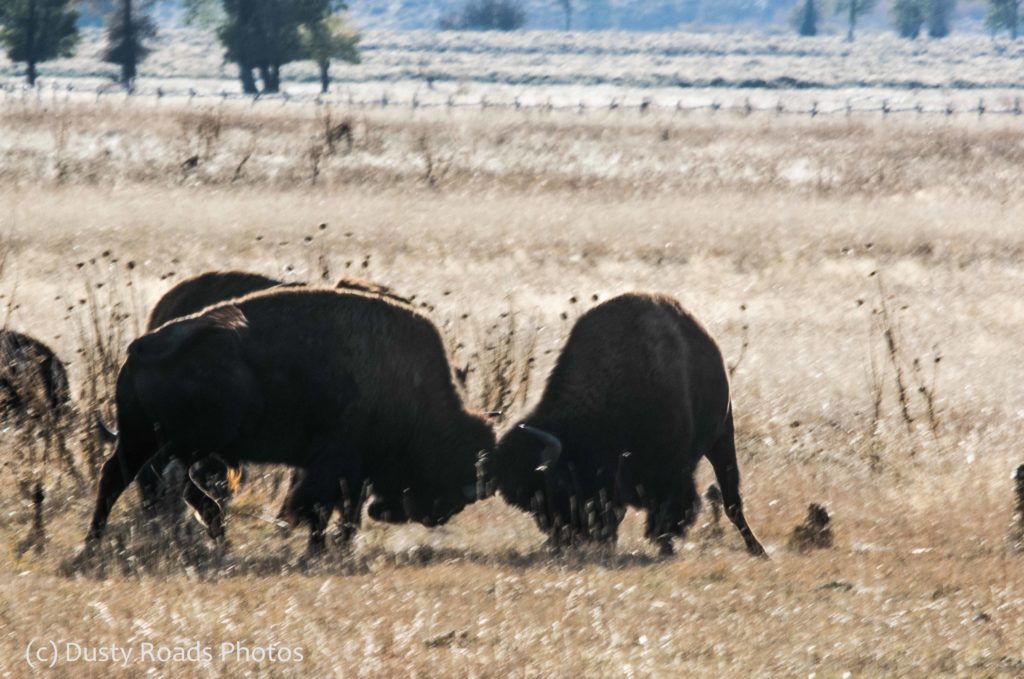
Yellowstone has dangers from  geysers to wildlife. If you have any doubt read about my encounter with the Bison of Yellowstone . I was sure I was going to be flattened to roadkill before I was through.

Getting ready to pass by

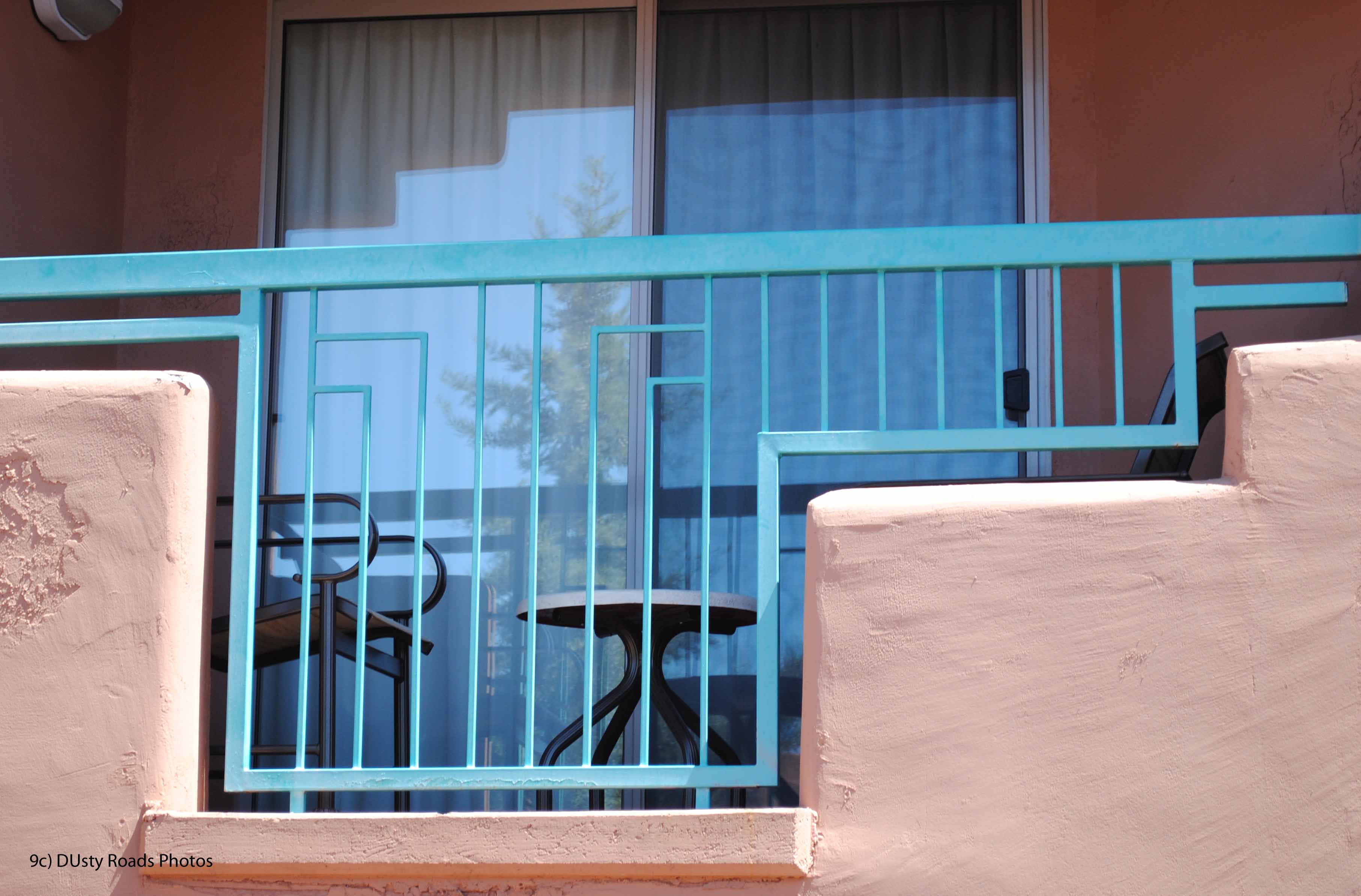
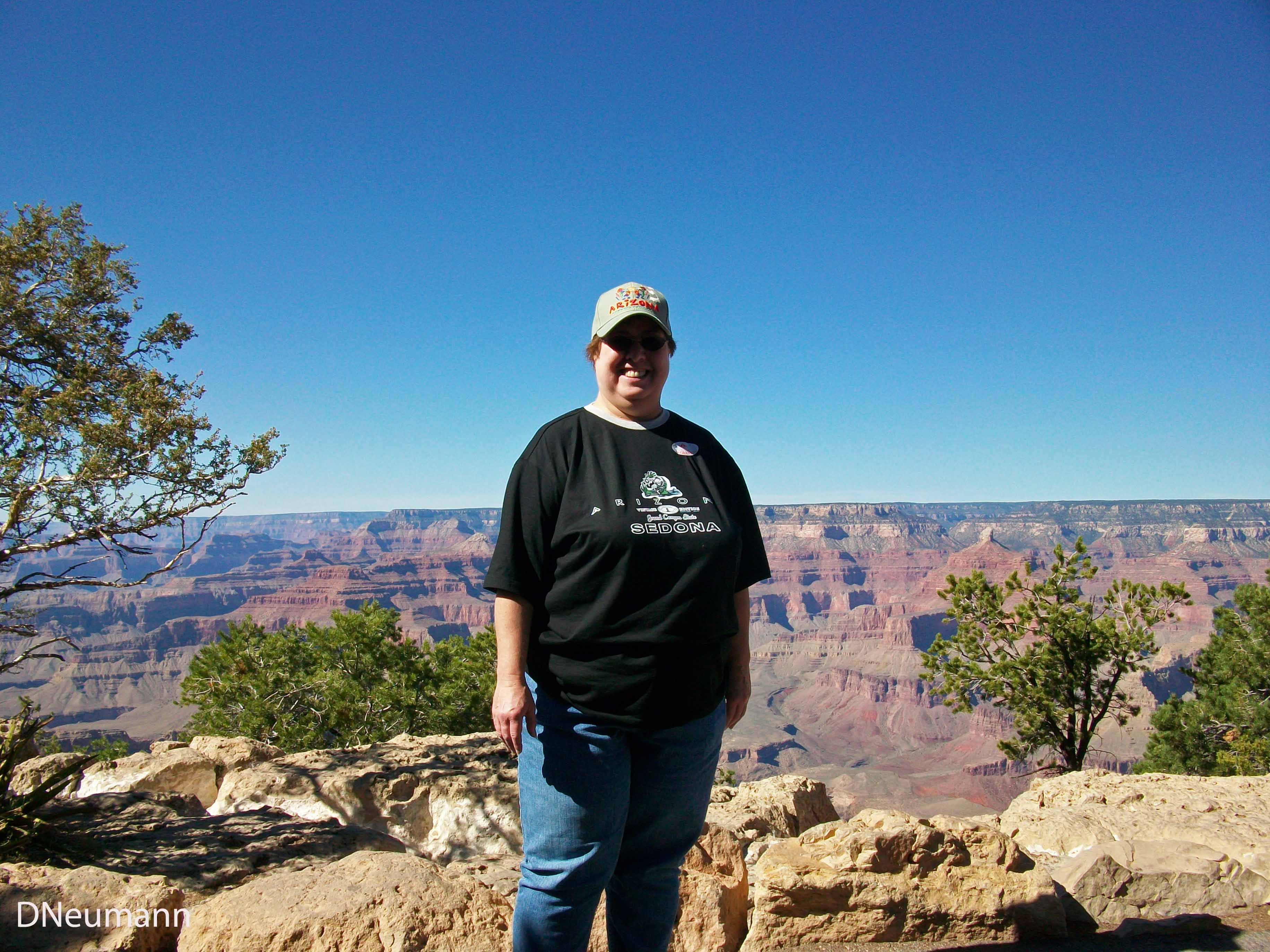
On the South Rim, Grand Canyon 2008

A Little Research Goes a Long Way

I’m not saying you should stay home. Travel is still one of the most exciting, enriching things you can do. But a bit of research before you go—and a few simple precautions—can make the difference between a great adventure and a stressful one. Know the risks, plan accordingly, and you’ll come home with memories worth keeping.


Quick, No‑Nonsense Travel Tips That Actually Help

  • Know the vibe before you go — Not just the “Top 10 Things to Do” list. Look up neighborhood safety, recent news, and what locals say. Every city has great areas and “maybe not after dark” areas.
  • Trust your spidey sense — If something feels off, it probably is. Change direction, duck into a store, or call it a night.
  • Stay where the people are — Wandering is fun until it isn’t. Stick to well‑lit, busy areas, especially if you’re solo.
  • Keep your stuff simple — Crossbody bag, zipper closed, nothing dangling. Leave the “I’m a tourist!” clues at home.
  • Have a “just in case” plan — Screenshot directions, save the hotel address, and keep a backup way to get back.
  • Hydrate like it’s your job — Especially in places with heat, altitude, or long trails.
  • Don’t overshare in real time — Post the photos after you leave the location.
  • Ask locals the right question — Not “Is it safe?” but “Where would you go or avoid after dark?”
  • Give yourself permission to bail — If a situation feels sketchy, you don’t owe anyone an explanation.

So go forth, intrepid adventurer, and make memories worth keeping… safely, of course.

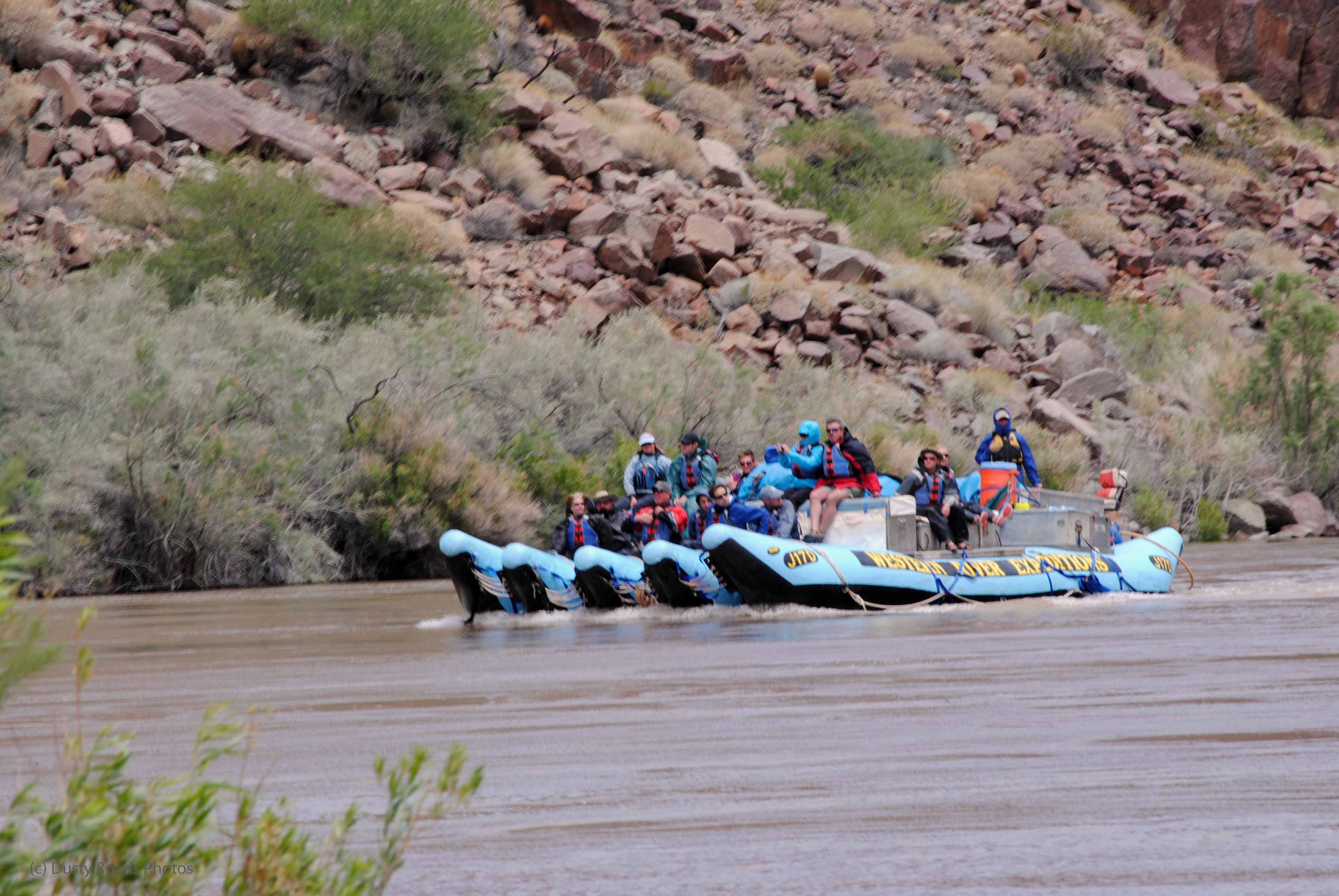
Alaska 2013


Fly the Friendly Skies? A Closer Look at Aviation Safety in 2025

✈️ Fly the Friendly Skies? 

In recent months, headlines have been dominated by unsettling stories of midair collisions, emergency landings, and tragic crashes. From the fiery evacuation of an American Airlines jet in Denver to the devastating Jeju Air disaster in South Korea that claimed 179 lives, travelers are understandably asking: Is it still safe to fly?

Let’s unpack the turbulence.

Aerial view of the wreckage of an airplane that crashed with 61 people on board in Vinhedo, Sao Paulo State, Brazil, on August 9, 2024. An airplane...


🚨 Recent Incidents That Raised Eyebrows

  • Denver Gear Fire: A Boeing 737 MAX 8 aborted takeoff after its landing gear caught fire. Passengers evacuated via emergency slides, with one hospitalized.

  • Midair Collision in Washington, D.C.: A commercial jet collided with a military helicopter, killing 67 people—the deadliest U.S. airline crash in nearly 20 years.

  • Jeju Air Tragedy: A belly landing and runway overrun in South Korea led to one of the country’s worst aviation disasters.

  • Alaska Crash: A plane overloaded with moose meat and antlers crashed, highlighting the risks of improper cargo handling.

  • Near Misses: A Southwest flight plunged nearly 500 feet to avoid another aircraft, and a Delta pilot had to dodge a B-52 bomber.

These incidents have sparked public anxiety, with one in four Americans reporting increased nervousness about flying.

📊 The Bigger Picture: Is Flying Still Safe

Despite the drama, aviation experts and data tell a reassuring story:

    • Commercial aviation remains one of the safest modes of transportation.  . The fatality rate is roughly 1 in 11 million
        —far lower than driving.
  • Most incidents involve private or general aviation, not commercial airlines.
  • Rigorous safety protocols, pilot training, and aircraft technology continue to evolve, making flying safer each year.
  • Runway incursions and near misses are being addressed with infrastructure upgrades and new air traffic control systems.

As aviation professor Chad Kendall puts it: “Thousands of operations have occurred since these accidents. Highly professional pilots and air traffic controllers are doing this right now”.

🛫 So, Should You Fly the Friendly Skies?

Yes—with informed confidence.
While recent events have shaken public trust, they also serve as catalysts for improvement. The aviation industry is doubling down on safety, transparency, and innovation. And statistically, you’re far safer cruising at 35,000 feet than driving to the airport.
So next time you buckle up and hear the engines roar, remember: the skies are still friendly—just a little more watchful.

Cartoon Granny Flying Plane Vector Illustration Stock Vector | Adobe Stock