The Headline that screamed “The microchip era is ending”


Good morning, Dear Readers.

As is my habit, I was browsing headlines for something interesting to chat with you about when I stumbled across this dramatic proclamation:
“The microchip era is ending… here’s what comes next.”
 

Well, that certainly got my attention.

For a moment, I wondered what we had here. Did they finally locate all the Crystal Skulls and unlock the key to unlimited cosmic knowledge? You know — those legendary artifacts said to store the wisdom of the universe like some ancient, mystical supercomputer, if only humanity could figure out how to boot them up.
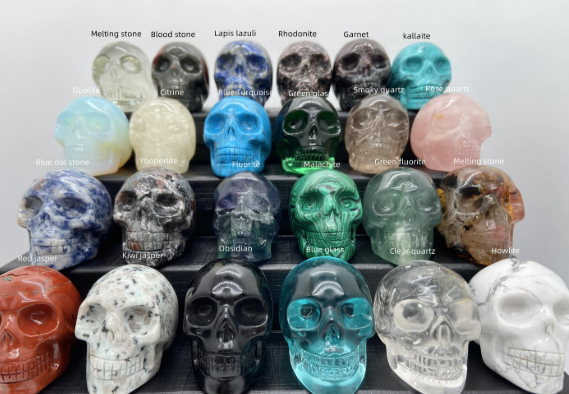
Alas… no Crystal Skulls.
But the truth might actually be stranger than the myth.

Science has been making some remarkable strides in the world of computing — the kind of breakthroughs that sound like science fiction until you realize they’re already being tested in labs. Here are just a few of the technologies researchers are exploring:


1. Photonic Chips

These chips compute with light instead of electricity.
Photons move faster, generate almost no heat, and can carry far more information than electrons. Some early photonic processors already exist, and they look like something straight out of a futuristic glass sculpture.

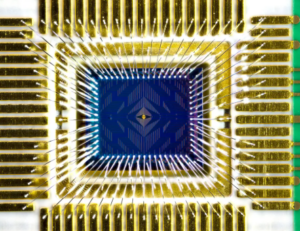
2. Quantum Chips

Quantum computers use qubits, which can be 0 and 1 at the same time. I sometimes wonder if they ever have an identity crisis.
They’re built from exotic systems like superconducting circuits, trapped ions, and even diamond defects. They won’t replace your home computer anytime soon, but they’re already solving specialized problems in chemistry and cryptography.


3. Cryogenic Chips
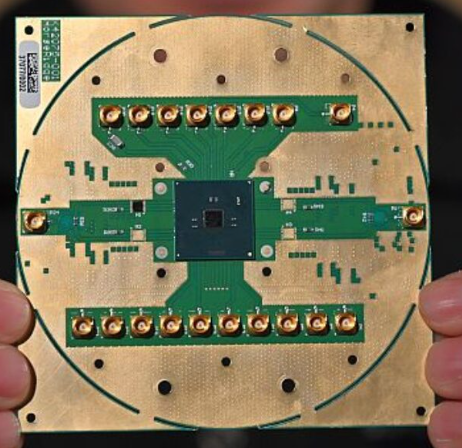
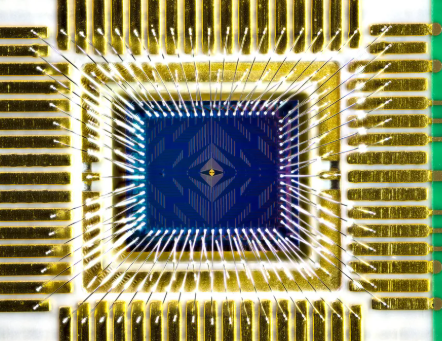
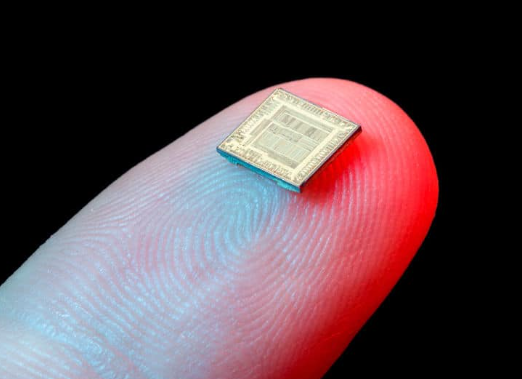
Intel Cryogenic control chip

These operate at temperatures just above absolute zero.
Why so cold? Because superconducting materials behave beautifully in that environment — almost no electrical resistance, ultra‑low noise, and blazing‑fast switching speeds. NASA and IBM are both experimenting with them.


4. Neuromorphic Chips

Inspired by the human brain, these chips use components that act like neurons and synapses.
They’re built from materials such as memristors and phase‑change crystals, allowing them to “learn” patterns the way biological brains do. Think of them as early prototypes of artificial intuition.



5. Wafer‑Scale Chips

This is the one behind that headline.
Instead of slicing a silicon wafer into hundreds of tiny chips, engineers use the entire wafer as one enormous processor. Companies like Cerebras and Tesla are already building these dinner‑plate‑sized computing beasts.
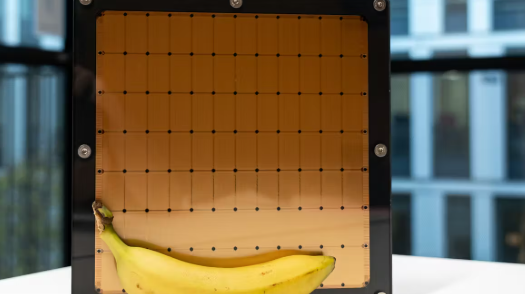

So no, the Crystal Skulls haven’t been unearthed… but the technologies emerging today are astonishing in their own right.

So that’s my geek‑out for today. At this rate, I’m half expecting a Starfleet recruitment booth to pop up at the mall — and if anyone spots a transporter pad being installed at Target, please report back immediately!

Beam Me Up Scotty
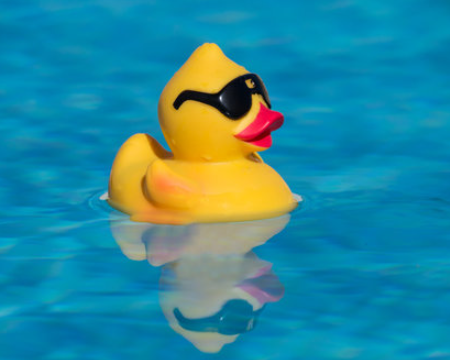
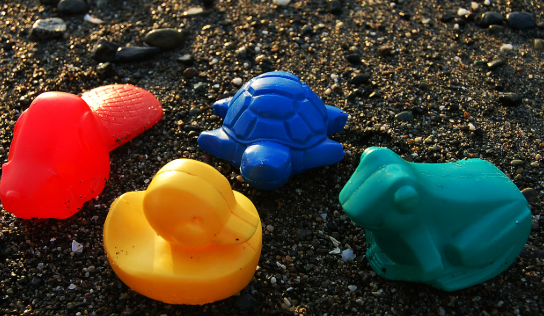


The Rubber Ducks That Went Around the World

How a Lost Cargo Became a Scientific Treasure Map

Every so often, the ocean hands us a story so strange and delightful that it sounds like fiction. The Great Rubber Duck Spill of 1992 is one of those tales — a mix of accident, adventure, and unexpected scientific discovery.

A Storm, a Ship, and 28,800 Floating Toys

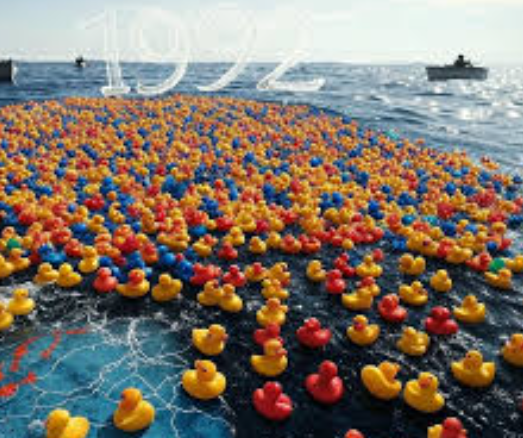
On January 10, 1992, the cargo ship Ever Laurel was crossing the North Pacific when it hit a powerful storm. Twelve containers went overboard, and one of them burst open, releasing 28,800 plastic bath toys into the sea. These weren’t just yellow ducks — the shipment included blue turtles, green frogs, and red beavers.


Because the toys had no holes, they didn’t sink. Instead, they bobbed along the surface, ready to drift wherever the currents carried them.

Why Scientists Paid Attention

Oceanographers quickly realized this spill was more than a quirky headline. It was a rare, real‑world experiment: thousands of identical floating objects released at a single point in the ocean. By tracking where the toys washed ashore, scientists could trace the movement of surface currents with surprising accuracy.

The toys became bright, plastic breadcrumbs that revealed how water circulates across the globe — especially in the vast, looping systems known as gyres.


What Exactly Is a Gyre?

A gyre is a massive, slow‑moving swirl of ocean currents, often spanning thousands of miles. Picture a gentle, continent‑sized whirlpool created by wind, Earth’s rotation, and the shape of the ocean basins. The Pacific has several major gyres, and many of the toys became trapped in these loops, circling for years before escaping or freezing into Arctic ice.

A Legacy Still Washing Ashore

Over the decades, sun‑bleached ducks and their colorful companions have appeared in Alaska, Hawaii, Japan, New England, and even the shores of the UK. Each one is a tiny reminder of how connected our oceans truly are — and how far a little plastic traveler can roam.

If you ever spot a weathered duck on a distant beach, you might just be meeting one of the world’s most famous accidental explorers.

Bizarre Animal Facts That Sound Made Up


  🐙🦩🐬

Party Tricks in the Animal Kingdom

Nature is the ultimate improv comedian. Just when you think you’ve seen it all, animals pull out the weirdest party tricks. Take the pistol shrimp—this tiny creature snaps its claw so fast it creates a bubble hotter than the sun. That’s right, it’s basically packing a superheated water gun. And then there’s the mantis shrimp, whose punch is so powerful it can break aquarium glass. If animals had a boxing league, the mantis shrimp would be the undefeated champ.

FlamingosFlamingos, Polar Bears, and Other Oddities
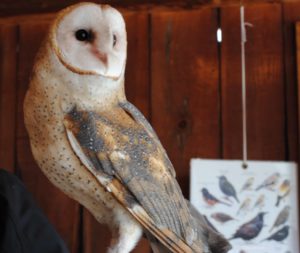
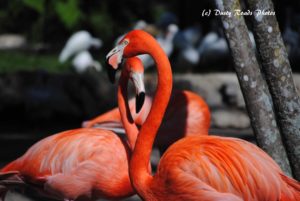
Flamingos aren’t born pink—they’re naturally grayish-white. Their rosy glow comes from eating brine shrimp and algae, so technically they’re living proof that “you are what you eat.” Polar bears, meanwhile, look fluffy and white but actually have black skin under all that fur to soak up the sun. And owls? They don’t have eyeballs at all—just long, tube-shaped eyes that make them masters of the dramatic head swivel.

Millie, American Barn Owl Ambassador

Animal Social Scenes

Here’s where it gets wild. Dolphins have been spotted passing around pufferfish to release mild toxins that leave them in a trance-like state. It’s basically the ocean’s version of a smoke circle—except instead of a joint or bong, it’s a spiky little fish. Picture dolphins giggling and saying, “Don’t bogart the puffer, man.”

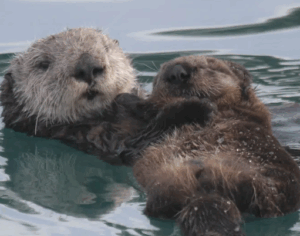
Meanwhile, otters hold hands while they nap so they don’t drift apart. It’s adorable, like a floating cuddle puddle. And goats? They can pick up accents from their herd mates. Imagine a goat moving to Boston and suddenly bleating with a Southie twang.

Seasonal Magic

Some animals even change with the seasons. Reindeer eyes turn blue in winter to help them see in the dark Arctic months. It’s like they’ve got built-in night vision goggles—Santa’s squad is seriously high-tech.

Final Laugh

From shrimp with sonic booms to dolphins puff-puff-passing, the animal kingdom is full of bizarre, hilarious wonders. Next time you’re people-watching, remember: animals are out there doing even stranger things, and they don’t care who’s watching.


Orange You Glad It’s a Shark?


Creamsicle Shark of Costa Rica: Nature’s Sweetest Surprise

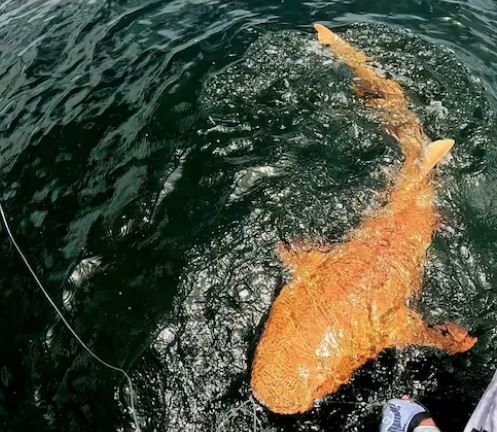
Somewhere off the Caribbean coast of Costa Rica, nature whipped up a treat that’s part shark, part sherbet, and all spectacle. Meet the Creamsicle Shark—a nurse shark with a rare genetic twist that turned it a glowing shade of orange, like it swam straight out of a popsicle ad.

NATIONAL CREAMSICLE DAY - August 14, 2026 - National Today

Stock photo

Catch & Release- Its still out there

Local fisherman Garvin Watson reeled in the citrus-hued creature near Tortuguero National Park, and the reaction was pure delight. “It looked like an alien,” he said, as the crew snapped photos and squealed like kids spotting a unicorn in the surf. The shark was released unharmed, but its legend is just beginning.

Photo Credit (Garvin Watson/Parismina Domus Dei

Scientists later confirmed this was no ordinary catch. The shark had both xanthism (a condition that boosts yellow pigmentation) and albinism, making it a one-in-a-million marvel. It’s the first documented case of xanthism in a nurse shark—proof that even the deep sea has a flair for drama.

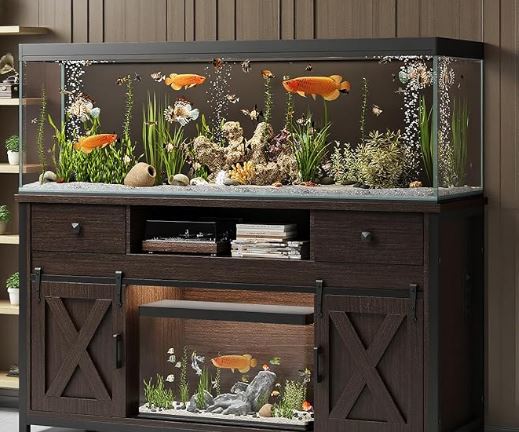
If this creamsicle-colored wonder has you dreaming of underwater worlds, why not bring a splash of the ocean home? A well-designed aquarium can be a tranquil centerpiece, a sensory escape, and a nod to nature’s whimsy. [Affiliate link to aquariums] 🐠

Amazon

Whether you’re a marine biology buff or just love a good sea story, the Creamsicle Shark reminds us that the ocean still holds sweet surprises. And sometimes, they come in orange.

____________________________________________________________________________________________________________

Affiliate Disclosure: Some of the links in this post are affiliate links, which means I may earn a small commission if you make a purchase—at no extra cost to you. I only recommend products I genuinely love and think you’ll enjoy too. Thanks for supporting Around Dusty Roads and helping keep the storytelling flowing

A Trace is still a Trace

My sister was tracing my mother’s side of the family tree and said she found a Native American in our linage.

native-american-scholarship

I thought this was just great. I’ve always felt a connection to Native Americans.

family-tree

Of course I started asking for more information that she just didn’t have so finally I submitted my saliva (aka spit) to Ancestry.com. It seemed to take forever. Every couple of weeks I’d get an email from them with an update…we have your sample…we’ve submitted your sample…your sample is being analyzed…Then the big day came. I got an email with the title: Great News! Your DNA results are in!.

113013_DNA_600

I was so excited!

When I checked the result I felt a little like the Ancestry.com TV ad where the guy says “Growing up we were German then I submitted my DNA to Ancestry.com and found out we were Scottish. I traded my Lederhosen  for a kilt.”

My heritage breakdown was

33%  Irish

irish-dancing-2

26%  Great Britain

Stonehenge_from_the_northeast

11%  Western Europe

oktoberfest-dancers-2

But where was the Native American? In fact where was Canadian? I know my maternal grandparents were French Canadian! But I really wanted the Native American bloodline.  I felt so let down. But wait, there’s a tab that says “America Trace”. I clicked it and there it was…Native American, just a trace but that’s ok.

girlmortar

At least I have a little bit flowing through my veins.