Colorado’s Big, Bold, and Slightly Baked Idea


A Wildlife Overpass for the Ages
A Mile‑High Solution to a Down‑to‑Earth Problem

Yo, wildlife lovers—gather ‘round. Did you know that Colorado, the state where the air is thin, the mountains are tall, and the recreational marijuana is… well, very recreational, is building one of the world’s largest wildlife overpasses? Yes indeed. Leave it to Colorado to say, “Hey, what if we just let the elk do their thing—safely—and vibe their way across the interstate?”
Mama and Cubs

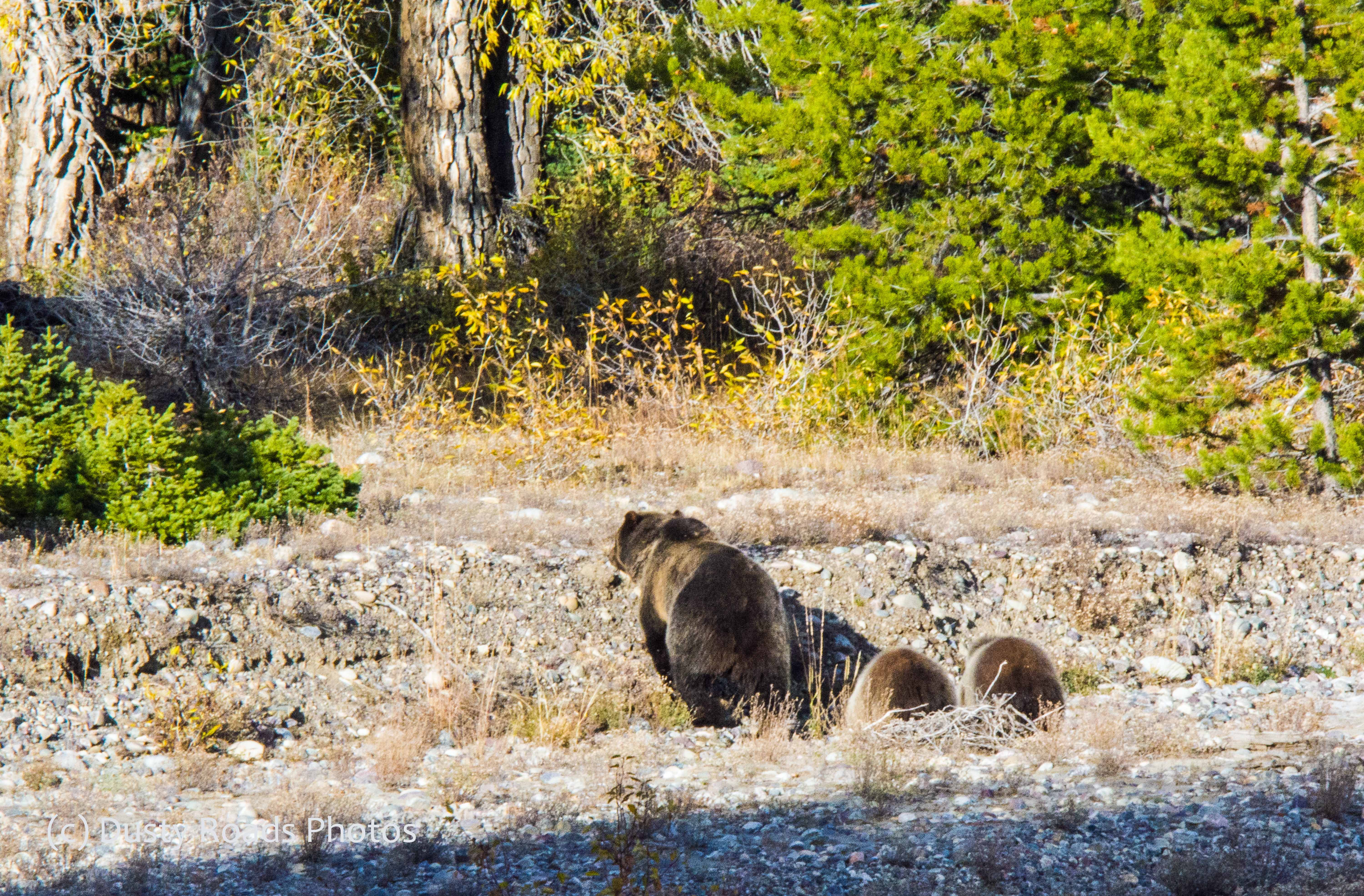
Grizzly 399 and cubs -Wyoming Photo Credit Deb Neumann

I first heard about wildlife crossings in Canada, where they’ve been quietly helping critters avoid becoming roadkill for years. Sometimes it’s a tunnel under a highway; sometimes it’s a lush, green overpass that looks like a national park decided to take a nap on top of a bridge. Either way, the goal is simple: stop the heartbreaking (and frankly messy) carnage we see on roads every year. From squashed squirrels to majestic elk and even bears—vehicle collisions take a toll. Grizzly 399 in Wyoming, a beloved icon, was tragically killed by a vehicle accident. These crossings matter.

The Biggest, Boldest Overpass Yet

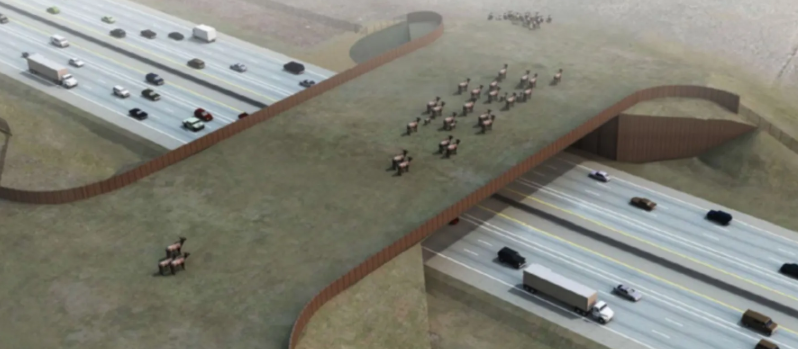
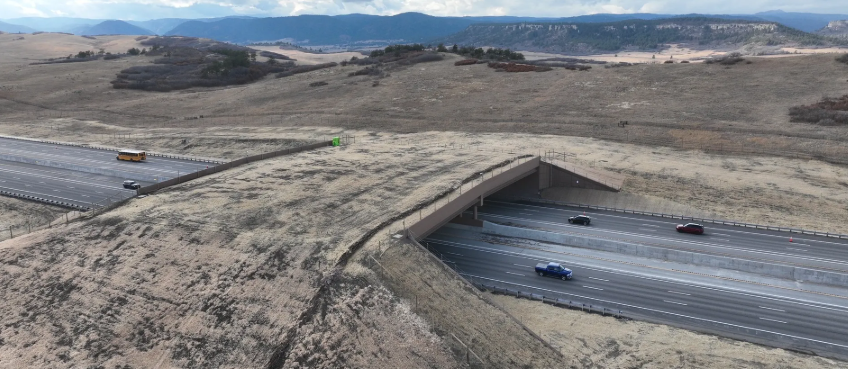
Colorado’s new wildlife overpass is being built across I‑25 near the Greenland interchange between Larkspur and Monument. And this isn’t just any overpass—this will be the world’s largest wildlife structure over a major roadway. Leave it to Colorado to go big or go home. Maybe it’s the altitude. Maybe it’s the edibles. Who’s to say.

This massive structure will span six full lanes of interstate traffic. Imagine elk strolling over rush hour like they’re on a scenic hiking trail while commuters below sip coffee and wonder why they didn’t choose a simpler life in the woods.
Why Overpasses Work (Especially for the Big Guys)

Before this system began construction, this stretch of I‑25 saw an average of one wildlife‑vehicle crash per day. One. Every. Day. The new crossing system—overpass plus underpasses—is expected to reduce those crashes by up to 90%.
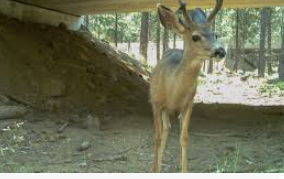
Smaller animals tend to use the tunnels, but elk and other large game? They’re not fans of enclosed spaces. Tunnels don’t accommodate their antlers, their line of sight, or their general “I need room to strut” energy. Overpasses, with open views and natural vegetation, are their preferred runway.

A Win for Wildlife and Drivers Alike

This project is a reminder that conservation doesn’t always require grand speeches or sweeping legislation. Sometimes it’s as simple—and brilliant—as giving animals a safe path home. Colorado’s leading the way, and honestly, I hope more states follow suit.

After all, if we can build bridges for people, why not build them for the creatures who were here long before the interstates arrived?
 

One More Scary Bridge Story


One More Scary Bridge Story: The Final Chapter

After my last post about terrifying bridges, I expected a flood of horror stories. There are certainly enough fear-inducing spans out there—but it seems you, my dear readers, are made of sterner stuff.

Still, a few brave souls shared their tales, and I couldn’t resist digging deeper. Let’s take one last look at some of the world’s most spine-tingling bridges before we lay this topic to rest.


🌉 Mile High Swinging Bridge — North Carolina

This one wasn’t on my original list, but a reader’s story of sheer terror sent me searching.

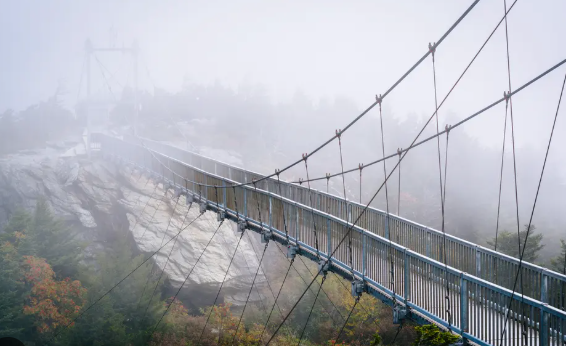
Located in Grandfather Mountain Nature Park, the Mile High Swinging Bridge is a 228-foot suspension bridge that spans an 80-foot chasm—at more than one mile in elevation. To reach it, you’ll drive a winding two-mile scenic road, climb 50 stairs to the Top Shop, and then take an elevator to the final leg.

The bridge is fully accessible, so yes—you can roll across in a wheelchair. Equal opportunity thrills (or chills), indeed.


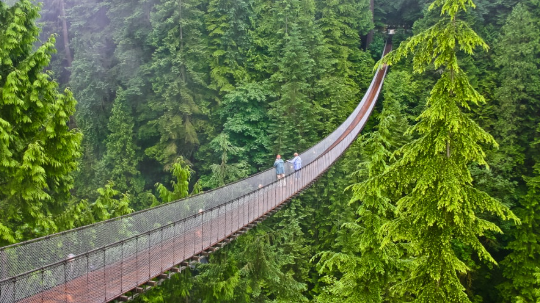
🌲 Capilano Suspension Bridge — British Columbia, Canada

This one made my original list and was also suggested by a reader who’s “been there, done that.” Just looking at the photos had my heart in my throat.

Stretching 450 feet across and suspended 230 feet above the Capilano River, this swaying, bouncing bridge connects manicured gardens to temperate rainforest. Steel cables serve as handrails, and wooden planks make up the floor—just enough to keep you wobbling with every step.

The website reassures visitors that the bridge can hold the weight of a fully loaded 747. Comforting? Maybe. But I’ll still be clutching those cables.


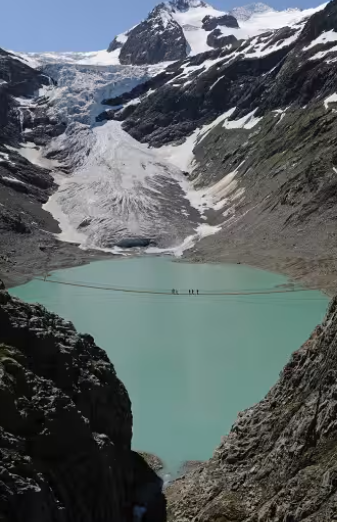
🏔️ Trift Bridge — Switzerland

One more for the road—because why not end with a high-altitude thrill?

Built in 2004 and modeled after Nepalese high-wire bridges, the Trift Bridge was designed to restore access to the Trift Glacier, which had receded due to global warming. It became such a tourist magnet that it was replaced in 2009 with a safer version.

Suspended 328 feet above the ground and stretching 558 feet long, this pedestrian bridge is considered one of the most spectacular in the Alps. If you can handle the height, the views are unforgettable.


🧭 There Are More…

Of course, this is just the tip of the terrifying iceberg. A quick search for “Most Dangerous Bridges in the World” will reveal dozens more. But for now, I think we’ve crossed enough chasms together.

If I missed one of your favorites, drop me a note! Maybe we’ll revisit this topic down the road—preferably one with guardrails.


Bridges of Terror

Bridges That Dare You to Cross

Let’s talk bridges—again. When I first dipped into this topic, I had no idea how many life-threatening crossings existed around the world. It’s truly fascinating… and a little terrifying.

Here are a few more that push the limits of courage and engineering:

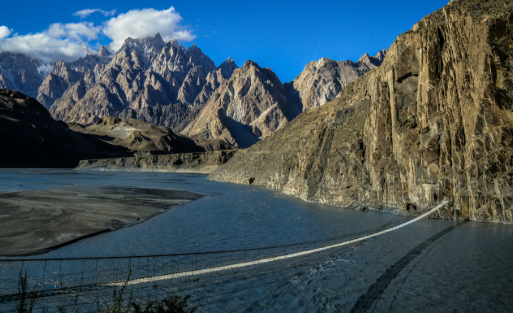
🌪️ Hussaini Suspension Bridge — Pakistan

A landslide wiped out the original 1968 bridge, and in its place rose a daring suspension of wooden planks and rope—minimalist, precarious, and unforgettable. Picture this: 635 feet of rectangular wooden planks, strung together by just six ropes. To reduce wind vibrations, the planks are spaced apart—meaning you’ll be stepping over gaps as you cross. In 2013, Condé Nast Traveler named it one of the most dangerous bridges in the world. No surprise there.

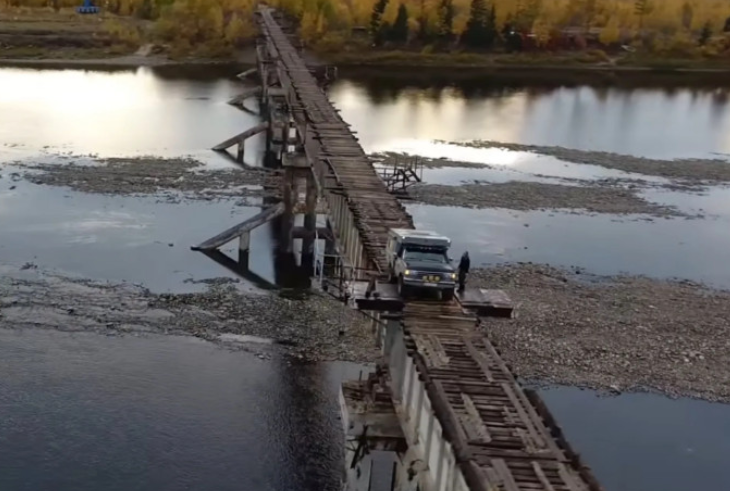
🪵 Vitim River Bridge — Russia

This one sets the bar for sheer nerve. A single-lane wooden bridge with no railings, perched over a frigid Siberian river. Add in rotting wood and icy conditions, and you’ve got a recipe for second thoughts. It’s not just a crossing—it’s a dare.

🌊 Carrick-a-Rede Rope Bridge — Northern Ireland

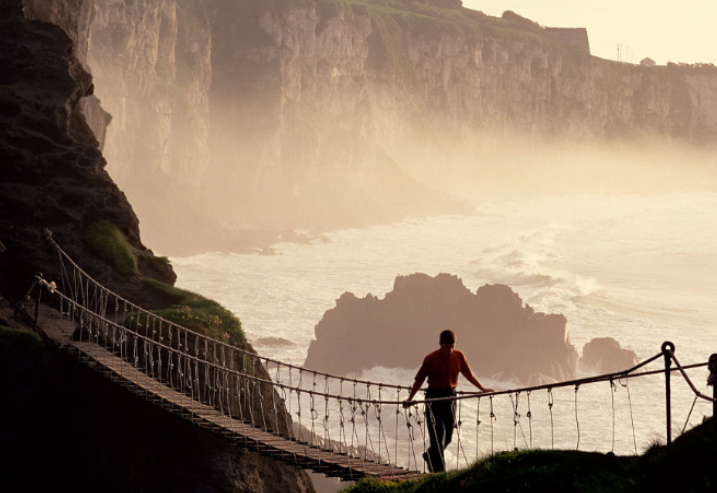
Spanning 66 feet and suspended 98 feet above jagged rocks, this rope bridge connects Carrick Island to the mainland. Strong winds and crashing waves make the crossing a heart-pounding experience. Some tourists are so shaken they need to be ferried back by boat. Would you brave it?

🐒 Monkey Bridges — Vietnam

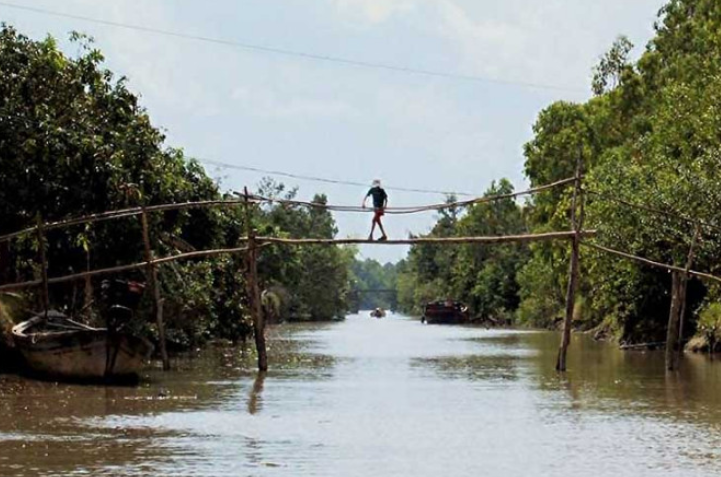
Crafted from bamboo and used daily by locals, these narrow, unsupported bridges are a test of balance and bravery. Tourists often hesitate—but if you’re feeling bold, they offer a truly authentic challenge. Think you’ve got the nerve?

🧗 Tianmen Mountain Glass Skywalk — China

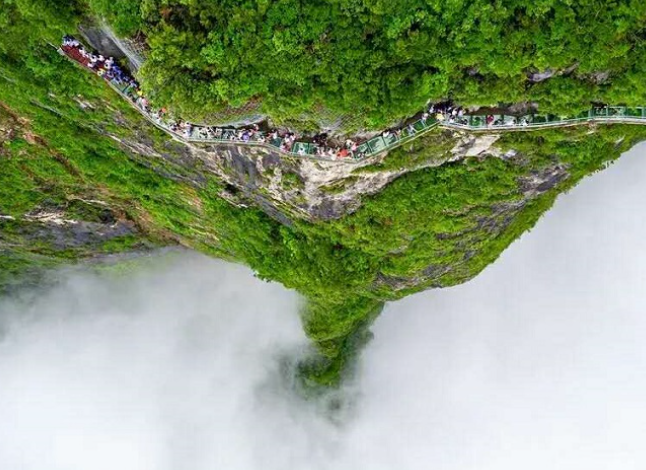
Afraid of heights? Timid? Have a heart condition? Then this one’s not for you. Built along high cliffs, these glass skywalks are painted green to reduce panic—but even that doesn’t stop knees from buckling. The views are breathtaking, if you can keep your eyes open. If you go, I’d love to hear how you fared.


More to Come…

There are countless bridges out there that test the limits of human courage. I won’t get to them all—but I’d love your help. Have you crossed a bridge that belongs on this shortlist of terror? Drop me a note and let’s add it to the adventure.


A Mustang Like No Other

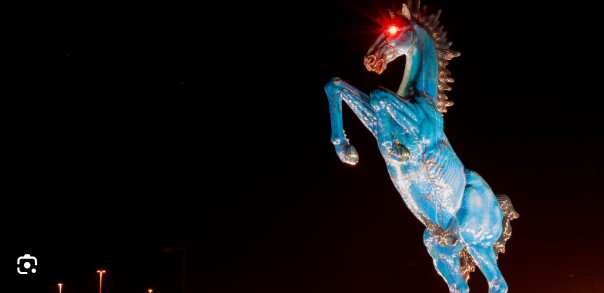
Returning to Arounddustyroads roots of travel stories and the approach of Halloween seems a good time to touch on the mysterious Blue Mustang of Denver International Airport. “Blue Mustang”—a towering sculpture steeped in tragedy, controversy, and conspiracy—has become one of the most iconic and unsettling landmarks in Colorado.


The Beast at the Gate: A Mustang Like No Other

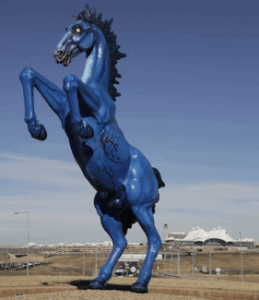
Standing 32 feet tall and weighing approximately 9,000 pounds, the cast-fiberglass sculpture known as Blue Mustang greets travelers along Peña Boulevard leading to Denver International Airport (DIA). Its electric-blue body and glowing red eyes have earned it the ominous nickname Blucifer, a moniker that reflects both its dramatic appearance and the dark tale behind its creation.

A Vision Cut Short: Luis Jiménez’s Final Work

Commissioned in 1992 as part of Denver’s public art initiative, artist Luis Jiménez envisioned the mustang as a tribute to the spirit of the American West. Drawing inspiration from his own Appaloosa stallion, Blackjack, Jiménez poured years of effort into the sculpture. Tragically, in 2006, a section of the statue broke loose during studio work and fatally severed an artery in his leg. After his death, the piece was completed by his family and fellow artists, including Camillo Nuñez and Richard LaVato, and finally installed in 2008.

Blucifer’s Glow and the Public’s Unease


The sculpture’s glowing red eyes—an homage to the neon signs crafted by Jiménez’s father—have fueled eerie interpretations. Some locals view the mustang as demonic or cursed, while others admire its bold presence and artistic merit. Despite initial backlash and calls for its removal, Blucifer has become a permanent fixture and a symbol of Denver’s unconventional approach to public art.

DIA: A Hotbed of Conspiracy

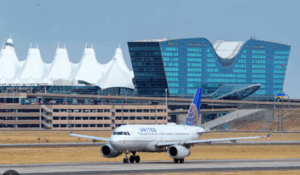
Denver International Airport itself is no stranger to mystery. Since its opening in 1995, DIA has been the subject of countless conspiracy theories. From alleged underground bunkers and secret societies to murals with supposed subliminal messages, the airport has inspired speculation about hidden agendas and paranormal activity. The mustang’s deadly backstory only adds fuel to the fire, with some theorists claiming it’s part of a larger narrative involving alien coordinates and apocalyptic symbolism.

A Legacy of Awe and Intrigue

Though born of tragedy and surrounded by controversy, Blue Mustang endures as a striking piece of public art. It stands not just as a gateway to Denver, but as a testament to Jiménez’s vision and the airport’s embrace of the bizarre. Whether seen as a protector of travelers or a harbinger of mystery, Blucifer continues to captivate and unsettle in equal measure.


Road Trip to Hana- Again

On the Road to Hana

I’m in Maui so that means a trip to Hana. The only way to get there is taking the “Road to Hana” also called the Hana Highway. Regular visitors to this site can attest to my experiences with the Hana Highway. I’ve had some close calls when I’ve attempted to make the drive on my own so this time I chose to take a tour. Let someone else do the driving. In case you are wondering about my cowardly decision the Road to Hana is considered the 5th most dangerous road In The World!

The Hana Rainforest & Waterfall Fun Tour

The concierge recommended Aloha Sunshine Tours for the trip to Hana. Pick up was in the lobby at Ka’anapali Beach Club at 6:10 am. I was advised to wear a bathing suit under my clothes and bring beach towels and sunscreen. Also recommended was bug repellent and Dramamine. This is not an inexpensive trip. I was receiving a discount but for those not members of a resort club or time share the cost of the tour was $161.45 per adult. The price includes lunch in Hana. In our case lunch was a sandwich wrap and a soft drink. I just didn’t want you to think it was an elaborate restaurant meal, it wasn’t. 

Lets Talk about The Road to Hana

The Hana Highway is dangerous because in a 30 mile stretch there are 620 curves and 59 single lane bridges. Unlike other places where one car goes then the other side goes, like at a stop sign, if you have a line of cars behind you  that gives you the right of way and the on coming cars all wait until the whole string of cars has passed. Some of the curves are blind curves. Our tour bus went around them with the horn blaring to let cars on the other side of the curve know we were coming. Two of the passengers got car sick. but thankfully managed to hold it until we could find a place to pull over. The drop offs can be dizzying when you look down.

The Hana Highway runs through a rainforest

The scenery is magnificent. We stopped to take a quick dip under a waterfall. You are traveling through an honest to goodness rainforest. Waterfalls abound, some dripping down onto the highway. There can be fog and limited visibility. The day we went it was sunny for the most part. Only patches of rain. One big change from my previous tour, when we got to Hana we turned around and came back. The tour did not take us on the back side of Haleakalā. Our driver said the unpaved road there was too rough on their vans. I’ll share some of the stops we made in the next post.

If You Go

If you get to Hana , whether on your own or by tour, be sure to pick up some banana bread. It is THE BEST! I’m told it’s made with the tiny bananas and that is what makes it so moist and sweet. I don’t know if that’s true but I’ve never had banana bread as good as this in my life. Its worth the scary ride on the Road to Hana.