Upside-Down Trees


đŸŒČUpside-Down Trees, Blossoms, and Bigfoot: A Twisted Tale from the Wild

Have you ever stumbled across a tree so bizarre it makes you question everything you know about forests? I’m talking about upside-down trees—roots in the air, branches buried in the ground. The first time I heard about them was while watching Expedition Bigfoot, and let me tell you, the theories were as wild as the wilderness itself.

👣 Bigfoot’s Botanical Calling Card?

According to some Bigfoot enthusiasts, these inverted trees aren’t just random oddities—they’re territorial markers. Picture it: a massive creature yanking a tree from the earth and slamming it back down, roots skyward, as a way of saying, “This is my turf.”

  • No machinery marks: Some of these trees are found deep in remote areas, with no signs of heavy equipment. Could a creature with superhuman strength be responsible?
  • Linked evidence: Upside-down trees often appear alongside other alleged Bigfoot clues—broken branches, bent saplings, and the eerie phenomenon known as “wood knocking.”

It’s a compelling theory, especially if you’re already deep in the Bigfoot rabbit hole. But not all explanations require a cryptid with landscaping skills


🌳 From Myth to Masterpiece: The Flower Towers of Alaska

While Bigfoot might be flipping trees for fun (or fury), there’s a more grounded—and gorgeous—version of this phenomenon in Alaska. Near the Mendenhall Glacier (yes, that glacier I visited back in 2013 and wish I’d known about this then!), a landscaper turned frustration into floral genius.

The story goes like this: after damaging some heavy equipment, the landscaper vented his rage by slamming a fallen tree stump upside down into the mud. As he stared at the dangling roots, he had a revelation—they looked like vines. Inspiration bloomed.

And so did the trees.

He went on to invert over 20 dead trees, transforming them into Flower Towers—a surreal garden where moss and netting cradle vibrant begonias, fuchsias, and petunias. The roots, once ragged and bare, now form a canopy dripping with color and life.


🌾 Bigfoot or Bloom? You Decide

Whether you lean toward cryptid theories or creative landscaping, upside-down trees are undeniably magical. They blur the line between folklore and flora, mystery and masterpiece.

If you’re itching to see these Flower Towers for yourself, head to Glacier Gardens Rainforest Adventure in Juneau, Alaska. It’s open May through September—and who knows, maybe Bigfoot will be admiring the begonias too.


A Mustang Like No Other

Returning to Arounddustyroads roots of travel stories and the approach of Halloween seems a good time to touch on the mysterious Blue Mustang of Denver International Airport. “Blue Mustang”—a towering sculpture steeped in tragedy, controversy, and conspiracy—has become one of the most iconic and unsettling landmarks in Colorado.


The Beast at the Gate: A Mustang Like No Other

Standing 32 feet tall and weighing approximately 9,000 pounds, the cast-fiberglass sculpture known as Blue Mustang greets travelers along Peña Boulevard leading to Denver International Airport (DIA). Its electric-blue body and glowing red eyes have earned it the ominous nickname Blucifer, a moniker that reflects both its dramatic appearance and the dark tale behind its creation.

A Vision Cut Short: Luis JimĂ©nez’s Final Work

Commissioned in 1992 as part of Denver’s public art initiative, artist Luis JimĂ©nez envisioned the mustang as a tribute to the spirit of the American West. Drawing inspiration from his own Appaloosa stallion, Blackjack, JimĂ©nez poured years of effort into the sculpture. Tragically, in 2006, a section of the statue broke loose during studio work and fatally severed an artery in his leg. After his death, the piece was completed by his family and fellow artists, including Camillo Nuñez and Richard LaVato, and finally installed in 2008.

Blucifer’s Glow and the Public’s Unease


The sculpture’s glowing red eyes—an homage to the neon signs crafted by JimĂ©nez’s father—have fueled eerie interpretations. Some locals view the mustang as demonic or cursed, while others admire its bold presence and artistic merit. Despite initial backlash and calls for its removal, Blucifer has become a permanent fixture and a symbol of Denver’s unconventional approach to public art.

DIA: A Hotbed of Conspiracy

Denver International Airport itself is no stranger to mystery. Since its opening in 1995, DIA has been the subject of countless conspiracy theories. From alleged underground bunkers and secret societies to murals with supposed subliminal messages, the airport has inspired speculation about hidden agendas and paranormal activity. The mustang’s deadly backstory only adds fuel to the fire, with some theorists claiming it’s part of a larger narrative involving alien coordinates and apocalyptic symbolism.

A Legacy of Awe and Intrigue

Though born of tragedy and surrounded by controversy, Blue Mustang endures as a striking piece of public art. It stands not just as a gateway to Denver, but as a testament to JimĂ©nez’s vision and the airport’s embrace of the bizarre. Whether seen as a protector of travelers or a harbinger of mystery, Blucifer continues to captivate and unsettle in equal measure.


Scenic Chair Lifts & Sky-High Leaf Peeping


🎱 Scenic Chair Lifts & Sky-High Leaf Peeping: New England’s Autumn Adventures

Oh hey, Leaf Peepers 🍁—ready to elevate your fall foliage game? If you’re tired of craning your neck through car windows or dodging reflections off the windshield, New Hampshire and Vermont have a better idea: take to the skies.

Stock photo

🎿 Chair Lifts & Gondolas with a View
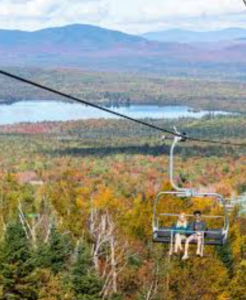
Ski resorts across the region open their lifts to non-skiers each autumn, offering a bird’s-eye view of the blazing reds, golds, and oranges below. You’ll be strapped in, feet dangling, soaring over treetops like a migrating hawk. Feeling bold? Snap a few photos mid-air—if your nerves allow. Prefer something enclosed? Opt for a gondola ride, where you can enjoy the same stunning views from the comfort of a cozy cabin.

Photo Credit Deb Neumann


🎱 But Wait—There’s More (Thrill Seekers, This One’s for You)

🎱 Thunderbolt Mountain Coaster – Berkshires, MA
If your idea of leaf peeping involves adrenaline and velocity, head to Thunderbolt Mountain Coaster in the Berkshires. This alpine coaster climbs 1,500 feet before plunging down Mount Institute in a blur of hairpin turns and forested speed. You might not catch every leaf, but your heart will definitely skip a beat.

Stock photo


🚂 A More Sedate Journey

🚂 Conway Scenic Railroad – White Mountains, NH
For a gentler ride through fall’s splendor, hop aboard the Conway Scenic Railroad. Winding through the White Mountains, this vintage train offers panoramic views of Crawford Notch’s cliffs and fiery foliage. Want the ultimate experience? Splurge on a seat in the glass-domed car—360 degrees of autumn magic.

Stock photo


🌳 Walk Among the Treetops

🌳 Canopy Walk – Vermont Institute of Natural Science
Ever dreamed of strolling through the treetops? Vermont makes it real. The Canopy Walk at VINS invites visitors of all abilities to wander above the forest floor, immersed in golden leaves and birdsong. It’s peaceful, poetic, and perfect for families, nature lovers, and anyone craving a gentle thrill.

Murch Canopy Walk » HF&G

Stock photo


🧗 Zip Lines & Obstacle Courses

🧗 Adventure Park – Discovery Museum, Bridgeport, CT
Zip lines used to be a novelty—now they’re a staple of fall fun. At the Discovery Museum’s Adventure Park, you’ll zip through a kaleidoscope of leaves, suspended in midair like a squirrel on a mission. But that’s just the beginning: 14 treetop trails await, complete with swinging bridges, ladders, and cable runs. Friendly staff are on hand to help you gear up and get climbing.

The Adventure Park at Discovery Museum: Zipline & Rope Course

stock photo


🍂 Leaf Peeping, Reimagined

New England’s fall foliage isn’t just for slow drives and scenic overlooks anymore. Whether you’re gliding above the trees, racing through them, or walking among their golden crowns, there’s a thrill for every kind of adventurer. Seniors, families, daredevils—everyone’s invited to move leaf peeping off the ground and into the sky.

Photo Credit Deb Neumann


A Traveler’s Guide to Roadside Attractions


Just a heads-up: Some of the links in this post may be affiliate links. That means if you click through and make a purchase, I may earn a small commission—at no extra cost to you. I only share products, places, and experiences I truly love and think you will too. Thanks for supporting Around Dusty Roads and helping me keep the adventure going!

_________________________________________________________________

📝 Lists: These Are a Few of My Favorite Things

I love lists. I like to check off the things I’ve done and review the things to come. One of my favorites? A well-worn copy of 1,000 Places to See Before You Die. It’s part bucket list, part daydream fuel.

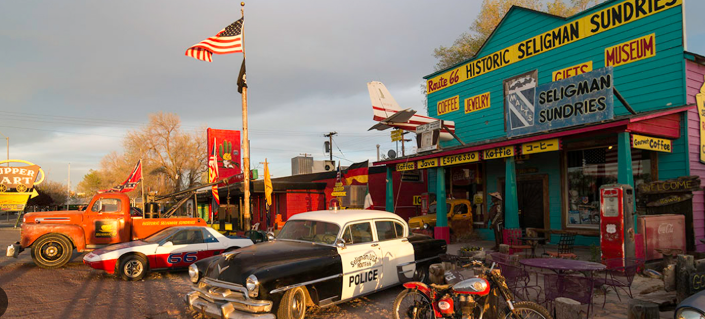
Every now and then, I stumble across a list of Roadside Attractions—those quirky, unforgettable stops that dot the highways like exclamation points. Starting in the 1920s and ’30s, the rise of the automobile road trip sparked a craze among entrepreneurs to build eye-catching structures and clever advertisements to lure passing motorists. The trend flourished through the 1950s and ’60s, often considered the “Golden Age” of roadside Americana. Route 66 was famous for it. And yes, I’ve driven parts of Route 66 myself.

Rt 66 2011 – Photo Credit Deb Neumann


⏳ Time Is Passing

Sadly, as time marches on, many of these roadside oddities are falling into ruin—or worse, being sold to developers and replaced with modern billboards and generic signage. The charm fades, but a few gems still linger.


📍 Three Attractions That Linger

Here are three roadside wonders I’ve personally visited—and they’ve left a lasting impression.


🩖 1. Wall Drug Store — South Dakota

Located near Badlands National Park, Wall Drug is more than a pharmacy—it’s a full-blown destination. Think kitschy souvenirs, an 80-foot animatronic T-Rex, and a dining room that serves up hearty fare. When people say “You can’t miss it,” they mean it. Just follow the signs off Route 16.

Wall Drug Store 2011- Photo Credit Deb Neumann

Thanks to a catchy jingle—
“Get a soda / get a beer / turn next corner / just as near / to Highway 16 and 14 / free ice water / Wall Drug”—
the cars started rolling in and haven’t stopped since.


🩕 2. Dinosaur Park — Rapid City, South Dakota

After a snack at Wall Drug, why not swing by Dinosaur Park? Built in 1936 during the Great Depression, this hilltop attraction features a towering 80-foot brontosaurus and six of its prehistoric pals.

Dinosaur Park Rapid City SD 2011- photo credit Deb Neumann

The idea was sparked by local discoveries of dinosaur bones and footprints—and it worked. The park captured traffic headed toward Mount Rushmore and became a beloved symbol of Rapid City. Today, the brontosaurus still stands tall, watching over the town like a gentle giant.

Big Brontosaurus- Rapid City photo credit Deb Neumann


đŸ§œâ€â™€ïž 3. Weeki Wachee Springs — Florida

Heading south to the Sunshine State, I was on the hunt for manatees—and found mermaids instead. Weeki Wachee Springs is famous for its live mermaid shows, a nostalgic nod to old Florida charm. But like the vintage ads say, “Wait—there’s more!”

Mermaid Show Weeki Wachee Springs 2012 – photo credit Deb Neumann

Visitors can take a nature boat ride, go kayaking, or splash around in the water park. It’s a fun day for all ages. And yes, if you’re lucky, you might just spot a manatee gliding through the springs. ( Yes, that’s me swimming with the baby manatee)

Baby Manatee

Manatee Whisperer 2017


Ghosts in the Dutch Room

Ghosts in the Dutch Room: My Brush with the Gardner Museum’s Lost Masterpieces

When I first moved to Boston in the 1970s, the Isabella Stewart Gardner Museum felt like a secret garden tucked behind Venetian walls.

Isabella Stewart Gardner Museum — Museum Review | CondĂ© Nast ...

Stock photo

I wandered its hushed rooms, drawn to the Dutch Room’s moody elegance—dark wood, gilded frames, and masterpieces that seemed to whisper stories if you lingered long enough. I remember standing before Rembrandt’s Storm on the Sea of Galilee, mesmerized by the chaos of waves and the quiet terror on each painted face.

Stock photo

Vermeer’s The Concert glowed with intimacy, a trio of musicians caught mid-note. I didn’t know then that I was witnessing something that would vanish forever.

Stock photo

The Heist

On March 18, 1990, two men disguised as Boston police officers entered the museum and stole thirteen works of art worth over $500 million. They tied up the guards, spent 81 minutes plucking treasures from the walls, and disappeared into the night. No arrests. No recovered art. Just empty frames still hanging in place—silent tributes to what was lost.

Visiting the museum now feels like stepping into a mystery novel. The Dutch Room is quieter than ever, its emptiness louder than any alarm. The stolen paintings are gone, but their absence is palpable. I find myself staring at the vacant frames, remembering the brushstrokes that once lived there.

stock photo

If you’re planning a trip to Boston, don’t miss the chance to experience one of the art world’s most enduring mysteries. The Gardner isn’t just a museum—it’s a living crime scene, a place where beauty and intrigue collide. You’ll walk through rooms curated by Isabella herself, past lush courtyards and haunting gaps in the gallery walls. It’s history, heartbreak, and high drama all in one.

photo credit Deb Neumann

Banner and Balboa, my feline muses, seem intrigued by the mystery too—especially the idea of cat burglars. Maybe I’ll let them sniff around the Dutch Room in their dreams. After all, every good mystery needs a clever sidekick.


stock photo

Travel Tip:
If you’re planning a visit to the Isabella Stewart Gardner Museum, aim for a weekday morning. The museum’s Venetian-style courtyard is especially tranquil when it’s less crowded, and the soft natural light spilling through the glass roof makes the perfect backdrop for reflection—or a moody Instagram moment. Don’t rush through the Dutch Room; linger by the empty frames and let the mystery settle in. And if you’re intrigued by the heist, consider watching the Netflix documentary This Is a Robbery before you go—it adds a thrilling layer to the experience.


The Five Frames Left Behind

stock photo