National Geographic’s 7 Natural Wonders of America


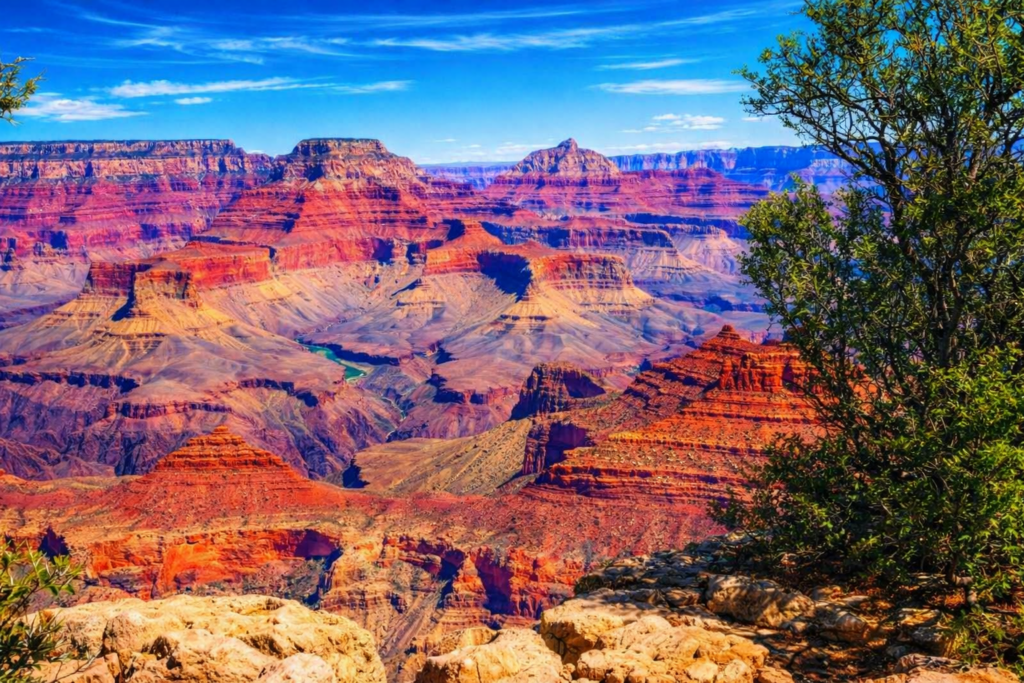
Wide view of the Grand Canyon showing layered red, orange, and tan rock formations under a clear blue sky. A green tree frames the right side, and sunlight highlights the canyon’s depth and geological details.”

Photo Credit Deb Neumann

What Wonders Await When You Dare to Explore

National Geographic has named seven Natural Wonders of America. It made me pause for a moment and ask myself: Have I explored any of them? As it turns out, I’ve been fortunate enough to experience many of these extraordinary places firsthand.

On the South Rim, Grand Canyon 2008

1. The Grand Canyon — “The Big Ditch”

This destination of a lifetime cannot be fully described. It can be photographed, painted, and praised by poets, but nothing prepares you for the awe of seeing it in person — whether for the first time or the fifth. Eighteen miles wide and over a mile deep, its scale is almost more than the mind can grasp.

I’ve seen it. I’ve stood at the edge and felt that dizzying thrill of peering into the vastness. It takes your breath away every single time.

2. Coastal Redwoods

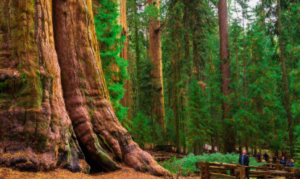
I have not yet explored the giant sequoias and redwood forests that stretch along the misty northern California coast. I’ve seen enormous trees in other places — including the sprawling banyan trees of Hawaiʻi — but a trip to California’s Redwood forests still waits on my list.

3. Niagara Falls

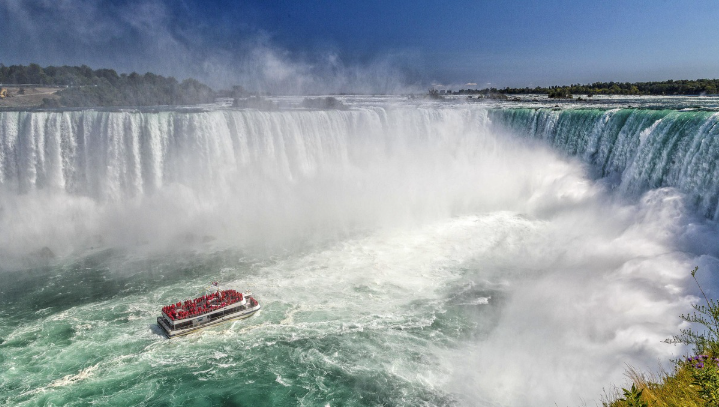
Truly one of the Wonders of America, Niagara Falls straddles the border between Canada and the USA — a cathedral carved by water and time. The Maid of the Mist heroically plunges into the wild waters at the base of the falls, where the world becomes wind and spray. Down there, the air itself is alive, whipped into motion by the thunderous plunge of millions of gallons of water. Gusts rise and swirl like invisible wings, tugging at your clothes and reminding you that nature still knows how to roar.

If this sounds like I’ve been there, it’s because I have. I’ve seen and felt the power of the falls up close and personal. It is truly a Natural Wonder and one not to be missed.

4. Appalachian Mountains

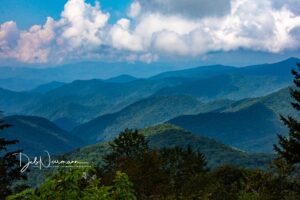
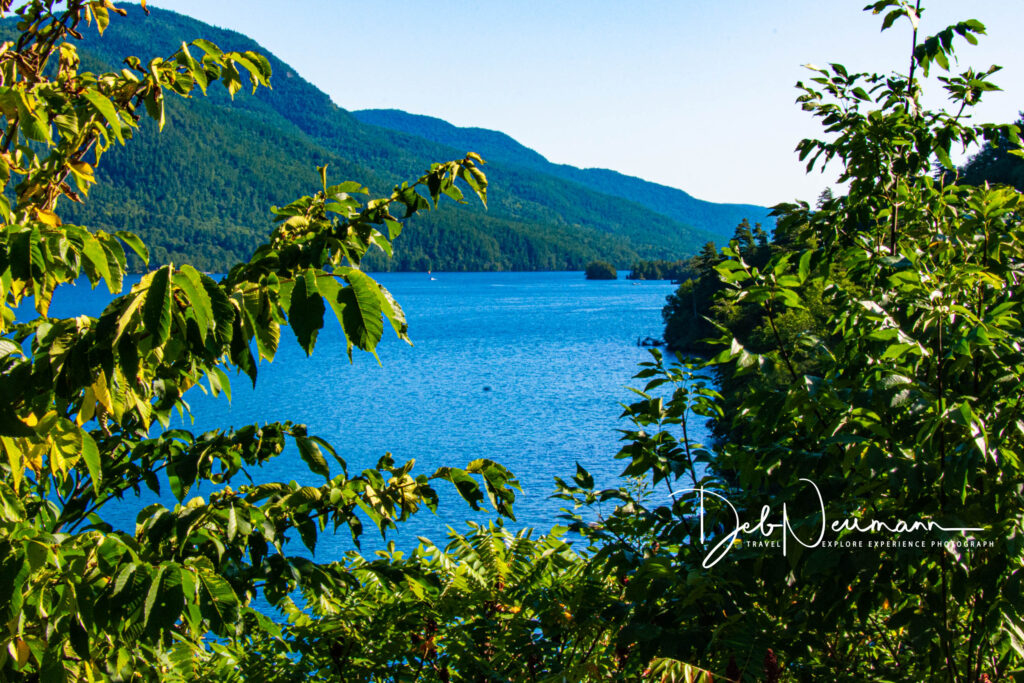
The Appalachian Mountains stretch roughly 2,000 miles from Alabama to Canada. I grew up in the Adirondack Park, on the shores of Lake George, never realizing that the mountains around me were part of a story far older and wider than my childhood. The Appalachians form a quiet backbone across the eastern states — through the soft Berkshires, the misty Catskills, the deep greens of the Smokies, and the sharp granite of the White Mountains.

The Appalachian Trail threads through many of these ranges, a long wandering line that eventually reaches Maine. When you grow up surrounded by mountains, you don’t always see them as wonders. They’re just there — the shape of your horizon, the backdrop of your summers, the steady presence behind every memory. Only later do you understand that you were living inside an ancient world without ever needing to look for it.

People travel from all over to experience these unspoiled mountain parks. But I grew up in them.


5. The Everglades

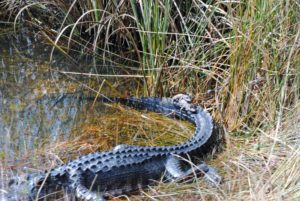
The Everglades is a slow — very slow — moving river in subtropical Florida. It’s a mix of fresh and salt water and home to an astonishing diversity of wildlife: wading birds with enormous wingspans, prehistoric reptiles like alligators and crocodiles, and rare creatures such as sea turtles, the Miami-blue butterfly, and the elusive Florida panther.

What most people don’t realize is that the Everglades is not just a national park — this ecosystem covers one-third of the entire state. It encompasses nine distinct habitats, from mangroves to sawgrass prairies.

Today, the Everglades faces threats from invasive species like Burmese pythons, which thrive in the warm climate and have no natural predators. Still, I’ve been there. I love it — even in the heat and humidity — and I would go back in a heartbeat. It’s wild and beautiful.

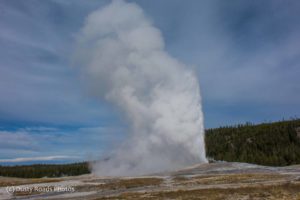
Old Faithful Erupts6. Yellowstone National Park

Another of my favorite places. When you realize you are walking, hiking, and driving inside the caldera of an enormous volcano, it can boggle the mind. Hot springs, bubbling mud pots, steaming geysers — everywhere you turn, you’re surrounded by nature’s raw power.

And then there’s the wildlife: deer, elk, bison, pronghorn, wolves, bears, coyotes, and foxes. If you love wild creatures, you are in the right place.


I’ve been to Yellowstone, and even after a week of exploring, I only scratched the surface of its wonders.

7. Hawaiʻi Volcanoes

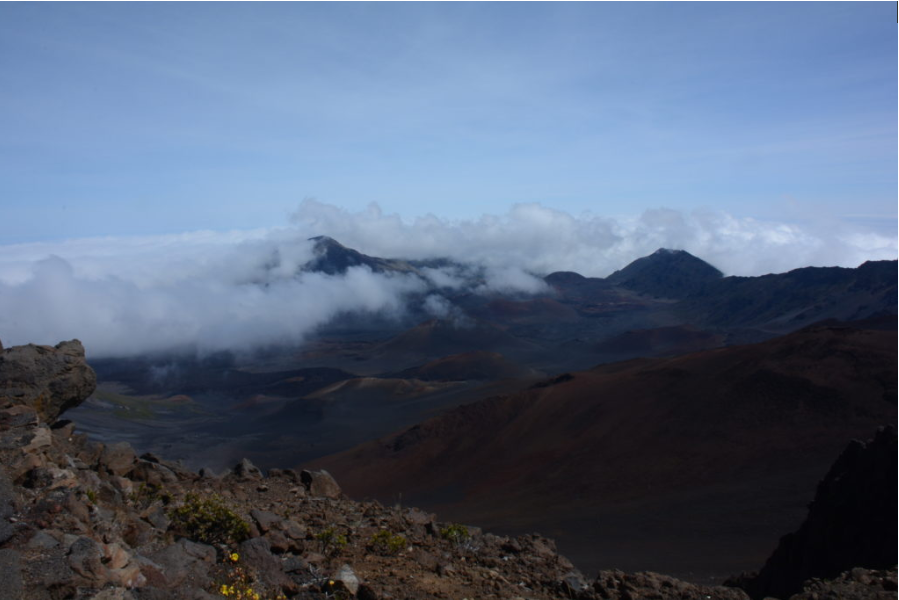
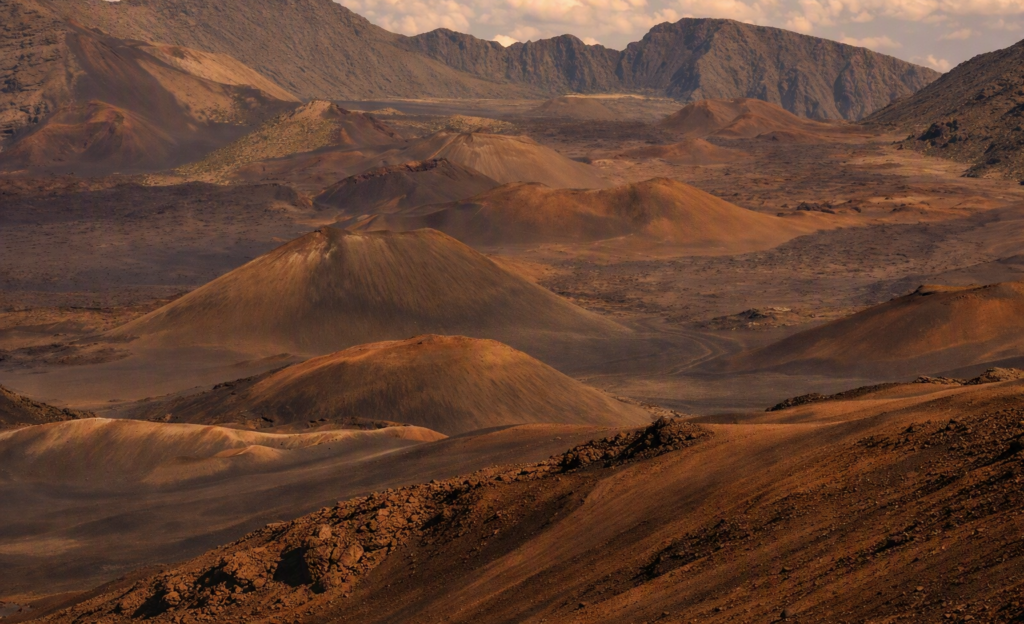
I love all the places on National Geographic’s list, but Hawaiʻi’s volcanoes hold a special place in my heart. From Haleakalā — the House of the Sun — to Hawaiʻi Volcanoes National Park with the very active Kīlauea, these landscapes take my breath away.

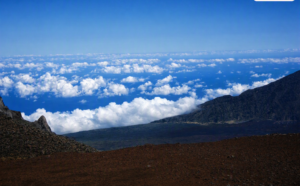
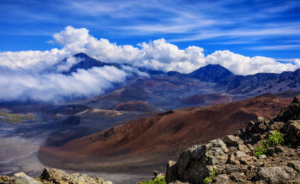
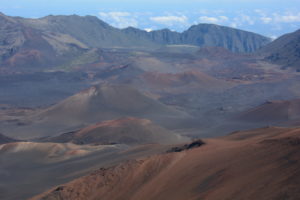
Haleakalā is a beautiful moonscape of ochre and red cinder cones. Often a shifting layer of clouds lies between you and the valley floor.

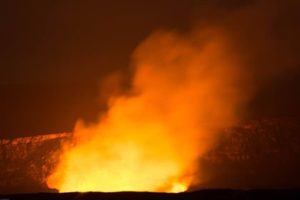
Kīlauea erupted almost continuously for 35 years, reshaping the island with lava flows and glowing lakes of molten rock. I’ve missed most of her dramatic displays — she’s been quiet during my visits — but I’ve walked through a lava tube and seen the red glow from the crater. Maybe someday Pele will show herself when I’m there.

A Grateful Journey

And that’s the list, according to National Geographic. Writing about these places has been a wonderful trip down memory lane. I have so much to be thankful for — to have visited so many of America’s most wondrous landscapes.

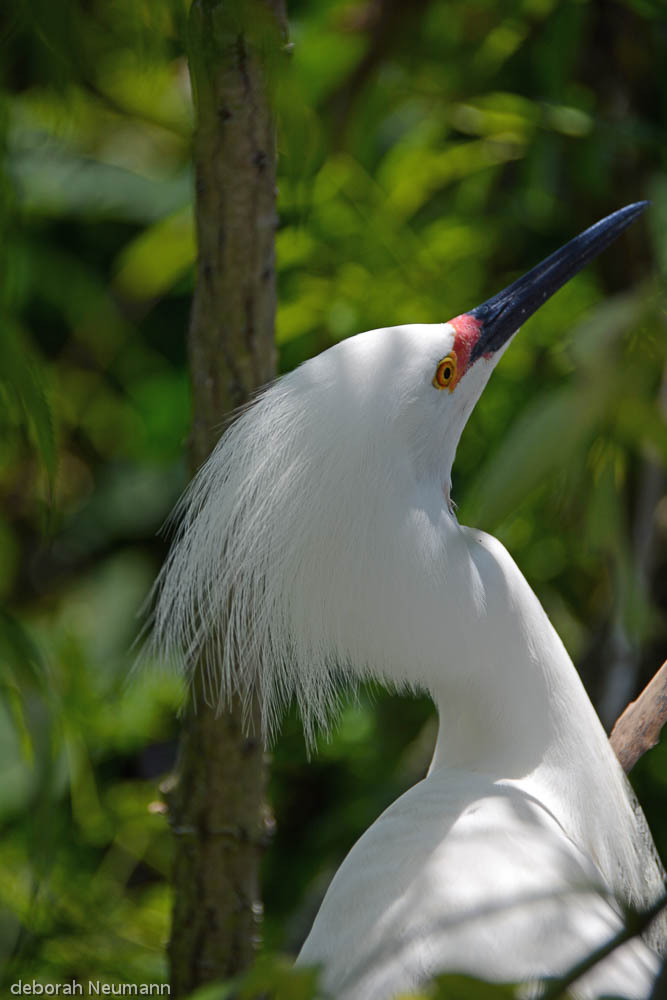
Egret, Florida


When a Screensaver Sends You Back to Hawaii


A Morning Memory Triggered by the Koʻolau Mountains

A Morning Spark

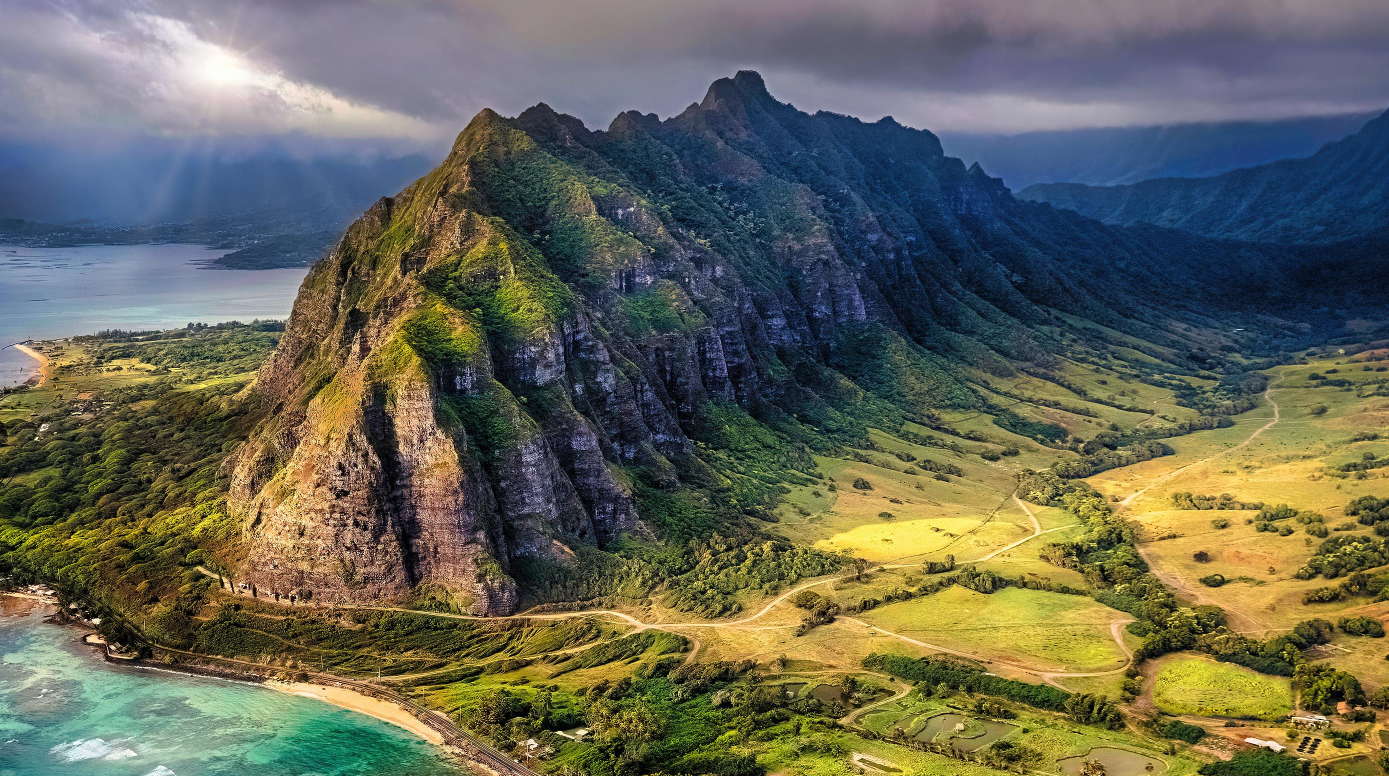
It’s amazing where inspiration comes from. I opened my computer this morning to a breathtaking image — an aerial view I recognized instantly. Those dramatic ridges could only belong to the Koʻolau Mountain Range on Oʻahu.

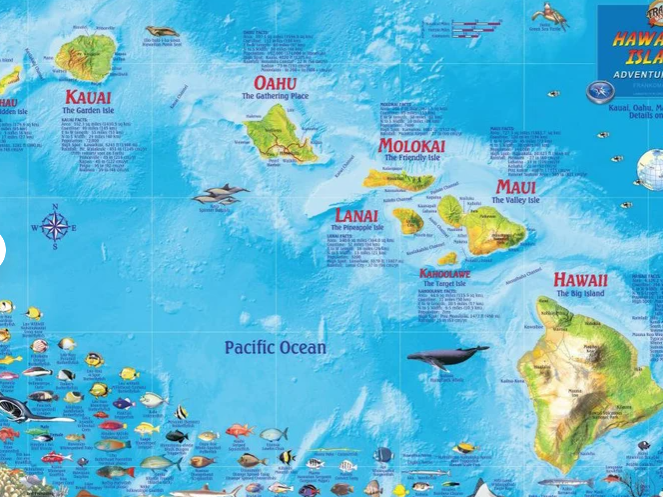
Yes, I know. You already know I love Hawaii. But here’s the twist: I’ve only been to Oʻahu once. My heart belongs first to the Big Island, then to Maui. Kauaʻi is still waiting for me.

Before I get to the mountains, here are my quick impressions of the four most‑visited islands.

My Take on the Four Big Islands

  • The Big Island — Kīlauea, volcanic energy, and Parker Ranch. My favorite.
  • Maui (The Valley Isle) — My nickname: #1 Tourist Stop. Lots to do, lots to see, and plenty of upscale accommodations.
  • Oʻahu (The Gathering Place) — Chaotic, urban, crowded. Great attractions, but one visit was enough for me. Pearl Harbor is a must.
  • Kauaʻi (The Garden Isle) — Said to be the most traditional and the most natural. I haven’t been yet, but everyone insists I’ll love it.

The Mountains That Look Carved by a Giant Hand

Back to that screensaver photo.
The Koʻolau Mountains run along the eastern edge of Oʻahu — the eroded remains of a single shield volcano. Thirty‑four miles of ridges and deep green troughs.

To me, it looks like a giant hand dragged its fingers down the mountainside, leaving those dramatic grooves behind. Once you see it, you never forget it.

The Wind, the Cliffs, and a Battle in the Clouds

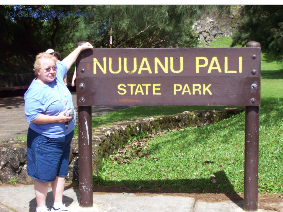
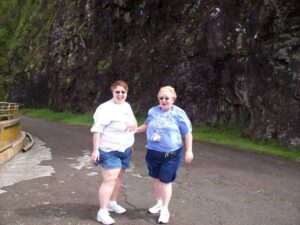
My sister and I explored this area on our trip in 2007. We started at Nuʻuanu Pali, on the recommendation of our Pearl Harbor guide. I think he hoped we’d hire him to take us, but we couldn’t coordinate schedules, so off we went on our own.

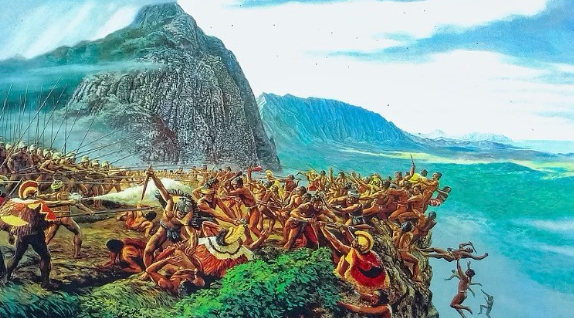
“Pali” means cliff, and Nuʻuanu is the site of a brutal turning point in Hawaiian history. During his campaign to unite the islands, King Kamehameha I drove the opposing warriors up the cliffs until many fell — or were forced — over the edge. Storyboards at the lookout help visitors understand the gravity of what happened there.

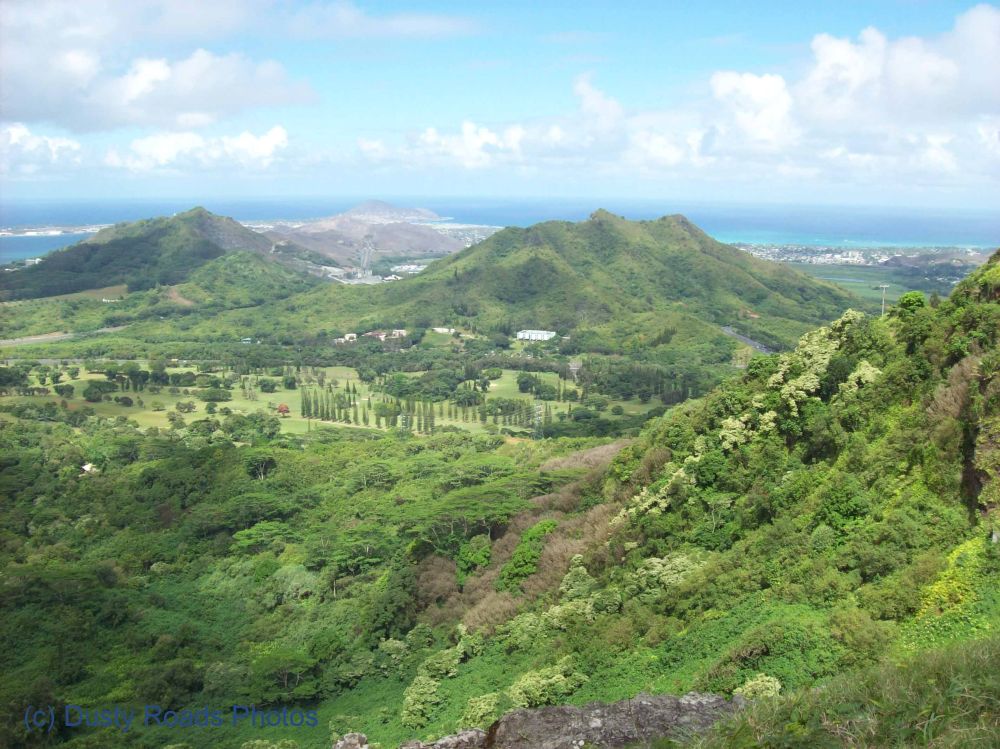
From the windy heights of Nuʻuanu Pali, the view opens to a deep green valley and the rugged Koʻolau Mountains, with Honolulu and the shimmering coastline far beyond.

And the trade winds? They’re no joke. The same winds that keep Hawaii comfortable on hot days become fierce at the Pali. We laughed ourselves silly trying to walk without being blown sideways. Crawling back up the path didn’t seem like a bad idea.

Ghost Crabs, Teasing Birds, and Chinaman’s Hat
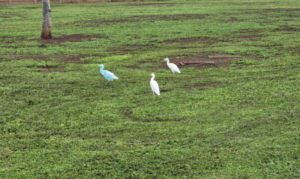
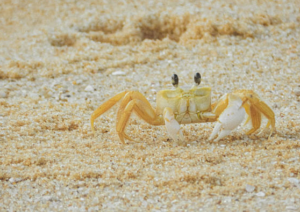
After leaving the lookout, we drove down to the base of the mountain and stopped at a small beach park. We watched ghost crabs — tiny, transparent little things — scuttle across the sand and vanish into holes like magic.

The park was full of those silly white birds (cattle egrets), and they were the ultimate tease. Every time I tried to get a close‑up photo, they stepped just out of reach. They’ve clearly been tormenting tourists for years.
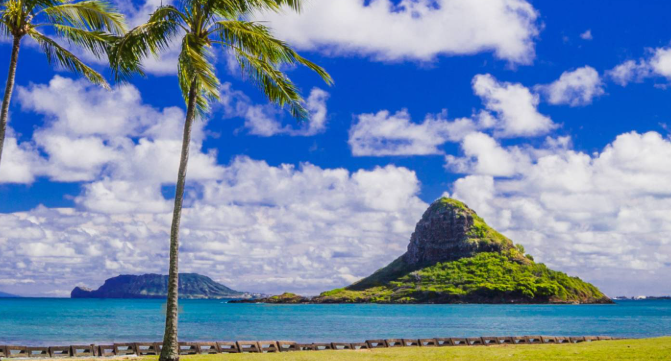
A more cooperative subject was Chinaman’s Hat (Mokoliʻi), the little cone‑shaped island sitting just offshore in Kāneʻohe Bay. But the real star of the park was the mountain itself, those unforgettable “finger marks” rising behind us.

If You Go to Oʻahu…

Step away from Waikīkī and the North Shore waves for a bit.
Go feel the force of the trade winds at the Pali.
Stand before the Koʻolau cliffs and let your imagination run wild.

Close your eyes and you might even hear echoes of that long‑ago battle — a true turning point in Hawaii’s history.


World Ocean Day: The Night I Met the Mantas


🌊A Morning Prompt That Sparked a MemoryManta Ray Adventure. Snorkle with the giants in Hawaii

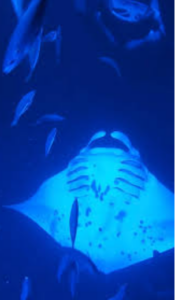
A little morning card on my screen recently told me to “Celebrate World Oceanic Day.” Not a real holiday, not even close to June, but it nudged loose one of my favorite memories from the Big Island — the night I went snorkeling with manta rays. And if there’s ever a story worthy of World Ocean Day, it’s this one.

Waiting Out the Rain

It had started to rain while we waited to head out, the kind of soft Hawaiian drizzle that feels more like a suggestion than weather. One of the other snorkelers asked the dive master if we’d still be going out “if it rained.” I remember blinking at her. We were about to jump into the Pacific Ocean — getting wet was sort of the point.

Dusk on the Big Island

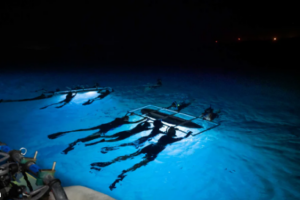
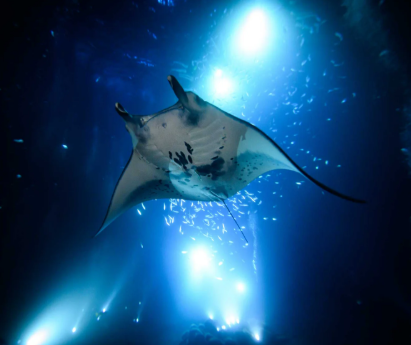
The boat drifted near shore as dusk settled in. We could see the lights from the Marriott stretching across the water, long gold streaks shimmering toward us as the sky deepened from blue to indigo. The air was warm, the kind of tropical warmth that wraps around you like a shawl. The crew moved with practiced ease, lowering a huge square frame of lights into the water. The glow sank beneath the surface like a stage being lit from below. The lights attract the plankton, and the plankton attract the mantas — a whole food chain choreographed for our front‑row seats.

Into the Water

With the light frame in place, we splashed in — one by one — each snorkeler taking hold of the frame and settling into an easy dead man’s float. The ocean was warm against my skin, and I listened to the subtle lapping of the waves as I drifted, face down, breathing slow and steady through my snorkel. The night felt soft as velvet, the kind of darkness that holds you rather than hides you.

When the Mantas Appeared

And then… there they were.

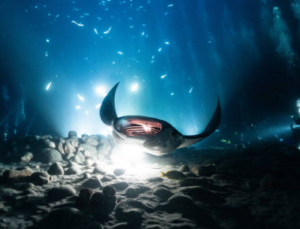
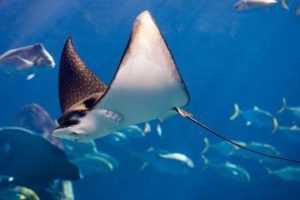
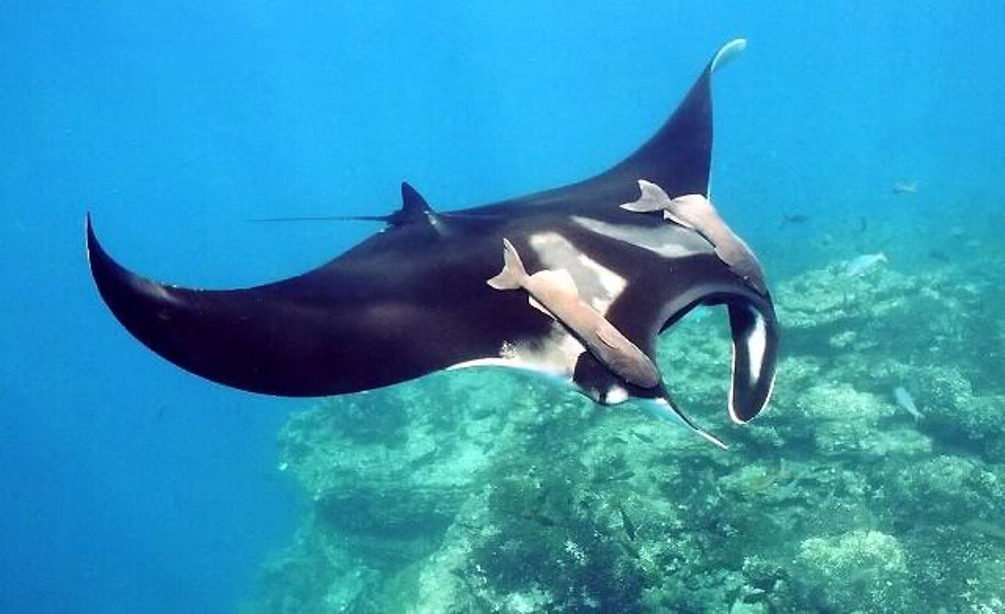
They came in silently, emerging from the darkness like ghosts with wings. Enormous, graceful, otherworldly. They moved with a kind of slow, deliberate elegance, sweeping in wide arcs beneath us. They were huge — impossibly huge — and apparently just as curious about us as we were about them. I had to remind myself to breathe. It felt like watching an underwater ballet, choreographed by creatures who had been dancing long before humans ever arrived on the islands.

A Moment I’ll Never Forget

Then came the moment we were all hoping for. One of those beautiful creatures rose from below and swam right up the length of my body, its wings brushing the water inches from my skin. As it reached my collarbone, it rolled into a perfect backflip, white belly glowing in the light, before drifting away again into the dark. For a heartbeat, it felt like we were sharing the same pulse.

A Glimpse of the Magic

Since I didn’t have an underwater camera, here’s a video that captures the magic better than I ever could.

Why World Ocean Day Matters

If you’ve never floated in the dark while a manta ray the size of a dining room table glides past your face, trust me — the ocean has a way of making you feel small in the best possible way.

If You Ever Find Yourself on the Big Island

If you ever find yourself on the Big Island of Hawaii, take the plunge. The manta experience is one you’ll remember for a lifetime.


From My Screen to the Sea: A Green Turtle Moment

I love logging in each morning to see what gorgeous picture Bing has dropped onto my desktop. They never disappoint. But today’s image stopped me in my tracks — a green sea turtle gliding through clear blue water.

Why so special? Because I actually swam with them in Hawaii. Their eyes are beautiful, and I know it sounds silly, but I think their little beaked faces are just adorable. Just saying.

snuba at Turtletown 2020

Funny how a desktop picture can bring back a whole wave of happiness.

Chasing Giants: A Lifetime of Whale Watching From New England to Alaska and Hawaii

The Early Years: Cape Ann and the Thrill of Discovery

For years I chased humpback whales up and down the New England coast. This was no small feat for someone with a tendency toward seasickness, but the call of the ocean—and the promise of seeing those magnificent creatures—was stronger than my stomach. One of my earliest and most unforgettable trips was out of Gloucester, heading toward Stellwagen Bank. I was new to Massachusetts then, freshly transplanted from New York and convinced I wouldn’t be here long. So I crammed every adventure I could into those first months.

Now, nearly fifty years later, I’m still here. And that Cape Ann whale watch remains one of the highlights of my early Massachusetts life.

That day, we found ourselves surrounded by humpbacks bubble‑net feeding—so close to the boat you felt like you could reach out and touch them. (We didn’t, of course.) For years afterward, people insisted that New England humpbacks don’t bubble‑net feed. I always love when nature proves the experts wrong. It’s a reminder of how much we’ve learned—and how much we’re still learning.

Boston and Plymouth: Rituals on the Water

I tried a few whale watches out of Boston next. Bigger boats, higher decks, great views—fun, but nothing quite matched the raw magic of that Cape Ann trip.

Eventually I migrated south to Plymouth and became a regular on Captain John’s Boats. Those summer trips became a ritual. It was on one of those outings that I photographed my first breaching whale—a moment that still ranks among my favorite memories.

Hawaii: The Heart’s Home

My whale watching didn’t stop at New England. I found the home of my heart in Hawaii and made annual February trips for years. February is peak migration season, and I often watched whales right from the breakfast table.

I joined the Pacific Whale Foundation and went on their photography expeditions. That’s where I captured my first baby‑whale breach and listened to whale songs through hydrophones dropped over the side of the boat. Pure magic.

Breaching Humpback Calf

It’s just a baby

Alaska: Cold, Raw, and Unforgettable

Then there was Alaska—nothing warm or tropical about that trip. It was cold, wet, raw, and absolutely worth it. The boat was smaller, the whales cruised close to the surface, and we always knew where to look when we heard the whoosh of their breath.

Alaska offers something New England and Hawaii don’t: variety. Humpbacks, orcas, gray whales, belugas—and if luck is really on your side, maybe even a narwhal or a sperm whale. Spring can be beautiful there, but in 2013 we went in May, which turned out to be too early for sunshine. My advice? Aim for June or later.

Why It Matters

No matter where you go—New England, Hawaii, Alaska—whales are magnificent creatures deserving of every conservation effort we can muster. Their importance is so universal that even the Star Trek universe built a whole movie around saving them. (Star Trek IV: The Voyage Home, for fellow fans.)

If the Federation thinks whales are worth saving, who am I to argue?
Live long and prosper.