
The Five‑Second Rule and Other Delicious Lies We Tell Ourselves


✨ The Myths, Legends, and Laughs of Kitchen Folklore

There are a few myths and legends that sneak into everyday food handling. One that comes to mind immediately is the Five‑Second Rule. Ever heard of it? I seem to run into it constantly. I’ve even heard it mentioned in TV programs like The Simpsons—and believe it or not, Julia Child herself once scooped up dropped food on camera. She never said the rule out loud, but that moment alone helped cement it in modern kitchen culture.

The Five‑Second Rule: Convenient, Comforting… and Completely Wrong

For anyone who’s never watched TV or has their head buried like an ostrich, the Five‑Second Rule is the belief that food dropped on the floor is safe to eat if you pick it up within five seconds.

Unfortunately, science has rained on that parade. Studies show bacteria can transfer to food almost instantly. How much depends on the food, the surface, and how dirty that surface is. The myth sticks around because it’s a handy excuse not to waste food—but it’s not exactly a food‑safety strategy.

Understanding the risks helps us make better choices and reminds us that hygiene matters more than wishful thinking.

The Jelly‑Side‑Down Curse

Another favorite saying is that toast always lands jelly‑side down. Don’t laugh—think about it. I always assumed the extra weight of the butter or jelly caused the flip… or maybe it’s just a breakfast version of Murphy’s Law.

But there’s actually physics behind it. Toast usually starts jelly‑side up on a plate. When it slips, it only has time to rotate about half a turn before hitting the floor—landing jelly‑side down. Not bad luck. Just gravity with a sense of humor.

The Pancake Theorem: The First One’s Always a Dud

There’s a whole plethora of kitchen sayings, but one of my favorites is the Pancake Theorem:
“The first one’s always a dud.”

As someone who struggled for years to make the perfect pancake, I can confirm this one from personal experience. I’m happy to report that with improved kitchen skills, I now make pancakes from scratch—company‑worthy ones, no less—and I’ve finally overcome the first‑pancake curse.

Why does that first pancake misbehave? A few reasons: the pan isn’t evenly heated yet, the oil hasn’t settled, and the batter is still adjusting to the temperature. So the first one comes out pale, blotchy, or shaped like a map of New Jersey. It’s folklore backed by kitchen physics.

A Final Bite

So, my friend, tuck these sayings away for a quick kitchen chuckle. Just don’t rely on the Five‑Second Rule. That’s one myth best left on the floor—preferably with the jelly‑side down.

 

Deadwood, South Dakota: Truth, Legend, and the Last Days of Wild Bill Hickok


The One Stop We Missed

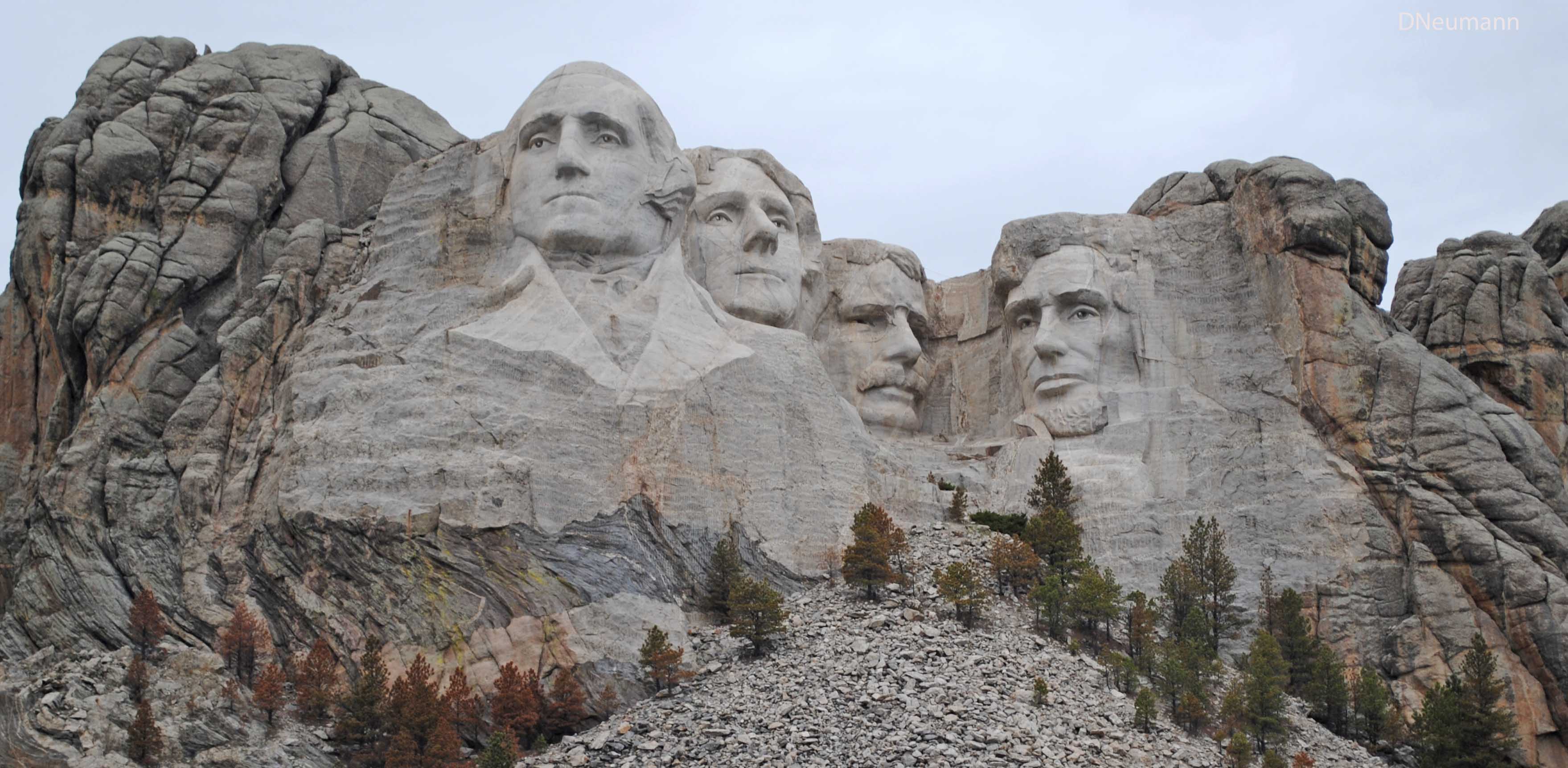
Among the myths and legends of the Wild West sits Deadwood, South Dakota. I still regret that we didn’t take the time to visit when we took our amazing vacation out that way. If you’ve been following Around Dusty Roads for a while, you may remember those older posts—Mount Rushmore, the Badlands, Custer State Park… we squeezed in a lot. But Deadwood? Somehow it slipped through the cracks.

Does that mean a return trip is needed? Let’s talk about it, and you be the judge.

A Town Built on Gold, Grit, and Gunpowder

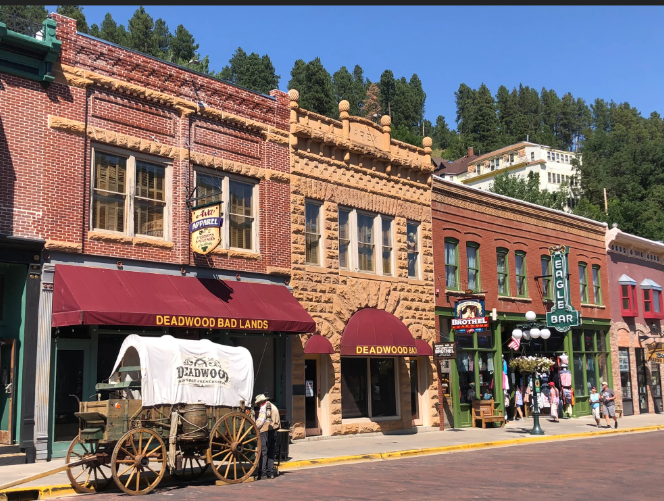
Deadwood earned its reputation during the lawless days of the Wild West. Gold brought fortune seekers. Fortune seekers brought outlaws. Outlaws brought gunfights. And the whole mix created a town where danger and opportunity walked hand in hand.

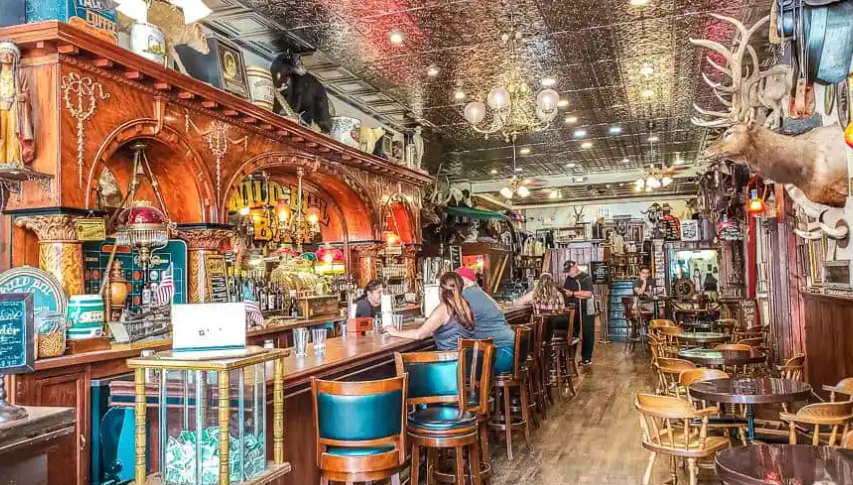
Today, Deadwood leans into that history with restored saloons, historic buildings, and lively reenactments that celebrate its rough‑and‑tumble past. It’s a place where the line between truth and legend blurs—sometimes intentionally.

The Murder of Wild Bill Hickok

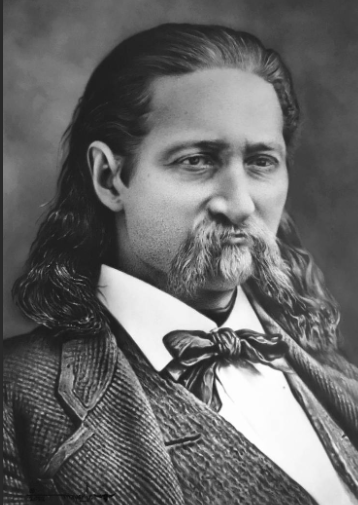
Of all the stories tied to Deadwood, none is more famous than the death of James Butler “Wild Bill” Hickok. On August 2, 1876, Hickok took a seat in Nuttal & Mann’s Saloon No. 10. For reasons still debated, he sat with his back to the door—something he almost never did.

That small decision became part of Western lore.

The day before, a drifter named Jack McCall had lost all his money to Hickok in a poker game. When Hickok offered him money for a meal, McCall took it as an insult. Fueled by wounded pride and liquid courage, he returned the next evening, walked up behind Hickok, and shot him in the head.

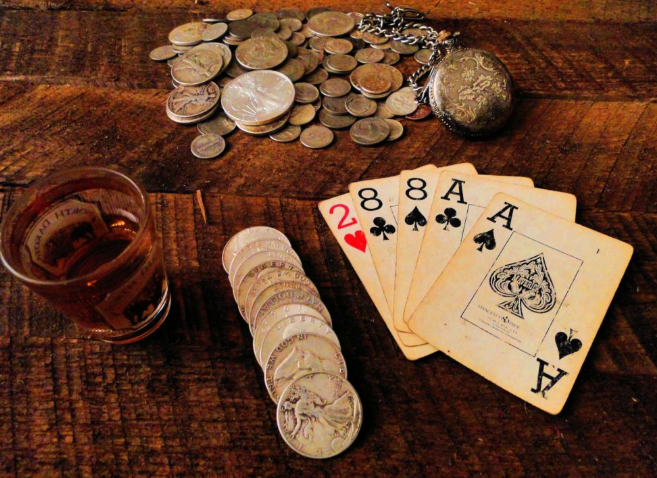
Legend says Hickok was holding black aces and black eights—the now‑famous “Dead Man’s Hand.”

Honoring a Legend

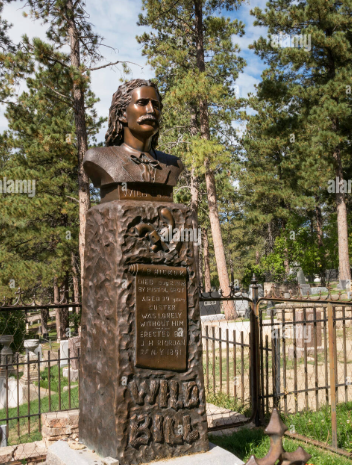
Visitors to Deadwood can still pay their respects at Wild Bill’s grave in Mount Moriah Cemetery. His memory lives on in more ways than one:

  • In 1979, he was inducted into the World Series of Poker Hall of Fame.
  • Every June, Deadwood hosts “Wild Bill Days” in his honor.
  • And every time someone draws a Dead Man’s Hand, Hickok’s story resurfaces.

Thus, while gone, Wild Bill Hickok is certainly not forgotten.

Truth or Tall Tale?

This one goes firmly in the truth column. The details may have been polished by storytellers over the years, but the core of the tale—Deadwood, Wild Bill, Jack McCall, and that fateful poker game—is solid history.

Your Turn: Is Deadwood Worth a Return Trip?

I missed Deadwood the first time around, and the more I dig into its history, the more I wonder if that was a mistake. Between the Wild West legends, the historic saloons, and the chance to stand where Wild Bill Hickok played his final hand, it feels like a place that deserves a spot on the itinerary.

So now I’m turning it over to you.
Have you been to Deadwood? Did it live up to the stories?
Or, if it’s still on your bucket list, does it sound like a place worth doubling back for on a future South Dakota adventure?

Share your thoughts in the comments—I’d love to hear your take.


Groundhog Day, The Legend Continues


Groundhog Day: Shadows, Legends, and One Very Busy Groundhog

If you woke up this morning and thought, Wait… is it Groundhog Day already? — you’re in good company. February sneaks up on all of us, but Punxsutawney Phil never misses his cue. Today is the day we turn our eyes to Gobbler’s Knob and wait for the world’s most famous meteorological rodent to decide our seasonal fate.

A Legend Born in the Shadows

Punxsutawney Phil has been predicting the arrival of spring since 1887 — or so the legend goes. According to the Punxsutawney Groundhog Club, Phil is not just a groundhog but the groundhog, the same one for nearly 140 years thanks to a magical “elixir of life” lovingly administered each summer. Reality tells us groundhogs live about 14 years in captivity, but the story? The story insists Phil is eternal.

And yes — officially, there has only ever been one Phil. Unofficially? Let’s just say the Inner Circle keeps those details tucked tighter than their tuxedo collars.

From Candlemas to Gobbler’s Knob

Groundhog Day’s roots stretch back to Candlemas, when Christians brought candles to be blessed for good fortune through the rest of winter. German settlers later added an animal to the tradition — originally a hedgehog.

When they arrived in America and found no hedgehogs in sight, they turned to a plump, hibernating stand‑in: the groundhog.

Cue Punxsutawney Phil, stage left.

How Phil Makes the Call

Each February 2nd, Phil emerges from his burrow after a long winter’s nap:

  • Shadow spotted: six more weeks of winter
  • No shadow: early spring on the way

The ceremony draws thousands before dawn — fireworks, music, banquets, and a crowd that treats Phil like the furry celebrity he is.


Phil’s Family & Fun Facts

Phil isn’t alone in his weather‑predicting empire. He lives with his wife, Phyllis, and in 2024 they welcomed twins, Sunny and Shadow. He’s also met presidents, appeared on Oprah, and once wore a yellow ribbon in honor of American hostages.

Why We Keep Watching

Maybe Phil’s accuracy isn’t perfect (NOAA gently reminds us of that), but Groundhog Day isn’t really about meteorology. It’s about tradition, whimsy, and the joy of believing — even for a moment — that a small creature in Pennsylvania holds the keys to spring.

Honestly? On a cold February morning in New England, that’s exactly the kind of magic we need and if Phil wants six more weeks of winter, he can come shovel my walkway and explain himself.


UPDATE

The Mystery of the Keepers of Eilean Mòr


Flannan Isle

Wilfrid Wilson Gibson

Though three men dwell on Flannan Isle
To keep the lamp alight,
As we steered under the lee, we caught
No glimmer through the night.

Aye: though we hunted high and low,
And hunted everywhere,
Of the three men’s fate we found no trace,
Of any kind in any place,
But a door ajar, and an untouched meal,
And an overtoppled chair.


The Vanishing Keepers of Eilean Mòr

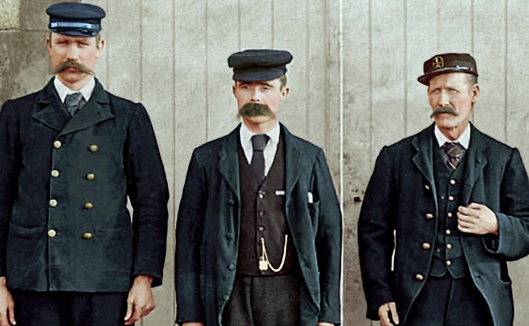
After writing about some of history’s most haunting disappearances, I stumbled onto another case that fits right in with the Mary Celeste and the Sodder children—a mystery wrapped in fog, salt spray, and superstition. The disappearance of the three lighthouse keepers of Flannan Isle (also known as Eilean Mòr) remains one of the most unsettling maritime puzzles ever recorded.

In December 1900, a relief ship arrived at the remote lighthouse in Scotland’s Outer Hebrides. From the deck, the crew expected to see the usual welcome: a wave, a signal flag, or at least the steady sweep of the lamp. Instead, the lighthouse stood dark and silent. When the landing party reached the island, they found the place eerily undisturbed—coats missing, a meal left untouched, a chair knocked over as if someone had risen suddenly. But of the three men—James Ducat, Thomas Marshall, and Donald MacArthur—there was no sign at all.

Theories: From the Practical to the Paranormal

A Rogue Wave or Sudden Storm

The most widely accepted explanation is that a violent wave swept the men off the cliffs while they were securing equipment during bad weather. The western side of the island is notorious for unpredictable surges that can rise dozens of feet without warning.

A Fight or Accident Gone Wrong

Some speculate that tempers flared in the isolation, leading to an accident or struggle. But with no bodies, no blood, and no signs of conflict inside the lighthouse, this theory feels thin.

Abduction or Foul Play

A passing ship, a criminal act, or even a staged disappearance has been suggested. Yet nothing in the logbooks or supply records hints at outside interference.

The Sea Monster Theory

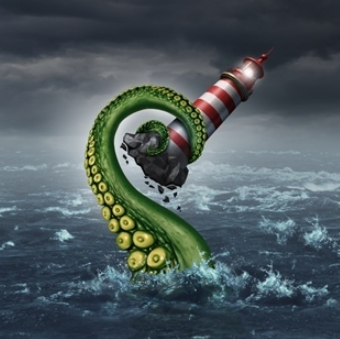
And then there’s the theory that refuses to die—something ancient and enormous rising from the depths. The waters around the Flannan Isles have long been tied to Celtic sea lore: kelpies, serpents, and creatures said to drag sailors beneath the waves. The overturned chair and the half‑eaten meal have inspired storytellers to imagine a sudden terror—a shadow at the window, a roar from the cliffs, something so shocking that all three men rushed outside at once. It’s dramatic, improbable, and yet somehow perfectly suited to a lighthouse perched on the edge of the world.

A Mystery That Still Echoes

More than a century later, the Flannan Isle disappearance remains unsolved. No bodies ever washed ashore, no equipment was found, and no definitive explanation has emerged. Like the Mary Celeste, it lingers in that strange space between history and legend—a reminder that even in our modern age, the sea still keeps its secrets.

If you enjoy mysteries that refuse to sit quietly, this one belongs on the list.

Infamous Disappearances


Infamous Disappearances That Still Have Us Stumped

A Morning Scroll Turns Mysterious

Ah yes — my usual morning routine of cruising the internet. It started out like any other day: headlines about the latest political squabble, something about Greenland, something about Venezuelan oil. The Epstein files were quiet for once. Recipes and cooking tips filled the lifestyle section, and Gordon Ramsay was on yet another of his trademark rants.

Then something unusual caught my eye.

A headline read: “Infamous Disappearances That Still Have Us Stumped.”
Well now — let’s see how many of these I’ve heard of.


The Crew of the Mary Celeste

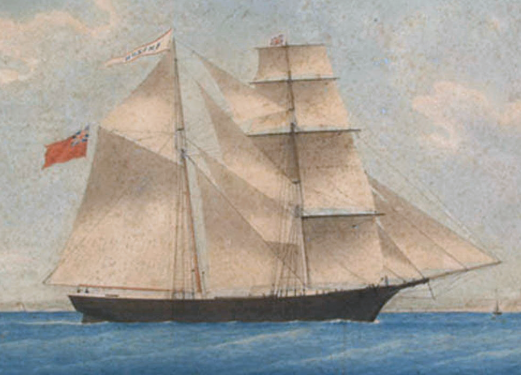
This one is practically the poster child for maritime mysteries. In 1872, the merchant ship Mary Celeste was found drifting in the Atlantic, fully rigged, cargo intact, dinner still on the table — but the lifeboat and all ten crew members were gone.

Every documentary about the paranormal or the unexplained eventually circles back to this case. Theories abound:

  • Explosion: Fumes from the high-proof alcohol cargo may have caused a near-explosion, prompting the crew to abandon ship.
  • Mutiny: Some believe the crew turned on the captain.
  • Murder: A darker twist — the crew may have killed the officers and fled.
  • Insurance Fraud: Perhaps a scheme gone wrong.
  • Natural Disaster: Rogue waves, storms, or sudden waterspouts have all been suggested.
  • Illness: A sudden outbreak or poisoning.
  • Piracy: Always a favorite theory in maritime lore.

Despite endless speculation, the fate of the Mary Celeste’s crew remains one of history’s most enduring mysteries.


The Sodder Children

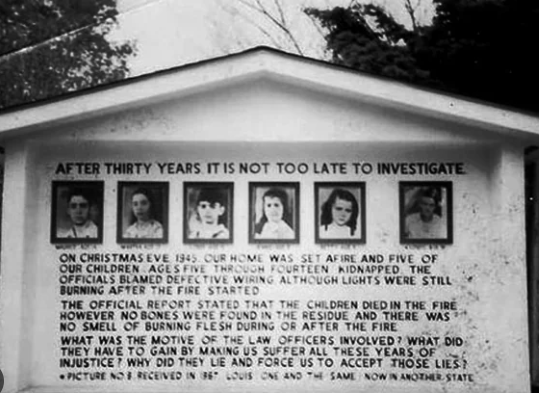
On Christmas Eve, 1945, a fire destroyed the Sodder family home in Fayetteville, West Virginia. George and Jennie Sodder escaped with four of their ten children — but the remaining five were never found.

Rumors swirled for decades. A letter supposedly from one of the missing children surfaced years later, but nothing was ever proven. The family searched tirelessly, but the case eventually went cold. To this day, no one knows what truly happened that night.


D.B. Cooper

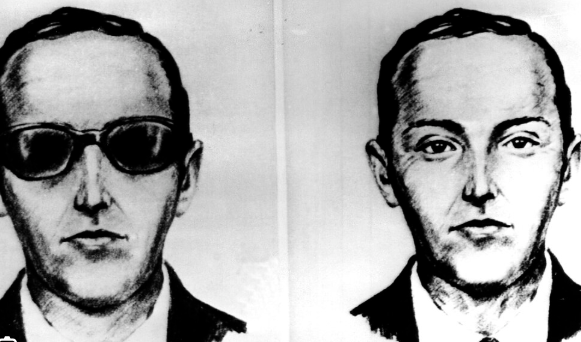
Everyone knows this one. In 1971, a man calling himself D.B. Cooper hijacked Northwest Orient Flight 305, collected a ransom, and parachuted into the wilderness — never to be seen again.

Only a small portion of the ransom money has ever been recovered. His identity remains unknown. Some celebrate him as a folk hero; others see him as a criminal who endangered dozens of lives. Either way, he’s become a permanent part of American folklore.


Amelia Earhart

The pioneering aviator vanished on July 2, 1937, while attempting to become the first woman to fly around the world. She and her navigator, Fred Noonan, disappeared somewhere over the Pacific.

The leading theory is a crash-and-sink scenario, but no confirmed wreckage has ever been found. Every few years, someone claims to have discovered bones or debris — and every time, the headlines flare up before the evidence fizzles out.

A new search by the deep-sea exploration company Nauticos is underway near Howland Island. They say this mission is based on math, not myth, sparked by the discovery of an old radio at a garage sale. Stay tuned.


Malaysian Airlines Flight 370

On March 8, 2014, an entire commercial aircraft vanished while flying from Malaysia to China. Despite international searches, satellite data, and countless theories, the disappearance of MH370 remains the greatest aviation mystery of the modern era.


Madeleine McCann

Few cases break hearts the way this one does. In 2007, three-year-old Madeleine McCann disappeared from a holiday apartment in Portugal. Despite worldwide attention and ongoing investigations, she has never been found. The case remains open, painful, and unresolved.


And the List Goes On

The Springfield Three.
The Beaumont Children.
Brian Shaffer.
Bryce Laspisa.
Tammy Lynn Leppart.

So many names, so many unanswered questions.

Even with today’s sophisticated investigative tools — satellites, DNA, digital footprints — people still vanish without a trace. These stories remind us how fragile certainty can be.

Stay aware out there, and hold your loved ones close.