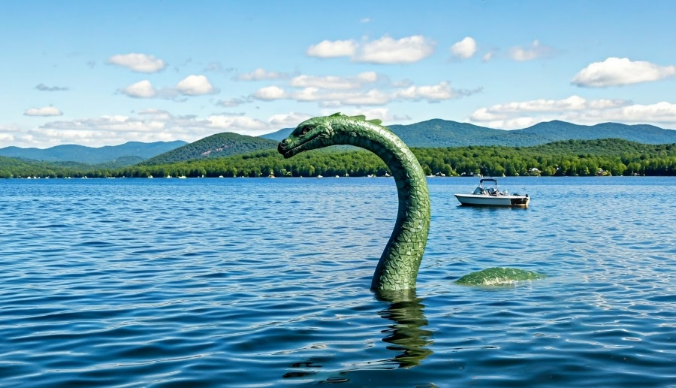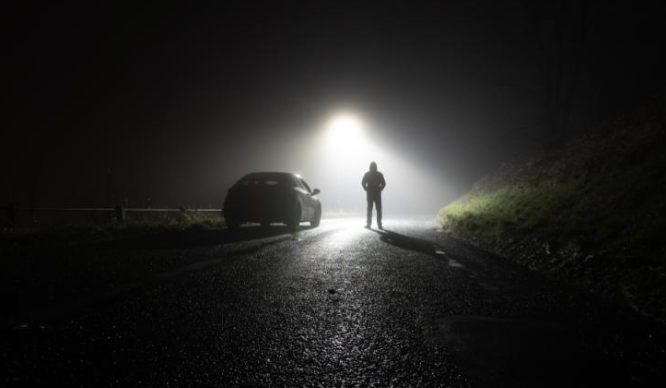
Infamous Disappearances


Infamous Disappearances That Still Have Us Stumped

A Morning Scroll Turns Mysterious

Ah yes — my usual morning routine of cruising the internet. It started out like any other day: headlines about the latest political squabble, something about Greenland, something about Venezuelan oil. The Epstein files were quiet for once. Recipes and cooking tips filled the lifestyle section, and Gordon Ramsay was on yet another of his trademark rants.

Then something unusual caught my eye.

A headline read: “Infamous Disappearances That Still Have Us Stumped.”
Well now — let’s see how many of these I’ve heard of.


The Crew of the Mary Celeste

This one is practically the poster child for maritime mysteries. In 1872, the merchant ship Mary Celeste was found drifting in the Atlantic, fully rigged, cargo intact, dinner still on the table — but the lifeboat and all ten crew members were gone.

Every documentary about the paranormal or the unexplained eventually circles back to this case. Theories abound:

  • Explosion: Fumes from the high-proof alcohol cargo may have caused a near-explosion, prompting the crew to abandon ship.
  • Mutiny: Some believe the crew turned on the captain.
  • Murder: A darker twist — the crew may have killed the officers and fled.
  • Insurance Fraud: Perhaps a scheme gone wrong.
  • Natural Disaster: Rogue waves, storms, or sudden waterspouts have all been suggested.
  • Illness: A sudden outbreak or poisoning.
  • Piracy: Always a favorite theory in maritime lore.

Despite endless speculation, the fate of the Mary Celeste’s crew remains one of history’s most enduring mysteries.


The Sodder Children

On Christmas Eve, 1945, a fire destroyed the Sodder family home in Fayetteville, West Virginia. George and Jennie Sodder escaped with four of their ten children — but the remaining five were never found.

Rumors swirled for decades. A letter supposedly from one of the missing children surfaced years later, but nothing was ever proven. The family searched tirelessly, but the case eventually went cold. To this day, no one knows what truly happened that night.


D.B. Cooper

Everyone knows this one. In 1971, a man calling himself D.B. Cooper hijacked Northwest Orient Flight 305, collected a ransom, and parachuted into the wilderness — never to be seen again.

Only a small portion of the ransom money has ever been recovered. His identity remains unknown. Some celebrate him as a folk hero; others see him as a criminal who endangered dozens of lives. Either way, he’s become a permanent part of American folklore.


Amelia Earhart

The pioneering aviator vanished on July 2, 1937, while attempting to become the first woman to fly around the world. She and her navigator, Fred Noonan, disappeared somewhere over the Pacific.

The leading theory is a crash-and-sink scenario, but no confirmed wreckage has ever been found. Every few years, someone claims to have discovered bones or debris — and every time, the headlines flare up before the evidence fizzles out.

A new search by the deep-sea exploration company Nauticos is underway near Howland Island. They say this mission is based on math, not myth, sparked by the discovery of an old radio at a garage sale. Stay tuned.


Malaysian Airlines Flight 370

On March 8, 2014, an entire commercial aircraft vanished while flying from Malaysia to China. Despite international searches, satellite data, and countless theories, the disappearance of MH370 remains the greatest aviation mystery of the modern era.


Madeleine McCann

Few cases break hearts the way this one does. In 2007, three-year-old Madeleine McCann disappeared from a holiday apartment in Portugal. Despite worldwide attention and ongoing investigations, she has never been found. The case remains open, painful, and unresolved.


And the List Goes On

The Springfield Three.
The Beaumont Children.
Brian Shaffer.
Bryce Laspisa.
Tammy Lynn Leppart.

So many names, so many unanswered questions.

Even with today’s sophisticated investigative tools — satellites, DNA, digital footprints — people still vanish without a trace. These stories remind us how fragile certainty can be.

Stay aware out there, and hold your loved ones close.


King Arthur: The Once and Future King

The Legend of King Arthur: Truth, Tale, or Internet Whimsy?

There are days when the internet feels like a treasure chest of wonders… and other days when it feels like someone dumped a medieval storybook, a history textbook, and a Disney script into a blender and hit purée. And because we all know that if it’s on the internet, it must be true, today’s journey down the rabbit hole brings us to one of the most enduring legends of all time: King Arthur.


So grab your imaginary sword, polish your virtual armor, and let’s wander through the misty halls of Camelot—courtesy of the world wide web.


A Sword, a Stone, and a Story We All Know

Most of us grew up with the classic tale: a young Arthur Pendragon pulls a sword from a stone, proving he’s the rightful king of Britain. He marries Guinevere, gathers the bravest knights around a Round Table, and rules with justice, honor, and enough chivalry to make modern etiquette books blush.

Then comes betrayal—Lancelot and Guinevere’s ill‑fated romance—and Arthur’s final journey to the mystical Isle of Avalon after being mortally wounded. It’s dramatic, tragic, and tailor‑made for Hollywood. No wonder Disney cashed in.

But where did all this actually come from?


The First “Historical” Arthur… Written 300 Years Too Late

Our earliest written mention of Arthur comes from a 9th‑century Welsh monk named Nennius, who described Arthur as a 5th‑century warrior battling Anglo‑Saxons. Inspiring, yes—but also written centuries after the fact. Imagine writing a biography of someone from the 1700s based solely on campfire stories.

That’s our first clue that things might be… flexible.


Enter Geoffrey of Monmouth: The Man Who Made Arthur a Superstar

In the 12th century, Geoffrey of Monmouth penned Historia Regum Britanniae, and suddenly Arthur wasn’t just a warrior—he was a king. This is where we first meet Merlin, Guinevere, Excalibur, and Avalon. Geoffrey’s work was wildly popular, but historians today treat it more like medieval fan‑fiction than factual record.

Then along came French writer Chrétien de Troyes, who added Lancelot and the Holy Grail, launching the entire genre of Arthurian romance. Each writer added a little more magic, a little more drama, and a lot more legend.


Camelot, Avalon, and Other Places That Might Not Exist

Camelot has been “located” in Wales, Somerset, and Winchester—depending on which historian, archaeologist, or enthusiastic blogger you ask. None of these claims have solid evidence.

Avalon, meanwhile, gets its name from the Welsh word for “apples,” which is far less mystical than the glowing, enchanted island we picture. Still, it’s said to be home to Morgan le Fay and the birthplace of Excalibur, so the internet keeps the magic alive.


So… Was King Arthur Real or Not?

The consensus among scholars is that Arthur, as we know him, is mythological—a patchwork of folklore, wishful thinking, and centuries of storytelling. There may have been a real warrior who inspired the legend, but the shining king of Camelot? That’s another matter entirely.

But that’s the beauty of legends—they grow, evolve, and enchant us, whether rooted in truth or spun from imagination.

So tell me, dear readers of Around Dusty Roads:
Do you think King Arthur was real, or is he simply one of history’s greatest myths?

The Whitehall Bigfoot

The Whitehall Bigfoot: A Hometown Legend That Refuses to Fade

If you’ve been following my recent posts about Colorado and the curious Bigfoot sighting near the Durango & Silverton railroad, you already know I’ve been deep in a cryptid rabbit hole. Maybe it’s just that Bigfoot stories make excellent comfort reading, but my mind drifted back to a place much closer to home: Whitehall, New York.

For anyone who grew up in that corner of the Adirondacks, Bigfoot isn’t just a campfire tale — it’s practically local history. And one night in 1976 cemented Whitehall’s place on the cryptozoology map forever.


A Quiet Town, a Strange Night

Whitehall is the kind of small town where people know each other’s dogs, never mind each other’s business. But in late August 1976, something happened on Abair Road that no one could quite explain.

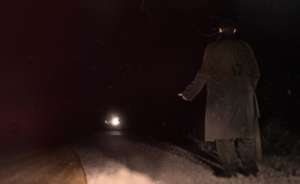
Multiple witnesses — including law enforcement officers — reported seeing a tall, broad, hair‑covered figure standing near the tree line. Not a bear. Not a prankster. Something… else.

The creature was described as:

  • Around 7–8 feet tall
  • Covered in dark hair
  • Broad‑shouldered and muscular
  • Moving with surprising speed

Officers later said the encounter left them shaken in a way they couldn’t easily dismiss. When seasoned police officers admit they were rattled, people tend to listen.


Why the 1976 Sighting Still Matters

Plenty of Bigfoot reports fade into folklore, but the Whitehall incident has staying power. Here’s why:

  • Multiple credible witnesses
    This wasn’t one person seeing something in the dark. Several individuals — including trained observers — reported the same thing.
  • Consistent descriptions
    The accounts line up in uncanny ways, even decades later.
  • Ongoing activity
    Whitehall still gets sightings. Enough that the town now hosts an annual Sasquatch Festival.
  • Cultural identity
    Whether you believe or not, Bigfoot is part of Whitehall’s personality. It’s woven into the local storytelling tradition.


A Personal Connection

Growing up near Whitehall, the 1976 sighting wasn’t just a story — it was the story. Kids whispered about it on school buses. Adults mentioned it with that “I’m not saying it was Bigfoot, but…” tone. It was part of the landscape, like the mountains and the fog.

So after writing about Colorado’s mysterious figure, it feels natural to circle back to the place where my own fascination began.


Want to See More?

There’s a great YouTube video that breaks down the 1976 incident with interviews and reenactments.


If you’ve ever driven down Abair Road at dusk, you know how easy it is to imagine something watching from the trees. Whether Bigfoot is flesh and blood or folklore, Whitehall’s legend endures — and it’s one I’ll always have a soft spot for.

When Fiction Predicts Reality


The Eerie Tale of the Titan and the Titanic

Every now and then, history hands us a story so uncanny, so goosebump‑worthy, that you have to stop and say, Wait… what? The strange parallels between a fictional ship called the Titan and the very real Titanic fall squarely into that category. This isn’t just a fun coincidence — it’s the kind of tale that makes you glance over your shoulder and wonder what else fiction has accidentally whispered into the future.

A Novel That Hit Too Close to Home

Back in 1898, long before the Titanic was even a blueprint, author Morgan Robertson wrote a novella titled Futility. His story centered around a massive luxury ocean liner named — you guessed it — the Titan. It was marketed as unsinkable, packed with wealthy passengers, and built with cutting‑edge engineering confidence.

Then Robertson sank it.

In his story, the Titan strikes an iceberg in the North Atlantic, lacks enough lifeboats, and goes down in a chilling maritime disaster.

Fast‑forward fourteen years, and reality delivered a nearly identical tragedy. The Titanic — also deemed unsinkable, also short on lifeboats, also colliding with an iceberg in the North Atlantic — met the same fate.

That’s the moment where most people pause and say, “Okay, that’s weird.”

Coincidence… or Something More?

Robertson wasn’t a shipbuilder. He wasn’t a psychic. He was a writer crafting a cautionary tale about human arrogance and the dangers of believing our own hype. Yet somehow, he captured details that would later unfold with eerie precision:

  • Similar size
  • Similar speed
  • Similar passenger capacity
  • Similar disaster
  • Similar cause

Some readers insist he tapped into a collective unconscious — that mysterious creative well where ideas bubble up before the world is ready for them. Others say he simply paid attention to the trends of his time and made an educated guess.

Either way, the result is one of literature’s most unsettling coincidences.

Why Stories Like This Stick With Us

Maybe it’s because we love a good mystery. Maybe it’s because we’re fascinated by the thin line between imagination and reality. Or maybe it’s because stories like this remind us that even our grandest creations — whether fictional or steel‑and‑riveted — are never as invincible as we want them to be.

Whatever the reason, the Titan and Titanic connection remains one of those “oh wow” moments in history that keeps us wondering… what else has fiction already predicted?


A Solstice Stroll Down Dusty Roads

Hello, Dear Readers—
Today marks a special turning of the year, a day wrapped in mystery and magic.
Take my hand as we wander down a dusty road, joining in a quiet celebration of renewal and rebirth.

✨ The Longest Night, The Brightest Spark

On the eve of the winter solstice, Dusty Roads seemed to hum with quiet anticipation. The air was crisp, the kind that nips at your nose but makes the stars above shine brighter. Villagers whispered that the solstice was no ordinary night—it was a turning point, a cosmic wink reminding us that even the longest darkness must eventually give way to light.

🌙 Lanterns, Laughter, and Little Surprises

As twilight settled, neighbors gathered with lanterns glowing like captured fireflies. Children giggled, chasing shadows that danced across snowbanks, while elders told stories of ancient times when people believed the sun itself was a weary traveler, pausing to rest before returning stronger. On Dusty Roads, the tradition was simpler: share warmth, share wonder, and maybe sneak an extra cookie from the solstice feast.

🌌 The Fox and the Flicker

Legend has it that on this night, a silver fox trots quietly along Dusty Roads, leaving tiny pawprints that shimmer until dawn. Some say the fox carries a spark of the returning sun in its tail, scattering hope wherever it wanders. Whether true or not, villagers swear they’ve seen a flicker darting between lanterns, playful as if reminding everyone that magic hides in plain sight.

🌞 Dawn’s Gentle Promise

By morning, the horizon blushes with the first hint of longer days ahead. The solstice doesn’t shout its triumph. It whispers it, gently nudging us to notice the promise of light tucked inside the cold. On Dusty Roads, the villagers raise their mugs of steaming cocoa, clink them together, and laugh. The night may have been long, but the story it told was one of renewal, joy, and the simple magic of gathering together.

🌟 Until We Meet Again

And so, dear friends, our wander down Dusty Roads comes to rest at dawn’s gentle edge. The lanterns fade, the fox’s pawprints dissolve into morning light, and the promise of brighter days lingers in the air. May the solstice remind us that every shadow carries a spark, and every ending whispers of renewal. Until we meet again, may your hearth be warm, your cocoa sweet, and your spirit ever ready to greet the returning sun.