It’s National Ice Cream Day- Who Wants to Party?!

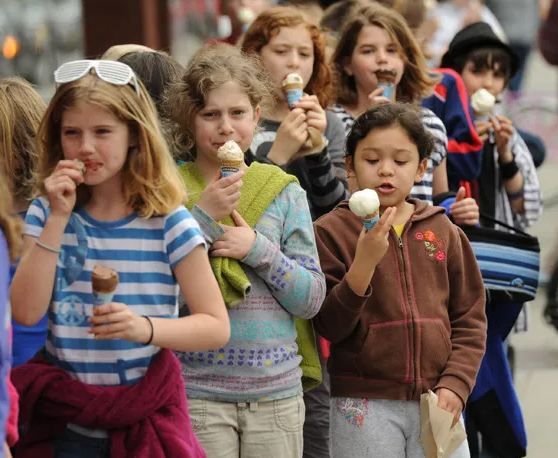
 Children walking outdoors in cool weather, happily eating ice‑cream cones, with buildings blurred in the background.

I Scream, You Scream, We All Scream for Ice Cream!

Do you know what day it is? It’s National Ice Cream Day! A totally legitimate excuse to pig out on your favorite frozen treat — cones, sundaes, cups, bars, whatever makes your inner child happy.

A Little Nostalgia

Let’s get nostalgic for a minute. Do neighborhoods still have ice cream trucks? They used to cruise the streets with jolly jingles and ringing bells, and we all came running. We had to get our ice‑cream bar or our little “hoodsie” cup.

Anyone remember the old ice‑cream counters, or am I really dating myself? They were usually tucked inside the local drugstore or a Woolworth’s. You climbed up on a stool and ordered a shake or a cone, and life was good.

Right now I’m craving some Caramel Cup ice cream… and of course my freezer is empty.

Freebies for National Ice Cream Day

A bunch of ice‑cream companies are celebrating with deals and giveaways:

  • Dairy Queen: Rewards members get a free Dilly Bar with any order of $1 or more using the DQ App.
  • Baskin-Robbins: Rewards members get $5 off an order of $20 or more, plus a buy‑one‑get‑one free single scoop next week.
  • Friendly’s: Every guest gets a free cone or dish — no purchase necessary.
  • Dippin’ Dots: Participating locations are giving away free mini cups during a designated two‑hour window.
  • Häagen-Dazs: Rewards members can get a Buy One, Get One Free sundae at participating shops.
  • Insomnia Cookies: Get a free two‑scoop ice‑cream cup with any $5 purchase.

And while Boston isn’t hosting an official Ice Cream Day celebration, plenty of shops are scooping happiness today.

So… What Are You Doing for National Ice Cream Day?

I think I’m going to go buy a quart of my favorite flavors. Maybe two. It is a holiday, after all.


America 250: Quick‑Hit History Quiz

: An American flag waves in the wind against a warm golden sunset, its red and white stripes glowing in the light and the blue field of stars clearly visible.

Happy 250th Anniversary America!

How well do you know your American History? Here’s a Quick Quiz, just for fun. I promise your history teacher won’t see the results.

Answer Key is at the bottom. Good luck!

America 250: Quick‑Hit History Quiz

1. In what city was the Declaration of Independence signed?

A) Boston

B) Philadelphia

C) New York

D) Richmond

2. Who was the principal author of the Declaration of Independence?

A) John Adams

B) Benjamin Franklin

C) Thomas Jefferson

D) James Madison

3. Which battle is often called the “turning point” of the American Revolution?

A) Bunker Hill

B) Saratoga

C) Yorktown

D) Trenton

4. What year did the American Revolution officially end?

A) 1776

B) 1781

C) 1783

D) 1787

5. Which founding document established the first national government before the Constitution?

A) Bill of Rights

B) Articles of Confederation

C) Federalist Papers

D) Northwest Ordinance

6. Who commanded the Continental Army?

A) Benedict Arnold

B) George Washington

C) Horatio Gates

D) Nathanael Greene

7. Which foreign nation provided the most crucial military support to the American colonies?

A) Spain

B) France

C) Netherlands

D) Portugal

8. What was the last major battle of the American Revolution?

A) Lexington

B) Concord

C) Yorktown

D) King’s Mountain

9. Which famous pamphlet helped convince colonists to support independence?

A) The Federalist No. 10

B) Common Sense

C) Poor Richard’s Almanack

D) The Liberty Song

10. On July 4, 1776, how many colonies voted to declare independence?

A) 12

B) 13

C) 11

D) 10

Answer Key

  1. B — Philadelphia
  2. C — Thomas Jefferson
  3. B — Saratoga
  4. C — 1783
  5. B — Articles of Confederation
  6. B — George Washington
  7. B — France
  8. C — Yorktown
  9. B — Common Sense
  10. A — 12 (New York abstained)

So How did you do? Are you the teacher’s Pet? Happy 4th of July


Why We Celebrate the 4th of July

A rectangular 4th of July cake decorated like the American flag, with blueberries and small white star-shaped frosting in the top-left corner and alternating rows of raspberries and white frosting forming the stripes. The cake sits on a wooden surface with patriotic napkins and red, white, and blue striped straws in the background.

Hooray for the Red, White, and Blue!

The 4th of July always sneaks up right when summer starts feeling real — flags on porches, parades gearing up, cookouts firing, and someone in the neighborhood already testing fireworks like they’re running quality control. It’s festive, it’s loud, and it’s very American. But behind all the fun, there’s a real story about why we celebrate this day.

The Declaration of Independence

July 4th marks the anniversary of the Continental Congress adopting the Declaration of Independence — the moment the colonies officially said, “We’re done here,” to British rule. Thomas Jefferson wrote most of it, and the delegates spent time editing and debating before approving the final version.

What Actually Happened on July 4, 1776

Here’s the twist: the vote for independence happened on July 2nd, not the 4th. John Adams even predicted July 2nd would be the holiday we celebrated every year. Only two men signed the Declaration on July 4th — John Hancock and Charles Thompson. Hancock famously signed his name large enough for King George to read without his spectacles, which is how we ended up with the phrase “put your John Hancock on it.”

The big parchment with all 56 signatures didn’t come until August 2nd.

Early Independence Day Celebrations

The very first celebrations included mock funerals for King George III. (Americans have always had a flair for dramatic symbolism.) George Washington marked the first anniversary by giving his soldiers extra rum — probably the most popular tradition of all.

The First Fireworks

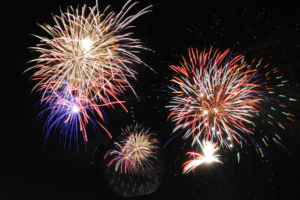
By 1777, Boston and Philadelphia were lighting up the sky with cannons and fireworks. Boston, of course, claimed another “first,” because that’s just what Boston does.


How the Holiday Grew

After the War of 1812, Independence Day really took off. It became a federal holiday in 1870 and a paid one in 1941. From there, the celebrations got bigger, louder, and more delicious.

A few fun facts:

  • Three presidents died on July 4th: John Adams, Thomas Jefferson, and James Monroe.
  • Americans spend about $1.5 billion on fireworks every year.
  • Around 150 million hot dogs get eaten on the 4th.
  • Fireworks send roughly 10,000 people to the ER annually — so maybe don’t stand too close to Uncle Bob’s “custom” firework setup.

A Modern American Tradition

Today, the 4th of July is a blend of history, community, food, and things that go boom in the sky. It’s imperfect, messy, and uniquely ours — a celebration of choosing our own future.

So enjoy the parades, the parties, the cookouts, and all the red‑white‑and‑blue desserts your heart desires. Just be safe around those fireworks.

Happy 4th of July!

It Ain’t Easy Being Dad

Happy Father’s Day

It ain’t easy being Dad. Here’s  to all  the Fathers who power through the tough stuff. Bad ties. Crooked mugs. Socks no one asked for. And those “World’s Best Dad” gifts that come with glue fingerprints and a lot of heart.

Best dad Award for Father's Day. It ain't easy being Dad

Dads smile anyway. They wear the tie once. They keep the mug forever.

Looking for a grin? I’ve got a Calvin and Hobbes Father’s Day post that always delivers.

Here’s to them.

Its World Crocodile Day

Crocodile resting on a riverbank, highlighting the species for World Crocodile Day and its role in wetland ecosystems.


World Crocodile Day

It’s World Crocodile Day, coming right on the heels of World Turtle Day — another reminder that some of Earth’s oldest creatures are fighting for their future.

Crocodiles are incredible animals. They’ve been around since the age of the dinosaurs, surviving the mass extinction that wiped out nearly everything else. A meteor couldn’t take them out… but humans are giving it a pretty good try through habitat destruction, pollution, and hunting.

Steve Irwin, the Crocodile Hunter himself, understood them better than most. He once said, “Crocodiles are easy. They try to kill and eat you. People are harder. Sometimes they pretend to be your friend first.” He wasn’t wrong.


Crocodile Facts

  • Crocodiles can be found in nearly every corner of the world — North and South America, Africa, Australia, and Asia.
  • The Florida Everglades is the only place on Earth where crocodiles and alligators live together.
  • You can tell them apart by their snouts: alligators have broad, rounded snouts, while crocodiles have narrow, pointed ones.
  • Crocodiles tend to be larger. The saltwater crocodile can exceed 20 feet and weigh over 2,000 pounds.
  • Alligators are usually smaller. The American alligator typically reaches 10–15 feet and weighs 500–1,000 pounds.
  • Crocodiles can live in both freshwater and saltwater.
  • There are 15 species worldwide, including Australia’s famous “salties” and the Nile crocodile — found, of course, in the Nile River.

Crocodiles are living dinosaurs, apex predators perfectly adapted to their environments. They deserve the same chance at survival as every other creature sharing this planet.

It’s up to us to protect their habitats, reduce pollution, and ensure these ancient reptiles continue to thrive for generations to come.

Crocodiles survived the dinosaurs’ extinction. They shouldn’t have to survive us!