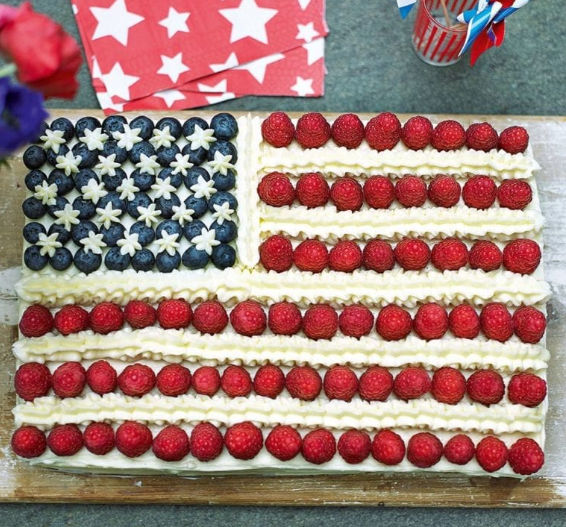

Hooray for the Red, White, and Blue!
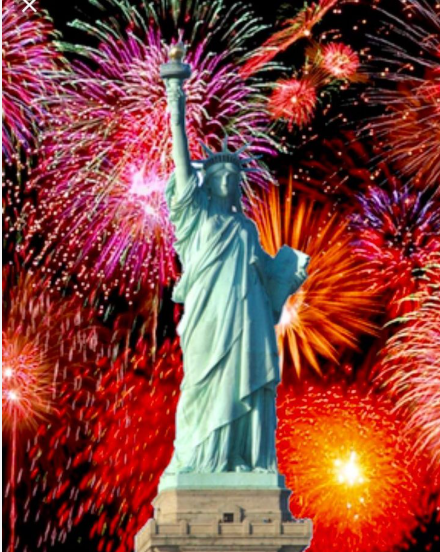
The 4th of July always sneaks up right when summer starts feeling real — flags on porches, parades gearing up, cookouts firing, and someone in the neighborhood already testing fireworks like they’re running quality control. It’s festive, it’s loud, and it’s very American. But behind all the fun, there’s a real story about why we celebrate this day.
The Declaration of Independence
July 4th marks the anniversary of the Continental Congress adopting the Declaration of Independence — the moment the colonies officially said, “We’re done here,” to British rule. Thomas Jefferson wrote most of it, and the delegates spent time editing and debating before approving the final version.
What Actually Happened on July 4, 1776
Here’s the twist: the vote for independence happened on July 2nd, not the 4th. John Adams even predicted July 2nd would be the holiday we celebrated every year. Only two men signed the Declaration on July 4th — John Hancock and Charles Thompson. Hancock famously signed his name large enough for King George to read without his spectacles, which is how we ended up with the phrase “put your John Hancock on it.”
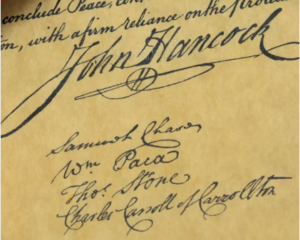
The big parchment with all 56 signatures didn’t come until August 2nd.
Early Independence Day Celebrations
The very first celebrations included mock funerals for King George III. (Americans have always had a flair for dramatic symbolism.) George Washington marked the first anniversary by giving his soldiers extra rum — probably the most popular tradition of all.
The First Fireworks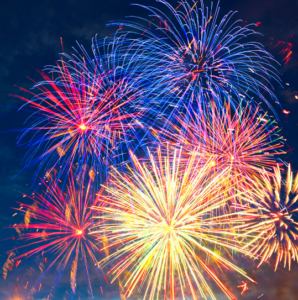
By 1777, Boston and Philadelphia were lighting up the sky with cannons and fireworks. Boston, of course, claimed another “first,” because that’s just what Boston does.
How the Holiday Grew
After the War of 1812, Independence Day really took off. It became a federal holiday in 1870 and a paid one in 1941. From there, the celebrations got bigger, louder, and more delicious.
A few fun facts:
- Three presidents died on July 4th: John Adams, Thomas Jefferson, and James Monroe.
- Americans spend about $1.5 billion on fireworks every year.
- Around 150 million hot dogs get eaten on the 4th.

- Fireworks send roughly 10,000 people to the ER annually — so maybe don’t stand too close to Uncle Bob’s “custom” firework setup.
A Modern American Tradition
Today, the 4th of July is a blend of history, community, food, and things that go boom in the sky. It’s imperfect, messy, and uniquely ours — a celebration of choosing our own future.
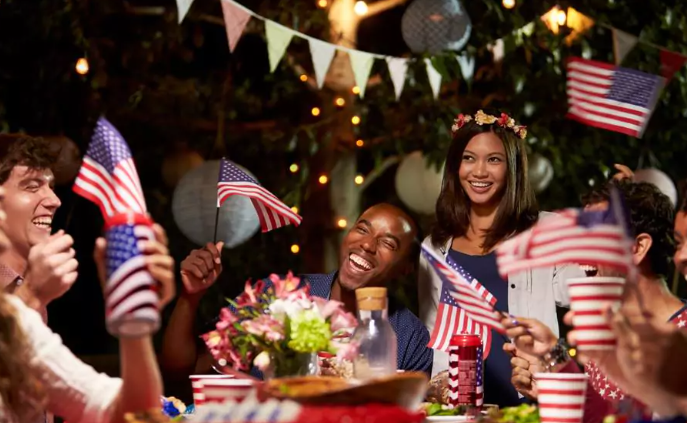
So enjoy the parades, the parties, the cookouts, and all the red‑white‑and‑blue desserts your heart desires. Just be safe around those fireworks.
Happy 4th of July!
Share this:
- Share on Tumblr (Opens in new window) Tumblr
- Print (Opens in new window) Print
- Share on X (Opens in new window) X
- Share on Facebook (Opens in new window) Facebook
- Share on Pinterest (Opens in new window) Pinterest
- Share on Reddit (Opens in new window) Reddit
- Share on LinkedIn (Opens in new window) LinkedIn