A Vacation of Firsts


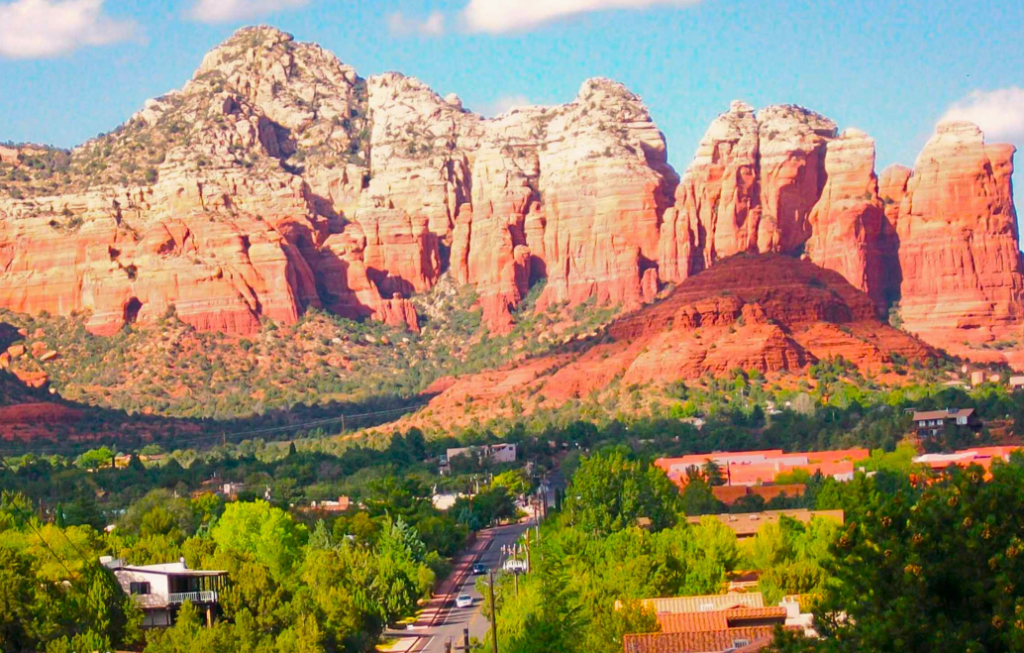
 Red rock formations rise above the town of Sedona, Arizona, with layered sandstone cliffs, green trees, and scattered houses under a clear sky.

⭐ Sedona Firsts — A Walk Down Memory Lane (2008)
 Red sandstone cliffs and buttes rise above the town of Sedona, Arizona, with green trees and scattered houses in the foreground under a partly cloudy sky.You all know about my great photo‑tagging project. I’m making good progress, but as if 10,000+ pictures weren’t enough, I discovered a whole stash of older photos that never made it into my media library.

I was searching for a specific shot I knew I took. It wasn’t in the library, so I went digging through my computer’s hard drive. Ta‑da — found it! But then… what are all these other folders? I clicked one at random.

Sedona 2008. Instant time warp.

None of these photos were ever imported, but there were a lot of them — and suddenly I was right back in that trip. 2008 was one of my earlier adventures, full of “firsts,” as you’d expect. So let’s take a walk down memory lane.

🌄 Sedona: Home of the Woo‑Woo

Sedona has a reputation — mystical energy vortexes, UFO sightings, crystal shops, tarot readers. If it’s outside the norm, you’ll probably find it here.

I didn’t partake in any meditations or energy‑raising ceremonies. For me, Sedona is a photographer’s dream:

 Two tall red sandstone hoodoos known as the “Two Nuns” rise against a clear blue sky in Sedona, Arizona, with green hills and sparse desert vegetation at their base.

2 Nuns

  • Red rocks glowing at dawn and dusk
  • Oak Creek winding between canyon walls
  • Hawks floating overhead
  • A photography shop on the main street with local art so beautiful it made my heart hurt

That’s the Sedona I fell in love with.

🚂 First: The Grand Canyon Railway

I drove to Williams, Arizona, where I caught the train to the Grand Canyon. I know I’ve told you before — that first look at the canyon is beyond description.

My mind couldn’t get a grip on it. The canyon is so massive, so colorful, so unreal that I half expected to reach out and touch a mural instead of… nothingness. I don’t think I’ll ever recapture that moment again, and I’ll never forget it.
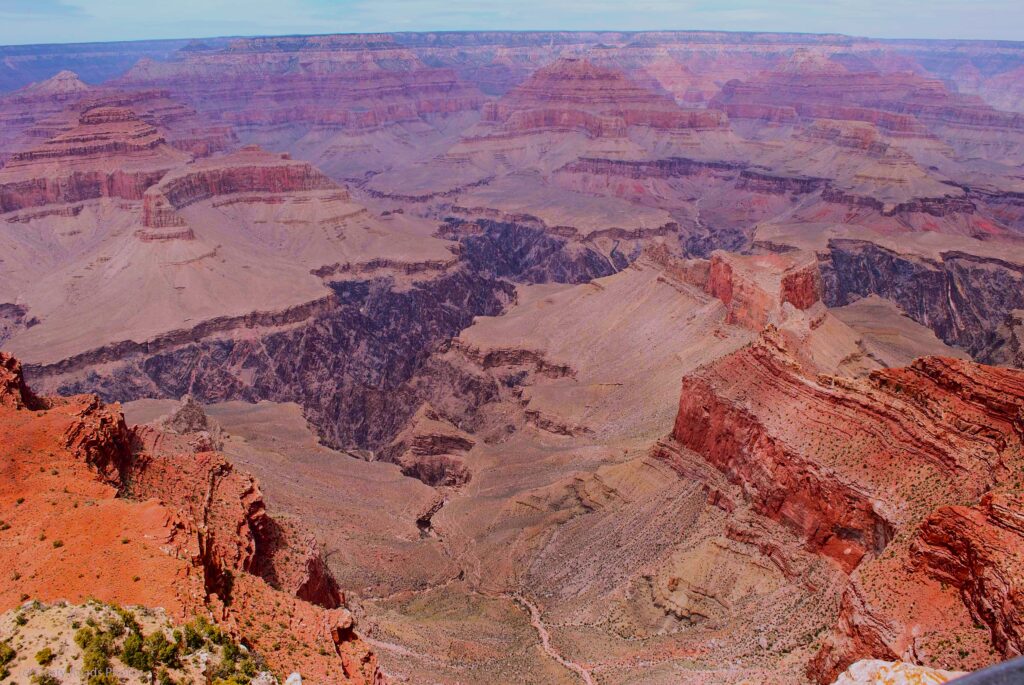
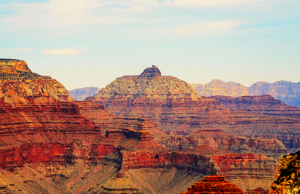
Expansive view of the Grand Canyon with layered red and orange cliffs, deep valleys, and rugged rock formations stretching toward the horizon under a partly cloudy sky.

🌬️ First: Meteor Crater

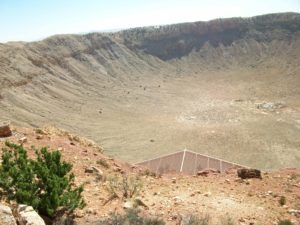
 A wide view of Meteor Crater in Arizona, showing its steep rocky walls, flat crater floor, and desert terrain with a small observation structure along the rim.

Meteor Crater

Traveling east from Williams, I followed I‑40 until I reached Exit 233 — Meteor Crater.

  • 1 mile wide
  • 550 feet deep
  • 50,000 years old

There are four lookout points along the rim, each with telescopes for viewing the floor. The day I visited was windy, and the sound was incredible — like someone blowing across the top of a giant bottle. A deep, resonant WOOOOOOSH rolling across the crater’s rim.


There’s a small space museum, but honestly, the crater itself overwhelmed me so much that I barely went inside.

🐅 First: A Dirt Devil Up Close

Back in Sedona, I headed south toward Camp Verde to visit Out of Africa Wildlife Park. Who expects to find a safari A tall dust devil spirals upward from the desert floor, twisting across a flat, dry landscape with distant mountains under a clear blue sky. park in Arizona? But it was fun — until it became memorable.
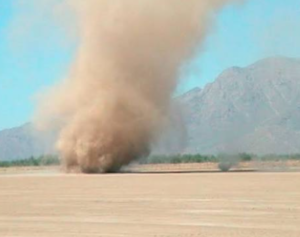
I was in the bleachers watching the tigers swimming and playing when a trainer suddenly yelled, “Take cover!” We were outside… cover where?

A dirt devil was forming near the tiger enclosure.

I’d seen plenty of them while driving — harmless little twisters that never last long. Or so I thought.

This one hit the bleachers with force:

  • The wind nearly knocked me off my feet
  • Cat toys were flying
  • Dirt blasted into the air like sandpaper
  • Anything not covered stung

It only lasted a few minutes, and I wasn’t hurt, but wow — I learned how not harmless those “little” things can be.
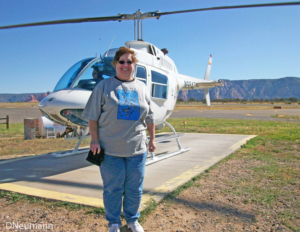
A woman stands in front of a white sightseeing helicopter on a desert helipad, wearing sunglasses, a graphic T‑shirt, and jeans, with rocky hills and a clear blue sky in the background during her first helicopter ride.🚁 First: My First Helicopter Ride

Another big first: my first helicopter ride.

We flew over the landscape around Sedona in a small helicopter, and I had the perfect seat — window access and a camera in hand. I took photos the entire time and loved every second.

I’ve been on several helicopter rides since, but none were as satisfying. Bigger copters, center seats, someone’s head or arm always in the way. That first ride spoiled me forever.
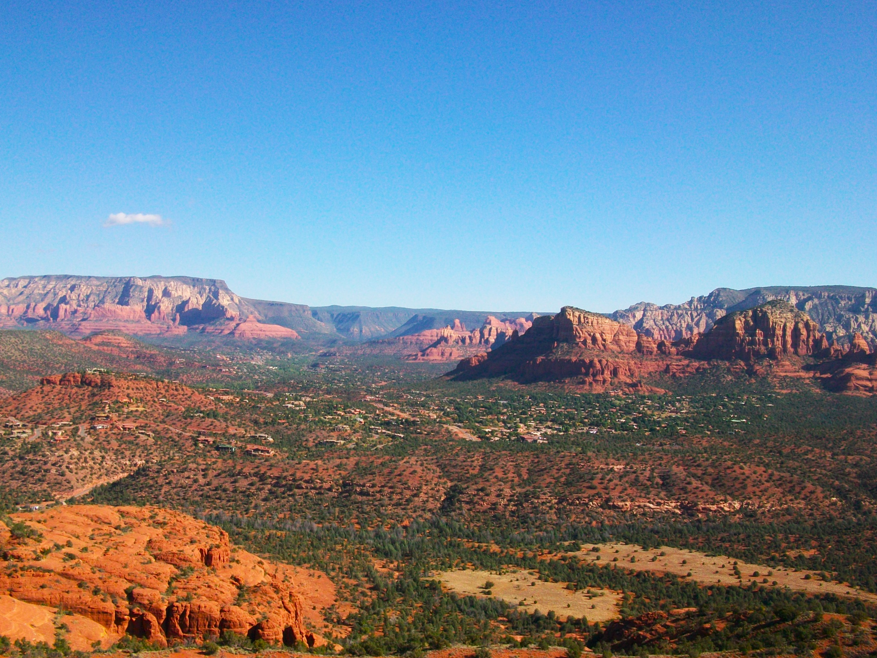
Wide desert landscape with red rock mesas and buttes in Sedona, Arizona, surrounded by sparse vegetation and green shrubs under a clear blue sky.

❤️ Why I Returned

My first trip to Sedona was a huge success. No wonder I went back a couple of years later. And if time and money allowed, I’d go again.

Maybe next time I’d even see a UFO.
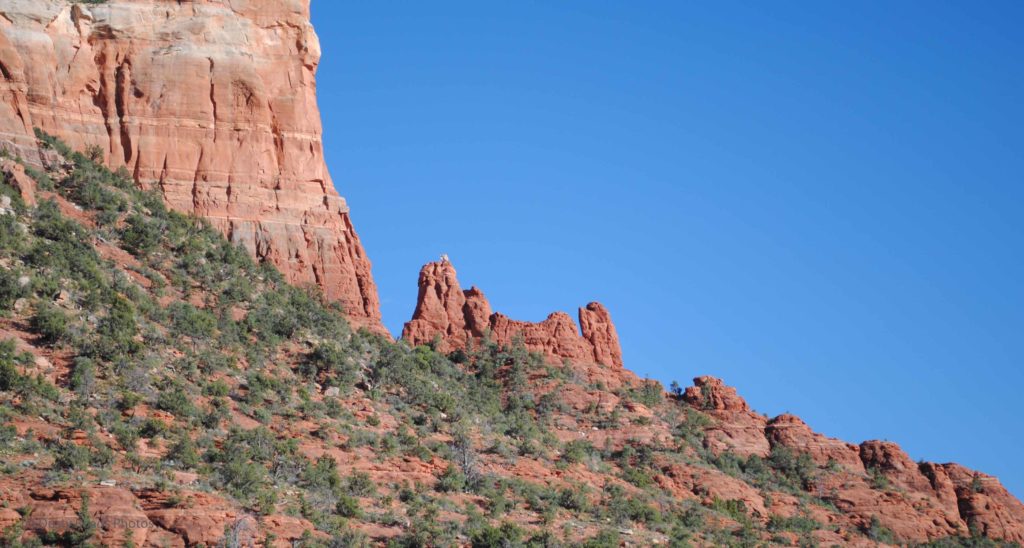
Red rock cliffs and buttes in Sedona, Arizona, rising above sparse desert vegetation under a clear blue sky.


How Vacations Have Changed

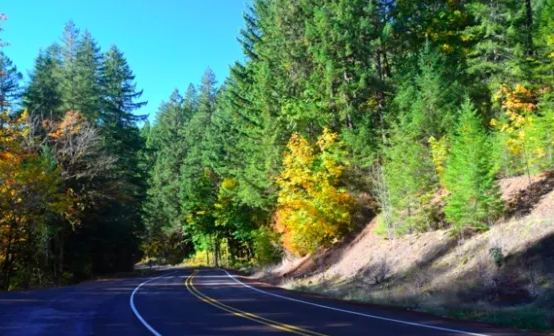
A winding paved road curving through a forest of evergreens and autumn-colored trees under a bright blue sky.”

Casting Around for a Topic

Someone suggested I write something nostalgic today, and that’s a tall order when your life has reached the three‑quarter‑century mark. Most of my memories feel downright vintage now. But that got me thinking about vacations — and how wildly different they are now compared to when I was a kid.

Planning vs. “We’ll Figure It Out”

As an adult, I planned my vacations meticulously. Hotels booked. Airline tickets secured. Rental car reserved. Tours and attractions scheduled before I ever left the house.

Back then? I don’t think we were quite that organized.

The Road Trip Era

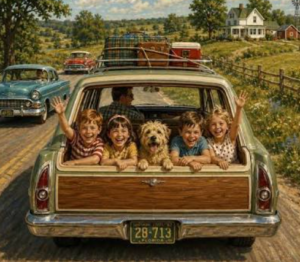
 “Vintage station wagon on a country road with children and a dog waving from the back, luggage tied to the roof, and a farmhouse and fields in the background under a bright blue sky.”One big difference was the road trip. Today we have super‑duper safety seats and booster seats, but “back in the day” we kids just climbed into the back of the station wagon. It became our play area, nap space, and sometimes the dog’s spot too. No seat belts. No rules. Just vibes.
We drove wherever we wanted with no sense of time. Hungry? Look for a restaurant that looked decent. Ready to stop for the night? Watch for Vacancy signs. No Hotels.com. No Trivago. You took your chances.

Growing up in a tourist town, we judged how well the season was going by how many No Vacancy signs were lit up along the strip.

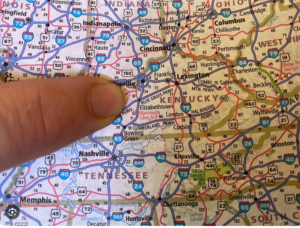
Maps: The Lost Art“Close-up of a printed road map showing parts of Kentucky, Tennessee, Indiana, and Ohio, with a finger pointing near Louisville.”

I’m still a champion map reader — not just because of vacations, but because my first job had me on the road. No GPS. No turn‑by‑turn voice telling you what to do. You opened a map or a map book and figured it out.

I’m amazed at how many people, especially younger ones, would stay lost forever if they had to read a map. I’ll forgive them if they can’t fold it.

Getting Lost Was Normal

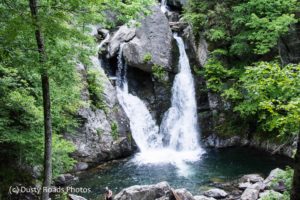
Waterfall cascading over large rocks into a clear pool, surrounded by lush green forest at Bash Bish Falls.”A couple of years ago, I was driving to upstate New York to visit family. I told them I was detouring to a waterfall, but I guess I took too long because my cell phone started ringing — “Where are you?” Back in the day, there were no cell phones, and even when they arrived, there were plenty of dead zones. You could disappear for a whole day and no one would notice.
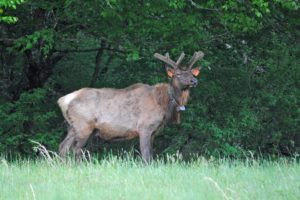
Getting lost on a road trip was expected. Honestly, sometimes I still set out knowing something is west or north and just head that way. When I was in Tennessee looking for elk on back roads, I had no idea where I was — dead zone, no GPS, no clue. But I had a full tank of gas, so I kept driving. Eventually you’d see something familiar or someone you could ask. And Yes, I did find elk.

“Large elk standing on a grassy clearing at the edge of a forest, with velvet-covered antlers and dense green foliage in the background.”

And yes, we asked for directions. “A‑yuh, down the road apiece.” “Left at the old firehouse.” “If you get to the light, you’ve gone too far.”

Maybe that’s why I think of travel as an adventure. It keeps me from getting upset when things don’t go exactly as planned. Some of the best things I’ve seen came from being lost.

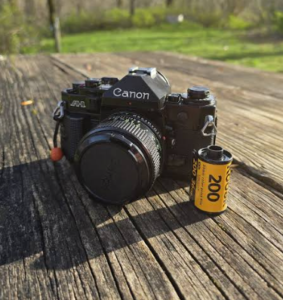
 “Vintage Canon film camera on a weathered wooden surface with a roll of Kodak 200 film beside it, set outdoors near grass and trees.”The Digital Camera Revolution

There are lots more differences now that I think about it — one being the digital camera. Today you can see instantly if you got the shot. No limits from the size of your film roll. No waiting for development.

We always had old rolls of vacation film sitting around because when we got home, we were too broke to get them developed right away. They landed in a junk drawer, lost to time.

Your Turn

Speaking of time — that’s about all I have for today.

How have vacations changed for you since you were a kid? Toss your thoughts in the comments. Lets compare notes.


When a Chore Turns Into a Treasure Hunt

Two deer standing in a sunlit grassy clearing surrounded by dense green foliage.

Rediscovering Hidden Gems in My Photo Archives

Dolphins swimming together at the ocean surface with their dorsal fins visible above the water.When I started The Great Photo Tagging Project, I was doing everything I could not to feel overwhelmed. My archives had grown to more than 10,000 photos, and most of them weren’t tagged. Any time I needed a specific picture, I had to scroll endlessly—unless I happened to remember the exact year and month I took it.

Take Hawaii, for example. I started traveling there in 2008 and went annually for years. I have hundreds of photos from those trips, but no clue which year a particular shot belonged to. Finding one specific image felt nearly impossible.

To make matters worse, I didn’t know about tagging when I began blogging. I’d find a photo, use it, and then toss it right back into the black hole of the untagged archives. So when I finally decided to tackle this project, it felt daunting.

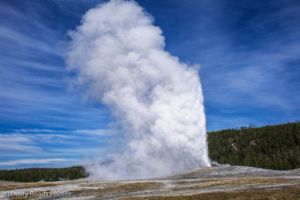
The Slow March Through the BacklogA powerful geyser eruption sending steam and water upward, surrounded by grassy terrain and a forested backdrop.

At first, everything went smoothly. I was happily tagging away, and I made a rule: any new photo gets tagged immediately so I don’t add to the backlog. Somewhere along the line, though, the fun faded. Tagging became a chore.

Still, I was determined. I’d skip a day or two, then come back and knock out a page of 20 photos, slowly working my way backward through the years.

I’m currently in November 2016, inching my way toward the very beginning of the archive—January 2011. Some months are easy with just 10 or 20 photos. But then I hit a trip month and suddenly I’m staring down 300 images. Momentum? Slowed.

When the Chore Became a Treasure Hunt

But recently something unexpected happened. Without a car, I haven’t been able to get out and take new photos, so I’ve been relying on the archives. And as I started reviewing images in small batches, I began noticing things I’d completely missed before.

Treasure #1: The Puffin

Original puffin photo showing the bird floating on calm water before enlargement.I once waded through more than 200 puffin photos during post‑processing and somehow missed a gem. But while tagging, I enlarged one tiny puffin and—there it was—the iconic mouthful‑of‑fish shot I thought I’d missed forever. My first treasure.
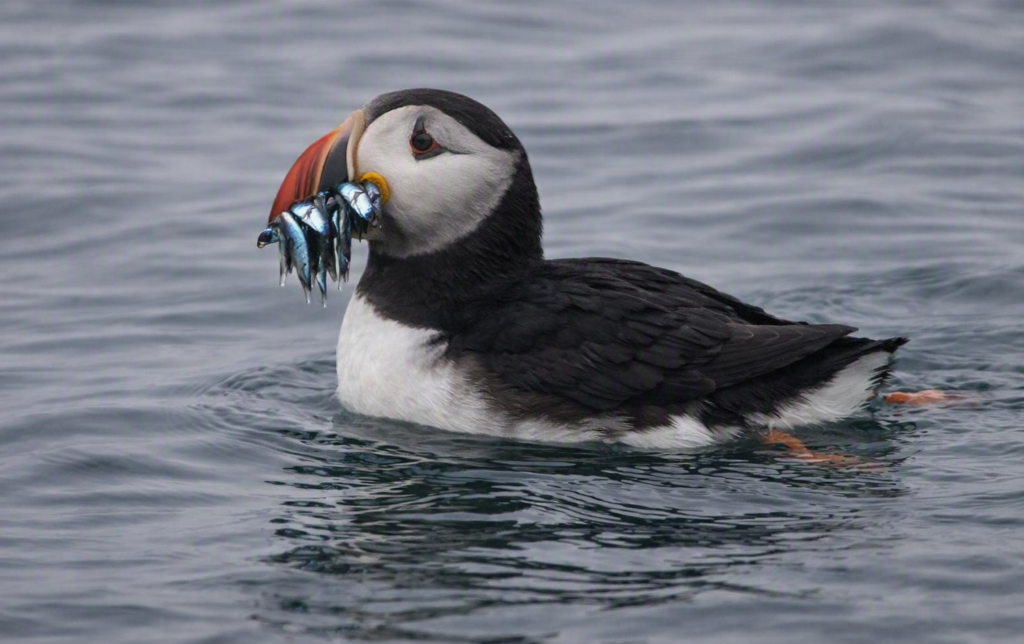
Close‑up of an Atlantic puffin with a mouthful of fish, revealing details missed in the original thumbnail.

Treasure #2: Haleakala

The untouched Haleakala photo showing the raw volcanic landscape before post‑processing.I’ve always loved my Haleakala photo, but my artistic eye said it was a little flat. When I rediscovered it during tagging, I decided to give it a little post‑processing love. Suddenly it had punch, depth, drama. Treasure number two.
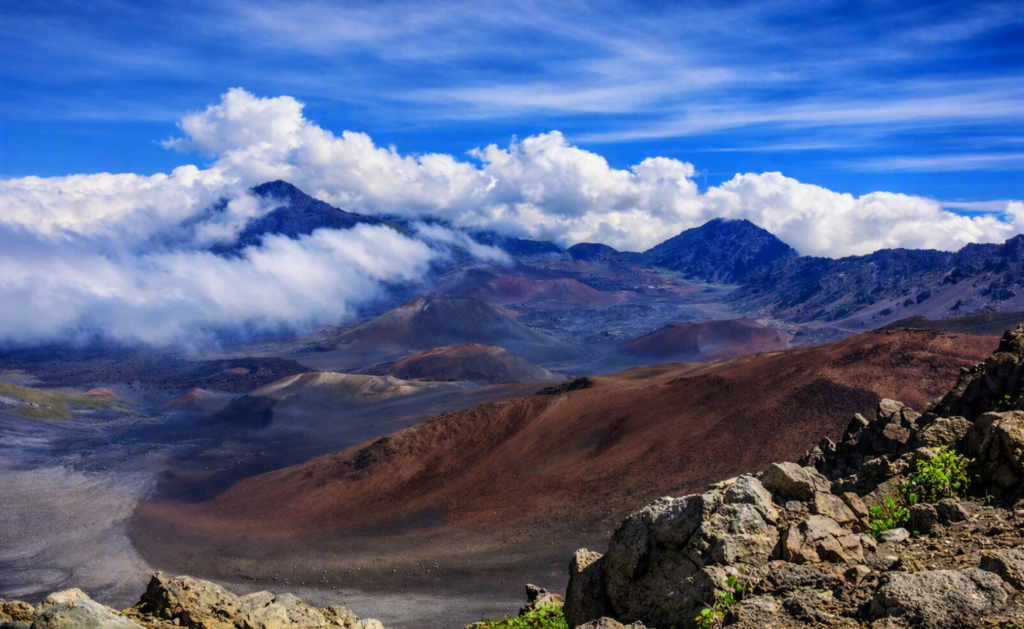

Vibrant, enhanced photo of Haleakala’s volcanic terrain with sharp detail and dramatic cloud formations.

Treasure #3: The Submarine Shots

The untouched shipwreck photo showing the quiet underwater scene before enhancement.Then came two photos taken from a submarine. Shooting through thick porthole glass isn’t ideal, but with a little editing magic, those images transformed from “nice memory” to “something really special.”
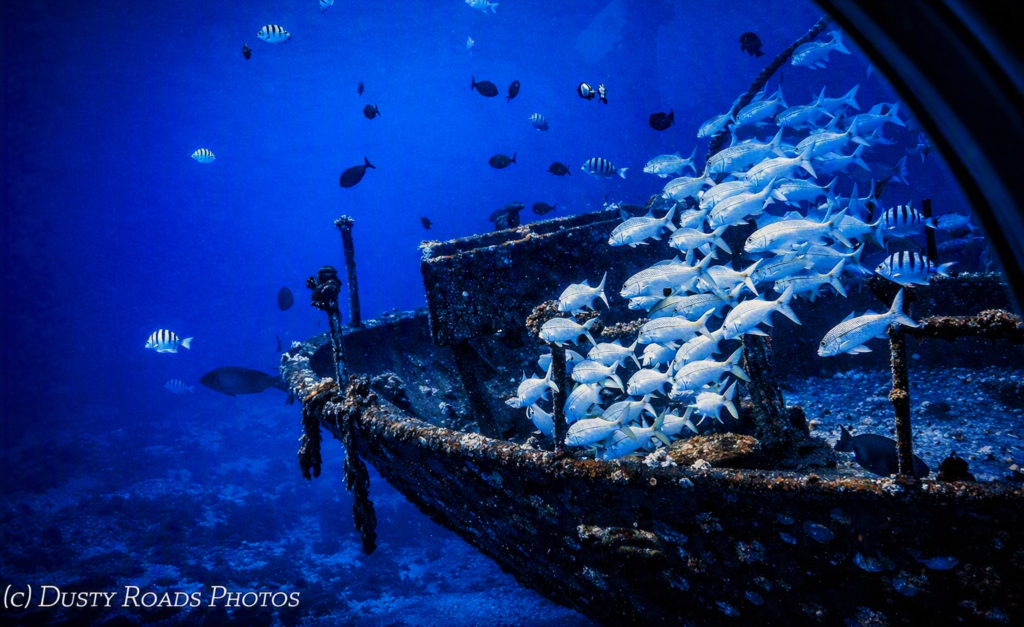
The transformed shipwreck image showing rich color, marine life, and dramatic underwater detail after post‑processing.

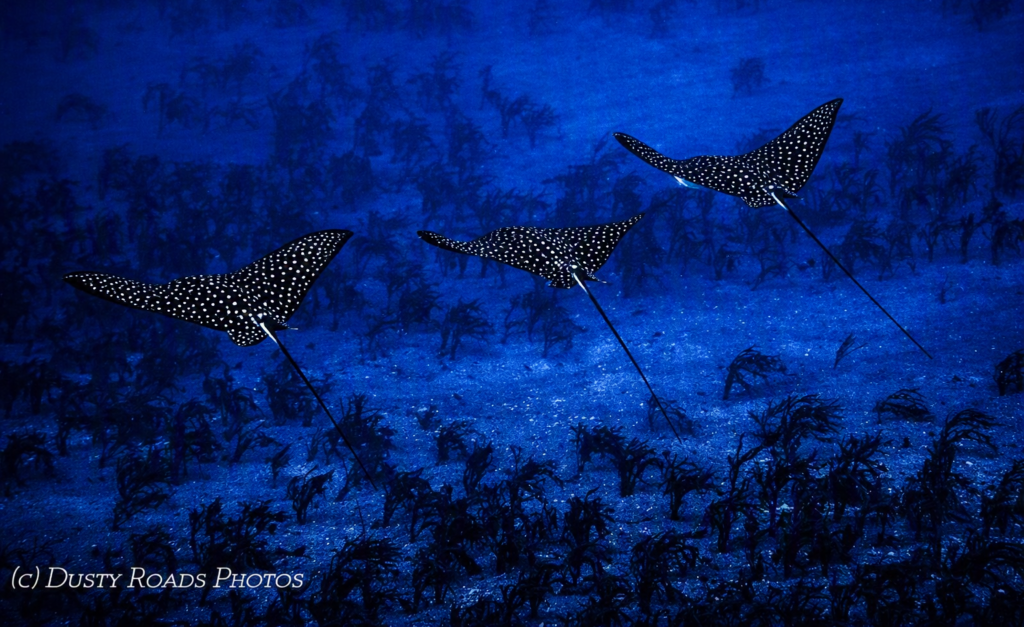
The untouched eagle ray photo showing the quiet underwater moment before enhancement.

Vibrant, enhanced photo of three spotted eagle rays swimming across the ocean floor, showcasing their patterns and graceful movement.

Finding Beauty in the “Ugly Ducklings”

Now I’m energized again. I’m not just tagging my inventory—I’m hunting for hidden gems. I’m looking for those overlooked, imperfect photos that just need a little love to become beautiful swans.

And honestly? I can’t wait to find my next treasure.

What about you? Have you ever looked at an old photo with new eyes and discovered a treasure hiding in plain sight?


HOW TO VACATION IN KEY WEST

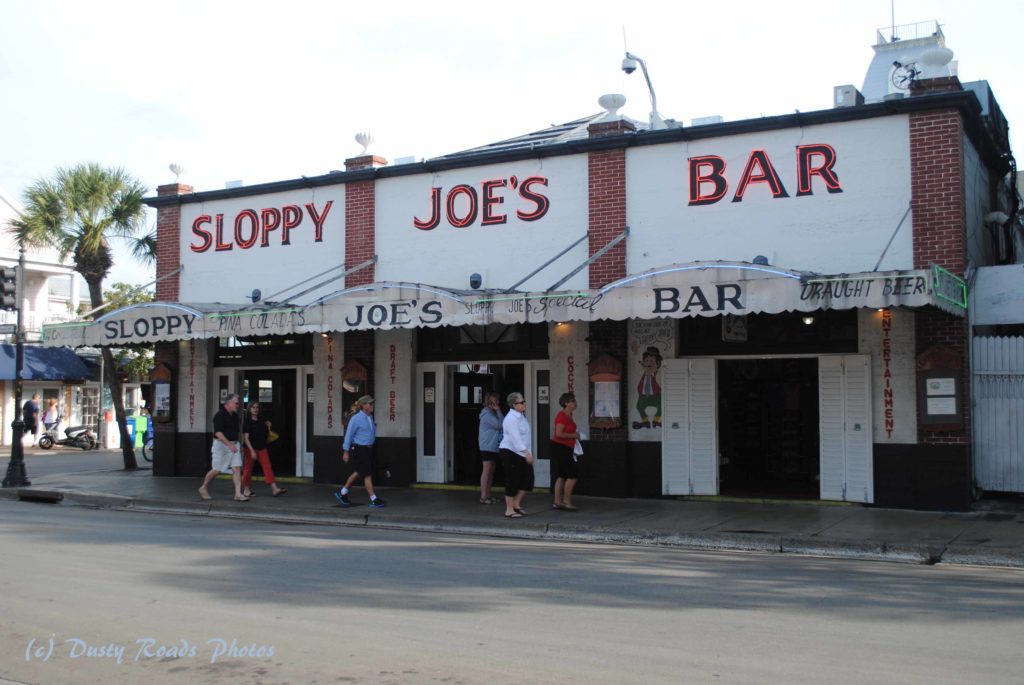
Sloppy Joe's Bar on Duval St Key West

🌴 What Not to Do in Key West

A Dustyroads Survival Guide for America’s Favorite Tropical Fever Dream

🌞 Key West: Where Logic Takes a Vacation and Never Comes Back

Helicopter over US1 in the Florday KeysYou’ve made it to the Keys, bless your brave little soul. You survived the iguana speed bumps of Islamorada, the deer gangs of Big Pine Key, and the “is this road drunk or am I?” experience of US‑1. At one point I even saw a helicopter hovering over the highway like it was checking on the mental stability of everyone making that drive — and honestly, fair And now, as your reward, you get to watch a sunburned housecat with emotional baggage square up against an iguana on Duval Street like it’s pay‑per‑view.
A few steps later, there’s a man painted head‑to‑toe in metallic gold, perched on a milk crate, silently judging everyone who doesn’t understand why this week’s unofficial island theme is “neon pineapple serenity.”

Key West is America’s last surreal fever dream — a tropical snow globe someone shook too hard and then decided to live inside. It clings to the bottom of Florida like a barnacle with seniority and a strong union.

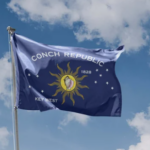
Reality shows up, gets carded, and is politely escorted out by a man in unicorn pajamas who also owns three hotels and a scooter rental business.Concg Replublic flag , the flag od Key West. Blue backgrouns with sun

Keep your shoes on. Something in the sand probably bites. So before you wander too far into the Conch Republic, here are a few things to keep in mind — little survival tips to help you enjoy the island without becoming part of its folklore.

🐔 1. Don’t Start Anything with the Chickens

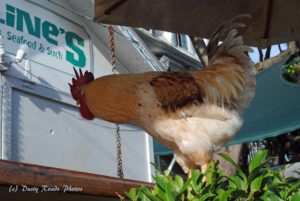
Key West Rooster expresses his displeasureKey West chickens are not pets. They are tiny feathered authority figures with generational confidence and zero fear of humans. Their ancestors arrived decades ago, decided the island was theirs, and never once paid rent.

The roosters strut like elected officials. The hens? The hens are the real muscle. I met a couple built like linebackers — broad‑shouldered ladies who looked ready to write me a citation.

Try to shoo one and you’ll get a stare so intense it’ll make you rethink every decision you’ve made since 1998.

Get too close to their chicks and you’ll find yourself sprinting toward a hotel lobby like you’re being chased by a very small, very angry HOA board.

Respect the chickens. They run the island. You’re just visiting.

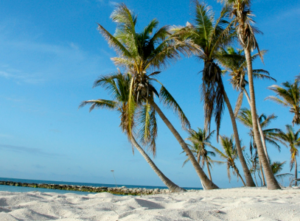
🦎 2. Don’t Expect a Real Beachsandy beach with palm trees

You might arrive thinking, “Island, ocean, sunshine — perfect beach day,” and you may even bring an inflatable flamingo with the kind of optimism usually reserved for lottery winners. But Key West doesn’t care. None of that matters.

Key West is coral, seaweed, and sharp prehistoric things that do not care about your vacation fantasies.

If you want soft, powdery sand, grab the next boat to the Bahamas. If you want coral shards that slice through flip‑flops like warm butter, try Key Largo. I did. Once. I still have emotional scars.

Smathers? Man‑made. Higgs? Acceptable if you enjoy sea lettuce and the faint aroma of sunscreen mixed with toddler rebellion.

Key West isn’t a beach destination. It’s a vibe — and the vibe is “We tried. Sort of.”

🍹 3. Don’t Go Looking for Jimmy Buffett’s House

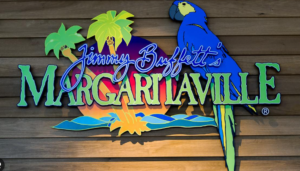
Colorful Margaritaville sign with Jimmy Buffet's namePeople come to Key West convinced Jimmy Buffett is still tucked away somewhere, strumming a guitar and handing out margaritas like party favors.


But Jimmy Buffett doesn’t live at an address. He lives in a mood.

If you really want to find him, you don’t need a map — you need a blender, a porch chair, and absolutely no guilt about doing nothing for the rest of the afternoon.

Where does he live?

Margaritaville. Population: anyone who’s decided they’re done with stress for the day.

Directions?Spilled salt shaker

First star to the right and straight on ’til morning. Bring sunscreen. And a salt shaker — you never know when you’ll lose it.

So pour your margarita, take a breath, and remember: It’s 5 o’clock somewhere.

🚫🚗 4. Don’t Try to Drive on Duval

Sweet heavenly biscuits, do not attempt to drive on Duval Street. It’s not a street — it’s a living organism made of tourists, glitter, questionable decisions, and humidity.

You will encounter:

  • People who forgot how sidewalks work
  • People who think Key Lime Pie grants temporary immortality
  • People spiritually, chemically, or Key‑West‑enhanced
  • Outfits that should come with warning labels

And then the performers:

  • Pirates
  • Mimes
  • Pirate‑mimes
  • Fire jugglers
  • Six chihuahuas dressed as mermaids
  • A unicyclist going the wrong way while singing ABBA

Drag Queen in red shoe. Famouse show drop for New Year's eve in Key WestMy best memory? New Year’s Eve on the gay end of Duval — wall‑to‑wall people, electric energy, and the famous drag queen shoe drop. I had a front‑row seat at a show and got dragged onstage to dance with the star. The crowd roared. The island vibrated. It was magic.

Duval is unforgettable. But it is absolutely no place for a car.

Park somewhere sane. Walk like the rest of the dehydrated pilgrims.

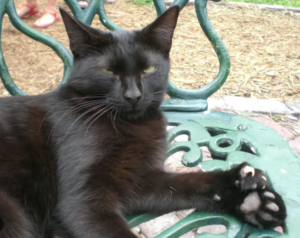
🐾 5. Don’t Skip Hemingway’s HouseBlack Polydactl cat looking very judgemental

If you go to Key West and don’t visit Hemingway’s house, the cats will know. They’re polydactyl — extra toes, extra judgment.

These cats are island nobility. They roam the property like tiny monarchs, lounging on furniture and accepting admiration with royal indifference. I have no idea how many there are — just a lot. Enough to suspect they’re running the estate.

The house itself is a sunlit time capsule of Hemingway’s life. You can practically feel unfinished manuscripts drifting around.

And of course, Hemingway made Sloppy Joe’s legendary — looping us right back to Duval Street.

Visit the cats. Pay your respects. They were here long before you.

📍 6. Don’t Expect the Southernmost Point to Be Empty

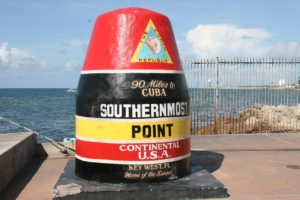
Southernmost point buoy, Key west FlThe Southernmost Point buoy is a celebrity. The line wraps around the block like it’s handing out concert tickets.

You’ll see:

  • Families in matching shirts
  • Couples trying to look romantic while sweating
  • People arguing about whether Cuba is visible (it’s not)

Take your photo. Smile. Pretend you’re not melting.

Pro tip: Take your picture from the side. No one will know. No one will care.

Go once. Move on. The buoy isn’t going anywhere.

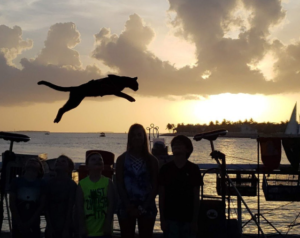
🌅 7. Don’t Miss Mallory Square at SunsetFamouse trained cats of Key West in Malloery Square at sunset

Mallory Square at sunset is Key West’s heartbeat — a nightly circus of jugglers, acrobats, musicians, fire performers, and a cat who jumps through hoops like it’s auditioning for Broadway.

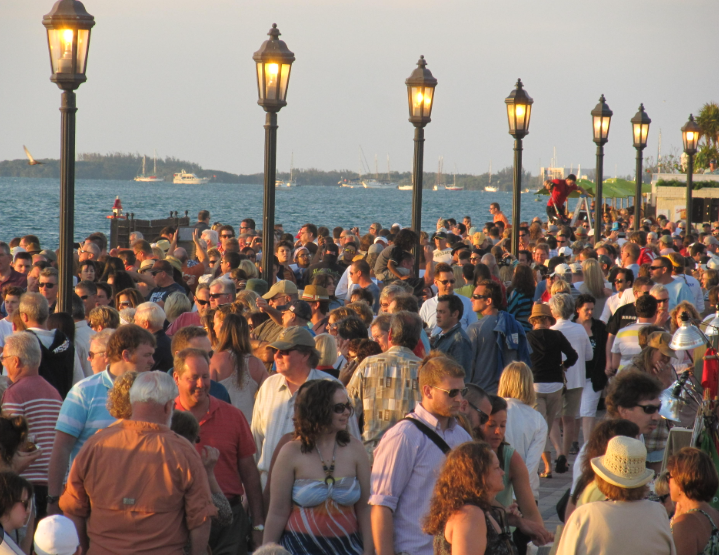
Locals, tourists, dreamers, wanderers — everyone stops, faces the water, and watches the sun drop into the ocean like it’s the final scene of a movie.

When it touches the horizon? The whole square cheers. Every single night.

Grab a drink. Find a railing. Let the sunset remind you why people come here and never want to leave.

🌴 And That’s Key West

Key West is a tangle of contradictions: chickens with seniority, beaches that lie about being beaches, sunsets that put on a full performance, and an island reality that wanders off whenever it feels like it. It’s the place where you danced with a drag queen, dodged coral shards, admired royal cats, and discovered that sometimes the best directions really are “first star to the right.” It lingers long after you leave — loud, strange, unforgettable.

Crowds gather in Mallorty Square, Key west to watch the sun set

A Miracle Comeback Nine Years in the Making

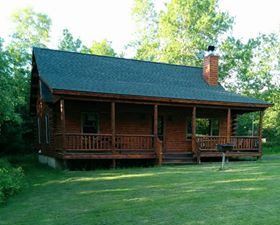
Rustic log cabin in Rangeley, Maine surrounded by trees and summer greenery, the lakeside vacation rental where I stayed during my 2017 moose‑spotting trip.

A Quiet Cabin, an Empty Town, and a Mountain Waiting for a Miracle

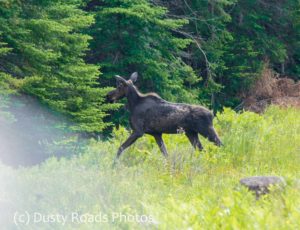
A Moose heading for the treesIn 2017 I chose Rangeley for my summer vacation because I wanted to see Maine moose. And I did — moose, deer, and more quiet forest roads than I could count. But I also found a town on a beautiful lake that was struggling.
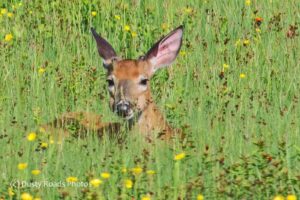
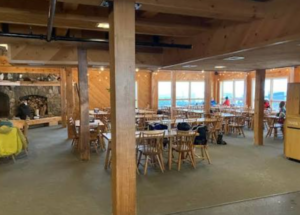
Saddleback, their ski mountain, was closed. Talk of a sale floated around like fog over the lake, but I can’t say the atmosphere was hopeful. Most people didn’t expect anything to come of it. Rangeley has plenty to offer if you love the outdoors — hiking, camping, nature photography — but in town the restaurants were either closed or empty. My cabin was beautiful, but I didn’t see many other vacationers around. It felt like a place waiting for something that might never come- a town holding its breath for a miracle.

So I’ve always wondered: What happened to Rangeley in the nine years since that visit?

Well, COVID didn’t stop the little town that could. In 2020, the sale of Saddleback finally went through — and everything changed.

The mountain woke up again

After years of false starts, Saddleback was purchased by Arctaris Impact Investors, a Boston‑based firm focused on revitalizing rural communities. And they didn’t just buy the mountain. They revived it.

More than $42 million has been invested since 2020. New lifts, new snowmaking, lodge improvements, a new T‑bar, a high‑elevation restaurant, and even a 7.5‑megawatt solar farm that produces twice the electricity the mountain uses.

It’s the kind of transformation you expect from a mega‑resort, not a once‑shuttered independent ski hill in western Maine.

Rangeley’s winter heartbeat returned

The reopening didn’t just bring skiers back — it brought life back.

Saddleback created 240+ jobs, built workforce housing, and restored the winter economy that had been fading when I visited. Restaurants filled up again. Lodges booked out. Seasonal workers could count on steady income. The town’s identity — which felt fragile in 2017 — snapped back into place.

It’s hard to overstate how much a single ski mountain can mean to a rural town. In Rangeley’s case, it meant everything.

From shuttered to #1 in the East

This is the part that still amazes me.

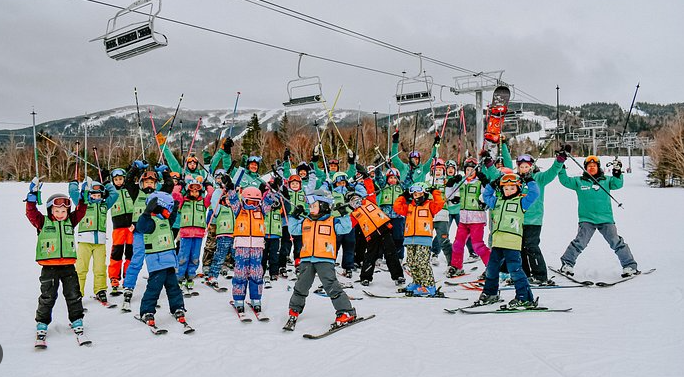
In 2025, SKI Magazine’s readers ranked Saddleback #1 ski resort in the East.

Number one. In the entire East. After being closed for five years.

If you wrote that in fiction, people would say it was unrealistic.

A different kind of ski mountain

What makes Saddleback’s comeback special isn’t just the money or the lifts — it’s the philosophy behind it.
They’re leaning into:

  • Independence — no mega‑pass, no corporate sameness
  • Sustainability — that solar farm is a game‑changer
  • Community — housing, childcare support, year‑round jobs
  • Authenticity — the “real ski mountain” vibe people crave

In a world where so many ski areas feel interchangeable, Saddleback is intentionally not trying to be anything but itself.

Weather still rules the game

Of course, skiing is still skiing. Warm spells still happen. Rain still happens. Gas prices still matter. Travel budgets still matter.

But Saddleback is far more resilient now than it was in 2017. Better snowmaking, better infrastructure, and a broader year‑round recreation economy give Rangeley a buffer it didn’t have before.

Looking back at that 2017 trip

When I think about that quiet summer week — empty restaurants, shuttered lifts, locals who didn’t dare hope — it makes Saddleback’s comeback feel even more remarkable. Rangeley didn’t just survive. It reinvented itself.

A comeback nine years in the making — and absolutely worth celebrating. I can honestly say that I love a happy ending! Rangely, Maine got it’s miracle. 

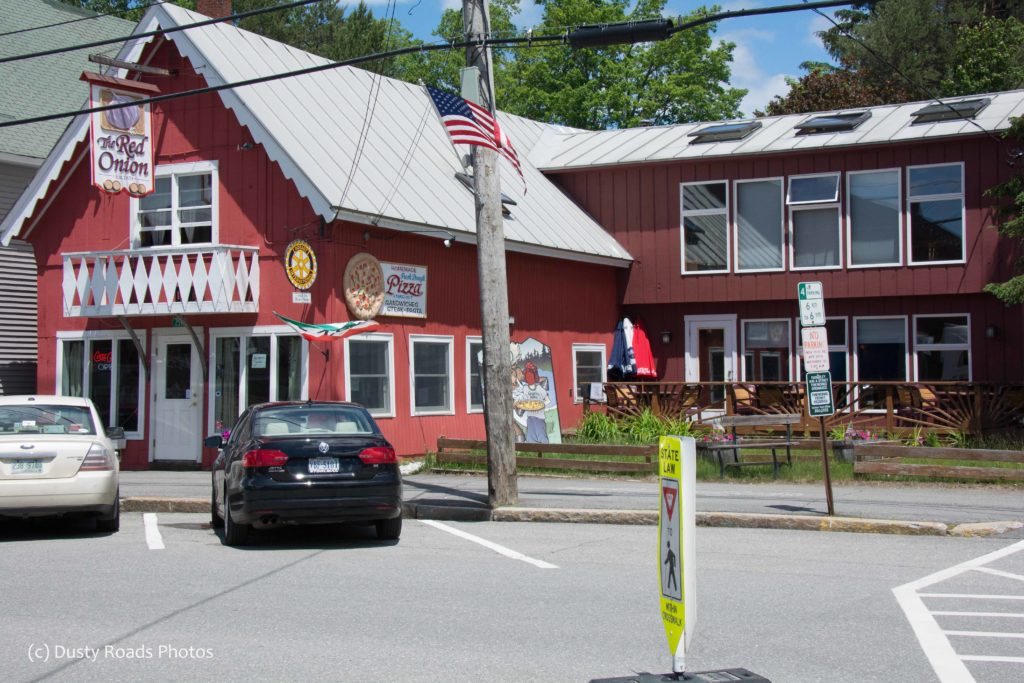
The Red Onion