Beware the Ides of March: Why This Ancient Date Still Echoes Today


What Are the Ides of March, Anyway?

Every year when March 15th rolls around, a little whisper from Shakespeare seems to drift through the air: “Beware the Ides of March! It’s dramatic, it’s ominous, and it’s one of those lines everyone knows—even if they’re not entirely sure what it means.

In ancient Rome, the Ides were simply the midpoint of the month. Nothing spooky, nothing sinister. Just a calendar marker. But in 44 BCE, Julius Caesar had a very unfortunate appointment with a group of senators who were feeling… let’s say, ambitious. That single event transformed an ordinary date into a cultural warning label.

Shakespeare later took the whole episode and turned it into high drama—soothsayers, tension, betrayal, and enough theatrical flair to make even modern political thrillers look tame. Thanks to him, the Ides of March became a symbol of caution, intrigue, and the occasional reminder to watch your back.

Why the Ides Still Capture Our Imagination

There’s something irresistible about a date with a built‑in sense of foreboding. The Ides of March has survived for more than two thousand years because it blends history, literature, and a touch of superstition. It’s a moment when we collectively pause, remember a dramatic turning point, and maybe give a little side‑eye to anyone acting overly dramatic.

Of course, today’s March 15th is far less dangerous than Caesar’s. No daggers, no conspiracies—just another day in early spring when New England is trying to decide whether it wants to be winter or mud season. The only thing most of us need to beware of is slipping on leftover ice in the driveway.

A Lighthearted Look at a Heavy Historical Moment

So as the Ides of March arrive, take a moment to enjoy the history, the Shakespearean flair, and the fun of a date that has lived rent‑free in our collective imagination for centuries. No need to beware—just appreciate the drama from a safe distance.

And tomorrow? We’ll leave ancient Rome behind and head back to Massachusetts, where Plymouth Rock is waiting to take its turn in the spotlight.


Travel Smart, Be Safe


When Travel Stories Skip the “Not‑So‑Great” Parts

When we talk about travel—or read the glossy blogs and glowing travelogues—we mostly hear how wonderful a place is. Sure, someone might mention bad weather or a disappointing meal, but the overall tone is usually sunshine and rainbows. I’m guilty of it myself. Except for my Road to Hana misadventure, I sing Hawaii’s praises every chance I get.

But every now and then, a little reality check is healthy.

The Comfort of a Timeshare… and the Trade‑Offs

For nearly twenty years, I traveled through my timeshare. It was one of the hardest things to give up when I retired, but the maintenance fees just didn’t fit my fixed income. While I had it, though? I traveled in style. Beautiful accommodations, attentive staff, and a sense of security—especially important because I often traveled alone.

Timeshares get a bad rap, and yes, getting out of one is neither painless nor easy. But if I ever hit the lottery, I’d consider it again. And here’s a tip: you can sometimes get the same perks without ownership by checking Redweek.com, where owners rent out their weeks to offset costs.

When a Destination Doesn’t Match the Hype

Even with all that comfort, not every trip felt safe. New Orleans is the one that stands out. Friends raved about the energy, the food, the parades—even outside Mardi Gras season. What they didn’t mention was the grime, the chaos, and the aggressive hustlers who thought nothing of following you down the street. I never felt unsafe anywhere else quite like I did there.

Other cities come with their own cautions. Detroit requires you to be mindful of the neighborhood you wander into. St. Louis consistently ranks among the most violent cities in the country. Oakland has seen a rise in break‑ins and street crime.

Nature Has Its Own Hazards

It’s not just cities. Even the most iconic outdoor destinations can be dangerous if you’re unprepared. Death Valley, for example, is one of the deadliest national parks due to extreme heat and dehydration risks.

Yellowstone has dangers from  geysers to wildlife. If you have any doubt read about my encounter with the Bison of Yellowstone . I was sure I was going to be flattened to roadkill before I was through.

Getting ready to pass by

On the South Rim, Grand Canyon 2008

A Little Research Goes a Long Way

I’m not saying you should stay home. Travel is still one of the most exciting, enriching things you can do. But a bit of research before you go—and a few simple precautions—can make the difference between a great adventure and a stressful one. Know the risks, plan accordingly, and you’ll come home with memories worth keeping.


Quick, No‑Nonsense Travel Tips That Actually Help

  • Know the vibe before you go — Not just the “Top 10 Things to Do” list. Look up neighborhood safety, recent news, and what locals say. Every city has great areas and “maybe not after dark” areas.
  • Trust your spidey sense — If something feels off, it probably is. Change direction, duck into a store, or call it a night.
  • Stay where the people are — Wandering is fun until it isn’t. Stick to well‑lit, busy areas, especially if you’re solo.
  • Keep your stuff simple — Crossbody bag, zipper closed, nothing dangling. Leave the “I’m a tourist!” clues at home.
  • Have a “just in case” plan — Screenshot directions, save the hotel address, and keep a backup way to get back.
  • Hydrate like it’s your job — Especially in places with heat, altitude, or long trails.
  • Don’t overshare in real time — Post the photos after you leave the location.
  • Ask locals the right question — Not “Is it safe?” but “Where would you go or avoid after dark?”
  • Give yourself permission to bail — If a situation feels sketchy, you don’t owe anyone an explanation.

So go forth, intrepid adventurer, and make memories worth keeping… safely, of course.

Alaska 2013


Quick Note: Promeed Flash Sale Is Live!


If you’ve been thinking about freshening up your bedding for spring, Promeed just kicked off a Flash Sale, and the savings are pretty impressive.

From March 12 at 11:55 PM through March 30 at 11:53 PM (Eastern), you can snag:

🌙 50% Off Comforters

Cooling, herbal, and silicone comforters — all half‑price with code Final50.

Summer cooling sale with promeed bedding and linens

✨ 15% Off Mulberry Silk Bedding

Their silk pillowcases and sheets are discounted with code PMF15.

You can shop the sale here using my affiliate link.

I’ve been really happy with their mulberry silk pillowcases — soft, cool, and gentle on hair and skin. If you’ve been curious, this is the best pricing I’ve seen in a while.

(This post contains affiliate links. If you make a purchase, I may earn a small commission at no extra cost to you.)


Back to Boston, Baby


Vikings, Chowda, and Josh Gates’ Wild New England Detour

Writing about Boston’s quirks and accents made me think of an episode of Expedition Unknown with host Josh Gates, a Massachusetts native son. The episode I’m thinking of—“Viking Secrets” (Season 4, Episode 1), which originally aired in December 2017—was packed with Boston jokes and New England flavor. One bit in particular, a hilarious monologue Josh delivered about coming home to Boston, aired once or twice and then vanished from later edits.

I don’t remember every word after all these years, but the spirit of it stuck with me. What follows isn’t a transcript — it’s my best memory of the tone, the rhythm, and the jokes he tossed out in that moment.


🦞 “I’m headin’ to Boston, baby—my home town.”

Josh delivered that line with the kind of grin only a true Boston kid can pull off. And then he launched into a hometown riff that hit every note:

“I’m headin’ to Boston, baby — my home town.
Nothin’ like comin’ back to a place where you can walk down the street wearin’ a giant foam lobstah hat and nobody bats an eye. Half the time someone’ll stop ya just to ask if the packie had ’em on sale.

And the sports, my God. You step off the plane at Logan and within five minutes you’ve got two guys in Brady and Ortiz jerseys arguin’ about which championship parade had bettah weathah.

The seafood? Forget it. You can’t throw a rock without hittin’ a place claimin’ they’ve got the best chowda in New England. And honestly? They’re not wrong.

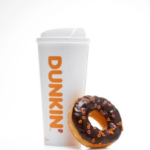
But the real sign you’re home? Dunkin’. There’s one on every cornah, like they’re multiplyin’. You leave for five minutes and suddenly there’s a new one across from the old one, just in case you needed backup.

So yeah — Vikings, longships, ancient mysteries… but first I’m grabbin’ an iced regulah and maybe swingin’ by Kowloon. You can’t staht an expedition on an empty stomach.”

It was Boston in a nutshell—accent, attitude, seafood, sports, and caffeine. And then, as quickly as it appeared, the riff disappeared from later versions of the episode. Lost media, Boston edition.


🌳 Comm Ave, Memory Lane, and the Boston That Stays With You

Hearing Josh talk about coming home made me think about my own Boston moments. Walking down

Swan boats in the public garden boston

two Swan Boats 2017

Comm Ave in the fall, leaves crunching underfoot. The Public Garden swan boats. The way the city glows at dusk, all brownstones and lamplight. The stubborn pride that makes Bostonians argue about everything from sports stats to the correct way to pronounce “car.”

(For the record: cah.)

Boston isn’t just a place—it’s a personality. And Josh taps into that every time he comes back.


Is it a Viking tower or a windmill🏰 From Chowda to the Newport Tower: New England Mysteries

Once Josh finished his iced regulah, he headed south to Rhode Island to investigate the Newport Tower—one of New England’s most persistent historical head‑scratchers.


Is it:

  • A colonial windmill?
  • A Viking structure?
  • A Portuguese relic?
  • A medieval tower built by someone who got very lost?

Depends on who you ask.

Josh did what Josh does best: climbed it, measured it, poked it, and interviewed everyone from historians to enthusiastic theorists. The result? A delightful blend of science, speculation, and “well, it could be Vikings… maybe.”


🦈 Nomans Land: Where Josh Gates Nearly Becomes Shark Chowda

But nothing—and I mean nothing—beats the segment where Josh heads to Nomans Land, the forbidden island off Martha’s Vineyard.

This place has:

  • Rough seas
  • Unexploded WWII bombs
  • Restricted access
  • A coastline patrolled by great white sharks

Naturally, Josh decides this is the perfect place to investigate Viking legends.

Watching him bounce around on a boat in choppy water while the captain casually mentions, “Oh yeah, this whole area is full of unexploded ordnance,” is peak Expedition Unknown. Add in the sharks circling like they’re waiting for him to drop a snack, and it becomes comedy gold.

I laughed out loud then, and I still do now. Only Josh could turn “bombs and sharks” into a charming travelogue.


⚓ Why This Episode Feels So Boston

It’s not just the accent or the Dunkin’ jokes. It’s the spirit of the thing.

Boston—and New England in general—is a place where:

  • History is always underfoot
  • Mystery is always around the corner
  • The ocean is always waiting to surprise you
  • And the locals are always ready to argue about something

Josh captured that perfectly. Even when the intro got cut, the episode still carries that unmistakable New England energy: a mix of curiosity, grit, humor, and “yeah, we’ll go check out the island full of bombs, why not?”


📝 Closing Thoughts

Revisiting this episode reminded me why I love Boston—and why Josh Gates remains one of my favorite storytellers. He gets it. He gets us. Josh knows that New England isn’t just a backdrop; it’s a character.

And even if that original Boston riff is lost to the editing room floor, it lives on in the hearts of those of us who heard it the first time and thought:

“Yep. That’s home.”

Boston Slang: A Survival Guide for Anyone Visiting the Hub


Boston has its own rhythm, its own attitude, and absolutely its own vocabulary. After fifty years in New England, I’ve learned that half the fun of living here is listening to the way people talk—and the other half is watching tourists try to decode it. So if you’re planning a trip to the Hub, or you’ve ever wondered why a Bostonian told you to “bang a U‑ey” near the “packie,” this one’s for you.


🗣️ Everyday Bostonisms

Boston slang isn’t just words—it’s a whole personality. These are the phrases you’ll hear before you’ve even finished your first Dunkin’ coffee.

  • Wicked — the Swiss Army knife of intensifiers. Wicked cold, wicked good, wicked late.
  • Bang a U‑ey — make a U‑turn, usually in a place that does not officially allow U‑turns.
  • Clicker — the TV remote.
  • Packie — the liquor store, not a package drop-off.
  • The T — the subway system, even though half of it is buses.
  • Kid — a friendly greeting, even if the person is 47 and wearing a suit.

Boston English is less about grammar and more about attitude. If it sounds like it should be shouted across a parking lot, it probably is.


🚗 Driving & Directions

Boston driving is a sport, a tradition, and occasionally a test of faith. The slang reflects that.

  • Storrowed — when a truck hits a low bridge on Storrow Drive. Happens every September like clockwork.
  • The Pike — the Massachusetts Turnpike.
  • Southie, Dot, Eastie — South Boston, Dorchester, East Boston.
  • The Big Dig — the tunnel project we’re still complaining about twenty years later.

If you can navigate Boston without GPS, congratulations—you’re officially a local.


🍽️ Food & Drink Terms

Boston’s food vocabulary is its own little universe.

  • Frappes — milkshakes with ice cream.
  • Jimmies — chocolate sprinkles.
  • Hoodsie — those little ice cream cups with the wooden spoon.
  • Steamers — soft-shell clams.
  • Scrod — whatever white fish the restaurant has that day.

If you order a “milkshake” expecting ice cream, that’s on you. Boston warned you.


🧥 Weather & Clothing

The weather here has personality, so of course the language does too.

  • Nor’easter — a storm that shuts down everything except Dunkin’.
  • Tennis shoes — any athletic shoe, regardless of sport.
  • Mud season — the fifth New England season between winter and spring.

nor’ easter

If someone says “wicked windy,” just grab a jacket and don’t ask questions.


🏙️ Attitude & Local Flavor

This is where Boston really shines.

  • Pissa — amazing, awesome, top‑tier.
  • Smaht — smart, usually said sarcastically.
  • Skeevy — sketchy or gross.
  • No big whoop — not a big deal.

Boston slang is blunt, efficient, and usually delivered with a side of dry humor.


🧭 Place Names Tourists Always Butcher

If you can pronounce these correctly, you’ve earned honorary Boston status.

  • Worcester — WUSS‑tah
  • Gloucester — GLOSS‑tah
  • Peabody — PEE‑buh‑dee
  • Haverhill — HAY‑vrill
  • Leicester — LEST‑ah
  • Copley — COP‑lee
  • Faneuil — FAN‑yul

If you pronounce them phonetically, don’t worry—locals will correct you before you finish the word.


Final Thoughts

Boston slang is more than vocabulary—it’s a cultural handshake. It’s the sound of Red Line delays, Dunkin’ drive‑thrus, and neighbors yelling across triple‑deckers. It’s sharp, funny, and proudly unique, just like the city itself.

And if you ever get confused, just remember: when in doubt, it’s probably wicked something.