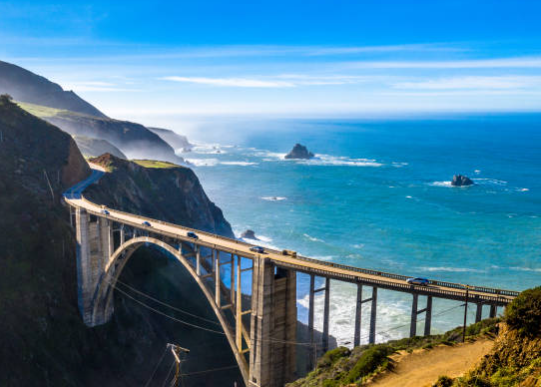
One More Scary Bridge Story


One More Scary Bridge Story: The Final Chapter

After my last post about terrifying bridges, I expected a flood of horror stories. There are certainly enough fear-inducing spans out there—but it seems you, my dear readers, are made of sterner stuff.

Still, a few brave souls shared their tales, and I couldn’t resist digging deeper. Let’s take one last look at some of the world’s most spine-tingling bridges before we lay this topic to rest.


🌉 Mile High Swinging Bridge — North Carolina

This one wasn’t on my original list, but a reader’s story of sheer terror sent me searching.

Located in Grandfather Mountain Nature Park, the Mile High Swinging Bridge is a 228-foot suspension bridge that spans an 80-foot chasm—at more than one mile in elevation. To reach it, you’ll drive a winding two-mile scenic road, climb 50 stairs to the Top Shop, and then take an elevator to the final leg.

The bridge is fully accessible, so yes—you can roll across in a wheelchair. Equal opportunity thrills (or chills), indeed.


🌲 Capilano Suspension Bridge — British Columbia, Canada

This one made my original list and was also suggested by a reader who’s “been there, done that.” Just looking at the photos had my heart in my throat.

Stretching 450 feet across and suspended 230 feet above the Capilano River, this swaying, bouncing bridge connects manicured gardens to temperate rainforest. Steel cables serve as handrails, and wooden planks make up the floor—just enough to keep you wobbling with every step.

The website reassures visitors that the bridge can hold the weight of a fully loaded 747. Comforting? Maybe. But I’ll still be clutching those cables.


🏔️ Trift Bridge — Switzerland

One more for the road—because why not end with a high-altitude thrill?

Built in 2004 and modeled after Nepalese high-wire bridges, the Trift Bridge was designed to restore access to the Trift Glacier, which had receded due to global warming. It became such a tourist magnet that it was replaced in 2009 with a safer version.

Suspended 328 feet above the ground and stretching 558 feet long, this pedestrian bridge is considered one of the most spectacular in the Alps. If you can handle the height, the views are unforgettable.


🧭 There Are More…

Of course, this is just the tip of the terrifying iceberg. A quick search for “Most Dangerous Bridges in the World” will reveal dozens more. But for now, I think we’ve crossed enough chasms together.

If I missed one of your favorites, drop me a note! Maybe we’ll revisit this topic down the road—preferably one with guardrails.


Oh That Cast Iron Skillet


🍳 Cast Iron Adventures & a Rule-Breaking Apple Pie

We’ve been busy in the kitchen lately—Skillet Meatloaf (a personal favorite), Apple Pancakes, and even a quick Skillet Lasagna. But let me be clear: tomato sauce and cast iron skillets don’t mix. The acidity can damage the seasoning. Still, it’s a great weeknight lasagna recipe—just use a different pan.

Apple Pancake


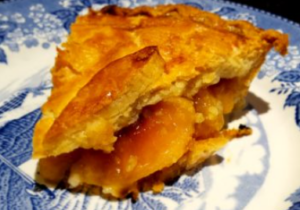
But today, we’re talking cast iron. And pie. Specifically, a skillet apple pie that made me break all my pie rules.


🥧 My Pie Rules

Before we dive in, here’s what you need to know about me:

  • I love apple pie. The only pie I love more is strawberry rhubarb.
  • My mom was a champion pie baker. We always had pie, especially around the holidays.
  • My dad and I once ate an entire apple pie by ourselves—just one more little slice at a time. It’s a family legend.
  • I don’t bake pies anymore. It’s just me, and I don’t need all those sweet calories.
  • When (if) I do bake pies, I NEVER use refrigerated pie dough. I ALWAYS make it from scratch.

So now that you know the basics… I’m about to break every single one of those rules.


🍏 Easy Skillet Apple Pie

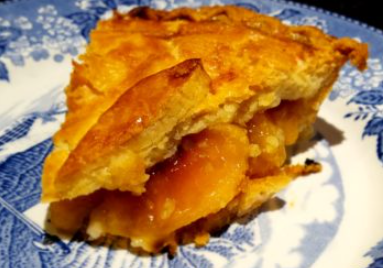
This recipe popped up in my feed from the Southern Living Test Kitchen. I set it aside, but like a magnet to iron, I kept coming back. Eventually, I gave in and headed to the grocery store.

Granny Smith apples? No problem. Braeburn? Never heard of them. They didn’t have any, but they did have Honeycrisp and my old standby, McIntosh. According to Google, there are seven good substitutes for Braeburn. I went with the familiar—McIntosh.

Then came the refrigerated pie dough. Cue dramatic pause. I’m not a fan. I prefer flaky, tender crusts made with lard or Crisco. But I promised myself I’d follow the recipe. So… refrigerated pie dough it is.


📝 The Recipe

Ingredients:

  • 2 lbs. Granny Smith apples
  • 2 lbs. Braeburn apples (I used McIntosh)
  • 1 tsp ground cinnamon
  • ¾ cup granulated sugar
  • ½ cup butter
  • 1 cup firmly packed brown sugar
  • 1 (14 oz) package refrigerated pie crust (2 crusts)
  • 1 egg white
  • 2 Tbsp granulated sugar
  • Ice cream or sharp cheddar cheese (optional)

Directions:

Step 1: Prepare the Apples
Preheat oven to 350°F. Peel apples and cut into ½-inch wedges. Toss with cinnamon and ¾ cup granulated sugar. Set aside.

Step 2: Prepare the Crust
Melt butter in a 10-inch cast iron skillet over medium heat. Add brown sugar and stir constantly for 1–2 minutes until dissolved.
Remove from heat and place one pie crust over the brown sugar mixture.

Step 3: Add the Filling
Spoon apple mixture evenly over the crust.

Step 4: Add the Top Crust
Top with the second pie crust. Whisk egg white until foamy and brush over the top. Sprinkle with 2 Tbsp granulated sugar.
Cut 4–5 slits in the top to allow steam to escape.

Step 5: Bake
Bake at 350°F for 1 hour to 1 hour 10 minutes, or until golden brown and bubbly.
Shield with foil during the last 10 minutes if needed to prevent over-browning.
Cool on a wire rack for 30 minutes before serving.

Serve with ice cream or a slice of sharp cheddar cheese.


🧼 Notes & Tips

  • Use a drip pan or line the bottom of your oven with foil—this pie bubbles over, and cleanup without protection is no fun.
  • Surprisingly, the tougher refrigerated crust holds up well against the gooey filling.

Now I’m stuck with a delicious 10-inch apple pie. Guess I’ll just have to take one for the team. I’m going to enjoy every bite—and I hope you do too.


🍂 Welcoming Haven Picks (Affiliate Links)

If you’re inspired to try this recipe, here are a few cozy kitchen picks from Welcoming Haven that fit right in:

As an affiliate, I may earn a small commission if you make a purchase through these links—thank you for supporting Around Dusty Roads and Welcoming Haven!


Legendary Beasts


🐉 Whispers in the Wild:  Legendary Beasts That Might Have Been Real

Every legend starts with a whisper—something glimpsed in the shadows, heard in the distance, or passed down around a fire. As someone who finds magic in the rustle of leaves and the flick of a cat’s tail, I’ve always been drawn to the creatures that blur the line between myth and reality.

So when I stumbled across a story about 13 legendary beasts that might have been real, I was hooked. These aren’t just bedtime stories—they’re echoes of something deeper. Something wild. Something possible.

Let’s take a walk through the misty woods of folklore and science, where imagination meets evidence with 7 of the 13 legendary monsters.


🦑 1. The Kraken

Sailors once spoke of a sea monster so massive it could drag entire ships beneath the waves. Today, we know of the giant squid—elusive, real, and up to 43 feet long. It’s easy to see how a rare encounter could birth a legend.

Kraken Sea Images – Browse 24,416 Stock Photos, Vectors, and ...

🐺 2. The Chupacabra

This blood-sucking creature of Latin American lore may actually be coyotes or dogs suffering from mange. Hairless, gaunt, and nocturnal, they’re eerie enough to spark stories of monsters in the moonlight.

🐾 3. Bigfoot

From the Pacific Northwest to the forests of Massachusetts, tales of a towering, ape-like creature persist. Whether it’s a misidentified bear or something more, the mystery keeps hikers glancing over their shoulders.

🐍 4. The Loch Ness Monster

Nessie’s long neck and aquatic grace have been compared to ancient marine reptiles like plesiosaurs. While no fossil has surfaced in Loch Ness, sonar blips and blurry photos keep the legend alive.

Loch Ness Monster may be a giant eel, say scientists

🦋 5. Mothman

With glowing red eyes and wings like a cloak, the Mothman haunted Point Pleasant, West Virginia. Some say it was a sandhill crane out of place. Others believe it was a warning of disaster. Either way, it’s become a symbol of eerie intuition.

⚡ 6. Thunderbird

In Native American lore, the Thunderbird is a sky-spanning creature that brings storms. Could it have been inspired by sightings of massive birds like the extinct teratorn? Or is it something more spiritual—an embodiment of nature’s power?

The Giant Thunderbird Returns

🐾 7. The Yeti

High in the Himalayas, the Yeti—also known as the Abominable Snowman—has left behind footprints and fear. Some scientists suggest it’s a bear. Others aren’t so sure.

Abominable Snowman PNG Clipart Bundle - 44 High Quality PNG - Instant Download - Calendar Card Mug Tumbler Sublimation Design PNG


🌲 Why These Stories Matter

Whether rooted in biology, misidentification, or pure imagination, these creatures, in the end, remind us of something essential: the world is still full of wonder. Even in our age of satellite maps and DNA tests, there are mysteries that resist explanation.

And maybe that’s the point.

I sit in my cozy corner in Taunton, my cats curled nearby, listening to the wind rustle the trees. Nature keeps her secrets close, and I feel her quiet magic. Sometimes, she invites us to believe.


🧭 Explore the Wild Side

If you’re as enchanted by these tales as I am, consider adding a few mythical touches to your home or adventures:

Affiliate links support Around Dusty Roads and Welcoming Haven—thank you for keeping the legends alive!


The Year Pumpkin Pie Froze Over


🥧  Colchester’s Canceled Thanksgiving of 1705

❄️ A Cold Snap and a Sweet Shortage

In the crisp autumn of 1705, Colchester’s settlers faced a pie-lover’s nightmare. They had to postpone Thanksgiving—not for lack of turkey, but because they couldn’t make pumpkin pie. A sudden cold snap in October froze the Connecticut River solid. The frozen river cut off supply routes from Norwich and New London. Snow piled three feet deep. Icy winds howled. The town’s few families were stranded—no sugar, no molasses, no pie.

🥄 Why Molasses Mattered

Molasses wasn’t just a pantry staple—it was the sweet soul of colonial cuisine. Imported from the West Indies, it was cheaper than sugar and essential for flavoring baked beans, brown bread, and most importantly, pumpkin pie. By 1705, pumpkin pie had already become a beloved Thanksgiving tradition, thanks to Native American influence and European adaptation. Without molasses, the settlers couldn’t sweeten their pies, and without pies, Thanksgiving just didn’t feel complete.

🗓️ A Feast Deferred

The townspeople originally scheduled the holiday for November 4, but they voted to postpone it. Records show that the townspeople agreed, “our present circumstances being such that it cannot with convenience be attended on that day.” The celebration was rescheduled for the second Thursday. It wasn’t just about food—it was about community, gratitude, and tradition. And in Colchester, pumpkin pie was tradition.

🍂 A Slice of Colonial Quirk

Today, we might chuckle at the idea of rescheduling a holiday over dessert. But Colchester’s molasses crisis reminds us how deeply we weave food  into our rituals. It’s a tale of resilience, resourcefulness, and reverence for the humble pumpkin pie—a dessert so iconic, it once held an entire town’s Thanksgiving hostage.


It’s National Chaos Day

Celebrate National Chaos Day

For years that was my life – rush here, Put out a fire there. Now it centers on cat puke and zoomies. So what is Chaos? Let’s look a little closer shall we?


🌀 Chaos Theory and the Butterfly That Broke My Brain

Or: Why Your Cat Knocking Over a Vase Might Be a Meteorological Event

What Is Chaos Theory Anyway?

Chaos theory sounds like something invented by a sleep-deprived philosopher with a whiteboard and a vendetta against weather forecasts. But it’s actually a legit scientific field that studies how seemingly random systems—like weather, traffic, or your cat’s mood—are governed by underlying patterns.

It’s the science of unpredictability. The art of finding order in disorder. The reason your perfectly planned picnic gets rained out because a butterfly flapped its wings in Brazil. (More on that in a minute.)

Chaos Theory vs. The Butterfly Effect 🦋

Let’s clear this up: chaos theory is the big umbrella. The butterfly effect is one of its sparkly, winged children.

  • Chaos theory says that complex systems are sensitive to initial conditions. Tiny changes can lead to wildly different outcomes.
  • The butterfly effect is the poetic metaphor: a butterfly flaps its wings, and weeks later, a tornado hits Kansas. (Dorothy was not amused.)

In short: chaos theory is the science. The butterfly effect is the drama.

5 AMAZING FACTS ABOUT CHAOS THEORY

  • 🧩 There’s a pattern
    Chaos theory’s core belief: even the wildest messes have hidden patterns. Like your sock drawer. Or quantum physics.
  • 🌐 It’s interdisciplinary
    Chaos theory moonlights in math, biology, meteorology, philosophy, politics, and probably your last group project.
  • 🏆 It’s award-winning
    Edward Lorenz, chaos theory’s founding father, snagged a Kyoto Prize for his work. He also accidentally invented the butterfly effect while trying to predict the weather. Oops.
  • 🧠 It makes the complicated simple(r)
    Chaos theory helps scientists predict unpredictable systems. Like climate change. Or your cat’s 3 AM zoomies.
  • 🔬 It’s widely used
    Chaos theory isn’t trending on TikTok, but it’s still a staple in scientific research. It’s just become so normal, it’s practically boring. Like gravity. Or coffee.

Final Thought: Embrace the Chaos

Next time your day spirals into a tornado of spilled coffee, missed buses, and mysterious glitter—just smile. You’re living proof that chaos theory works. Somewhere, a butterfly is laughing.