 A Fort on the Edge of My New Life
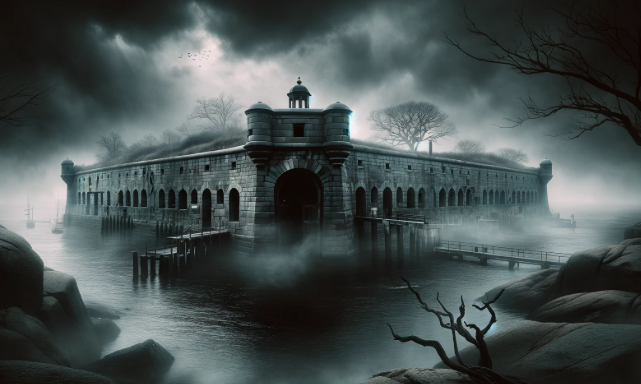
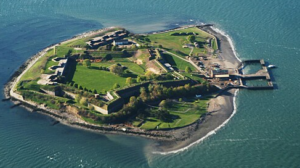
When I first came to Boston, I thought I’d be here for six months. Just long enough to finish my training, see a few sights, and head back home. So I did what any newcomer does — I explored. One of the first places I visited was Fort Warren out on George’s Island.
Even in daylight, the place had a weight to it. Long stone corridors that swallowed sound, archways older than the city itself, and that cold harbor wind that sneaks under your collar no matter how warm the day is. I didn’t know it then, but I was walking through one of New England’s most enduring ghost stories.
A Desperate Rescue in the Dark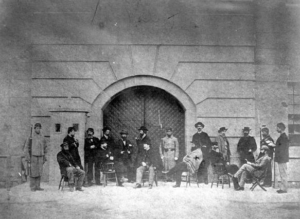
The legend begins during the Civil War, with a woman named Melanie who came to Fort Warren disguised as a man. Her husband had been captured and imprisoned there, and she crossed the harbor with nothing but a rope, a disguise, and a small pistol tucked into her coat.
Antique guns were unreliable things — prone to misfires, jams, and sometimes outright explosions. But it was all she had.
She found her husband in the darkness of the prison casemate. Imagine that moment: two people who thought they’d never see each other again, whispering in the shadows, trying to stay quiet while their hearts pounded loud enough to give them away. They slipped into one of the tunnels, hoping to reach the shore before anyone noticed.
But someone did.
A guard spotted them, shouted, and in the panic Melanie raised the pistol. Maybe she meant to scare him. Maybe she meant to fire a warning sho or maybe her hands were shaking from fear and cold.
Whatever her intention, the gun never behaved.
It exploded.
The chamber burst inward, sending metal fragments flying. Some hit the stone wall. Some struck Melanie. And one piece of shrapnel hit her husband — killing him instantly.
She didn’t just lose him. She lost him by her own hand, even though it was an accident.
The rescue didn’t fail because of a guard or a misstep. It failed because the weapon she trusted betrayed her.
The Birth of a Ghost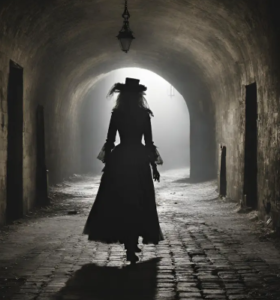
Melanie was captured soon after. She was tried and executed on the grounds of the fort. Her final request was simple: to be buried in the black cloak she wore during the rescue.
And that’s how she became the Lady in Black.
Visitors say she still wanders the ramparts at dusk, searching for the man she came to save. Some hear footsteps behind them in the tunnels — slow, deliberate, echoing off the stone. Others feel a brush of fabric against their arm when no one is near. A few claim they’ve seen her silhouette drifting along the battlements, the long black cloak trailing behind her like a shadow that refuses to fade.
A Memory That Still Echoes
When I think back to my first visit — that quiet corridor, that watchful stillness — I wonder if I walked through one of the places she still haunts. Maybe she was there, just out of sight, carrying the weight of a moment that changed everything.
Some stories cling to a place. And some places cling right back.
Plan Your Own Visit
If you’ve never been to Georges Island, it’s worth the trip. Fort Warren is one of those places where history settles into the stonework — quiet, atmospheric, and just eerie enough to make you glance over your shoulder in the tunnels. Walk the ramparts, explore the casemates, and let the harbor wind tell its own stories.
And who knows. Maybe you’ll feel that same watchful stillness I did all those years ago.
You can catch a ferry out during the season — Boston Harbor Cuises
Share this:
- Share on Tumblr (Opens in new window) Tumblr
- Print (Opens in new window) Print
- Share on X (Opens in new window) X
- Share on Facebook (Opens in new window) Facebook
- Share on Pinterest (Opens in new window) Pinterest
- Share on Reddit (Opens in new window) Reddit
- Share on LinkedIn (Opens in new window) LinkedIn