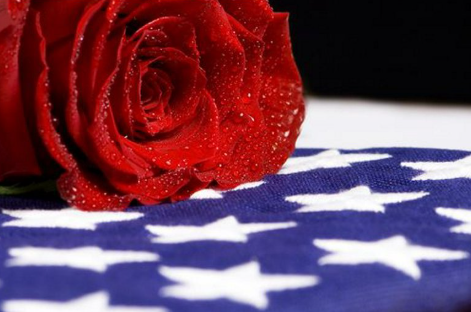
The White Table: A Quiet Reminder
While doing my weekly grocery shopping, I noticed a pretty little table set for one near the front of the store. It stood beside a bench where displays are often arranged to encourage holiday giving or charitable donations. Today, however, this small table occupied the space, an electric candle glowing softly in the center.
Curious, I stopped to see what it was about.
This is America’s White Table. Sometimes called the Missing Man Table or the POW/MIA Table, it grew out of concern for American prisoners of war and those missing in action during and after the Vietnam War.
The tradition of setting an empty place at the table was often observed in military dining facilities, but also in homes across the nation, especially during the holidays. It was a simple tradition that quietly said, We miss you. You are not forgotten.
As the tradition expanded, small White Tables began appearing at veterans’ events, memorial ceremonies, and public gatherings. Their symbolism is simple, yet powerful.
As I read the display, my throat seemed to tighten. Each item on the table carried a message.
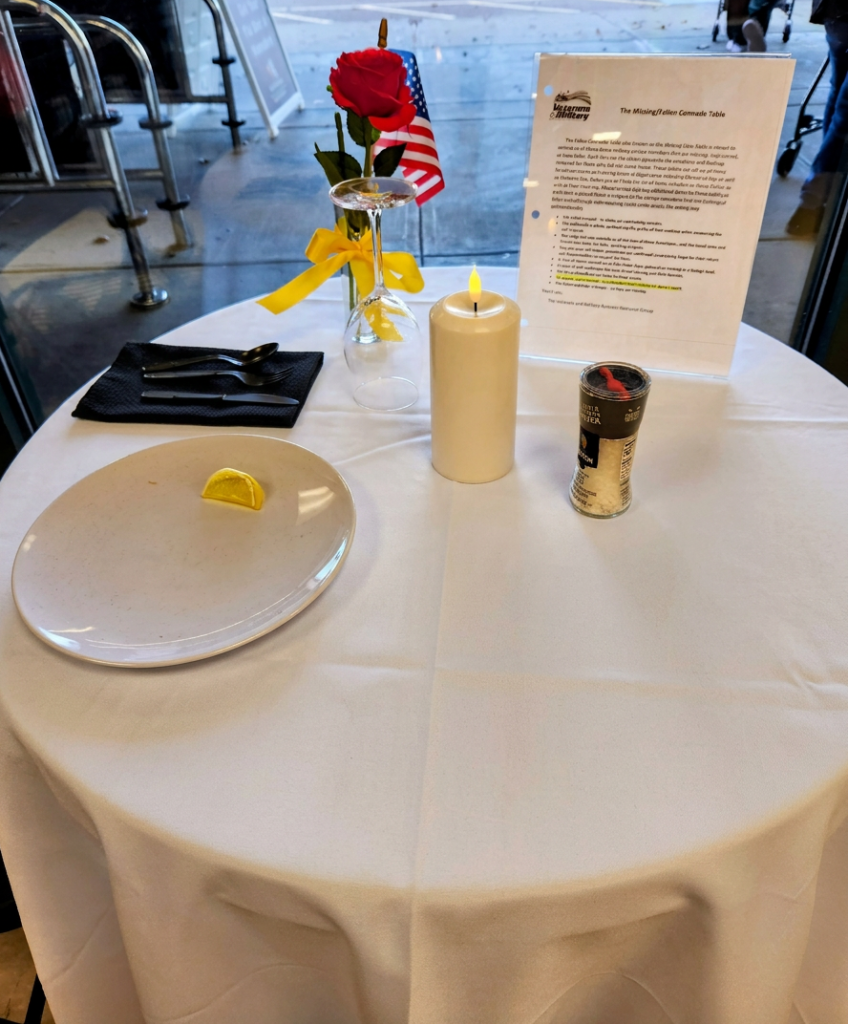
The Meaning Behind the White Table
- The table, set for one, is small to symbolize the frailty of a prisoner of war facing captivity alone.
- It is set for one to remind us that some are still missing from our ranks.
- The white tablecloth symbolizes the purity of their intentions when they answered their country’s call to service.
- The black napkin represents the sorrow of captivity.
- The single red rose signifies the blood many have shed in service to the United States. It also reminds us of the families and friends who continue to keep faith while awaiting answers.
- The yellow ribbon represents those who continue to seek a full accounting of the men and women who never returned home.
- The slice of lemon reminds us of their bitter fate.
- The salt sprinkled on the plate represents the tears shed by waiting families.
- The glass is inverted because they cannot raise a toast with us.
- The chair is empty because they are not here.
- The candle represents the light of hope that lives in our hearts, illuminating the way home for those who remain missing and reminding us that they are not forgotten.
Sometimes we need a visual reminder like this. It encourages us to step away from our busy lives, if only for a moment, bow our heads, and remember those who were lost, those who never returned, and those whose families still wait for answers.
They may be absent from the table, but they are not absent from our memory.