Look Up! November’s Sky is full of Celestial Surprises

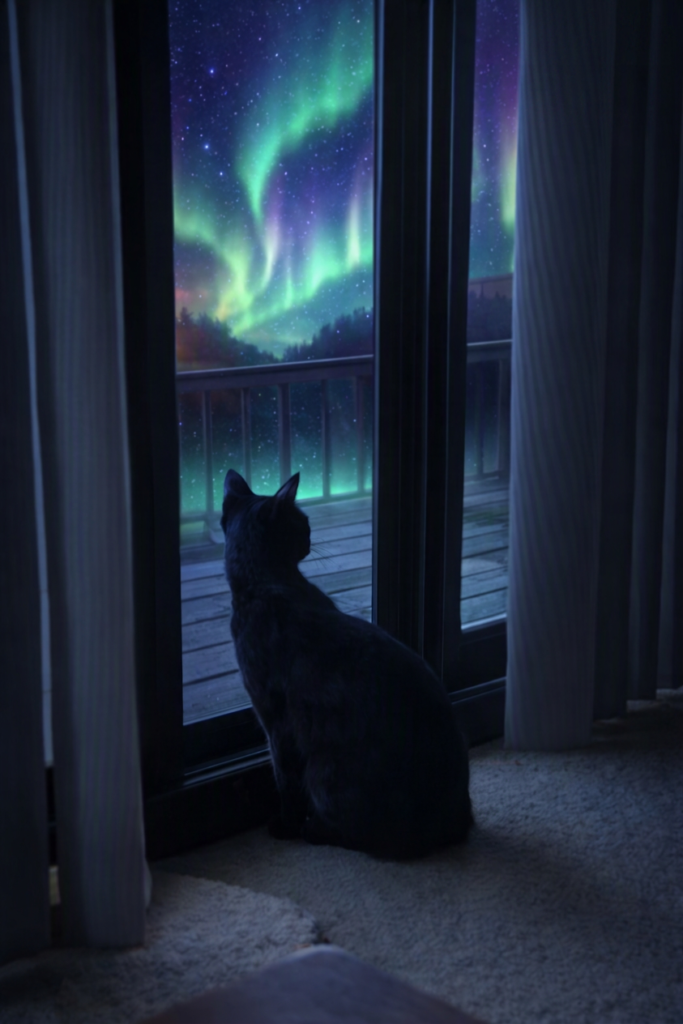
A silhouetted cat sits quietly by a sliding glass door, gazing at vivid green aurora borealis curtains dancing across a purple-blue, star-filled sky. The colorful glow reflects off the outdoor deck, while vertical blinds frame the peaceful nighttime scene.

Auroras and Meteor Showers Take Center Stage

Wow, November 2026 is shaping up to be a big month for stargazers.
Bright aurora borealis in vivid shades of green, purple, and pink stretches across the night sky above a calm lake. Dark mountain silhouettes line the distant horizon, while the colorful reflections shimmer softly on the water beneath the glowing curtains of light.On deck this month is a strong possibility of auroras in the northern states. The culprit behind the potential uptick in Northern Lights activity is a large coronal hole on the sun.

Yes, we have a hole in the sun! I’m serious, even if it sounds more like something the WMEO crew would investigate.

This hole in the sun’s corona allows charged particles from the solar wind to escape more easily. As a result, skywatchers could be treated to enhanced aurora displays.

Meanwhile, as if that’s not enough, we’ve got multiple meteor showers on tap.

Meteor Showers, Planet Pairings and a Historic Journey

The nice thing about meteor showers is that they aren’t just a one-night event. Most are active for several days or evenA dark blue night sky filled with dozens of bright meteors streaking downward in long, luminous trails. Countless stars are visible across the sky, while a dark silhouette of grass and vegetation lines the horizon at the bottom of the image. One especially bright meteor near the center illuminates the scene, creating a dramatic celestial display that resembles a meteor shower. weeks, so even if you miss the peak, you still stand a chance of catching a few shooting stars or bright fireballs.
Here’s what’s on the skywatching agenda for November:

• Southern Taurids: Active September 20 to November 20. Peak Nov. 4-5. Known for slow-moving, bright fireballs.

• Northern Taurids: Active October 20 to December 10. Peak Nov. 11-12.

• Leonids: This is the big one, folks. We always hear about this one. In fact, one year I was driving on an overcast night when I noticed flashes lighting up the clouds on the horizon. At first, I thought it might be fireworks, but the flashes kept coming. Curious, I pulled over and spent nearly twenty minutes watching the sky. It turned out I was seeing the light from meteors illuminating the cloud cover. The sight reminded me of distant artillery flashes, and it’s something I’ve never forgotten. The Leonids are active from November 6-30 and peak on November 17-18. Under ideal conditions, observers may see up to 15 meteors per hour. Best viewed in the early morning hours after the moon has set. As for why I was driving around in the middle of the night, that’s a story for another day.

A Supermoon, Two Planets and Voyager’s Big Milestone
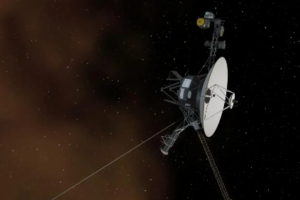
Illustration of a spacecraft in deep space with a large white dish antenna pointed outward. The probe is shown against a black star-filled background, with a faint orange-brown cloud or nebula along the left side of the image. A thin communication beam extends diagonally from the spacecraft into the distance. The spacecraft features a central instrument body, long support booms, and scientific equipment mounted above the dish, resembling a deep-space exploration probe.Moving on to the rest of the sky show Mother Nature has planned, there will be a close pairing of Mars and Jupiter along with a supermoon on November 24.

And one final note. NASA says Voyager 1 will reach a historic milestone this month. It will have traveled one light-day from Earth.

What’s a light-day, you ask?

That’s the distance light travels in 24 hours, about 16 billion miles (26 billion kilometers). Voyager 1 is expected to reach that mark on November 18, 2026.

Think about that for a moment. It’s taken Voyager 1 nearly 50 years to travel a distance that light covers in a single day.

Fifty years.

Imagine that!

So all you stargazers, November is serving up a cornucopia of celestial sights. From meteor showers and auroras to planetary pairings and a historic Voyager milestone, there’s plenty to keep your eyes pointed toward the night sky.
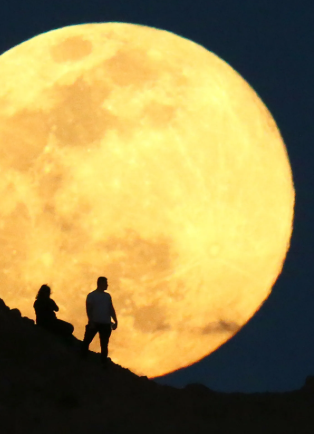
Two silhouetted figures pause on a hillside to admire a giant golden supermoon glowing against the night sky, highlighting the scale and wonder of the celestial scene.

Mystical, Magical, Velvet Nights

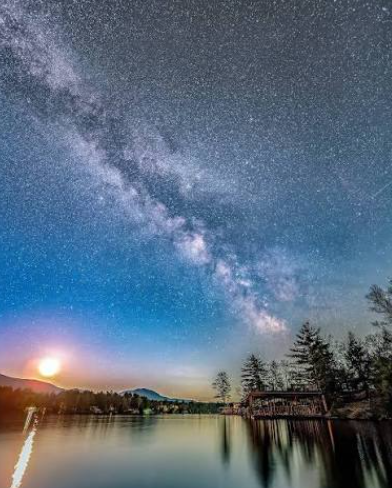
Night sky with the Milky Way over Lake George NY

Car traveling on a dirt road with dust billowing out behind itGrowing Up on Dusty Roads

I grew up a country girl. In fact, the name of my blog — Arounddustyroads — comes straight from childhood. Most of the roads around our house were dirt back then. Paving came later. I rode my horse along those back roads, learned to drive on them, and carry a lifetime of memories of dust billowing behind the car as we rattled our way home.


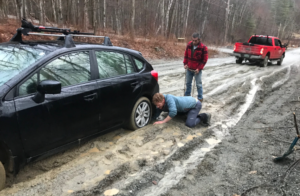
The Five Seasons of Country LifeCar stuck in mud during spring mud season

Where I grew up, we didn’t just have spring, summer, fall, and winter. We had a fifth season: mud season. During the spring thaw, the roads turned into deep, sticky traps. Getting stuck in a snowbank was annoying — but getting stuck in the mud was a whole different level of misery. You learned quickly where the ruts were, where the ground was soft, and how far you could push your luck.

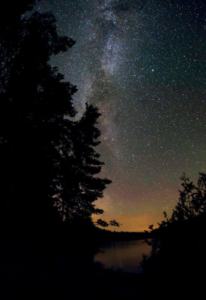
dark night sky with milky wayA Sky Without Streetlights

I don’t get home much these days, but one thing hasn’t changed: there still aren’t any streetlights where I lived. That mattered. Without them, the night sky was extraordinary — a deep velvet blackness with the Milky Way slashing across it like a river of stars.

We’d lie on the lawn and look for constellations. Orion with his bright belt. The Big Dipper, always easy to find. The sky felt endless, ancient, and close enough to touch.

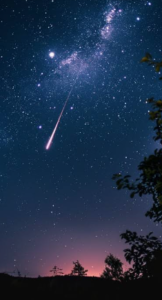
The Perseids and Leonids: Childhood Ritualsmeteor or shooting star streaks across the sku with milkly way in the background

Watching the Perseids in August was almost a ritual. We’d call out the shooting stars — There’s one! I saw two! So excited, so full of wishes. You could make a hundred wishes on a good night.

The Leonids came in November. We saw them too, but we didn’t stand around outside to watch. November in the Adirondacks is no place to linger.

The Aurora We Rarely Saw

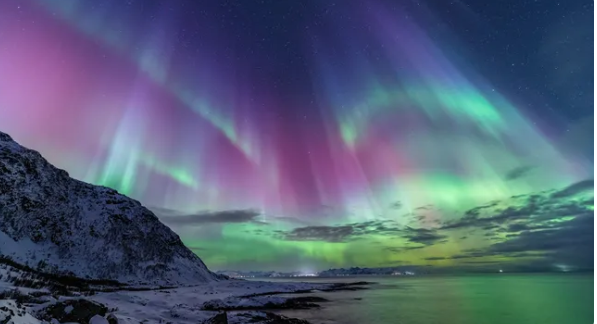
The one wonder we didn’t see often was the aurora. The Northern Lights belong to the northern sky, and we were just a little too far south. My parents told stories of pulling the car over to watch the lights dance, but I must have been very young — I don’t remember it myself.

These days, the aurora seems to be creeping farther south. My weather app lights up with headlines: Aurora visible in Maine. Northern Lights reach New York. But here, with all the city lights, I still haven’t seen them.

Northern lights dancing in the night sky

A Wish Still Waiting

I don’t know how many trips my old bones still have left, but I’d like to see the aurora before I die. I went to Alaska once, but it was the wrong time of year. No lights. Alaskans say the aurora sings — that the dancing curtains of color make music.

I’d love to hear it someday.

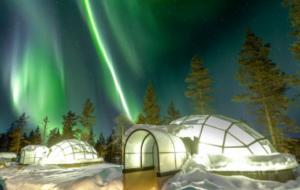
Glass igloos with Northern LightsSleeping Under the Northern Lights

There’s one dream I hold close: sleeping in a glass igloo in Finland, watching the Northern Lights from bed. Imagine vacationing in an igloo — already magical — but a glass igloo, where the whole night sky becomes your ceiling. If the aurora appeared, you wouldn’t miss a second of it.

Just… wow.

Have You Seen the Sky Dance?

Have you ever watched the night sky light up with dancing colors and more stars than you could ever count? Where were you, and when?

Like most things in nature, we can never be sure when something wonderful will show up. But when it does, it stays with you forever.

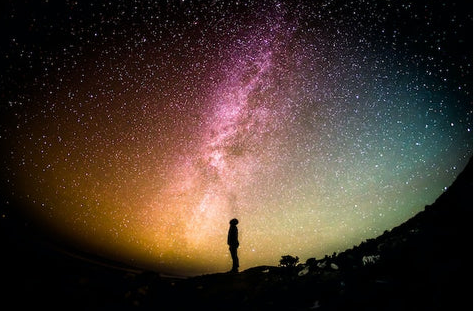
Sanding  in the light of the night sky enjoying the wonders of nature


What’s in North Dakota?

What about a trip to North Dakota?

In 2011 my sister and I spent an amazing week in South Dakota. When I was planning that vacation everyone asked me What’s in South Dakota? Truthfully, I had no idea except Mt. Rushmore but it turned out to be one of the best vacations we’ve taken. It had all my favorite things like wild animals, draw dropping scenery and even a dinosaur dig. So when I ask myself what’s in North Dakota, I hope I have a similar surprise! 

The Number 1 Attraction

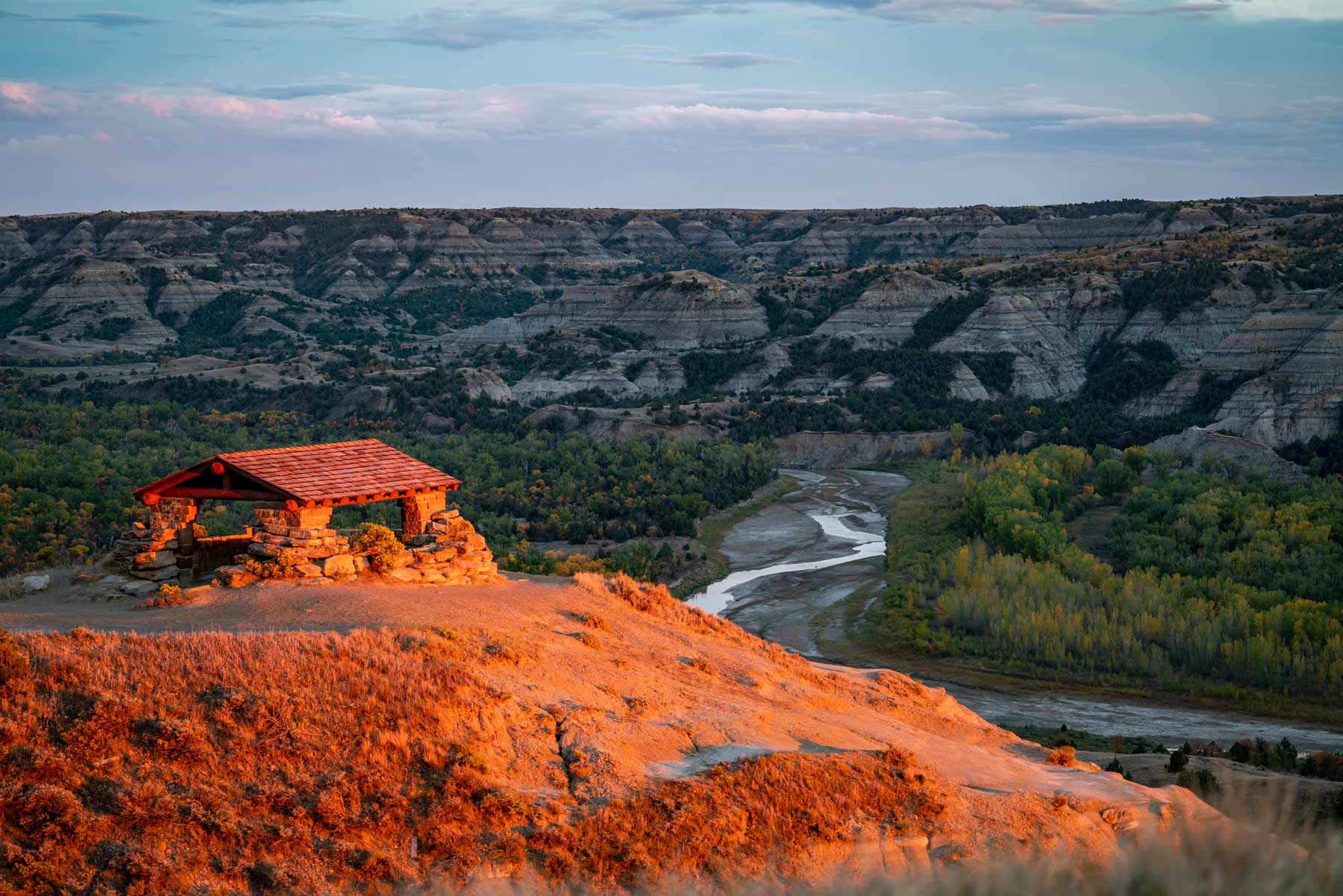
The number 1 attraction in North Dakota is Theodore Roosevelt National Park. The park lies in Western North Dakota where the Great Plains meet the Badlands. A scenic loop drive will take you through the south section’s colorful Painted Canyon. The badlands in South Dakota are breathtaking and I’ve been to the Painted Desert in Arizona so I will have to explore the Painted Canyon!

File:Painted Canyon overlook Theodore Roosevelt NP ND1.jpg - Wikimedia Commons

Painted Canyon Overlook; Photo credit Wikmedia Commons

Wildlife

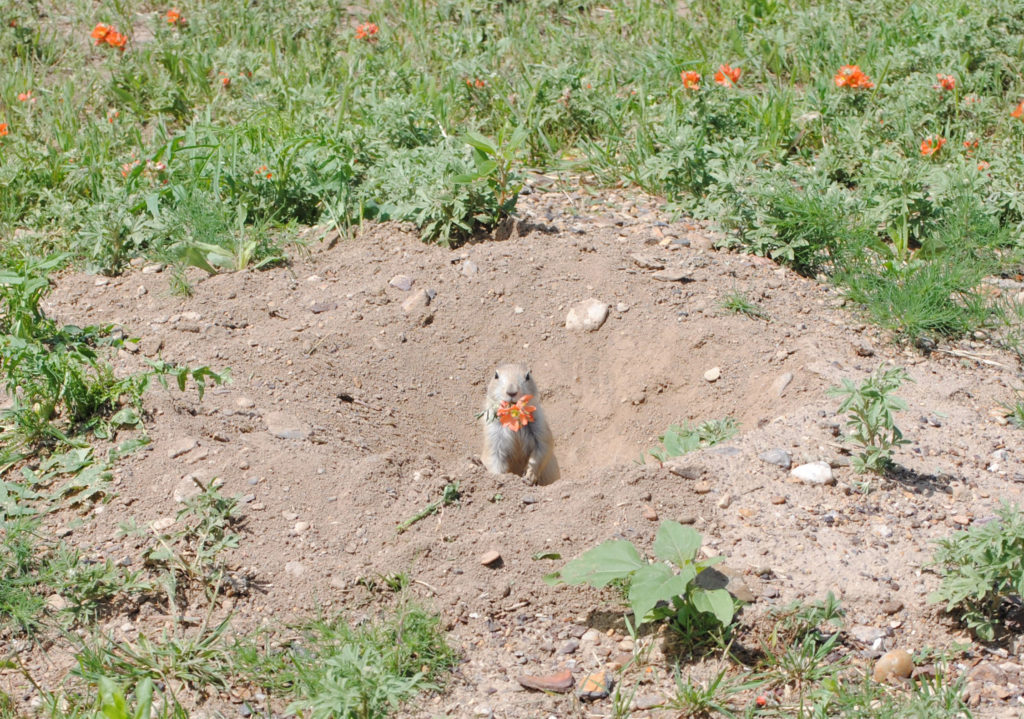
One of the best places to view wildlife is on the South Unit’s Scenic Drive. Bison, mule deer, prairie dogs, and horses are readily visible. Also be on the lookout for coyotes, pronghorn, bald and golden eagles, white-tailed deer, turkeys, and elk.

What's in North Dakota?

Prairie Dog with Flower – Photo Credit Deb Neumann 2011

Leaving the South Unit behind I’d like to head north for the North Unit’s scenic drive. A 14 mile Scenic Drive (28 miles round trip) is an out and back drive. The first half of the road traces the bottom of the badlands. Midway through, it crawls up out of the canyon to the North Unit’s most iconic view, River Bend Overlook.

20+ EPIC Things to Do Theodore Roosevelt National Park (+ Photos)

River Bend Overlook- Photo from Internet


From there, it’s an easy drive along the rim of the badlands to Oxbow Overlook at the road’s end. The road is almost entirely paved with only one stretch of gravel and is open to motor vehicles (including RVs) and cyclists.

Bison are common but careful observers may spot bighorn sheep on or near steep cliff edges. Since I missed the Big Horn Sheep in Colorado I’m still anxious to get a look at some. 

Aurora Borealis

Around here the Northern Lights ( Aurora Borealis) are a rare sight and often lost in the ambient light from the cities and towns but North Dakota is said to be prefect for viewing the lights that dance across the sky in vivid green, purple and blue. The aurora is most active in March and September. Still likely to have snow at that time of year!

Northern Lights Free Stock Photo - Public Domain Pictures

Northern Lights Free Stock Photo – Public Domain Pictures

If I get to go…

I’m sure there are many more things to see and do in North Dakota. I must remember to have my passport in case I cross to Canada or get to the International Peace Garden that sits on the border of the US & Canada.