Nothing like a Deep Fried Donut

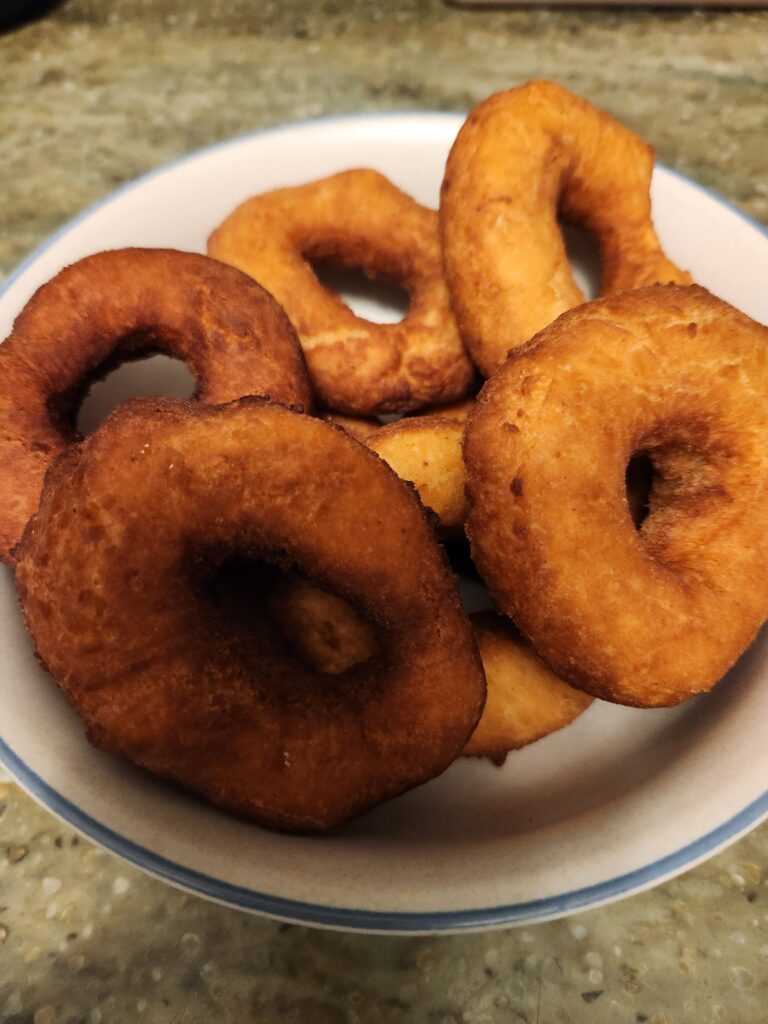
A white plate with a blue rim holds several homemade, golden‑brown fried donuts with slightly irregular shapes, sitting on a kitchen countertop.

Time to Make the Donuts

A smiling Dunkin’ Donuts employee in a beige uniform and paper hat holds up a chocolate‑glazed donut while standing in front of trays filled with assorted donuts.


Do you remember Fred? The dedicated — and perpetually tired — baker who dragged himself out of bed every morning to “Make the Donuts”? That Dunkin’ ad ran for 15 or 16 years, and somehow the line stuck. Everyone still knows it.

Well… for me, I’ve probably avoided making the donuts for at least that long.

I tried baked donuts once. I even bought the special pans. They looked like donuts, but they didn’t taste like donuts. They were fine, but I never made them again.

Seven chocolate‑glazed donuts rest on a metal cooling rack set over aluminum foil, their glossy tops contrasting with the golden‑brown dough beneath.

Dunkin’ (now just Dunkin) makes decent donuts, but they aren’t the ones I remember from childhood. Colonial Donuts comes close — dangerously close — and that’s how this whole adventure started. I got hooked on their crunchy, cakey Old Fashioned donut. Now I’m craving them, but I’m carless, and I’m not about to spend an hour on Dial‑a‑Ride for a single donut. And I’m definitely not spending $20 on Uber or $10 on DoorDash.

So there was only one thing left to do: I’d have to make them myself.

Luckily, they freeze well. I can make a whole batch, keep a few out, and tuck the rest away for later.

I dug out my battered, slightly dented donut cutter. I have a new one, but the little center piece refuses to stay put, so the old one wins. I laid out all my basics. I haven’t made donuts in so long that I honestly can’t remember ever making them completely on my own. So I was being extra careful.

I don’t have my mom’s recipe, but I found one that’s close — close enough that the first bite tasted like home.

Sour Milk Donuts

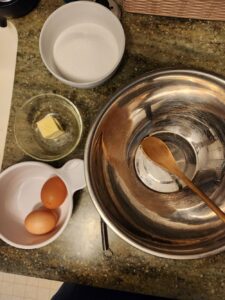
Equipment A kitchen countertop with a large metal mixing bowl and wooden spoon, plus small bowls holding butter, eggs, and granulated sugar arranged for baking.
  • Donut cutter
  • Dutch oven (mine is cast iron, of course)
  • Slotted spoon
  • Candy thermometer
  • Paper towels (or grocery bags — traditional in Mom’s kitchen)

Ingredients

For the donuts

  • 2 tablespoons unsalted butter, softened
  • 1 cup granulated sugar
  • 2 large eggs, beaten
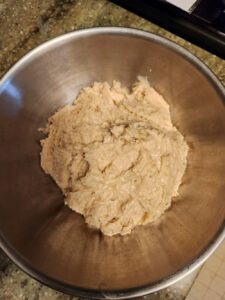
  • 3 ½ cups all‑purpose flour A stainless steel mixing bowl holds a rough, partially mixed ball of dough resting on a speckled kitchen countertop.
  • 2 teaspoons baking powder
  • ½ teaspoon salt
  • ¼ teaspoon ground cinnamon
  • ¼ teaspoon ground nutmeg
  • ¾ cup sour milk or buttermilk
  • Vegetable oil or Crisco for frying

Instructions

  1. In a large mixing bowl, cream the butter and sugar. Blend in the beaten eggs.
  2. In a separate bowl, whisk together the flour, baking powder, salt, cinnamon, and nutmeg.
  3. Add the dry ingredients alternately with the sour milk.
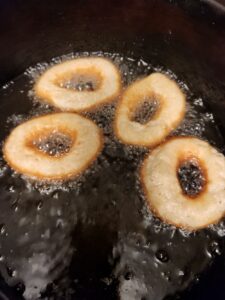
  4. Place dough in a medium bowl, cover, and chill for at least 2 hours.Four ring‑shaped donuts fry in bubbling hot oil, their edges turning golden brown as they cook.
  5. Roll dough out on a floured surface to about ⅓ inch thick. Cut with a donut cutter, saving the centers.
  6. Heat 24–48 oz of oil or Crisco to 350° using a candy thermometer. Fry donuts 2–3 minutes per side, or until golden brown.
  7. Remove with a slotted spoon and drain on paper bags or paper towels.
  8. Repeat until all dough is used.

Notes

My recipe called for a glaze, but I skipped it — I wanted plain donuts.

About halfway through mixing, I remembered exactly why I hadn’t made donuts in so long. The dough is stiff, and you really have to put some muscle into it to get all the flour incorporated.Four golden‑brown donuts float in bubbling hot oil as they finish frying in a deep pan.

This particular dough got sticky as it warmed up. I cut all the donuts and put them on a sheet pan, but next time I’ll cut and fry in batches so I can keep the dough chilled.

But for all my bungling, I didn’t burn the kitchen down or scald myself with hot oil. Aside from a few straggly-shaped donuts, they came out pretty good — and my cast iron Dutch oven got a beautiful seasoning. So I’m calling it a win all around.

I think cider donuts might be next.
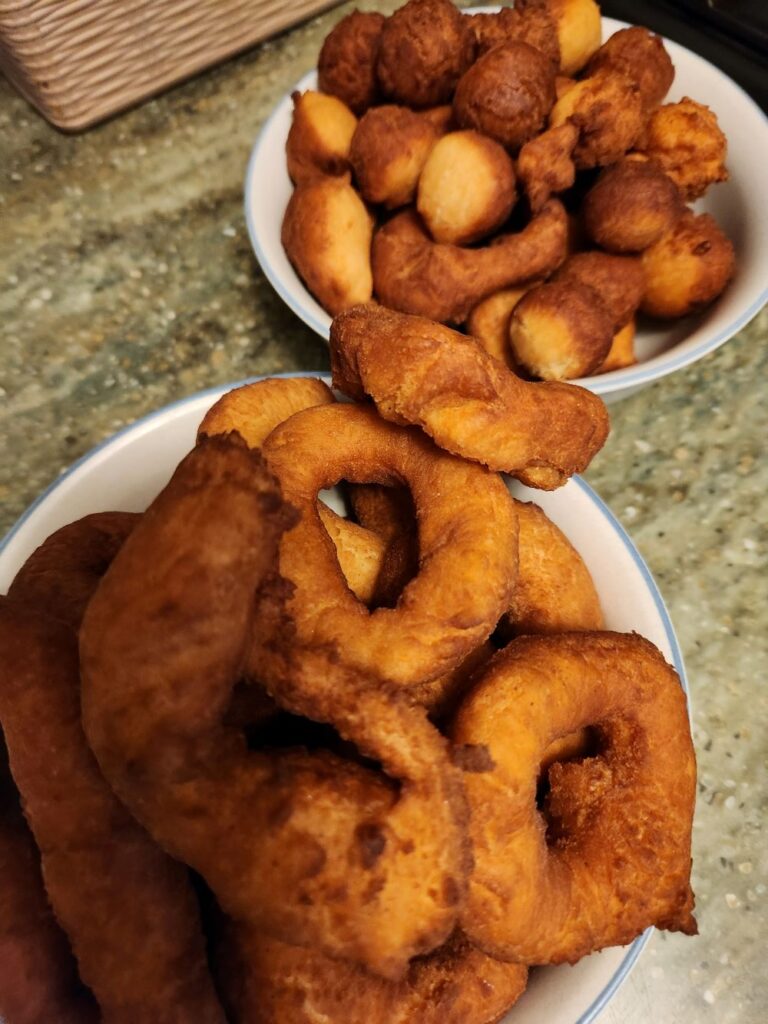
Two bowls of freshly fried donuts sit on a kitchen counter—one filled with large ring‑shaped donuts, the other with smaller round and oval donut holes, all golden brown and crisp.


The Great Pasta Debate Lives On


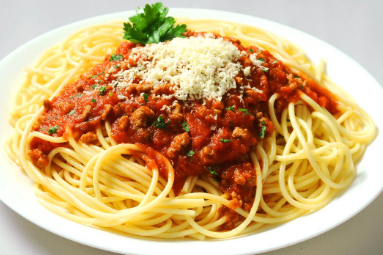
A plate of spaghetti topped with a thick tomato meat sauce, sprinkled with grated cheese and garnished with a fresh parsley sprig.

🍝 You’re Cooking Pasta ALL Wrong!

I guess the Great Spaghetti Debate is never going to rest.

Despite my very reasonable explanation back in April — To Break or Not to Break: The Great Spaghetti Debate — I opened my email this morning to a headline screaming at me like I’d committed a culinary crime:

“You’re Cooking Pasta Wrong.”

Well of course I had to read it. And inside? Another dramatic proclamation:

“arounddustyroads.com According to an Italian Chef.”

Alright, fine. What am I supposedly doing wrong now?

According to Chef Marcello of the Academia Barilla, the perfect bowl of pasta requires long noodles cooked in salted water — without breaking them — so the sauce can swirl and cling like it’s performing a romantic tango. After wading through all the author’s detours, it became clear he was talking about pasta dishes where the sauce is mixed into the noodles, not the kind you spoon on top once it’s on your plate. And after all that drama… they didn’t even include a recipe!

Okay. I can accept that. But I’ve moved on.

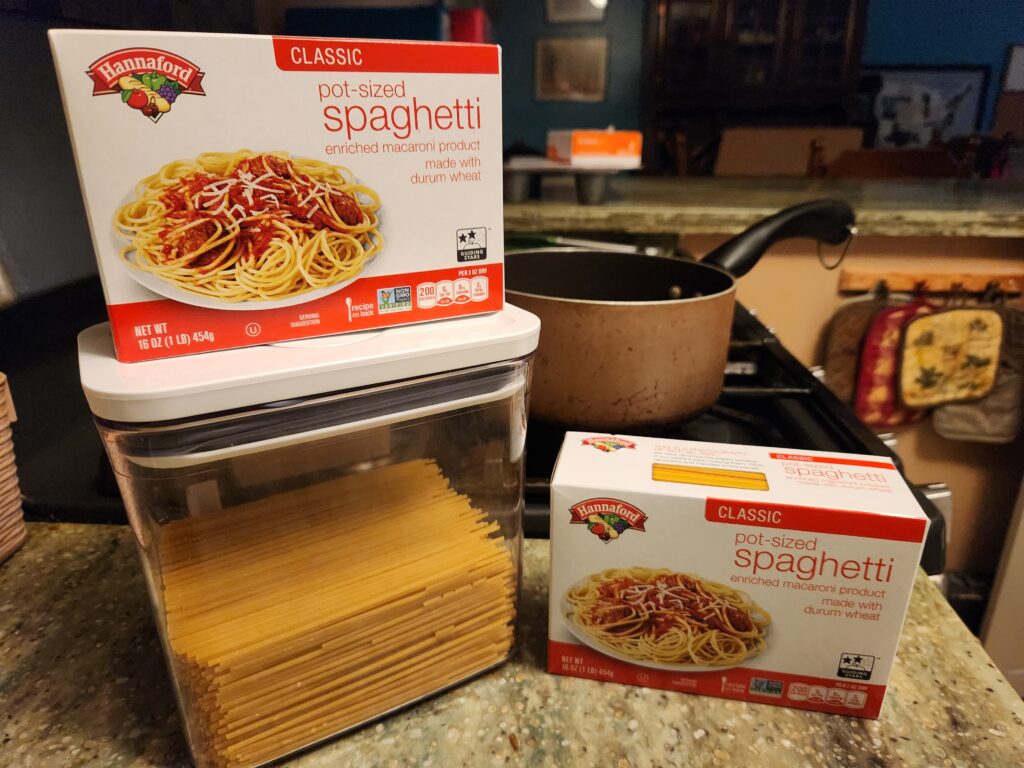
I am now 100% in the Short Noodle School of spaghetti cooking. I’ve even stocked up on the “pot‑sized” spaghetti you can buy at the grocery store. I don’t need a restaurant‑sized cauldron to make a single serving, and the pot‑sized noodles work beautifully. No muss, no fuss, no rogue noodle shards launching themselves across my kitchen like tiny edible javelins.Two boxes of pot‑sized spaghetti on a kitchen counter beside a container of uncooked pasta, with a cooking pot in the background.

So yes — the debate lives on. But this home cook has chosen her side.

And if Chef Marcello wants to challenge me, he can meet me in the pasta aisle — I’ll be the one holding the pot‑sized spaghetti with zero regrets.


Those Silly Kitty Cats Are at It Again


And a Four‑Year Mystery Is Finally Solved
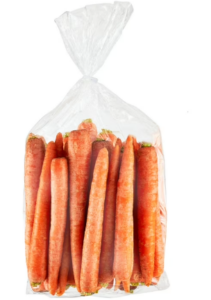
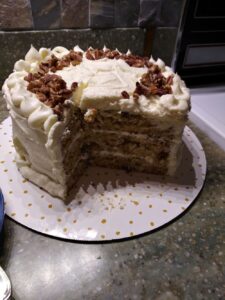
Banner and Balboa, those silly kitties,  have a talent — not just for finding things, but for finding the exact things I don’t want them to find. Rubber bands, paper clips, bottle caps, the occasional bug… and yes, even my car keys. (If you missed Banner’s infamous key‑hiding caper, you can read the full story here: Tale of the Lost Keys — October 3, 2021.)

Their preferred playground is the middle of my tiny kitchen floor. Runner‑up: the bathtub. At least in the bathroom they’re out from underfoot.

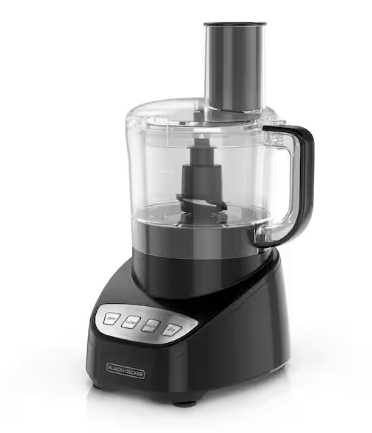
Anyway, there has been a mystery in my house for more than four years. It only ever annoyed me when I wanted to use my food processor — and only when I wanted to grate carrots — so you can see why it wasn’t exactly top of mind.

The Food Processor Era Begins

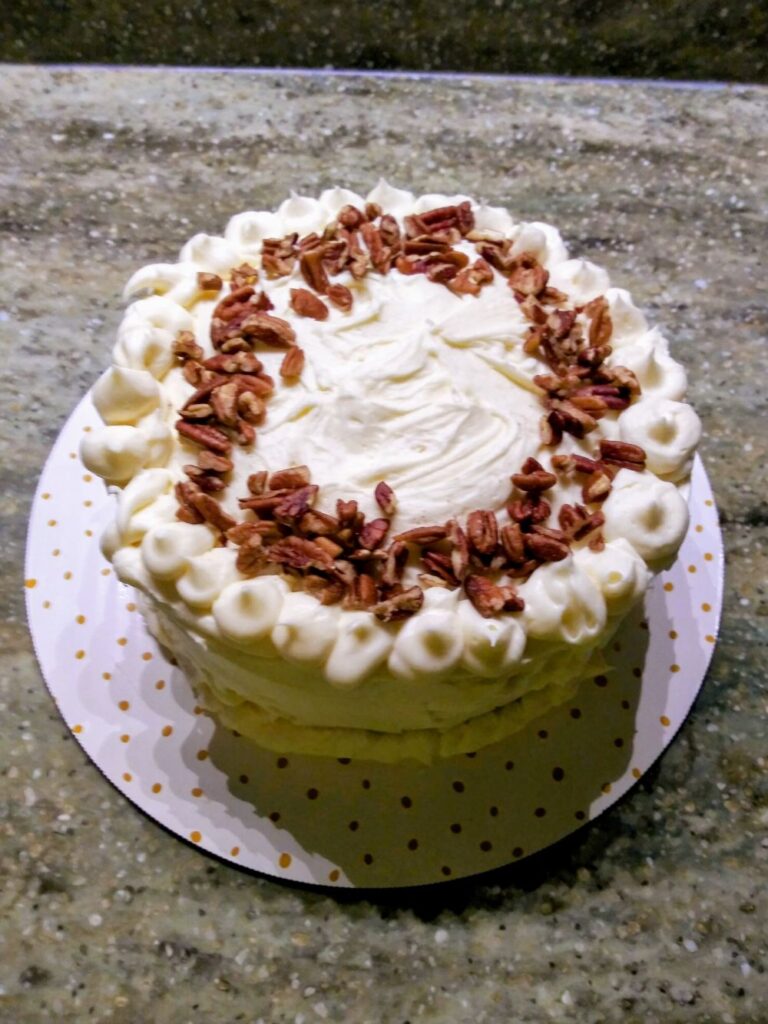
I bought that food processor in a moment of weakness. A literal one. I had just shredded a five‑pound bag of carrots by hand for a carrot cake, and my arm was about to fall off. My thought was “There has to be an easier way.” I watch the Food Network. I watch the cooking shows. You drop ingredients in, press a button, and voilà — shreds, purées, grinds, blends. It was time to modernize.

I brought it home, plugged it in, dropped in a carrot or two, and it worked beautifully. Perfect shreds. Coleslaw here I come. I gave it a place of honor on the counter.

The Carrot Catastrophe

Now, I’m not always the most mechanical of people, and the next time I tried to shred carrots… mush. Tiny bits. Sand. What was going on?

I ran to my computer and watched YouTube videos. Looked simple. Tried again. Same result. Back to the old‑fashioned hand grater I went, but the food processor was still great for bread crumbs, crushing crackers, and grinding honey grahams for pie crusts.

Over the years I kept reviewing how‑to videos and giving carrots another try. No success.

Then one day, I had an epiphany. I Googled the parts of a food processor.

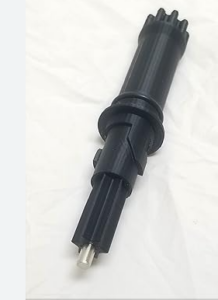
And there it was. The answer to my question. The missing part. The center shaft.


I only had the shaft with the blade. So when I put carrots in, they got shredded by the disc and then immediately chopped to bits by the blade underneath. I couldn’t remove the blade without having the center shaft to put in its place.

Head‑slap. Duh.


Enter: The Culprit

Okay all you culinary experts, stop laughing. I can explain.

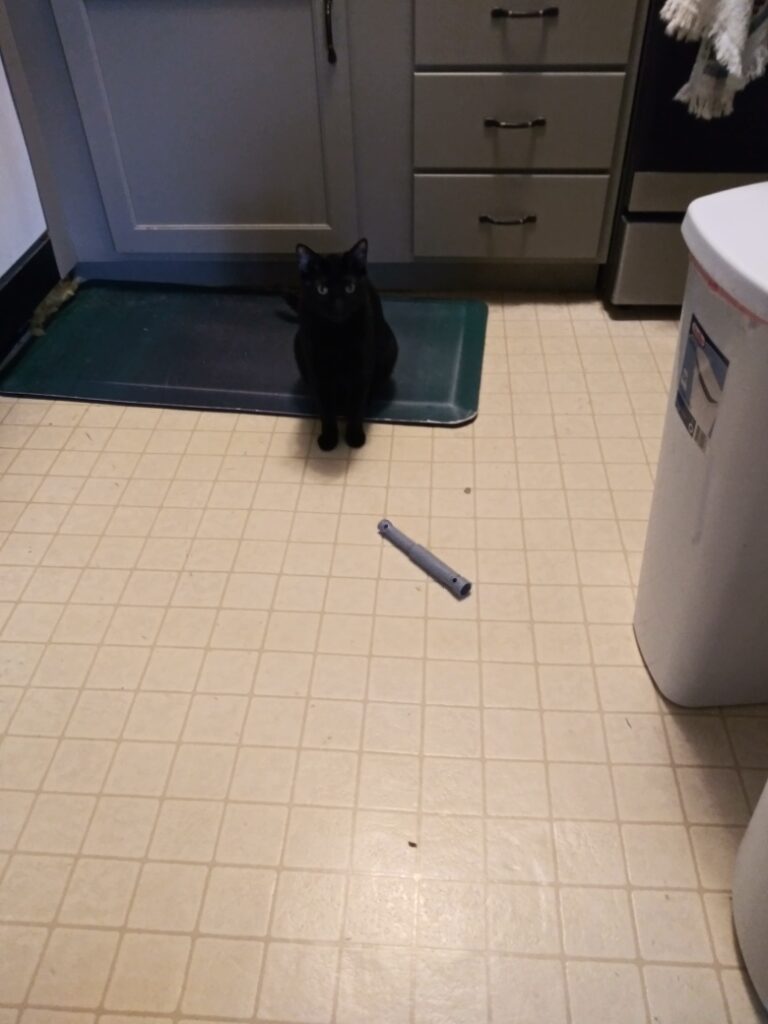
Not long after I got Balboa, I found the little culprit in the kitchen playing with a plastic thing. I had no idea what it was — I thought it was something he found under the sink. He used to go in and out of there all the time, and I figured it was leftover from when the workers replaced the countertops.

Now that I realize what I’m missing, I recognize the thing as the shaft from the food processor.

Needless to say, it’s long gone. It was tossed even before the Great Kitchen Declutter.

Balboa posing in the middle of the kitchen with the food‑processor shaft he ‘liberated,’ looking very satisfied with himself.

The Wallet‑Smacking Finale

The worst part? That tiny plastic thingy costs almost as much as a new food processor to replace. Can you believe that.

One small moment of stupidity… one big bang on the wallet. But at least I finally know why I couldn’t shred carrots with my food processor.

When that part gets here, I may have to make a carrot cake to celebrate.


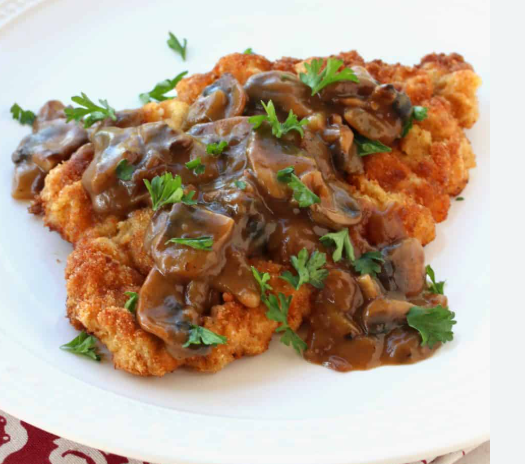
A Nod to My German Ancestry: Jägerschnitzel on the Hottest Night of the Summer


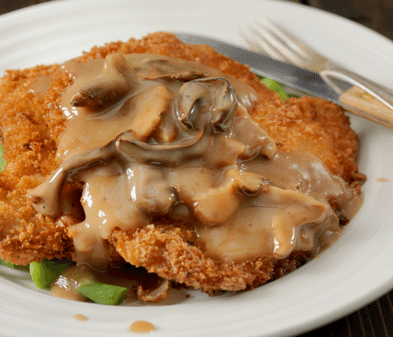
Jägerschnitzel , a classic German dish made with pork, bacon, and a rich mushroom gravy

Discovering a New German Favorite

Jägerschnitzel is a classic German dish made with pork, bacon, and a rich mushroom gravy. The pork chops are pan‑fried until crisp and golden on the outside but unbelievably tender inside — you could practically cut them with a fork.

The recipe claims to be ready in 30 minutes. Maybe I’m slow, but it definitely took me longer than that, mostly because of the bacon and the setup. Still, it was worth every minute.

I came across this recipe from House of Nash Eats. It’s one of those sites that requires your email, and now they send me recipes every day. I’ve thought about unsubscribing just to clean up my inbox, but then they send along a gem like this one and I decide to stay a little longer.

The Universe Sends a Sign

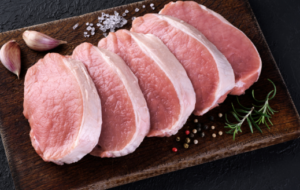
As if the universe agreed with my dinner plans, Hannaford had thin‑cut boneless pork loin chops on sale. No trimming needed — they were ready to go. What’s a home chef to do? Clearly, the universe had spoken.

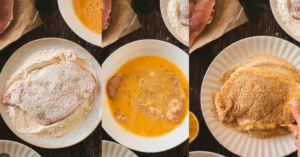
Like all schnitzel recipes, this one starts with a breading station: three shallow bowls — one for flour, one for eggs, and one for breadcrumbs. This recipe calls for Panko breadcrumbs, not my favorite, but I always try a recipe as written the first time. So here goes.


Jägerschnitzel Recipe

Ingredients

Schnitzel

  • 1 to 1½ pounds boneless pork loin chops (pounded to ¼ inch thin)
  • ¾ cup all‑purpose flour
  • ½ teaspoon salt
  • ½ teaspoon garlic powder
  • ½ teaspoon smoked paprika
  • ¼ teaspoon black pepper
  • 3 eggs, beaten
  • 2 cups Panko breadcrumbs
  • ½ teaspoon garlic powder
  • ½ teaspoon salt
  • ¼ teaspoon black pepper
  • ½ cup vegetable oil for frying

Mushroom Gravy

  • 6 slices bacon, chopped
  • 1 medium onion, chopped
  • 16 ounces sliced mushrooms
  • 3 tablespoons all‑purpose flour
  • 2½ cups beef broth
  • 1–2 teaspoons balsamic vinegar (optional)
  • ¼ teaspoon black pepper
  • ¼ cup heavy cream (or half‑and‑half or sour cream)
  • Chopped fresh parsley for garnish


Instructions

Make the Schnitzel

  1. Prepare the breading station:
    • Dish 1: flour, salt, garlic powder, smoked paprika, black pepper
    • Dish 2: beaten eggs
    • Dish 3: Panko, garlic powder, salt, pepper
  2. Trim fat from pork chops so they don’t curl. Pound to ¼ inch thick between plastic wrap using the smooth side of a meat mallet.
  3. Dredge each cutlet in flour, shake off excess, dip in egg, then coat in breadcrumbs. Transfer to a baking sheet and repeat.
  4. Heat oil in a large pan to about 360°F. Cook one schnitzel at a time for 2–3 minutes per side until golden brown. Transfer to a wire rack over a baking sheet and keep warm in a 200°F oven.

Make the Mushroom Gravy

  1. Cook bacon in a large pan over medium heat until crispy. Remove with a slotted spoon and set aside. Keep 2 tablespoons of bacon grease in the pan.
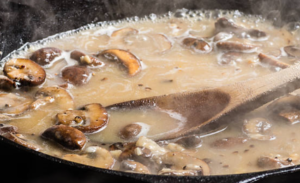
  2. Sauté onions for 3 minutes. Add mushrooms and cook 5–7 minutes until tender. Sprinkle flour over the mixture and cook 1 minute, stirring to coat.
  3. Gradually add beef broth while stirring. Reduce heat and simmer until thickened, about 5 minutes.
  4. Stir in cream and reserved bacon. Remove from heat.
  5. Plate schnitzel, top with mushroom gravy, and sprinkle with parsley.


Notes from My Kitchen

  • Let the pork chops sit a few minutes after breading — it helps the coating stay on.
  • I was skeptical about the Panko, but it really works in this recipe.
  • My gravy came out thinner than I like, so I added a flour‑and‑water slurry. Next time I’ll add a bit more flour in Step 2 and skip the slurry.

A Hot Kitchen and a Bavarian Feast

Of course, I picked the hottest day of the summer to try this recipe — and I made hot German potato salad as a side. Between boiling potatoes, frying bacon, and the oven warming the kitchen, I set a new personal heat record. I was melting by the time I was done.

My advice? Make this dish in the fall. And have a nice cold lager ready. Celebrate your own little Bavarian Oktoberfest.

Guten Appetit!


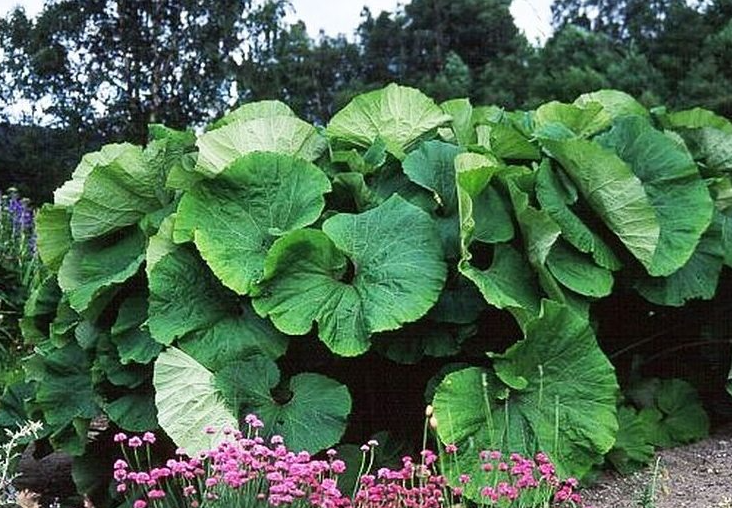
Rhubarb: -The Original Sweet‑Tart Rebel

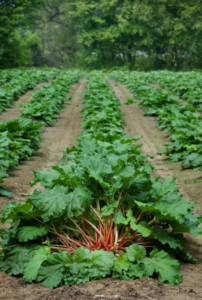
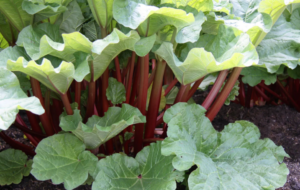
Wild Rhubarb gowing a a profusion of leaves and begging to make into a pie. A beautiful memory from my childhood

Wild Rhubarb Patch


🌿 Rhubarb: The Tart, Wild, Wonderful Spring Ritual

I grew up with a wild rhubarb patch — the kind that came back every year without being asked, without being watered, without being pampered. We’d wander out, snap off a few sturdy stalks, and head back inside to make sauce or pie. No ceremony, no measuring, just that sharp green‑red crunch and the promise of something tart and sweet bubbling on the stove.
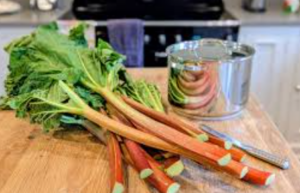
Once I became an adult, though, I don’t remember making many rhubarb pies at all… or many pies, period. That was my mom’s skill set, not mine. But I did make the sweet‑tart rhubarb sauce — the kind you drizzle over warm biscuits for breakfast or dollop onto vanilla ice cream. It was simple, bright, and tasted like spring in a spoon.

But the funny thing about getting older is how the staples of your youth start tugging at you. Out of nowhere, you miss the things you didn’t even realize were woven into your childhood. And just the thought of those rhubarb pies — the tart filling, the soft pink juices, the smell drifting through the house — started my mouth watering.

So I did it.
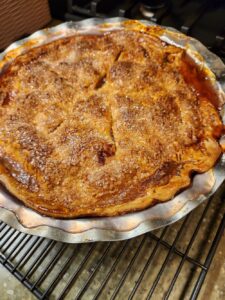
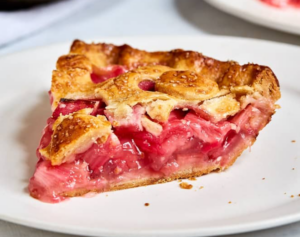
I made a rhubarb pie.

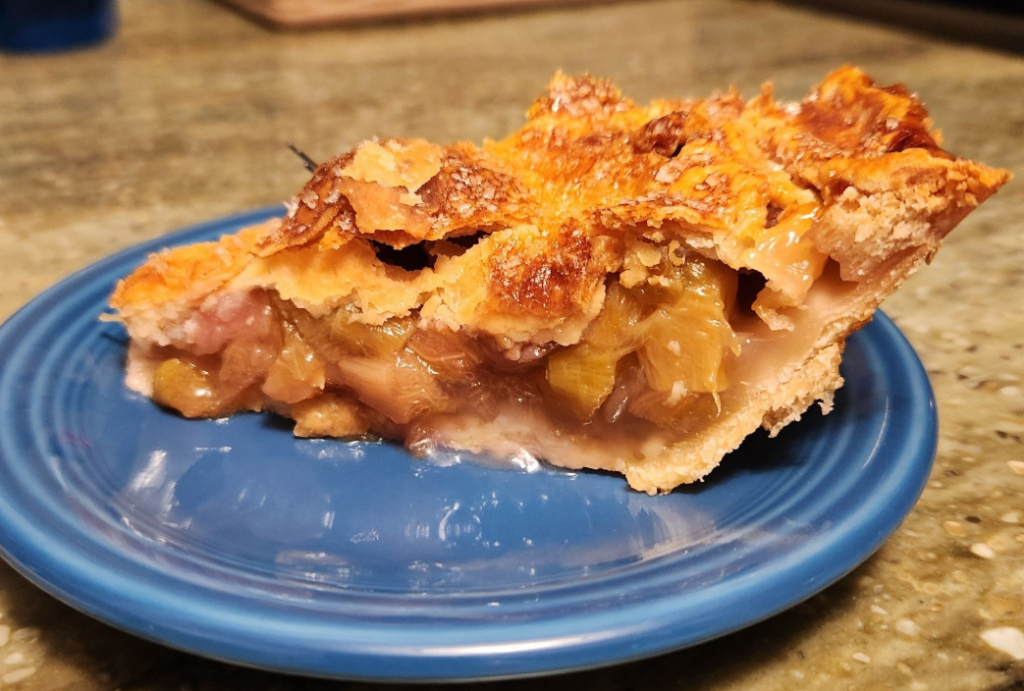
After all, I’ve mastered apple… why not rhubarb? And you know what? It worked. It was everything I remembered: tart, rosy, fragrant, and just a little wild.


🍓 Is rhubarb a fruit?

Botanically, rhubarb is a vegetable — a cousin of buckwheat and sorrel.
Culinarily, it’s treated like a fruit because it shines in pies, jams, and sauces. In 1947 the U.S. even reclassified it as a fruit for import tariffs because everyone was baking with it.


☠️ Are the leaves really poisonous?

Oh those huge, waving glorious leaves.  Tough and green they are the crown of the the red stalks. But are they really poisonous? Yes — the leaves contain high levels of oxalic acid, which can be harmful if eaten.
The stalks, however, are perfectly safe and delicious. Just chop off the leafy tops and compost them. Or if you’re a kid, run around the yard waving those leaves like flags, pretending they were shields or capes. I had no idea they were the “don’t eat this” part of the plant.

Most gardeners simply cut the leaves off and toss them in the compost. The plant knows what it’s doing — it protects itself with a built‑in warning label.


🎨 Color: Rhubarb’s Great Plot Twist

Rhubarb comes in every shade from deep ruby to streaky pink to full‑on green.
And here’s the secret: color has nothing to do with flavor. Green rhubarb can be just as tart and bright as the reddest stalk. Once it cooks down with sugar, the juices turn rosy anyway — sometimes ruby, sometimes golden‑pink, sometimes a warm sunset shade. Real rhubarb pies rarely look like the neon‑red photos online, and that’s part of their charm.


😋 The Taste: Tart, Bright, and Completely Addictive

Rhubarb doesn’t pretend to be sweet. It comes in bold, tart, and unapologetic — the kind of flavor that wakes you up and makes you pay attention. Add sugar and heat, and it softens into something lush and nostalgic, the taste of early spring before anything else is ready to harvest.


🌱 A Few Fun Rhubarb Facts

  • Rhubarb plants can live 20+ years in the same spot.
  • Forced rhubarb (grown in dark sheds) is so tender it’s harvested by candlelight.
  • The stalks get more tart as the season goes on — early spring is the sweet spot.
  • Some varieties are bred for color, not flavor, which is why your pie might not be red even if the stalks were.
  • Rhubarb was once prized as a medicinal plant long before it became a dessert star.

🥧 And now… the pie

Once I decided to finally make one, I kept it simple. There are countless variations online, but this recipe is tested, reliable, and friendly enough that even a novice baker can make a successful treat. If you try it, let me know — I’d love to hear how yours turns out.


Here’s the recipe I used:


Rhubarb Pie 

Ingredients

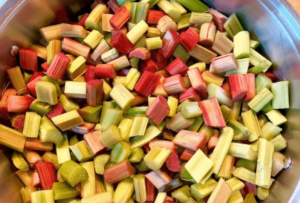
  • 2 lbs rhubarb, cut into 1‑inch pieces (about 7 cups)
  • 1 ½ cups granulated sugar
  • ¼ cup cornstarch
  • 1 Tbsp lemon juice
  • ¼ tsp kosher salt
  • 2 batches pie dough (homemade or refrigerated)
  • All‑purpose flour, for rolling
  • 1 Tbsp cold butter, cubed
  • 1 large egg + ½ tsp water (egg wash)
  • Sanding sugar, for sprinkling

Directions

  1. Mix dry ingredients
    Combine sugar, cornstarch, and salt in a large bowl.
  2. Prepare crust
    Roll each dough round to 12 inches. Fit one into a 9‑inch pie plate.
  3. Layer filling
    Sprinkle ⅓ of the sugar–cornstarch mix over the bottom crust.
    Add rhubarb and lemon juice.
    Sprinkle remaining sugar mixture on top.
    Dot with butter.
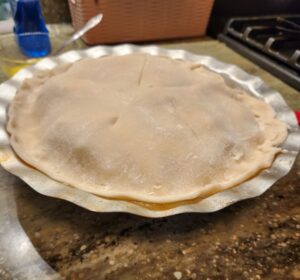
    Add top crust; trim and crimp edges.
  4. Vent and chill
    Cut 5 slits in the top crust.
    Freeze assembled pie for 30 minutes.
  5. Bake
    Preheat oven to 375°F.
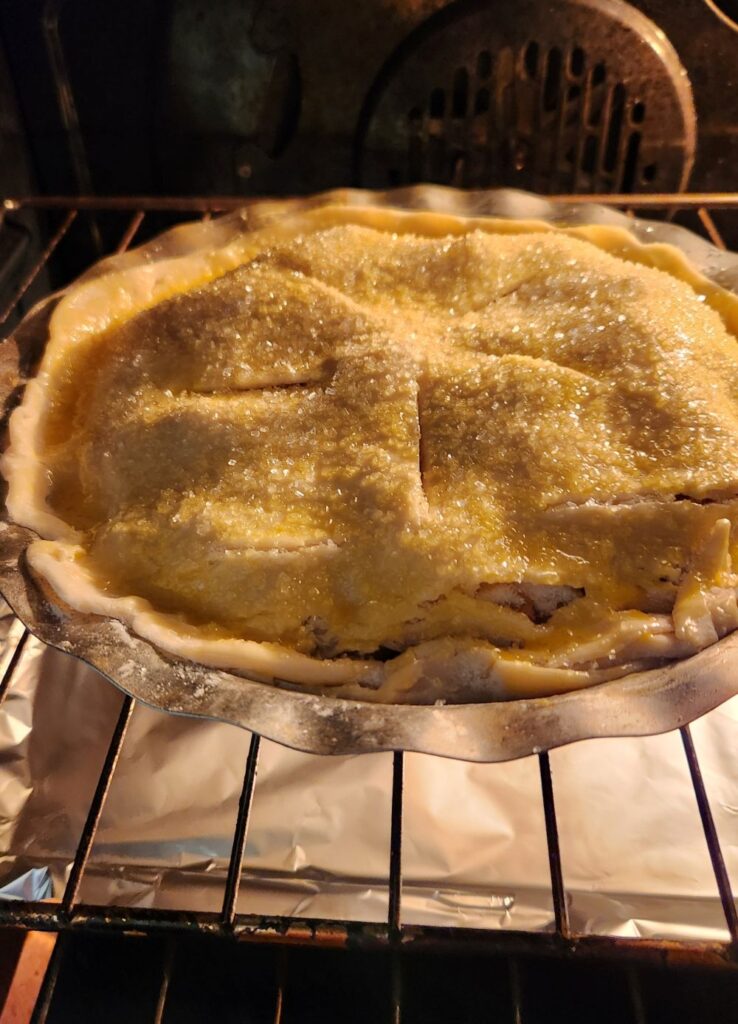
    Brush with egg wash; sprinkle sanding sugar.
    Bake on middle rack with a foil‑lined sheet on the lower rack.
    Bake about 1 hour, tenting if browning early.
    Continue baking until filling bubbles in the center and vents (about 30 minutes more)
  6. Cool completely
    Cool on a rack 3–4 hours for clean slices.

Notes

  • Peeling: Optional; peel only if stalks feel tough or stringy.
  • Cutting: Kitchen shears or a sharp knife both work.
  • Color: Red or green rhubarb both bake normally; color doesn’t affect flavor.
  • Doneness: Fully baked only when bubbling in the center.
  • Cooling: Full 3–4 hours helps the filling set.


MMM