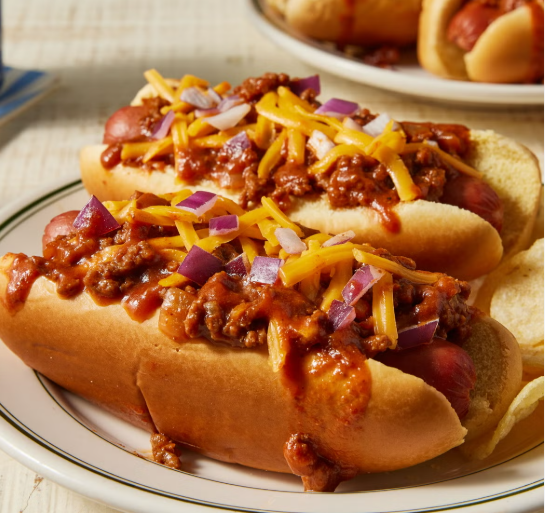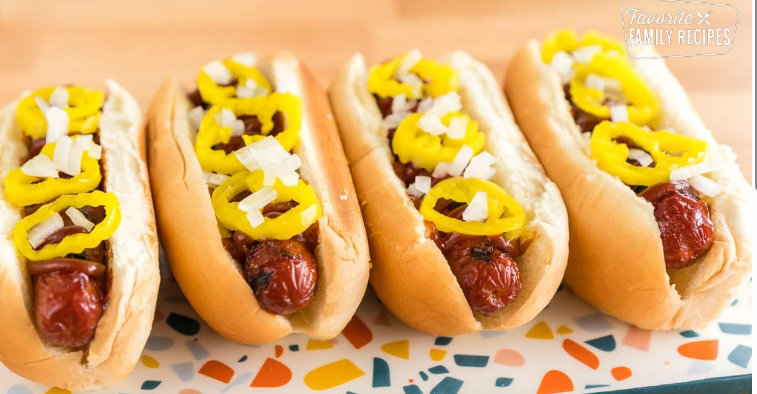
A Quick Lunch
 I’m not a big hot dog eater. I could never enter a Nathan’s hot dog contest. Just the thought of that many hot dogs makes me queasy. If it’s a choice between a hot dog or a hamburger, I’ll go with the hamburger every time.
But occasionally I get the urge. I wouldn’t call it a craving, just a desire for a quick meal. Hot dogs with a side of pork and beans, hot dogs wrapped in puff pastry, or even just a hot dog tucked into a slice of bread.
Confession: I don’t eat hot dogs often enough to justify buying the rolls. They’re just as good wrapped in a slice of bread.
The Wall of Hot Dogs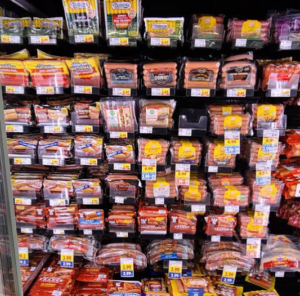
Recently I was grocery shopping and found myself standing in front of what seemed like an endless wall of hot dogs. Different brands, different sizes, different ingredients, and most importantly, different prices.
When I was working full-time, I got in the habit of grabbing the first package I saw. I was usually in a hurry to get my groceries and get out. There were always places to go and things to do.
Now, as a retired person living on a fixed income, I’ve slowed down and started looking at my choices. Grabbing the most expensive name brand isn’t always the best way to shop.
For example, I was looking at the bun-length hot dogs and wondering what made them different. They were longer, but there were still eight hot dogs in the package. Why did they cost about the same as the shorter ones?
I put the two packages side by side and suddenly it made sense. The longer hot dogs weren’t bigger. They were simply longer and thinner. About the same amount of meat, just shaped differently.
Are the Expensive Ones Better?
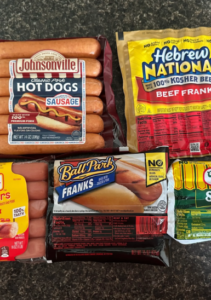 Then I moved on to a bigger question.
All beef? Pork and beef? Chicken? Smoked? Why so many choices?
That’s when I noticed there was about a $2 difference between the regular hot dogs and the all-beef hot dogs.
I started thinking about my childhood. I don’t remember all-beef hot dogs being a thing. As far as I knew, hot dogs were just hot dogs. I used to eat them right out of the package when I was a kid.
If they tasted good back then, can they really be that bad now?
Maybe I should save the extra $2 and buy the regular hot dogs. On my next grocery run, I may pick up a package and do a taste test. It would be interesting to see if I actually notice any difference.
A Lesson from the Meat Department
While we’re on the subject of the meat department, I had an interesting conversation with one of the employees.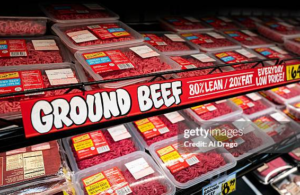
He was restocking the ground beef display during a sale. The price was $2.99 a pound, which feels almost like giving it away these days, so I reached for one of the sale packages.
That’s when he commented, “Good choice. It’s all pretty much the same. Most people don’t know it, but you don’t need the expensive ground beef for casseroles.”
I’ve thought about that conversation more than once since then.
Price vs. Value
 I’m not trying to buy the cheapest food. I’m trying to buy the food that gives me the best value.
Sometimes that means spending more.
Sometimes it means discovering that the sale item is every bit as good as the premium one.
Retirement has changed the way I shop. I pay more attention than I used to. I read labels. I compare prices. I ask questions.
The funny thing is that all this started with a package of hot dogs.
After all, as my mom used to say, “I’m a little old lady on a fixed income.”
Join the Conversation
Who out there is a hot dog connoisseur?
I’d love to hear your thoughts on the great hot dog debate. Do you notice a difference between all-beef and regular hot dogs? Is the extra $2 worth it, or should I save my money and stick with the classic version?
If you have a favorite brand, preparation method, or hot dog recommendation, share it in the comments. I may even report back after my own taste test on the next grocery run! 🌭😊