🌼
I haven’t revisited May Day for a few years — fifteen, to be exact — but who’s counting. If you’re curious (or just in the mood for a laugh), you can see that original 2011 post here. May Day.
May Day is one of those holidays everyone’s heard of, but almost no one can fully explain — which is probably why it’s so much fun to write about. Depending on who you ask, May 1st is about flowers, bonfires, maypoles, ancient goddesses, or childhood memories of weaving ribbons around a pole without tripping over your classmates. And honestly? All of those answers are right.
🌸 A Holiday Older Than… Well, Almost Everything
May Day goes all the way back to the ancient world. The Romans celebrated Floralia, a weeklong festival honoring Flora, the goddess of youth, spring, and flowers. When they reached the British Isles, their festival collided with the Celtic celebration of Beltane, also held on May 1st — a fire festival marking the start of summer. Over time, the two blended into what we now recognize as May Day.
🌿 “Bringing in the May”
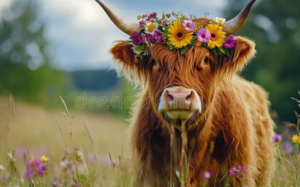
By the medieval period, May Day was the spring holiday across Europe. Villagers would wake up early to gather flowers and greenery — a tradition called “bringing in the May.” They decorated homes, barns, and even livestock with blossoms to welcome the season.
🎀 The Maypole (and the Competition to Have the Tallest One)
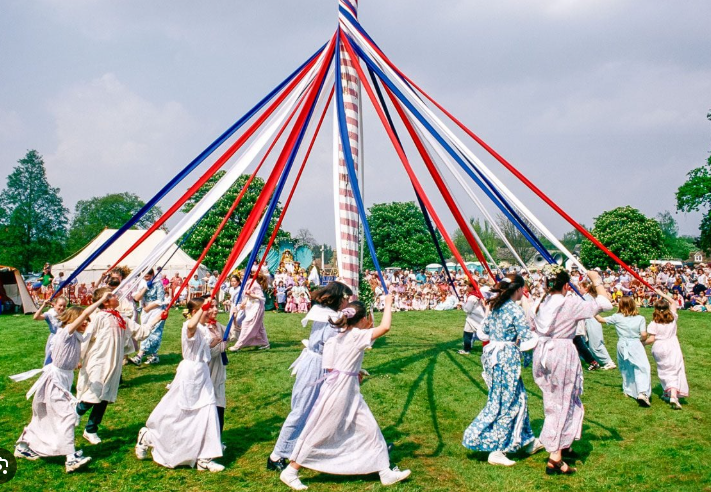
At the center of the festivities stood the maypole — usually a tall birch tree pulled into town by flower‑decked oxen. People danced around it holding colorful ribbons, weaving patterns as they went. Some towns even competed to see who could raise the tallest or most impressive pole.
👑 The May Queen
Many villages crowned a May Queen, a young woman chosen to preside over the day’s games, dances, and pageantry. Think of it as the original spring influencer — minus the hashtags.
 🔥 Bonfires, Dew, and a Little Magic
In some regions, May Day included bonfires — a holdover from Beltane — and people believed washing your face in May morning dew would bring good luck and beauty for the year ahead. (Honestly, that one might be worth trying.)
🌼 And Then There’s New England…
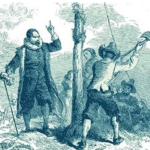
Here in New England, the Puritans were not fans. When an Anglican merchant erected a maypole at Merry Mount (today’s Quincy) in 1627, the neighboring Puritans chopped it down and shipped him back to England. No sense of whimsy, those folks.
So while the Puritans may have tried to shut the whole thing down (party poopers, the lot of them), May Day survived — flowers, maypoles, mischief and all. And honestly? I think that’s worth celebrating. Even if the only dancing you do is from the coffee maker to the couch.