The Reverse Sear: A New Englander’s Indoor Steak Victory

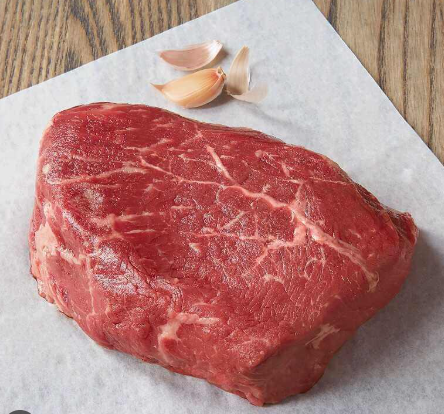
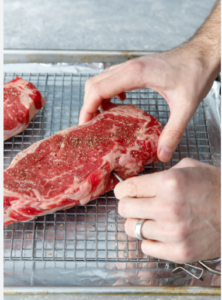
Raw sirloin steak prepared for a reverse‑sear recipe, shown with garlic on parchment.

Life Before the Condo Rules

New Englanders are a hearty lot. Around here, there’s no such thing as “Grilling Season.” We grill in snowstorms, nor’easters, and the occasional blizzard just to feel alive. I was no different. I cooked everything on my Weber — steaks, turkeys, potatoes, corn, kabobs, chicken, fish. Honestly, I used my grill more than my stove.

Then I bought my condo.

It has a lovely west‑facing deck, and I pictured myself out there year‑round, happily grilling under shelter like a civilized cavewoman. What I didn’t picture was the fire code. Not only could I not grill on the deck, I couldn’t even store a grill there. The only allowed option was an electric grill and… well… if I’m going to cook on a glorified space heater, I might as well use my stove.

So began my quest: how do you cook a steak indoors that still satisfies the primal red‑meat urge?


My Cast Iron Era: The Classic Pan Sear

For years, my go‑to method was the classic pan sear in my beloved cast iron skillet. If you’ve never done it, here’s the quick version:

How a Traditional Pan Sear Works

  • Heat a cast iron skillet until it’s smoking hot.
  • While it heats, coat your steak lightly in vegetable oil, salt, and pepper.
  • Lay the steak in the pan — you’ll get that glorious sizzle and a puff of smoke that could set off every alarm in the building.
  • Sear for a couple of minutes on the first side to build a crust, then flip and repeat.
  • Remove from heat and let it rest while you prep your sides.

It’s fast, it’s flavorful, and it gives a great crust. But it also fills the kitchen with smoke, and the inside of the steak can go from rare to overcooked in a heartbeat.

Lately, I wanted something better — something more steakhouse‑level without steakhouse prices.

And that’s when I found it.


Enter: The Reverse Sear

I’m only one person, and after years of dieting, I can’t eat a whole steak in one sitting. So when Hannaford’s had one of their rare steak sales, I grabbed a nice sirloin for $13. It was small, so I got three good cuts out of it — just $4.33 per meal. That’s a win.

Now I just needed the perfect cooking method.

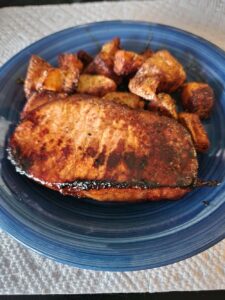
Reverse sear won by a landslide. Tender, evenly cooked, beautifully crusted — every time. I’m hooked.

Here’s how to do it.


How to Reverse Sear a Steak (No Grill Required)

Step 1: Prep Your Steak

  • Start with a thick cut — at least 1.5 inches.
  • Pat it completely dry.
  • Season generously with kosher salt and pepper.
  • Add garlic powder or any spices you love.
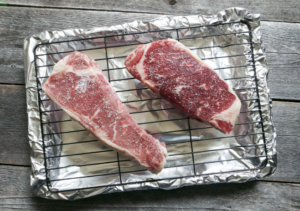
  • Place on a wire rack (I use my air fryer basket).

Step 2: Slow Cook

  • Preheat your oven to 250°–275°F.
  • Place the steak on the rack over a baking sheet.
  • Bake for 30–50 minutes, until the internal temp reaches 115°F for rare.
    • My smaller steaks usually hit this around the 30‑minute mark.

Step 3: High‑Heat Sear

  • Heat your cast iron skillet over high heat until it just starts to smoke.
  • Add a high‑smoke‑point oil (canola, vegetable, avocado).
  • Sear the steak 60–90 seconds per side until a deep brown crust forms.

Step 4: Rest and Serve

Because the steak cooked low and slow, it barely needs resting. A minute or two is plenty.


Notes & Tips

  • Many recipes suggest salting the steak and leaving it uncovered in the fridge for up to 24 hours. I haven’t tried it, but it’s supposed to improve the crust. If you test it, report back.
  • If you don’t mind smoke, add a pat of butter during the sear for extra flavor — just know it will burn.
  • A probe thermometer is essential to avoid overcooking before the sear.
  • A dry, heavy skillet (cast iron is best) gives the best crust. Make sure it’s screaming hot.
  • Add aromatics (butter, garlic, herbs) during the last minute of the sear and baste for extra flavor.

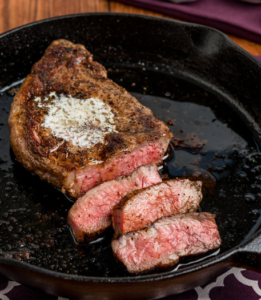
Regular Sear vs. Reverse Sear

You be the judge. I know which one I prefer — and I’d love to hear which method wins in your kitchen.


Cinnamon Swirl Quick Bread


WOW! Over 2,100 Posts — No Wonder I Can’t Find Anything

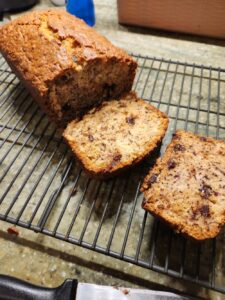
Homemake chocolate Chip banana bread is just one example of a quick bread you can bake in your own kitchenI’ve got over 2,100 published posts on Around Dusty Roads. I’ve either had a lot to say… or I just really love the written word. Probably a little of both.

Just like my photo library, it’s overwhelming — but at least all of my posts are tagged, so eventually I can track down what I’m looking for.

And yes, I finally found the post I needed: Chocolate Chip Banana Bread.

Which brings me to the real reason for this post.


Eating Well When You’re Cash‑Strapped

My hairdresser was telling me about a friend of hers who’s in the same boat I am: Social Security doesn’t stretch to the end of the month.

The big difference?
I cook.
Her friend orders takeout.

I’ve had to make a lot of adjustments since retirement. I’ve tried finding a second income stream — DoorDash, Amazon affiliate marketing, even applying for “real jobs” (my ego has taken a beating there; most resumes disappear into the void). And of course, there was Welcoming Haven, my online store — my great hope that fizzled. So it’s not like I’ve been sitting around.

Even on a fixed income — and especially now that my Social Security check is only about one‑third of what I earned when I was working — you can still enjoy good meals.


The Secret: A Well‑Stocked Pantry

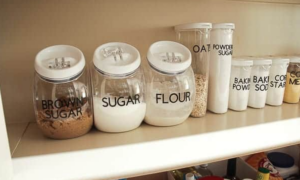
A stocked pantry is your best friend when money is tight. I always keep:

  • Canned tomatoes
  • Canned soups
  • Tuna
  • Flour, sugar, and baking staples

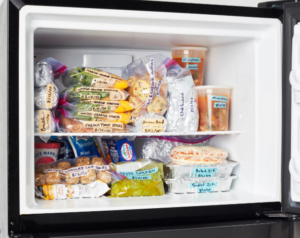
And the freezer? That’s where the real savings happen. I pick up meats, fish, and poultry only when they’re on sale and stash them away.


Let’s Talk Baking (The Easy Kind)

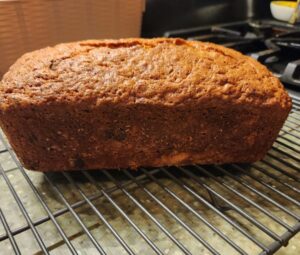
I’m not talking about artisan sourdough or anything that needs a starter. I mean the little things — quick breads.

Back when I was flush, I’d toss a couple of boxed mixes into the cart without thinking. But on my last shopping trip, I nearly choked:
$4.69 for ONE box.

And for what?
Someone else measuring your dry ingredients?


What Is a Quick Bread, Anyway?

I used to think “quick bread” just meant you could add an egg and some milk and pop it in the oven quickly.

But here’s the real definition:

A quick bread is a bread leavened with baking powder or baking soda instead of yeast. Because the rise comes from a chemical reaction rather than fermentation, the batter can be baked immediately, with no proofing time.

Once I understood that, I realized I could absolutely make these from scratch.


Why I Started Baking My Own

I’ve always doctored boxed cranberry bread by adding fresh cranberries — the mix alone is too bland. So why not skip the box entirely?

That’s how I ended up experimenting with homemade versions. And today’s recipe is my newest attempt: Cinnamon Swirl Quick Bread.

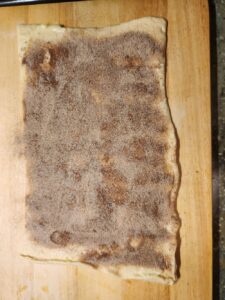
The swirl still needs practice, and next time I may turn the topping into more of a streusel by adding butter for a crumbly texture. But here’s the basic recipe as written — no tweaks, just simple and straightforward.


Cinnamon Swirl Quick Bread

Ingredients

Batter

  • 1 cup granulated sugar
  • 2 large eggs (room temperature)
  • ½ cup sour cream (room temperature)
  • ½ cup milk
  • ⅓ cup vegetable oil
  • 2 teaspoons pure vanilla extract
  • 2 teaspoons baking powder
  • 1 teaspoon baking soda
  • ½ teaspoon salt
  • 1 ½ cups all‑purpose flour

Cinnamon Sugar

  • ½ cup brown sugar
  • 1 tablespoon ground cinnamon

Instructions

  1. Preheat oven to 350°F. Line a 9×5 loaf pan with parchment or spray with baking spray.
  2. In a large bowl, whisk together sugar, eggs, sour cream, milk, oil, and vanilla.
  3. Add flour, baking powder, baking soda, and salt. Stir until just combined.
  4. In a small bowl, mix the brown sugar and cinnamon.
  5. Pour half the batter into the loaf pan. Sprinkle ¾ of the cinnamon sugar evenly over the batter. Swirl gently with a butter knife.
  6. Add the remaining batter, then sprinkle with the remaining cinnamon sugar.
  7. Bake 50–65 minutes, or until a skewer inserted in the center comes out clean.


Notes

  • The cinnamon sugar mixture tends to float, so don’t be too gentle or you won’t get a good swirl.
  • If the top browns too quickly, loosely tent with foil for the last 30 minutes.
  • Greek yogurt can be substituted for sour cream.

Final Thoughts

I hope you give baking without the box a try. Taste tests prove it’s just as good — sometimes even better — when you make it yourself.


Dusty’s Smothered Pork Chops


My Long‑Time Favorite Pork Chop Recipe

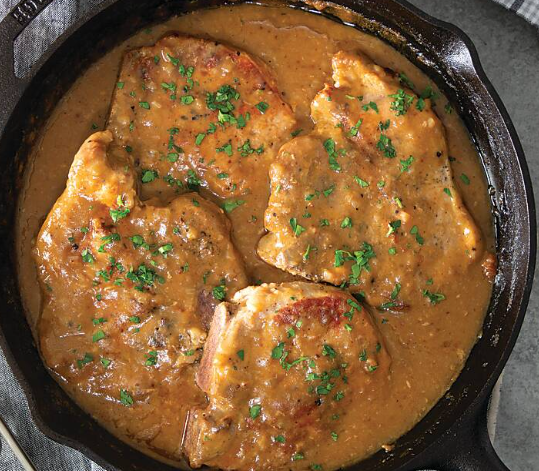
Smothered pork chops surrounded by gravy. Of course it's in a cast iron skillet

A Little Backstory

Recently I shared two new pork chop recipes — Rediscovering Pork Chops and Pork Chops Take 2.
Now I’m down to the last of the chops, which means there’s room for one more recipe before I take a break. I actually have another new one waiting in the wings, but that will have to wait for my next pork chop run.

Today’s recipe is my long‑time favorite. It goes all the way back to the 1970s, when I’d just gotten my first professional (non‑waitress!) job. One of my coworkers told me he always made his pork chops in a skillet with Campbell’s Golden Mushroom soup. He insisted it had to be Golden Mushroom — not Cream of Mushroom.

I tried it, loved it, and over the years it evolved into the version I make today. It’s still simple, still comforting, and still one of my go‑to meals.


Dusty’s Smothered Chops

Ingredients

  • 4 thick‑cut, boneless center‑cut pork chops
  • 2 cans Campbell’s Golden Mushroom Soup
  • 2 cans sliced potatoes
  • 1 small can sliced mushrooms (optional)
  • Salt and pepper to taste

Directions

  1. Heat a large skillet over medium‑high heat and add a light skim of oil (about 2 Tbsp).
    (I love a cast iron skillet for this.)
  2. Generously salt and pepper both sides of the chops. Add them to the hot pan and sear for color — about 2 minutes per side.
    Do not cook through.
  3. Transfer the chops to your slow cooker and pour in the soup. Add the sliced potatoes and the optional mushrooms, then stir gently to combine.
  4. Set to Low and cook for 6–8 hours.

Notes

  • Your chops will come out melt‑in‑your‑mouth tender.
  • The Golden Mushroom soup makes a wonderful gravy.
  • Add the optional mushrooms if you like a little extra.

Golden Mushroom vs. Cream of Mushroom

Why Golden Mushroom?

Golden Mushroom soup acts more like a flavor concentrate than a creamy base.
It melts into the pan juices and creates a rich, savory gravy that clings beautifully to pork chops — especially when you brown them first.

Can You Substitute Cream of Mushroom?

Not unless you want an entirely different vibe.

  • Cream of Mushroom makes the dish creamy and mild.
  • Golden Mushroom makes it bold, savory, and deeply seasoned.

In my own words… Yummy!


Wrapping Up

So that’s it — the last of this pork chop run. I’m all out for now, but I’m sure we’ll circle back another time.

How do you cook pork chops in your home? I’d love to know.


Pork Chops, Take Two: The Marinade Edition

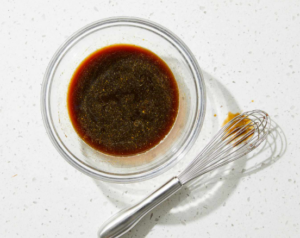
Pork Chop experiments continue in Dusty's test kitchen


Overnight Soy & Worcestershire Pork Chops

Can success strike twice in Dusty’s Test Kitchen? Let’s find out.

It was another busy day in Dusty’s Test Kitchen, and yes — the pork‑chop experiments continue. My first attempt, Rediscovering Pork Chops: A Cast Iron Success Story, turned out so well that I had to try again. Could I repeat the magic?

This recipe is a little more involved than the last one, mostly because it needs an overnight marinade. But once the cooking starts, everything moves fast and easy.


Ingredients

Marinade

  • ½ cup soy sauce
  • ¼ cup Worcestershire sauce
  • 2 tbsp olive oil
  • 1 tsp paprika
  • 1 tsp garlic powder
  • 1 tsp onion powder
  • ½ tsp black pepper
  • ½ tsp salt (optional, depending on your soy sauce)
  • Optional: 1 tbsp brown sugar
  • Optional: ½ tsp ginger powder

Finishing

  • 3–4 tbsp butter, cut into pats
  • Optional: 2 smashed garlic cloves or a few thyme sprigs

Instructions

1. Marinate Overnight

  1. Whisk all marinade ingredients together.
  2. Add pork chops and coat well.
  3. Refrigerate 8–24 hours.
  4. Remove from the fridge 20–30 minutes before cooking.

2. Pan‑Sear

  1. Preheat oven to 400°F.
  2. Heat a cast‑iron or heavy skillet over medium‑high until very hot.
  3. Add a thin layer of oil.
  4. Sear chops 2 minutes per side to develop color.
    • Do not cook through during this step.

3. Oven Finish with Butter

  1. Turn off the stovetop heat.
  2. Add the pats of butter to the bottom of the pan.
  3. Place the seared chops on top of the butter.
  4. Transfer the pan to the oven.
  5. Bake 5–8 minutes, depending on thickness.
  6. Remove when internal temperature reaches 140–145°F.
  7. Let rest 5 minutes before serving.


Notes

  • This method keeps thinner chops tender by combining a moisture‑boosting marinade, a quick sear, and a gentle oven finish.
  • The butter melts underneath the chops and bastes them as they finish, giving a glossy, savory finish.
  • Works with bone‑in chops too — just add 2–4 minutes to the oven time.
  • I served mine with oven‑roasted potatoes. I started the potatoes when I took the chops out of the refrigerator, so they had a 30‑minute head start.


My Rating

I’m giving this one 4 stars. Very flavorful, very tender — just shy of that 5‑star wow factor for me. But you can be the judge.


Rediscovering Pork Chops: A Cast Iron Success Story


A Budget-Friendly Find at Hannaford

Hannaford had pork chops on sale this week. They also had sirloin steak on sale — and it looked beautiful — but even with the discount, one steak would have blown my entire food budget. Meanwhile, I could get eight center‑cut pork chops for seven dollars. As much as I love a good steak, the better value was pretty obvious.

My Complicated History with Pork Chops

Here’s the thing: I’m not usually a pork chop person. I like pork, I love ham, but I’ve only had one pork chop recipe in my life that I’d rate five stars — a slow‑cooker recipe. Growing up, we ate pork chops often, always pan‑fried with lots of salt and pepper, and they always seemed tough. So I’ve never gone out of my way to cook them.

Could Cast Iron Save the Day?

But then I remembered how beautifully the cast iron chicken breast recipe turned out. That got me wondering… could I use the same method for pork chops?

I had a simple three‑ingredient recipe saved — the kind you bake in a foil‑covered dish — and I thought I might be able to adapt it to cast iron. And once I started, I decided it needed a gravy too. Egg noodles were already on the menu, so why not go all in.

A Major Success

Let me tell you: this was a winner.

The whole meal came together fast. The noodles cooked while the chops finished in the oven, and the gravy took maybe five minutes — probably less, but I didn’t time it because I was too busy tasting it. The chops came out tender and moist, with that brown‑sugar‑Italian‑herb glaze that tastes like you fussed way more than you did.

And the gravy… oh my. So yummy.

Cleanup was a breeze too. The cast iron pan wiped right out — no sticking at all, even with the brown sugar.

I have a whole new outlook on pork chops now.


Cast Iron Italian‑Rub Pork Chops (with Easy Pan Gravy)

Boneless, center‑cut, about ¾‑inch thick

Bonless Center cut poek chops are the feature of this dish

Ingredients

Pork Chops

  • 4 boneless center‑cut pork chops (¾‑inch thick)
  • 1 packet dry Italian dressing mix
  • 2–3 tbsp brown sugar
  • 1–2 tbsp oil (for the pan)

Gravy

  • Drippings from the pan
  • 1 tbsp butter (optional)
  • 1–2 tbsp flour
  • ¾–1 cup chicken broth
  • Optional: splash of cream or milk
  • Pepper to taste

Instructions

1. Season the Pork

Mix the Italian dressing mix and brown sugar. Pat the pork chops dry and coat them on all sides.

2. Sear in Cast Iron

Heat a cast iron skillet over medium‑high and add a thin film of oil.
Sear the chops 1–1½ minutes per side until lightly browned.

3. Finish in the Oven

Transfer the skillet to a 400°F oven.
Bake 8–12 minutes, depending on thickness.
Remove when the internal temperature reaches 140–145°F and let rest 5 minutes.


Make the Gravy

The gravy hits all the right notes and gets to simmer quickly

simmering gravy

  1. Remove the chops to a plate.
  2. Keep the skillet over medium heat.
  3. Add 1 tbsp butter if the drippings look sticky or sparse.
  4. Sprinkle in 1–2 tbsp flour and whisk to form a roux.
  5. Slowly whisk in ¾–1 cup broth until smooth.
  6. Scrape up all the browned bits.
  7. Simmer 2–3 minutes until thickened.
  8. Adjust seasoning with pepper or a splash of cream.

Serving Notes

  • Spoon the gravy over egg noodles and let it run onto the pork chops.
  • Add parsley if you want a little color.
  • Leftovers reheat beautifully.


Let Me Know If You Try It

If you give this recipe a try, I’d love to hear how it turned out for you. Did the gravy win you over too? Leave a comment and let me know — I’m always curious how these cast iron experiments work in other kitchens.