 A Tribute to Secretariat: America’s Super Horse
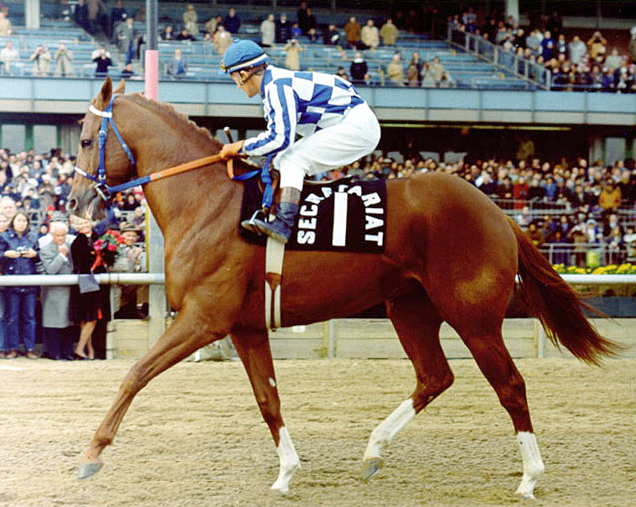
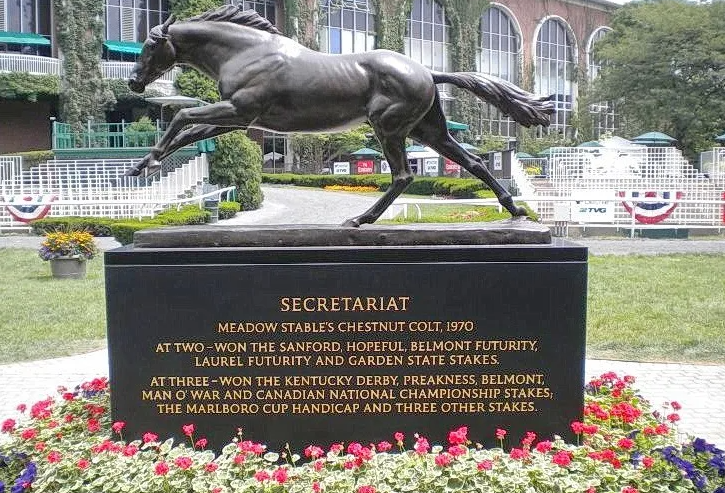
Now that Derby Day has come and gone for another year, I find myself thinking not just about the newest winner, but about the horse who still casts the longest shadow over the sport. Secretariat. Big Red. The legend who didn’t just win races — he redefined what greatness looked like on four legs.
Secretariat wasn’t simply fast. He was the Gretzky or Jordan of the racetrack — the kind of once‑in‑a‑generation athlete whose records don’t just stand; they dare anyone to even try. More than fifty years later, his times in all three Triple Crown races remain untouched. No other horse has come close.
The Making of a Legend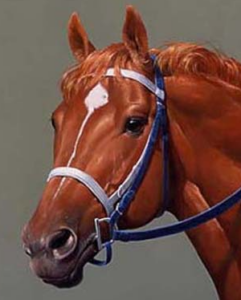
Born on March 30, 1970, Secretariat grew into a 16.2‑hand, 1,175‑pound chestnut with a stride so fluid it looked like he was skimming the ground. His conformation bordered on flawless, and during his three‑year‑old season he powered himself with 15 quarts of oats a day — fuel for the engine that would change racing forever.
In 1973, he became the first Triple Crown winner in 25 years. And he didn’t just win those races — he shattered them. His records in the Kentucky Derby, Preakness, and Belmont Stakes still stand today.
The Belmont That Became a Myth
Even if Secretariat had never run another race, the 1973 Belmont Stakes would have secured his immortality. That day, he didn’t just win the Triple Crown — he obliterated it.
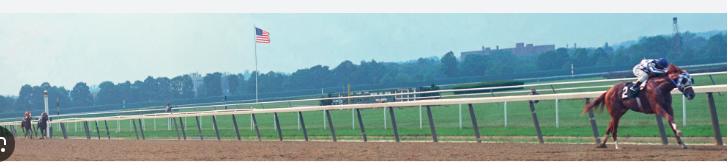
He ran the mile and a half in 2:24 flat, the fastest time ever recorded at that distance. And he won by 31 lengths. The camera literally couldn’t keep the rest of the field in the same frame. It remains one of the most astonishing athletic performances ever captured on film.
 A Horse Who Became an American Icon
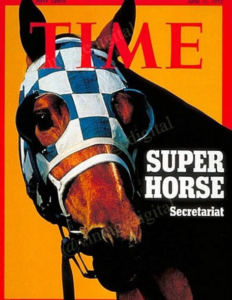
Secretariat wasn’t just a champion; he was a cultural phenomenon. Magazine covers. Headlines. Crowds who came simply to watch him walk. He was syndicated for millions under the agreement that he would retire after his three‑year‑old season — a decision that allowed him to begin a second career as a sire.
His influence is still everywhere. Nineteen of the twenty expected starters in the 2026 Kentucky Derby trace back to him. His bloodline continues to shape the sport.
He even made ESPN’s list of the 50 Greatest Athletes of the Century — the only non‑human on the list.
The Heart of a Champion
When Secretariat died at age 19 from laminitis, the necropsy revealed something that felt almost poetic: his heart was two and a half times the size of a typical Thoroughbred’s. Not diseased — just extraordinary.
Most racehorses are buried with only their head, heart, and hooves. Secretariat was buried whole at Claiborne Farm in Paris, Kentucky. Because how do you separate a legend into pieces?
The Legacy That Still Gallops On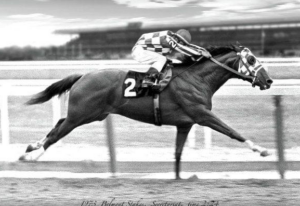
Secretariat earned over $1.3 million on the track — more than $7.7 million today — and commanded a $70,000 stud fee. But his true legacy isn’t measured in money. It lives in the records that refuse to fall, the bloodlines that still dominate, and the way his Belmont replay can make even a casual viewer feel goosebumps.
For those of us who grew up horse‑crazy, Secretariat wasn’t just a racehorse. He was the embodiment of every dream we ever had about what a horse could be.
He still is.
Big Red forever.