Traffic Cones? What’s that About?

A tight cluster of bright orange traffic cones surrounding a fresh sinkhole in a Boston street, with a red car parked nearby.


What’s With All the Cones?

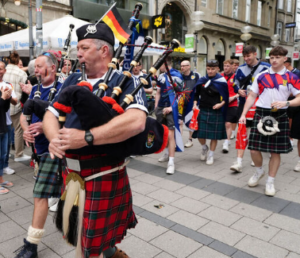
Well, it’s official. Boston has been invaded. Instead of New England, we have become New Scotland. The Tartan Army has managed to bring Boston to its knees without a single shot fired. Nope — they did it with kilts, bagpipes, and a contagious party spirit. They came, they saw, they partied, and Boston loved every minute of it.

But what is it with the traffic cones?

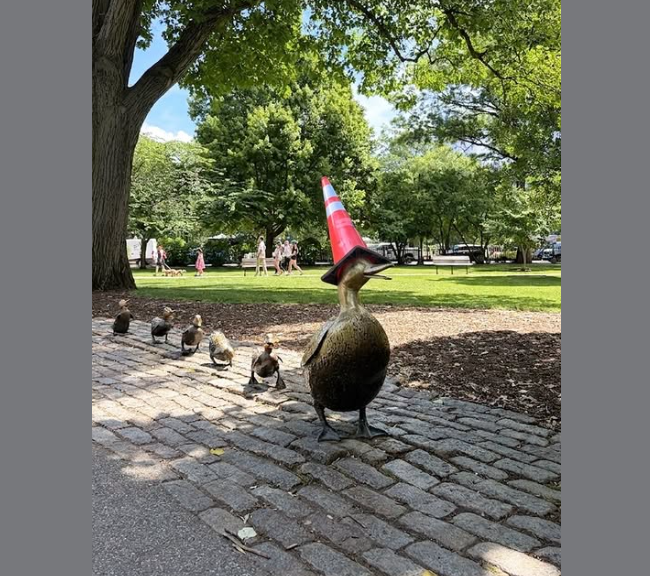
Around here, we have plenty of cones. They sit in potholes, they mark construction, they gather in mysterious clusters on sidewalks. But suddenly they’re adorning every statue and monument in Boston. Even Mrs. Mallard and her brood are not immune.
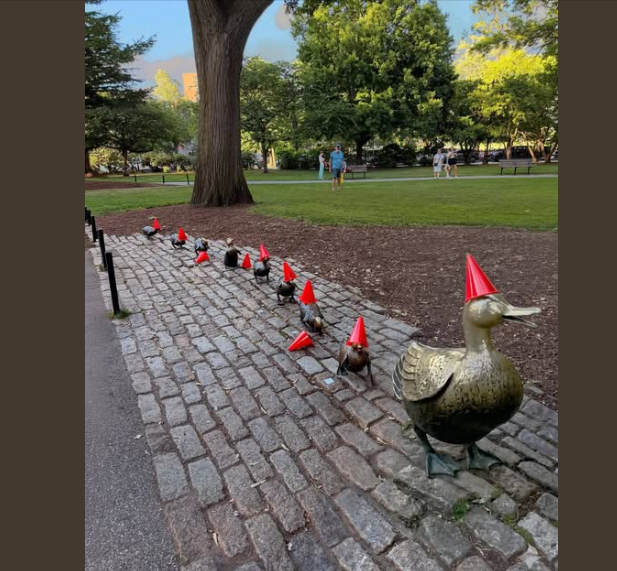
These Scots are like heat‑seeking missiles. They search out and find even the most obscure statues, and let’s face it — Boston has many. From George Washington in the Public Garden to Robert Burns standing proudly in the Fens, they’ve all been “coned.”

But what does it mean? It must mean something, right?

The Real Story Behind the Cones

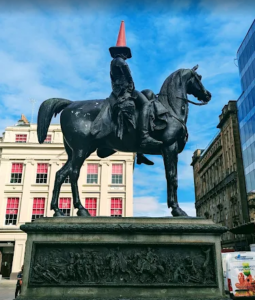
The whole tradition actually goes back to Glasgow in the 1980s, when locals started sneaking a traffic cone onto the head of the Duke of Wellington statue outside the Gallery of Modern Art. Every time the city took it down, someone would climb right back up in the middle of the night and put it on again.

What began as a bit of late‑night mischief turned into a full‑blown tug‑of‑war between the people and the authorities — a tiny, harmless act of rebellion that basically said, “We see your authority, and we raise you one bright orange cone.”

By the 1990s, the cone wasn’t just a prank anymore; it was a symbol of Glasgow’s humor — irreverent, stubborn, and proudly chaotic. When officials tried to raise the statue’s plinth to stop people from climbing it, Glaswegians protested so loudly the plan was scrapped. The cone stayed. It always stays.

And from there the tradition spread across Scotland — Edinburgh, Dundee, Aberdeen — until coning a statue became as Scottish as whisky, bagpipes, and arguing about football — soccer to you, mate.


So welcome to Boston, Tartan Army.

We’ll join your party, drink the beer — it’s our beer after all — dance to your bagpipes, and happily share your cone obsession with our statues.
 

Update

Scotland was defeated in their match with Morocco — a hard‑fought loss. They’ll now move on to face Brazil in Miami on Wednesday, June 24. Sadly, that means it’s time to bid farewell to our lively, outgoing visitors.

And if the cones weren’t enough, the Tartan Army left us with something even better: gratitude. One visitor posted a heartfelt thank‑you to Boston and all of New England, saying how welcomed they felt here. It turns out they didn’t just bring fun and joy — they brought a touch of class.
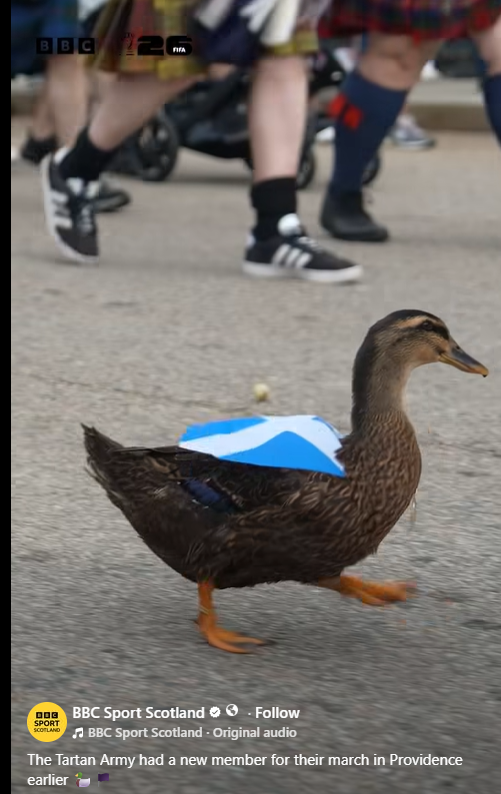
A Wee Mallard in the Tartan Army

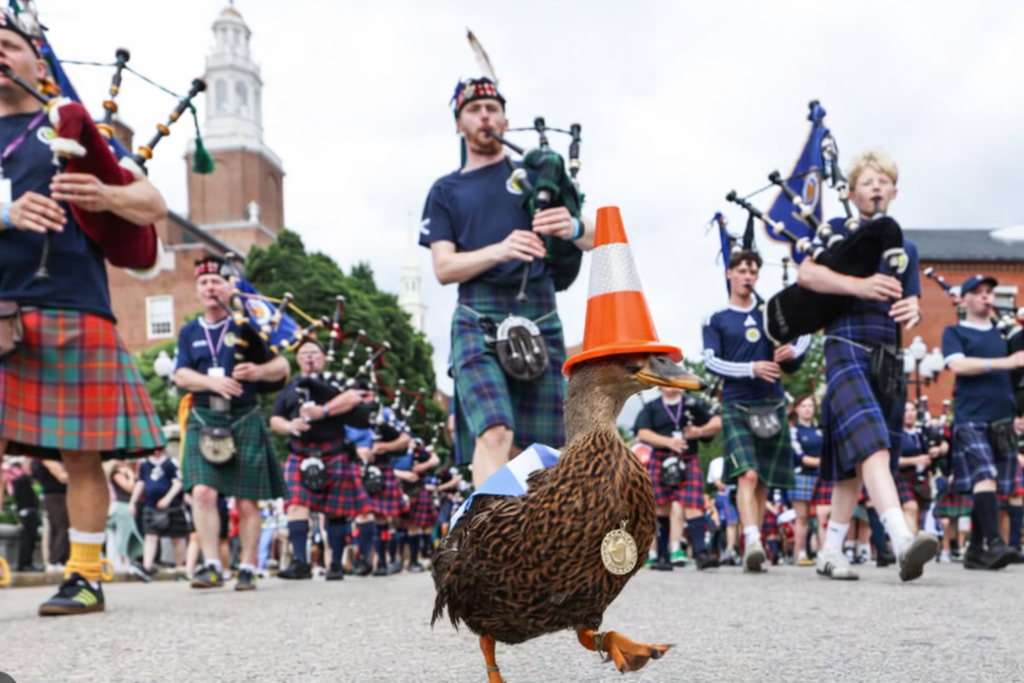
Meanwhile in the heart of the Boston Public Garden, Mrs. Mallard becomes  The Tartan Army’s newest recruit! Jack, Kack, Lack, Mack, Nack, Ouack, Pack and Quack join the festivities.


Even Mrs. Mallard and her brood have joined the Scottish takeover of Boston. Honestly, could it be any other way?

Bronze Mrs. Mallard statue in the Public Garden wearing a traffic cone during the Scottish festivities.

In True Scottish Fashion Mrs. Mallard Donned a cone!

But don’t look now — the Tartan Army has a new recruit. Mrs. Mallard heard the bagpipes and said, ‘Aye, I’m in.’


Bagpipes, Kilts, and a World Cup Win: The Tartan Army Arrives

Boston, the World Cup, and a Surprise Scottish InvasionPlayers from Scotland and Haiti battle for possession in midair during their World Cup match.

A few days ago, I posted an essay on Boston sports and our wonderfully chaotic mix of teams and traditions in Wicked Good Reasons to Love Living in Boston.
>I somehow managed to leave out two things: our Scottish heritage and Boston’s long, stubborn relationship with soccer — or as the rest of the world calls it, football.

Ask any soccer fan and they’ll tell you American football is the upstart, the imitation, the knockoff.
The real thing — and yes, that’s Coca‑Cola’s line — belongs to the rest of the world.

Well, the “real thing” arrived in Boston (okay, Foxborough) on Saturday, June 13, when Scotland beat Haiti 1–0 at Gillette Stadium in their first World Cup match on U.S. soil.

Soccer in Boston: Older Than You Think

Soccer didn’t just show up for the World Cup.
>It’s been here since the 1800s, brought over by Scottish immigrants who played in mill towns, factory yards, and open fields long before anyone thought to build a stadium.

Fast‑forward to 1996:
Robert Kraft — already owner of the Patriots — became the founding investor of the New England Revolution, one of MLS’s ten original clubs. The Revs had a rocky start (including the dubious honor of being the first MLS team to lose to an amateur club), but New England fans stuck with them. Even in the lean years, crowds of 15,000+ proved that soccer wasn’t going anywhere.

June 13: The Cheers Heard ’Round the World

So when the World Cup finally landed at Gillette, Boston showed up — but the Scots showed up louder.

The Tartan Army, Scotland’s legendary fanbase, marched in wearing kilts, waving flags, and playing bagpipes like they were soundtracking their own parade. Young, old, men, women — all proudly tartaned up for the match and for Scottish Heritage Night.

Their cheers didn’t just echo around Foxborough.
>They felt like they traveled the globe — a modern twist on “the shot heard ’round the world,” but this time it was the cheers.

Welcome Back, Soccer

Boston already has Red Sox Nation and Patriots Nation, but on this weekend, the city gained something new:
a joyful, plaid‑covered, bagpipe‑powered visiting nation — the Tartan Army.

And honestly?
They fit right in.

Scottish Update

Boston has officially been adopted by Scotland. Bagpipes on the T, the wave at Fenway, Sweet Caroline sung like it’s a national anthem — and everywhere you look, pure joy. I’m soaking up every second of it.