
What’s With All the Cones?
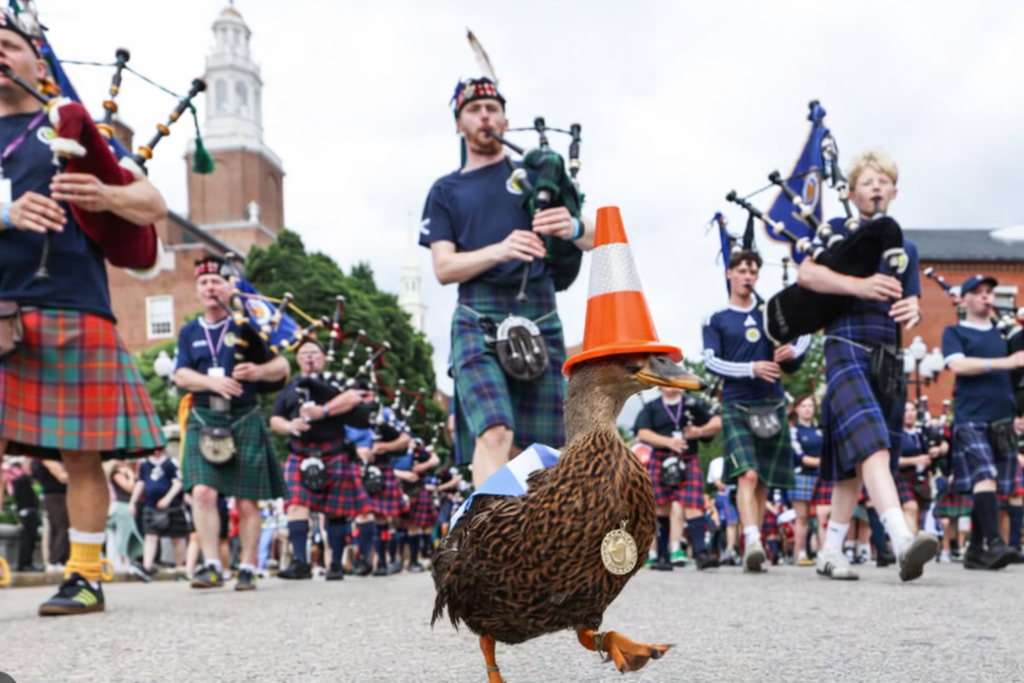
Well, it’s official. Boston has been invaded. Instead of New England, we have become New Scotland. The Tartan Army has managed to bring Boston to its knees without a single shot fired. Nope — they did it with kilts, bagpipes, and a contagious party spirit. They came, they saw, they partied, and Boston loved every minute of it.
But what is it with the traffic cones?
Around here, we have plenty of cones. They sit in potholes, they mark construction, they gather in mysterious clusters on sidewalks. But suddenly they’re adorning every statue and monument in Boston. Even Mrs. Mallard and her brood are not immune.
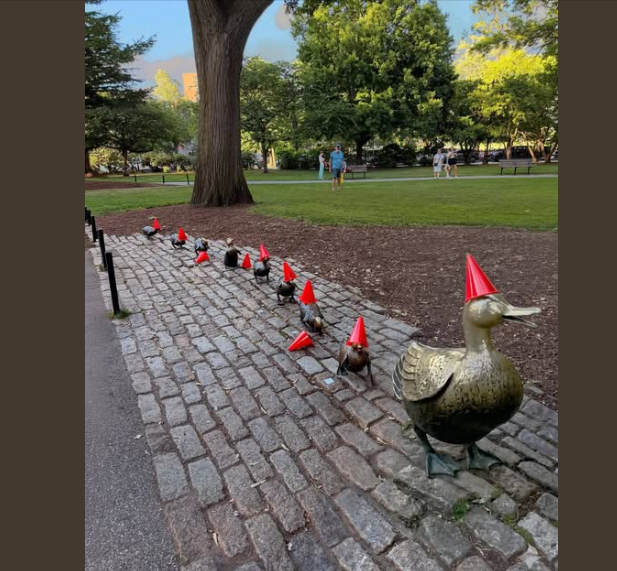
These Scots are like heat‑seeking missiles. They search out and find even the most obscure statues, and let’s face it — Boston has many. From George Washington in the Public Garden to Robert Burns standing proudly in the Fens, they’ve all been “coned.”
But what does it mean? It must mean something, right?
 The Real Story Behind the Cones
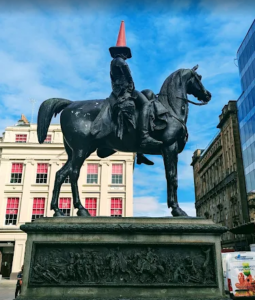
The whole tradition actually goes back to Glasgow in the 1980s, when locals started sneaking a traffic cone onto the head of the Duke of Wellington statue outside the Gallery of Modern Art. Every time the city took it down, someone would climb right back up in the middle of the night and put it on again.
What began as a bit of late‑night mischief turned into a full‑blown tug‑of‑war between the people and the authorities — a tiny, harmless act of rebellion that basically said, “We see your authority, and we raise you one bright orange cone.”
By the 1990s, the cone wasn’t just a prank anymore; it was a symbol of Glasgow’s humor — irreverent, stubborn, and proudly chaotic. When officials tried to raise the statue’s plinth to stop people from climbing it, Glaswegians protested so loudly the plan was scrapped. The cone stayed. It always stays.
And from there the tradition spread across Scotland — Edinburgh, Dundee, Aberdeen — until coning a statue became as Scottish as whisky, bagpipes, and arguing about football — soccer to you, mate.
So welcome to Boston, Tartan Army.
We’ll join your party, drink the beer — it’s our beer after all — dance to your bagpipes, and happily share your cone obsession with our statues.
Update
Scotland was defeated in their match with Morocco — a hard‑fought loss. They’ll now move on to face Brazil in Miami on Wednesday, June 24. Sadly, that means it’s time to bid farewell to our lively, outgoing visitors.
And if the cones weren’t enough, the Tartan Army left us with something even better: gratitude. One visitor posted a heartfelt thank‑you to Boston and all of New England, saying how welcomed they felt here. It turns out they didn’t just bring fun and joy — they brought a touch of class.
LOL I loved that. just harmless fun.
Boston sure will be quiet with the Scots heading back to Scotland.. I just watched a beautiful post from one of our Scotish visitors. He took the time to say Thank you to the people of Boston and New England. That’s classy. Not something you see or hear everyday. I’ll miss them. They sure livened things up around here
I know you’ve already read this post but I just added an update after seeing a FB post thanking Bosotn for it’s hospitality. Here’s what I added
Update
Scotland was defeated in their match with Morocco — a hard‑fought loss. They’ll now move on to face Brazil in Miami on Wednesday, June 24. Sadly, that means it’s time to bid farewell to our lively, outgoing visitors.
And if the cones weren’t enough, the Tartan Army left us with something even better: gratitude. One visitor posted a heartfelt thank‑you to Boston and all of New England, saying how welcomed they felt here. It turns out they didn’t just bring fun and joy — they brought a touch of class.
That was a very gracious of them. Nice to have people that are of the fun and happy variety.
So true. They started it off but next thing we knew we had Vikings on escaltors and Aussies yelling oi oi oi!! The fun was contagious!