A Day Late, But Still Tentacled and Terrific
While hunting for today’s blog inspiration, I stumbled upon World Octopus Day. Technically, it was yesterday—but I’ve never let a calendar dictate my curiosity. And let’s be honest, octopuses (yes, that’s the correct plural!) are far too fascinating to be confined to a single day.
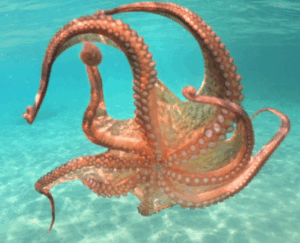
Stock photo
My Wild Encounter
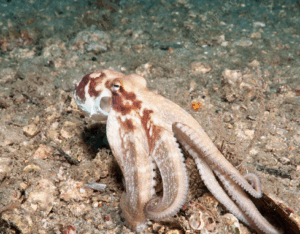
Stock photo
I’ve seen plenty of octopuses in aquariums—usually curled into a corner, looking more like a forgotten sock than a sea creature. But everything changed the day I met one in the wild. I was snorkeling off Maui, surrounded by fellow swimmers gushing over a sea turtle I somehow missed. My attention, however, was captured by a tiny, energetic octopus darting through the reef. Unlike its aquarium cousins, this one was a flurry of motion and mystery. I’ll take that little cephalopod over a turtle any day.
Brains Beyond the Head
Octopus intelligence isn’t just impressive—it’s radically different from our own. Instead of relying on a single brain, these creatures distribute their neurons across their bodies. In fact, two-thirds of their roughly 500 million neurons are located in their arms, allowing each limb to operate semi-independently.
Recent studies show that each arm contains a segmented nerve cord, with clusters of neurons that can control movement, react to stimuli, and even “taste” the environment through specialized suckers. This decentralized system lets octopuses respond quickly and precisely to their surroundings—whether they’re exploring a crevice or escaping a predator. It’s a neural architecture so unique that scientists are studying it to inspire advances in soft robotics and artificial intelligence.
A Glimmer of Self-Awareness
And if that wasn’t enough, octopuses may also possess a sense of self. In a groundbreaking experiment, researchers used a version of the “rubber hand illusion”—a test that tricks the brain into adopting a fake limb as its own. When scientists stroked a hidden real arm and a visible fake arm simultaneously, octopuses reacted defensively when the fake was pinched, as if their own body had been harmed.
This response suggests that octopuses can integrate visual and tactile information to form a mental image of their bodies—a trait once thought exclusive to mammals. It’s a hint that these alien-like animals might experience a form of body ownership, nudging them closer to our understanding of consciousness.
Final Thoughts from the Reef
Octopuses are more than eight-armed enigmas—they’re storytellers of the sea, weaving intelligence, adaptability, and mystery into every ripple. My brief encounter off Maui reminded me that wonder often hides in the smallest corners of nature. Whether tucked into a reef or curled in an aquarium tank, these creatures invite us to rethink what it means to be aware, alive, and astonishingly complex.
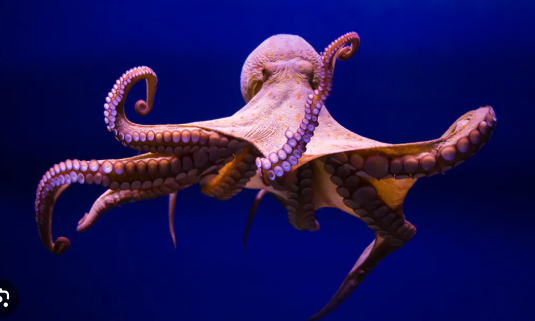
Georgia Aquarium photo
Affiliate Spotlight: Bring the Ocean Home
If your curiosity about octopuses has you dreaming of underwater worlds, why not start with a home aquarium? Whether you’re a beginner or a seasoned aquarist, a well-designed tank can become a tranquil centerpiece—and a gateway to appreciating marine life up close.
🪸 Explore top-rated home aquariums on Amazon
(affiliate link)
Disclosure: As an Amazon Associate, I earn from qualifying purchases. This helps support my blog and the stories I share—thank you for diving in with me!