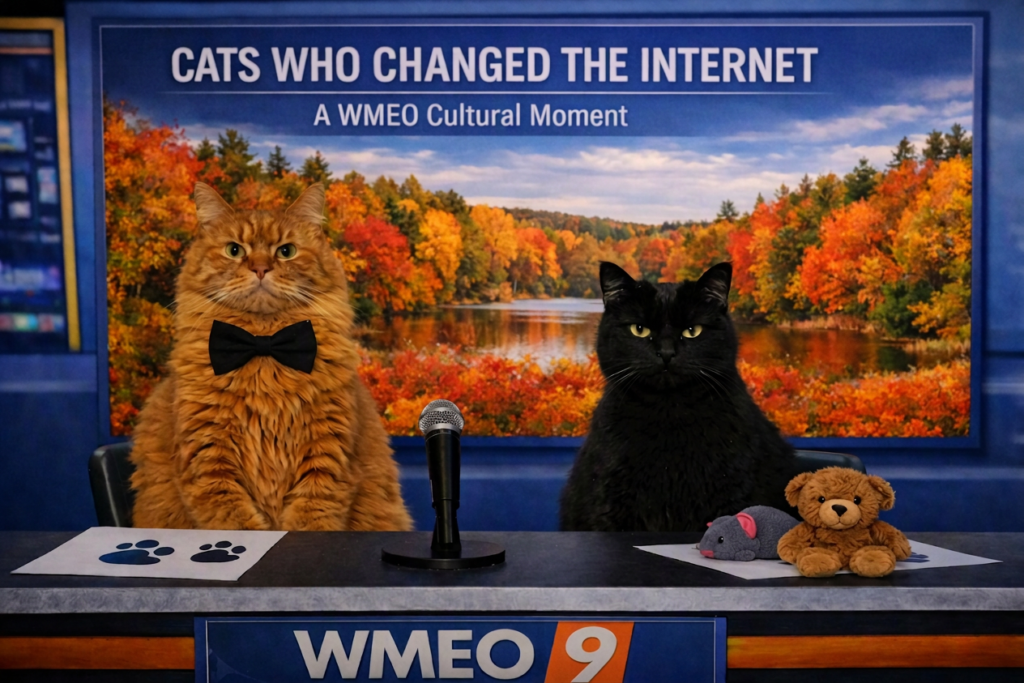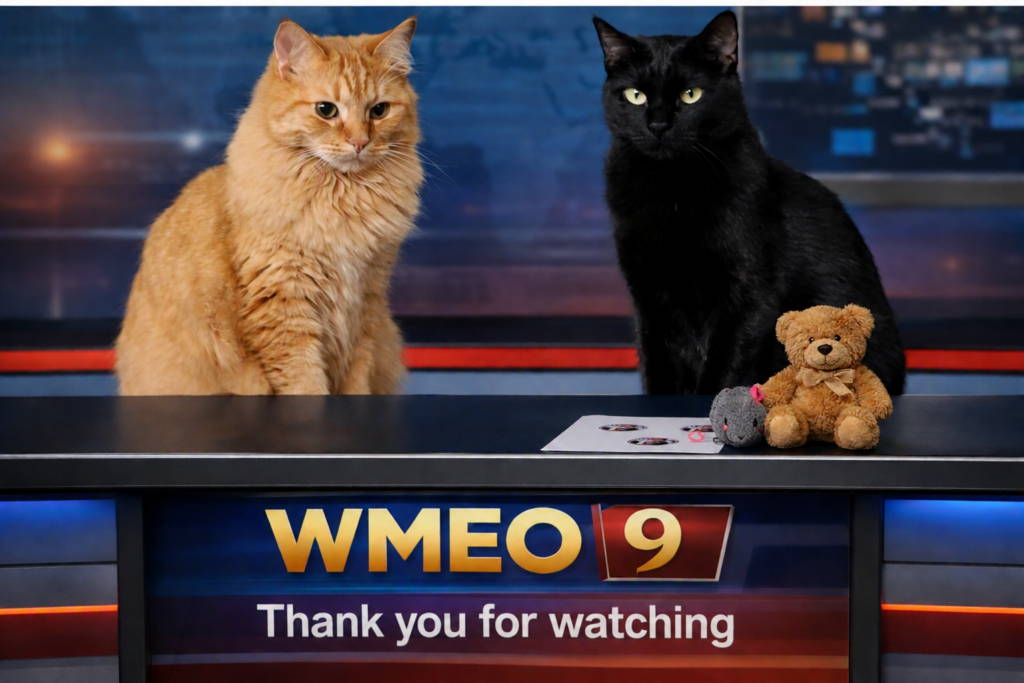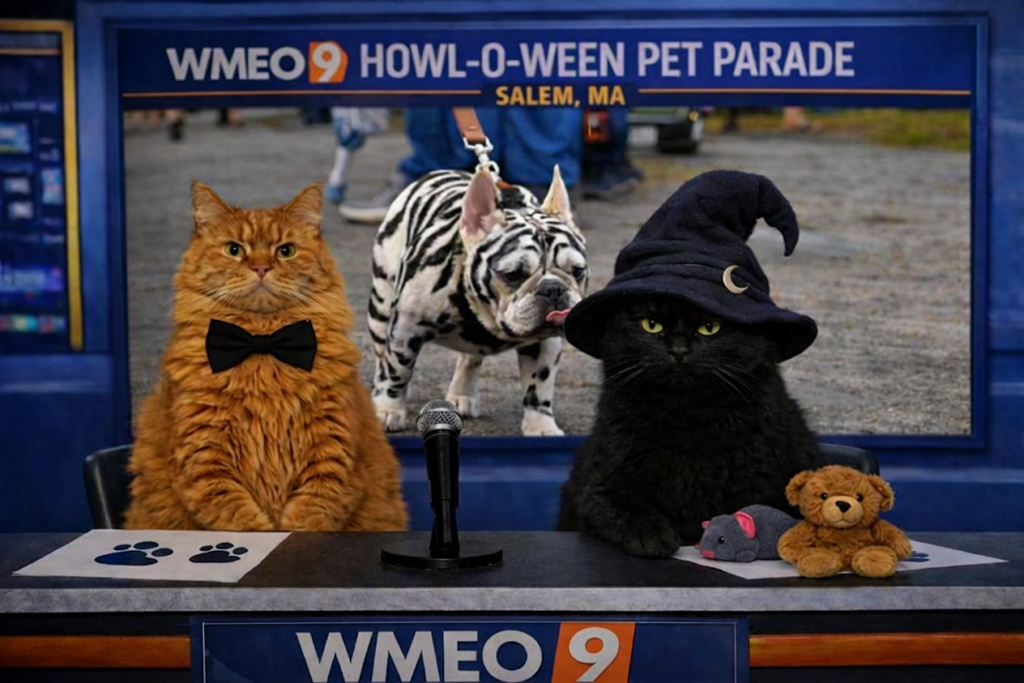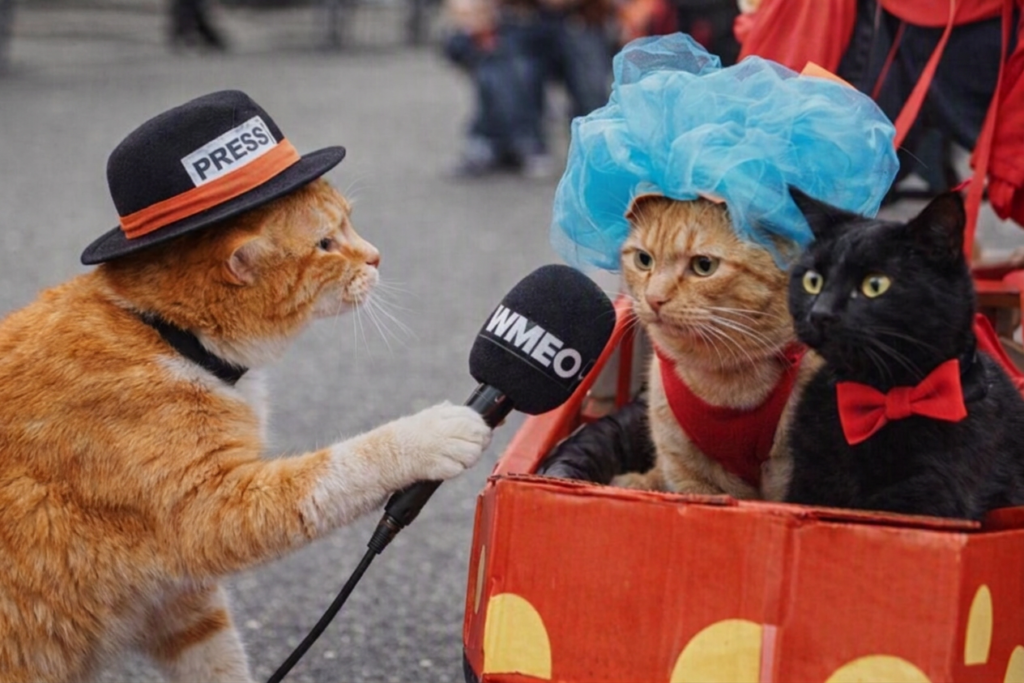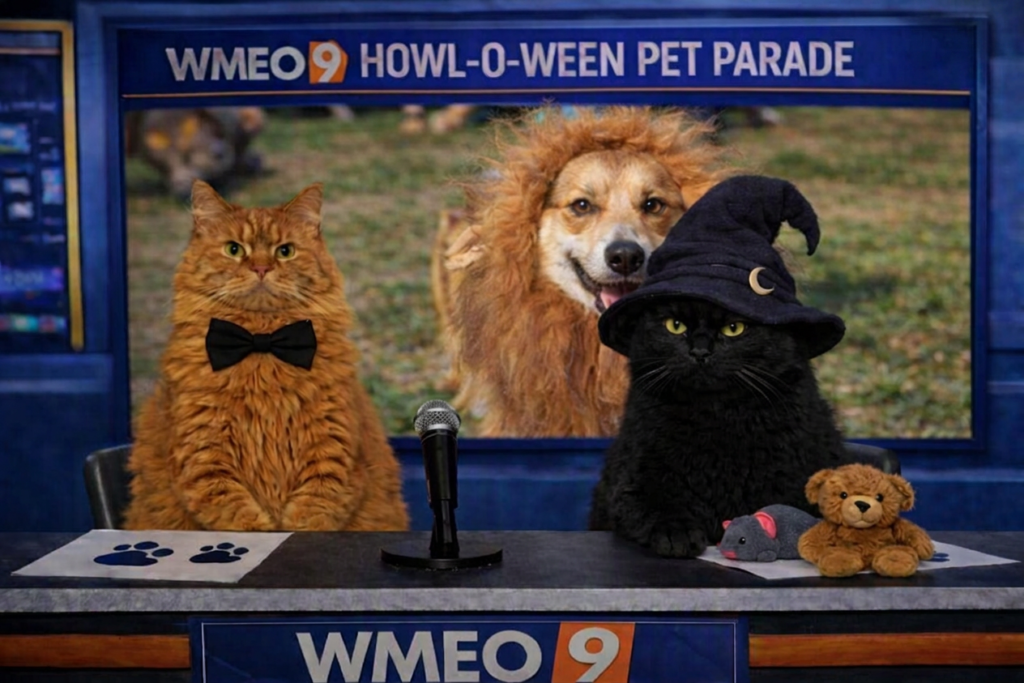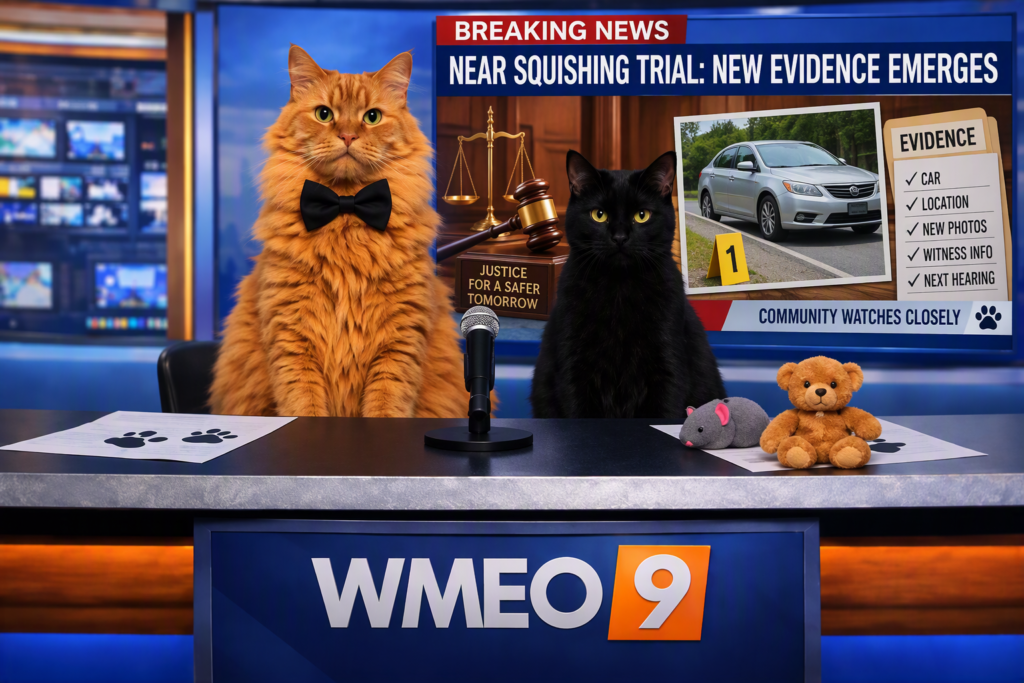
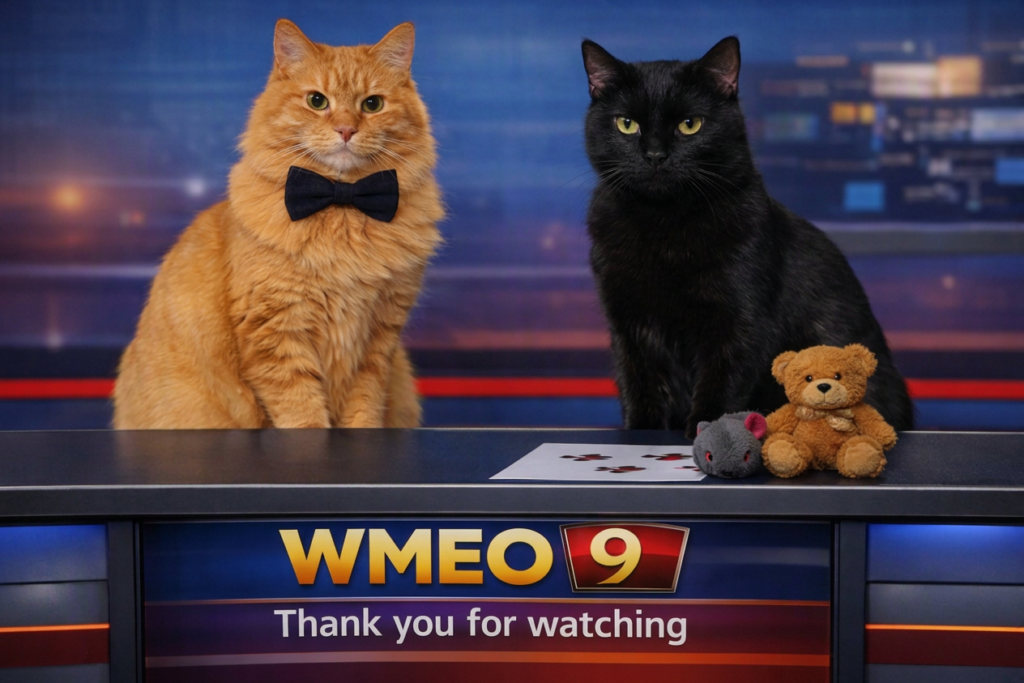
This is a WMEO Special Report: We Meow – You Listen
WMEO Investigates: High-Profile Near-Squishing Trial
Taunton, MA – Testimony resumed today in the highly publicized “Near-Squishing Trial,” where local orange cat and beloved WMEO field correspondent Pumpkin Spice claims he narrowly escaped becoming a hood ornament during an incident that has divided the neighborhood for months.
At issue is whether the defendant, identified in court records only as Karen Tabby, recklessly operated a motor vehicle, nearly striking Pumpkin Spice as he conducted what he described as “important journalistic business.”
The defendant has pleaded not guilty to all charges.
The courtroom was packed before sunrise. Several cats occupied the front row, while a contingent of squirrels gathered outside holding signs reading, “Justice for Pumpkin” and “Slow Down for Wildlife.”
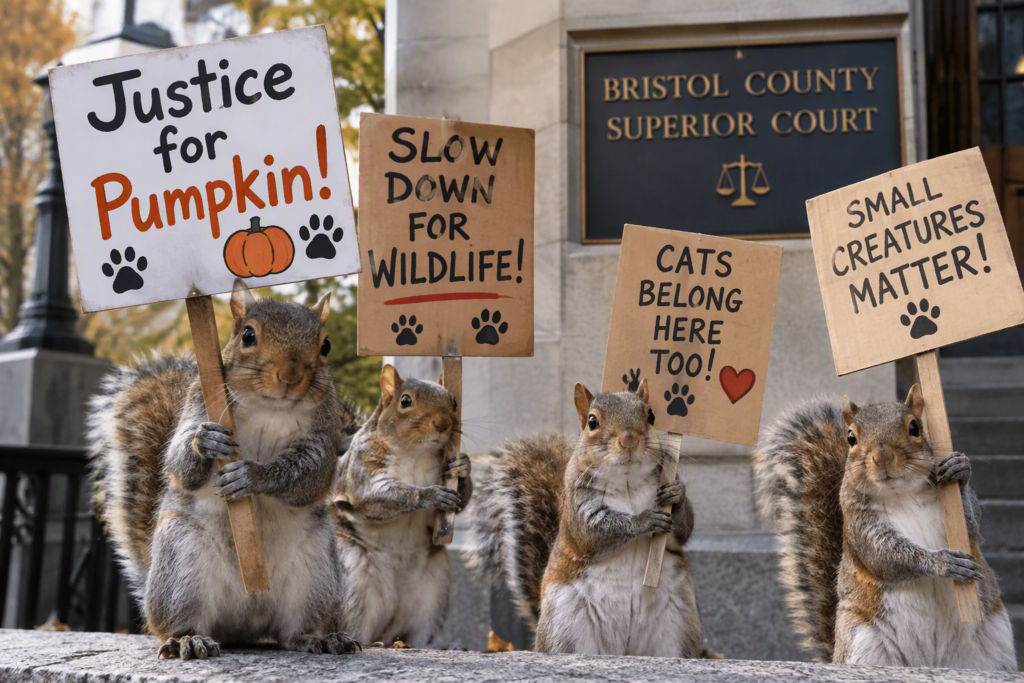
WMEO Exclusive: Demonstrators rally outside the courthouse Today as the Near-Squishing Trial enters its second day. The squirrels declined to reveal who paid for the signs.
Pumpkin Spice Recounts the Incident
Taking the stand shortly after 10 a.m., Pumpkin Spice calmly recounted the events of the day.
“I was performing a routine inspection of a suspicious leaf,” he testified. “The leaf had been moving erratically and warranted further investigation.”
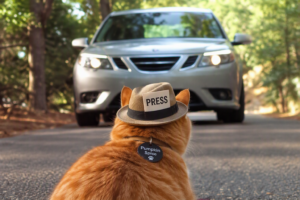
According to Pumpkin Spice, he had nearly reached the center of the driveway when a sedan appeared.
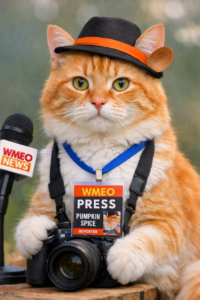
“The vehicle accelerated toward my position,” he said. “Frankly, it was terrifying.”
When asked how fast the car was traveling, Pumpkin Spice replied, “Approximately 900 miles per hour.”
Defense attorneys immediately objected.
The judge sustained the objection and reminded the witness that mathematics still applies in Massachusetts.
The prosecution then introduced grainy security camera footage that allegedly captured the incident.
For more than three hours, jurors examined a blurry image that appeared to show either a cat, a pumpkin, a squirrel, or what one expert witness described as “possibly a particularly aggressive leaf.”
Courtroom tension increased when the defense called Oscar the Labrador.
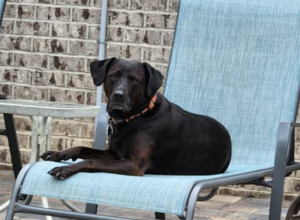 Oscar testified that he witnessed the event from a nearby lawn chair.
“The car wasn’t even moving,” Oscar said. “Everyone’s being dramatic.”
Under cross-examination, however, Oscar admitted he had been asleep for most of the afternoon.
The prosecution characterized his testimony as “less than reliable.”
In perhaps the day’s most dramatic moment, the state called an eyewitness squirrel known as Peanut.
Peanut claimed Pumpkin Spice had performed “an impressive sideways jump” moments before the vehicle reached him.
“It was incredible,” Peanut testified. “Like something out of an action movie.”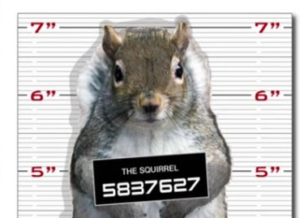
The defense attempted to discredit the squirrel by noting several prior convictions involving bird-feeder theft.
Peanut responded by invoking the Fifth Amendment.
Community Awaits a Verdict
Outside the courthouse, residents remained sharply divided.
Some insist Pumpkin Spice is a courageous survivor.
Others believe the entire controversy has been exaggerated.
“Every year we argue about this cat,” said one local resident. “Last October he reported being chased by a decorative scarecrow.”
Meanwhile, Pumpkin Spice appeared unfazed by the attention.
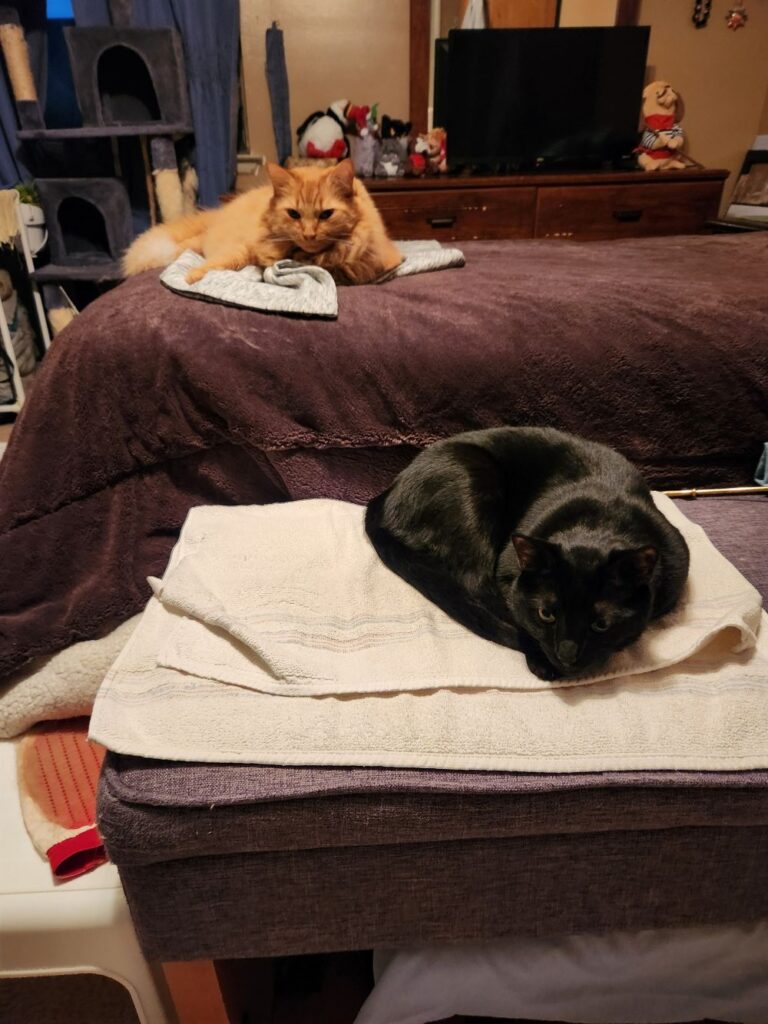
During a recess, he was observed napping on a court document later identified as an important piece of evidence.
Proceedings are expected to continue throughout the week.
Legal analysts predict the jury may need additional time to review footage, hear expert testimony regarding driveway physics, and determine whether the defendant’s vehicle actually moved at all.
If convicted, Karen Tabby could face substantial penalties, including mandatory driving classes, community service, and a permanent ban from operating motor vehicles in areas frequented by orange cats.
Pumpkin Spice offered a brief statement before leaving the courthouse.
“I stand by my testimony,” he said. “I know what I saw.”
The leaf in question declined to comment.
Developing story. Stay with WMEO for continuing coverage.
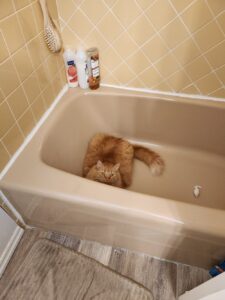 My bladder insists on a bathroom trip around 5 AM. I tiptoe in, trying not to disturb the pile of fur on the floor, but inevitably he follows… and hops into the bathtub. And refuses to get out. Fine. Stay there. But as soon as I leave to go back to bed, the crying starts — a steady little meow‑meow‑meow that echoes down the hallway.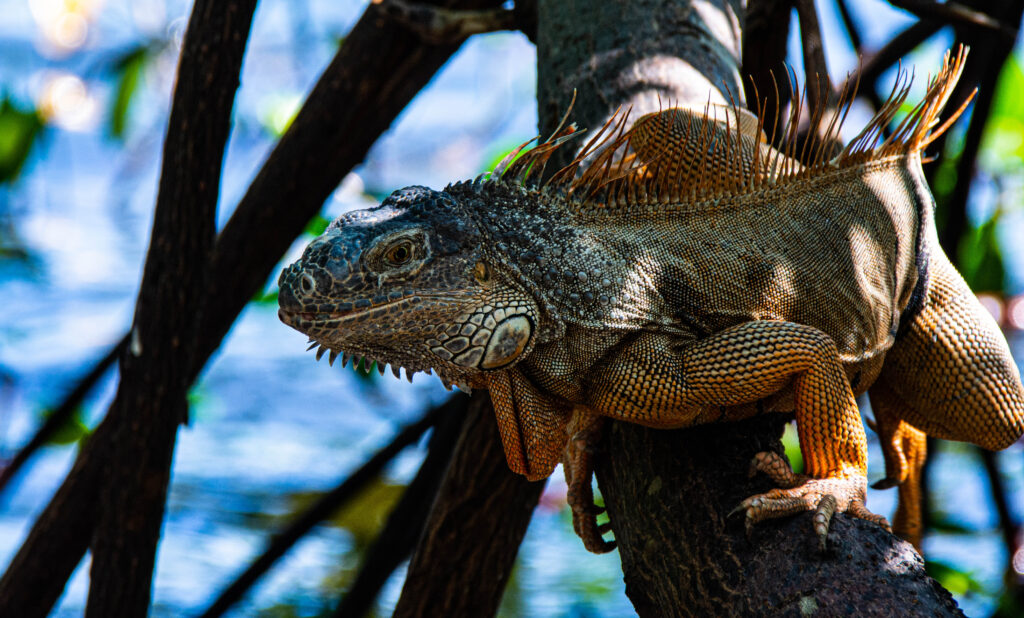
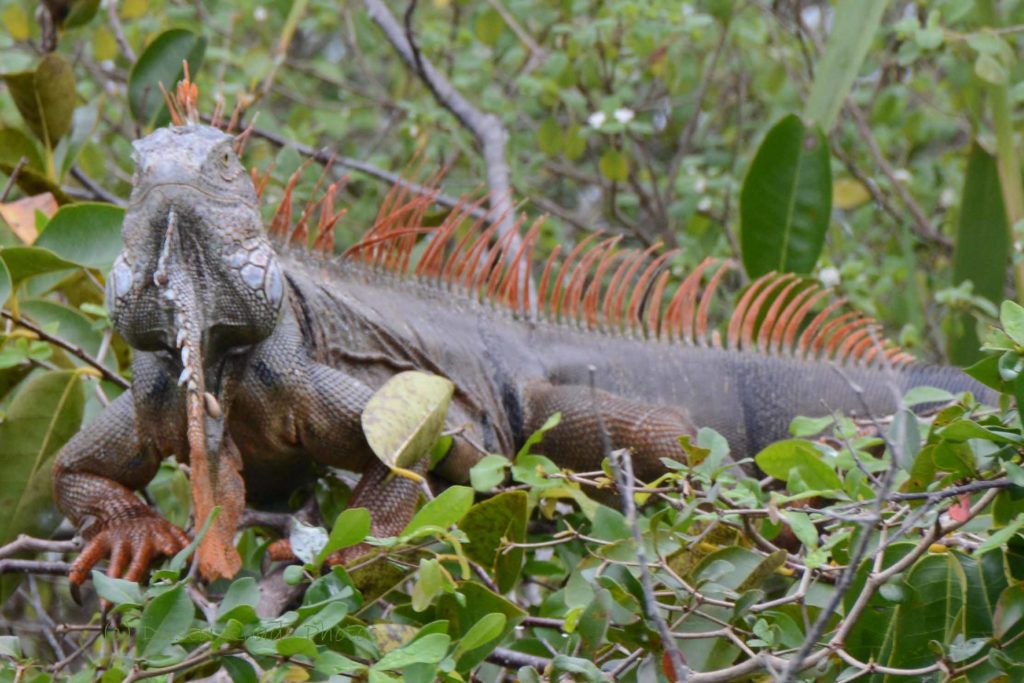
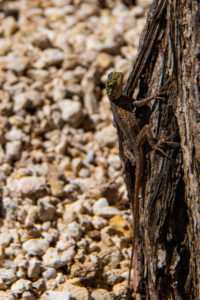 🦎 Anoles: Tiny Speed Demons
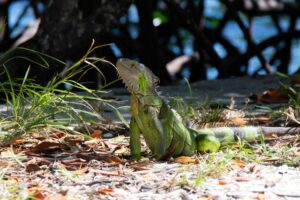 the iguana population — and wow, did they make an impression.
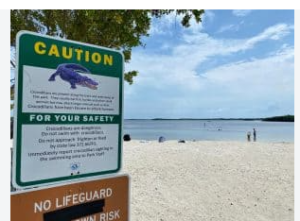 Of course, the biggest lizards in the area weren’t iguanas at all — they were alligators. Signs everywhere warned visitors not to swim with them, but the park still had a roped‑off swimming area, and plenty of people went in and out of the water like it was no big deal.