Why I Might Just Stay Put in Massachusetts


3 Reasons Why Massachusetts Might Still Be the Best Place to Retire

After another long snowstorm, I stopped and asked myself why I wanted to leave a state I’ve lived in for more than fifty years. I hate the cold now. Traffic makes simple day trips feel impossible. And I’ve listened to too many people who left with a grudge and want company. But when I looked past the frustration, I remembered why I stayed so long—and why staying might not be so bad.


Weather and Natural Beauty

Massachusetts gives you four real seasons. Winter drags, but spring brings color and birdsong. Summer offers beaches and warm nights. Fall steals the show with bright leaves and crisp air. The state packs a lot into a small space: coastline, forests, mountains, islands, and quiet towns. Many places also come with a story, which adds charm to every trip.


A Lifestyle Full of History and Culture

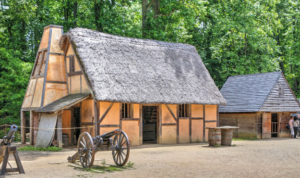
If you love history, this state delivers. The Pilgrims, the Revolution, the witch trials, and so many writers and thinkers left their mark here. You can walk through centuries in a single afternoon. Museums, theaters, galleries, and festivals fill the calendar. And sports? People here treat their teams like family. It’s loud, loyal, and part of the culture.

Boston Marathon


Quality of Life That Works for Retirees

Massachusetts isn’t cheap, but it offers strong benefits. Social Security isn’t taxed. Healthcare ranks among the best in the country. Smaller towns—especially west of Boston—cost less and are easy to walk. Locals may seem blunt, but they protect their communities and welcome people who respect them. Diversity isn’t just accepted here. People defend it.

Wicked Boston said it best when they posted this:


Massachusetts has its flaws. Winter is long, and traffic tests your patience. But the state also offers beauty, history, culture, and excellent healthcare. After fifty years, maybe there’s a reason I never packed up and left.

Where do you think is the best place to retire—and why?

St. Patrick’s Day in New England


St. Patrick’s Day in New England: Where Tradition, Parade Routes, and a Whole Lot of Green Collide

Why St. Patrick’s Day Hits Different Up Here

In most parts of the country, St. Patrick’s Day is a fun little holiday—wear something green, maybe have a beer, maybe listen to a fiddle tune or two. But in New England? It’s practically a season. The Irish roots run deep here, especially in Boston, where St. Patrick’s Day isn’t just a date on the calendar—it’s a cultural event, a family tradition, and sometimes a political lightning rod.

Growing up around here, you learn early that March 17th is not to be taken lightly. The parades, the music, the food, the crowds, the weather (which can be anything from sunshine to sideways sleet)—it’s all part of the charm. And even when the parade gets tangled up in local politics, the spirit of the day never really fades. New Englanders are nothing if not persistent.

A Little History, Because We’re Nothing If Not Thorough

St. Patrick himself wasn’t Irish by birth, but he became the patron saint of Ireland after spreading Christianity across the island in the 5th century. Over time, March 17th became a day of remembrance, celebration, and—eventually—green everything.

But here’s the twist: St. Patrick’s Day as we know it is actually more American than Irish. Irish immigrants in cities like Boston and New York turned the holiday into a public celebration of identity, resilience, and community. The first recorded St. Patrick’s Day parade in the U.S. happened in the 1700s, and Boston has been proudly carrying the torch ever since.

Today, the South Boston St. Patrick’s Day Parade is one of the biggest in the country. Bagpipes, marching bands, veterans’ groups, dancers, floats—you name it, it’s there. And yes, every few years the parade organizers and the city find something new to argue about, but that’s just part of the tradition at this point. If New Englanders aren’t debating something, are we even awake?

The New England St. Patrick’s Day Experience

There’s a certain rhythm to the day around here:

  • Corned beef and cabbage (which, fun fact, is an American invention—but don’t tell anyone’s grandmother).
  • Irish soda bread that ranges from “heavenly” to “doorstop,” depending on the baker.
  • Green everywhere, from hats to hair to the Charles River (Chicago dyes theirs; we just let ours stay its natural shade of questionable).
  • Bars packed by noon, because it’s tradition, not poor planning.
  • Weather roulette, because March in New England likes to keep us humble.

And through it all, there’s this wonderful sense of community—neighbors greeting each other, families gathering, and everyone claiming at least a little Irish heritage for the day.

A Toast to March in Massachusetts

With the Ides of March behind us and yesterday’s Plymouth Rock post already up on the site, St. Patrick’s Day rounds out a surprisingly festive stretch of mid‑March. It’s a reminder that even in the tail end of winter, New England knows how to celebrate—loudly, proudly, and with plenty of green.

And after today’s festivities, who knows where March will take us next?


Back to Boston, Baby


Vikings, Chowda, and Josh Gates’ Wild New England Detour

Writing about Boston’s quirks and accents made me think of an episode of Expedition Unknown with host Josh Gates, a Massachusetts native son. The episode I’m thinking of—“Viking Secrets” (Season 4, Episode 1), which originally aired in December 2017—was packed with Boston jokes and New England flavor. One bit in particular, a hilarious monologue Josh delivered about coming home to Boston, aired once or twice and then vanished from later edits.

I don’t remember every word after all these years, but the spirit of it stuck with me. What follows isn’t a transcript — it’s my best memory of the tone, the rhythm, and the jokes he tossed out in that moment.


🦞 “I’m headin’ to Boston, baby—my home town.”

Josh delivered that line with the kind of grin only a true Boston kid can pull off. And then he launched into a hometown riff that hit every note:

“I’m headin’ to Boston, baby — my home town.
Nothin’ like comin’ back to a place where you can walk down the street wearin’ a giant foam lobstah hat and nobody bats an eye. Half the time someone’ll stop ya just to ask if the packie had ’em on sale.

And the sports, my God. You step off the plane at Logan and within five minutes you’ve got two guys in Brady and Ortiz jerseys arguin’ about which championship parade had bettah weathah.

The seafood? Forget it. You can’t throw a rock without hittin’ a place claimin’ they’ve got the best chowda in New England. And honestly? They’re not wrong.

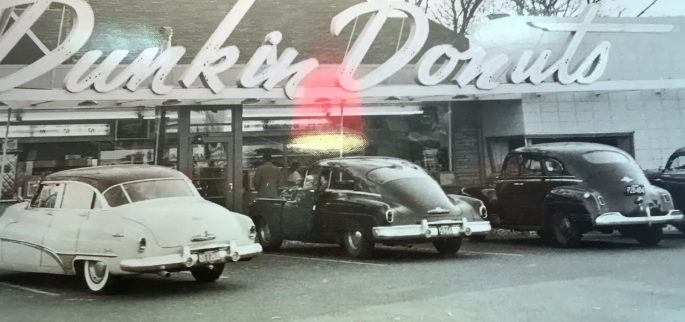
But the real sign you’re home? Dunkin’. There’s one on every cornah, like they’re multiplyin’. You leave for five minutes and suddenly there’s a new one across from the old one, just in case you needed backup.

So yeah — Vikings, longships, ancient mysteries… but first I’m grabbin’ an iced regulah and maybe swingin’ by Kowloon. You can’t staht an expedition on an empty stomach.”

It was Boston in a nutshell—accent, attitude, seafood, sports, and caffeine. And then, as quickly as it appeared, the riff disappeared from later versions of the episode. Lost media, Boston edition.


🌳 Comm Ave, Memory Lane, and the Boston That Stays With You

Hearing Josh talk about coming home made me think about my own Boston moments. Walking down

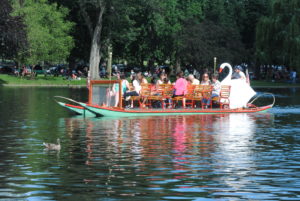
Swan boats in the public garden boston

two Swan Boats 2017

Comm Ave in the fall, leaves crunching underfoot. The Public Garden swan boats. The way the city glows at dusk, all brownstones and lamplight. The stubborn pride that makes Bostonians argue about everything from sports stats to the correct way to pronounce “car.”

(For the record: cah.)

Boston isn’t just a place—it’s a personality. And Josh taps into that every time he comes back.


Is it a Viking tower or a windmill🏰 From Chowda to the Newport Tower: New England Mysteries

Once Josh finished his iced regulah, he headed south to Rhode Island to investigate the Newport Tower—one of New England’s most persistent historical head‑scratchers.


Is it:

  • A colonial windmill?
  • A Viking structure?
  • A Portuguese relic?
  • A medieval tower built by someone who got very lost?

Depends on who you ask.

Josh did what Josh does best: climbed it, measured it, poked it, and interviewed everyone from historians to enthusiastic theorists. The result? A delightful blend of science, speculation, and “well, it could be Vikings… maybe.”


🦈 Nomans Land: Where Josh Gates Nearly Becomes Shark Chowda

But nothing—and I mean nothing—beats the segment where Josh heads to Nomans Land, the forbidden island off Martha’s Vineyard.

This place has:

  • Rough seas
  • Unexploded WWII bombs
  • Restricted access
  • A coastline patrolled by great white sharks

Naturally, Josh decides this is the perfect place to investigate Viking legends.

Watching him bounce around on a boat in choppy water while the captain casually mentions, “Oh yeah, this whole area is full of unexploded ordnance,” is peak Expedition Unknown. Add in the sharks circling like they’re waiting for him to drop a snack, and it becomes comedy gold.

I laughed out loud then, and I still do now. Only Josh could turn “bombs and sharks” into a charming travelogue.


⚓ Why This Episode Feels So Boston

It’s not just the accent or the Dunkin’ jokes. It’s the spirit of the thing.

Boston—and New England in general—is a place where:

  • History is always underfoot
  • Mystery is always around the corner
  • The ocean is always waiting to surprise you
  • And the locals are always ready to argue about something

Josh captured that perfectly. Even when the intro got cut, the episode still carries that unmistakable New England energy: a mix of curiosity, grit, humor, and “yeah, we’ll go check out the island full of bombs, why not?”


📝 Closing Thoughts

Revisiting this episode reminded me why I love Boston—and why Josh Gates remains one of my favorite storytellers. He gets it. He gets us. Josh knows that New England isn’t just a backdrop; it’s a character.

And even if that original Boston riff is lost to the editing room floor, it lives on in the hearts of those of us who heard it the first time and thought:

“Yep. That’s home.”

Boston Slang: A Survival Guide for Anyone Visiting the Hub


Boston has its own rhythm, its own attitude, and absolutely its own vocabulary. After fifty years in New England, I’ve learned that half the fun of living here is listening to the way people talk—and the other half is watching tourists try to decode it. So if you’re planning a trip to the Hub, or you’ve ever wondered why a Bostonian told you to “bang a U‑ey” near the “packie,” this one’s for you.


🗣️ Everyday Bostonisms

Boston slang isn’t just words—it’s a whole personality. These are the phrases you’ll hear before you’ve even finished your first Dunkin’ coffee.

  • Wicked — the Swiss Army knife of intensifiers. Wicked cold, wicked good, wicked late.
  • Bang a U‑ey — make a U‑turn, usually in a place that does not officially allow U‑turns.
  • Clicker — the TV remote.
  • Packie — the liquor store, not a package drop-off.
  • The T — the subway system, even though half of it is buses.
  • Kid — a friendly greeting, even if the person is 47 and wearing a suit.

Boston English is less about grammar and more about attitude. If it sounds like it should be shouted across a parking lot, it probably is.


🚗 Driving & Directions

Boston driving is a sport, a tradition, and occasionally a test of faith. The slang reflects that.

  • Storrowed — when a truck hits a low bridge on Storrow Drive. Happens every September like clockwork.
  • The Pike — the Massachusetts Turnpike.
  • Southie, Dot, Eastie — South Boston, Dorchester, East Boston.
  • The Big Dig — the tunnel project we’re still complaining about twenty years later.

If you can navigate Boston without GPS, congratulations—you’re officially a local.


🍽️ Food & Drink Terms

Boston’s food vocabulary is its own little universe.

  • Frappes — milkshakes with ice cream.
  • Jimmies — chocolate sprinkles.
  • Hoodsie — those little ice cream cups with the wooden spoon.
  • Steamers — soft-shell clams.
  • Scrod — whatever white fish the restaurant has that day.

If you order a “milkshake” expecting ice cream, that’s on you. Boston warned you.


🧥 Weather & Clothing

The weather here has personality, so of course the language does too.

  • Nor’easter — a storm that shuts down everything except Dunkin’.
  • Tennis shoes — any athletic shoe, regardless of sport.
  • Mud season — the fifth New England season between winter and spring.

nor’ easter

If someone says “wicked windy,” just grab a jacket and don’t ask questions.


🏙️ Attitude & Local Flavor

This is where Boston really shines.

  • Pissa — amazing, awesome, top‑tier.
  • Smaht — smart, usually said sarcastically.
  • Skeevy — sketchy or gross.
  • No big whoop — not a big deal.

Boston slang is blunt, efficient, and usually delivered with a side of dry humor.


🧭 Place Names Tourists Always Butcher

If you can pronounce these correctly, you’ve earned honorary Boston status.

  • Worcester — WUSS‑tah
  • Gloucester — GLOSS‑tah
  • Peabody — PEE‑buh‑dee
  • Haverhill — HAY‑vrill
  • Leicester — LEST‑ah
  • Copley — COP‑lee
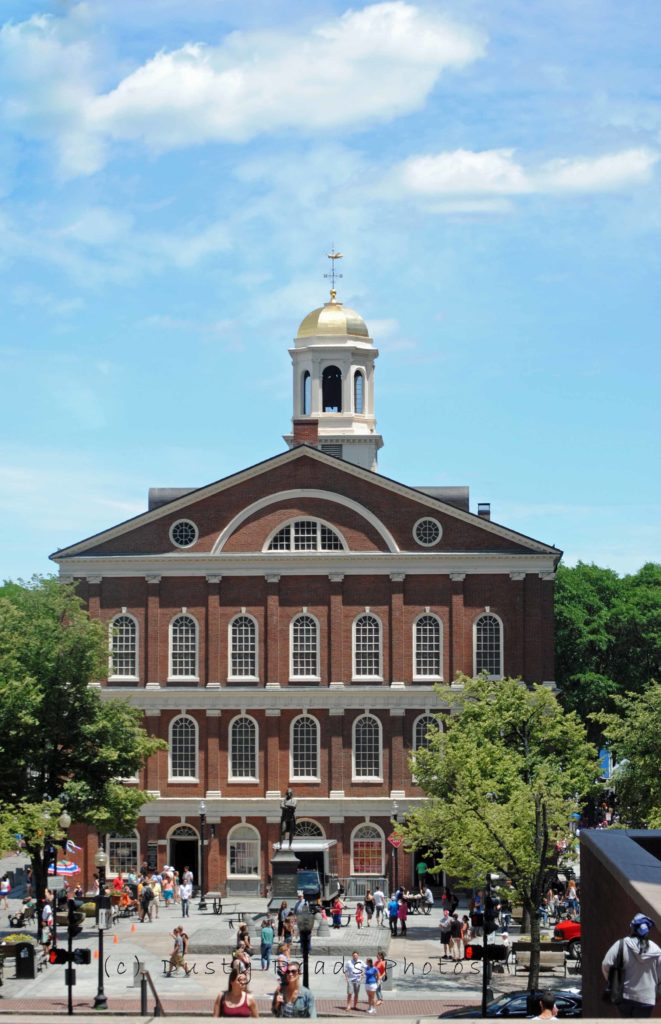
  • Faneuil — FAN‑yul

If you pronounce them phonetically, don’t worry—locals will correct you before you finish the word.


Final Thoughts

Boston slang is more than vocabulary—it’s a cultural handshake. It’s the sound of Red Line delays, Dunkin’ drive‑thrus, and neighbors yelling across triple‑deckers. It’s sharp, funny, and proudly unique, just like the city itself.

And if you ever get confused, just remember: when in doubt, it’s probably wicked something.


New England vs the World- a Linguistic Nightmare


New England Just Can’t Get With the Rest of the World

Or: Why Ordering a Simple Drink Can Feel Like a Pop Quiz

The Goulash That Started It All

A few days ago, I mentioned the great Massachusetts goulash mystery — how my simple mix of hamburger, tomatoes, and macaroni somehow shares a name with a paprika-heavy Hungarian stew, a baked casserole, and something called American Chop Suey. After fifty years in New England, you’d think I’d have the naming conventions down.

But no. Because if there’s one thing New England loves, it’s doing things its own way. And that includes what we call everyday foods and drinks.


Tonic, Soda, Pop… and Now “Soft Drink”

Ask for a soda in most of the country and you’ll get a Coke, a Pepsi, or whatever fizzy thing you’re after.

Ask for a tonic in New England and you might get a raised eyebrow — unless you’re talking to someone over 60, in which case they’ll hand you a Pepsi without blinking.

Meanwhile, pop is strictly a Midwest thing. If you say “pop” in Massachusetts, people will assume you’re talking about your father, not your beverage.

And then there’s soft drink, the polite, slightly formal cousin that sounds like it belongs in a 1950s diner or a doctor’s office. Technically it means any non‑alcoholic carbonated drink, but around here it’s more of a background character than a star.

So the full New England beverage glossary now looks like this:

  • Soda — the modern default
  • Tonic — the old-school Massachusetts classic
  • Soft drink — the formal, old-fashioned option
  • Pop — something your father is called, not something you drink

A newcomer doesn’t stand a chance.


The Frappe vs. Milkshake Debate (Now Featuring Smoothies)

This one still gets me.

In most of the country, a milkshake has ice cream. Thick, creamy, slurp-it-through-a-straw-if-you’re-lucky ice cream.

In New England?
Nope.

  • A milkshake is just flavored milk.
  • A frappe (pronounced frap, not frap-pay) is what the rest of the world calls a milkshake — because it actually has ice cream in it.
  • A smoothie is the healthy overachiever of the group — fruit, yogurt, ice, maybe spinach if you’re feeling virtuous. It sounds like it should be in the same category, but it absolutely is not.

So yes, you can order a chocolate milkshake here and get something the consistency of chocolate milk. And yes, it still surprises me.


The Grinder vs. Sub vs. Hoagie Situation

If you’re new to New England and someone offers you a grinder, don’t panic — it’s not a tool, it’s lunch.

  • Grinder — New England
  • Sub — Most of the U.S.
  • Hoagie — Philadelphia
  • Hero — New York

Same sandwich. Four names. Zero agreement.


Sneakers? Nope. We Wear “Tennis Shoes.”

Even if we haven’t touched a tennis court since the Nixon administration, New Englanders will still call all athletic shoes tennis shoes.

Running shoes, walking shoes, cross-trainers — doesn’t matter. They’re tennis shoes.


Rotaries, Not Roundabouts

Everywhere else: roundabout.
New England: rotary, and we drive through them like we’re trying to qualify for the Indy 500.

Tourists approach them with fear. Locals approach them with misplaced confidence. No one uses a blinker.


Wicked Good, Wicked Cold, Wicked Everything

“Wicked” is our universal intensifier.

  • Wicked cold
  • Wicked good
  • Wicked fast
  • Wicked expensive

It works for everything except actual wickedness.


Bubbler vs. Water Fountain

This one’s more Rhode Island and parts of Massachusetts, but it still counts.

A bubbler is a drinking fountain.
If you ask where the water fountain is, you’ll get directions.
If you ask where the bubbler is, you’ll get respect.


Jimmies vs. Sprinkles

Chocolate sprinkles?
In New England, they’re jimmies.

Rainbow sprinkles are still sprinkles, but chocolate ones get their own name. Why? No one knows. It just is.


Package Store vs. Liquor Store

If someone tells you they’re “running to the packie,” they’re not mailing a package — they’re buying wine.

A package store is a liquor store.
A packie run is a perfectly respectable Saturday errand.


Final Thoughts

New England is full of charm, contradictions, and linguistic curveballs. Whether it’s goulash that isn’t goulash, milkshakes that aren’t milkshakes, or rotaries that strike fear into the hearts of tourists, we like things the way we like them — even if the rest of the world disagrees.