Boston Transit-First in the Nation, Last to Arrive

Getting around Boston- the elevated orange line of Bostons' MBTA


Boston Transit: The System We Love to Hate

Proudly Delayed Since 1897

Let me tell you a story about a man named Charlie — yes, that Charlie, the poor soul doomed to ride the MTA forever because Boston raised the fare by a nickel. And honestly, if you’ve ever waited for a Green Line train that was “arriving now” for 14 straight minutes, you know Charlie’s still out there somewhere, circling the city like a transit ghost. But here’s the twist: long before Charlie got trapped in fare‑hike purgatory, Boston actually built the first subway in the entire United States. That’s right — we were pioneers. Visionaries. Transit trailblazers. And somehow, 127 years later, we’re still proudly delayed, occasionally on fire, and held together by tunnels older than most of our cemeteries.


Before the Subway: Boston’s First Commute (Bring a Rowboat)

Boston’s transit story actually begins way before subways, delays, and “signal issues.” It starts in 1631, when Thomas Williams launched the first chartered transit service in America — a ferry shuttling people into what was then a tiny peninsula. Walking from Chelsea took two days and at least one meltdown, so the ferry was a hit. Congratulations, Boston: we invented public transit and the first commuter complaint.


1700s: Walking, Carriages, and the First Stagecoach

By the 1700s, Boston had grown to a whopping 800 acres — basically the size of a modern Costco parking lot. Most people still walked everywhere, while the wealthy bounced around in horse‑drawn carriages, which were essentially Uber Black with worse suspension. In 1793, the first stagecoach line opened between Boston and Cambridge. Slow, uncomfortable, and probably smelling like wet wool, it was a perfect preview of the Red Line.


1800s: The Omnibus Era (Hold Onto Your Spine)

The 1800s brought the omnibus, a horse‑drawn bus that rattled over Boston’s cobblestones like a shopping cart with a grudge. Reliable? Sure. Comfortable? Absolutely not.

Relief arrived in 1856 with the first horsecar on rails, gliding from Central Square to Bowdoin Square and avoiding the potholes that made every other street feel like a chiropractic emergency.

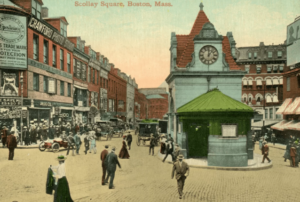
But by the late 1800s, Boston was already drowning in traffic. Tremont Street was so jammed that locals joked you could get across town faster by walking across the roofs of stalled streetcars. Honestly? Still true.


1897: The First Subway in America (And We Still Use It)

Then came the big moment:
In 1897, Boston opened the Tremont Street Subway — the first subway in the United States.

And here’s the wild part: even after the Big Dig ripped the city open like a lobster tail, we’re still using some of those original tunnels under the Boston Common. If you’ve ever wondered why the Green Line feels like it’s traveling through history… it literally is.


Mid‑1900s: Politics, Campaign Songs, and Poor Charlie

By the mid‑1900s, politics had taken the wheel (hold on tight). Charlie’s famous song? It was actually a 1949 mayoral campaign jingle. Only in Boston would a political ad become a folk classic and a transit trauma.

From there, the T passed through more commissions, budgets, repairs, and “temporary fixes” than anyone can count. If you’ve ever waited 27 minutes for a train that was “2 minutes away,” you’ve felt the legacy.


Today: Still First, Still Trying, Still Delayed

Today, the MBTA serves over a million riders a day across subways, buses, ferries, and commuter rail. It is heroic, chaotic, historic, and occasionally held together by zip ties.

But hey — we were the first.
And we’re still moving… eventually… after this brief delay… due to a disabled train at Government Center… and a signal issue at Alewife… and a mysterious “track problem” they won’t explain.

For more details on the history of the first subway in the country, follow the link here.


Final Stop: Let’s Bring Charlie Home

So join me in this noble cause: let’s finally rescue Charlie. Check your pockets, check your CharlieCard balance, and if you see him on the Green Line, hand him a fare and set him free. Boston owes him that much.


Historic memoir bound in the skin of highwayman James Allen, displayed under glass at the Boston Athenæum

The Book That’s Literally Skin‑Deep

Rare 1837 book bound in human skin at the Boston Athenæum, shown with its Latin‑inscribed cover inside a display case.”


Boston’s Most Macabre Treasure

Massachusetts has no shortage of historic firsts — the first lighthouse, the first subway, the first chocolate chip cookie, even the first telephone call. But tucked away on Beacon Street, inside the quiet, book‑scented halls of the Boston Athenæum, sits an artifact that makes all those milestones feel downright ordinary.

It’s a book.
Bound in human skin.
And yes, you can actually see it.


A Highwayman, a Deathbed Confession, and One Very Unusual Request

The story begins with James Allen, also known by several aliases, including George Walton — a 19th‑century highwayman who spent his life robbing travelers along the Boston Post Road. He wasn’t a glamorous outlaw; he was a gritty, stubborn one, constantly in and out of prison, and eventually mortally wounded during an escape attempt.

On his deathbed in 1837, Allen dictated his life story — a short memoir titled Narrative of the Life of James Allen. But he didn’t stop there. He made a final request that would cement his place in Massachusetts lore:

He wanted copies of the book bound in his own skin.

One copy was to be given to a man who had once fought him off during a robbery attempt — a man Allen respected for his bravery. Another copy went to the Boston Athenæum, where it remains today.

On the cover, stamped in gold, is the Latin inscription:

“Hic Liber Waltonis Cute Compactus Est.”
This book is bound in the skin of Walton.

Subtle? No.
Unforgettable? Absolutely.


Anthropodermic Bibliopegy: A Real (and Rare) Practice

As bizarre as it sounds, binding books in human skin — anthropodermic bibliopegy — was a real, if extremely uncommon, practice in the 18th and 19th centuries. Most examples come from:

  • Medical schools (anatomy students memorializing cadavers)
  • Criminal confessions
  • Personal mementos with a macabre twist

But Allen’s book stands out because it wasn’t done to him — it was done at his own request. A final act of control? A strange attempt at immortality? A criminal’s version of a legacy? Historians still debate it.

What’s certain is that the Athenæum’s copy is one of the most famous examples in the world.


Behind the Red Doors of the Boston Athenæum

The Athenæum itself is a treasure — one of the oldest independent libraries in the United States, founded in 1807. Its reading rooms feel like stepping into a different century: marble busts, oil portraits, polished wood, and the soft hush of serious book lovers.

The human‑skin book isn’t on open display. It’s kept in a secure, climate‑controlled room, brought out only for researchers or curious visitors by appointment. Staff are used to the request — it’s one of the most asked‑about items in their collection — but they treat it with the same respect as any rare artifact.

In recent years, scientific testing confirmed what the inscription claimed: the binding is, in fact, human skin.

Boston history is full of surprises, but this one still manages to raise eyebrows.


A Story That Sticks With You

What makes this such a compelling Massachusetts tale isn’t just the shock factor. It’s the layers:

  • A criminal who wanted his story preserved — literally.
  • A library that has safeguarded it for nearly two centuries.
  • A piece of history that blurs the line between the macabre and the meaningful.
  • A reminder that Boston’s past isn’t just revolutionary — it’s downright strange.

You can walk past the Athenæum’s iconic red doors a hundred times and never guess that one of the rarest, most unusual books in the world sits quietly inside.

But that’s Massachusetts for you.
Just when you think you’ve heard every story, it hands you one bound in human skin.


Boston Marathon

And They're off. The runners start the grueling 26 mile Bosotn Marathon


A Brief History of the Boston Marathon

The Boston Marathon isn’t just a race — it’s a piece of living Massachusetts history. First run in 1897, it holds the title of the world’s oldest annual marathon, inspired by the marathon event at the first modern Olympic Games in 1896. What began with just 15 runners has grown into one of the most iconic road races in the world, drawing elite athletes, charity runners, and more than half a million spectators every year.

Milestones That Shaped the Race

1918: A Military Relay

During World War I, the marathon wasn’t run in its traditional form. Instead, it became a 10‑man military relay, a patriotic adaptation that kept the spirit of the race alive during wartime.

1969: The Move to Patriots’ Day Monday

In 1969, organizers shifted the race from its traditional April 19 date to the third Monday in April, bringing it in line with the modern Patriots’ Day schedule. That’s how Marathon Monday was born.

1972: Women Officially Allowed to Compete

Although Roberta Gibb completed the race unofficially in 1966 and Kathrine Switzer famously ran with a bib in 1967, 1972 marked the first year women were officially welcomed into the field. It changed the race forever.

1980: The Rosie Ruiz Scandal

One of the most infamous moments in marathon history came in 1980, when Rosie Ruiz was initially crowned the women’s winner — only to be disqualified after it was discovered she hadn’t run the full course. It remains one of the most talked‑about sports scandals in Boston lore.

Heartbreak Hill

No discussion of Boston is complete without Heartbreak Hill, the legendary climb in Newton. The name dates back to 1936, when defending champion Johnny Kelley caught up to Ellison “Tarzan” Brown on the hill — only for Brown to surge ahead and win. Kelley’s heartbreak gave the hill its name, and runners have been bracing for it ever since.

2013: The Marathon Bombing

The darkest chapter in the race’s history came in 2013, when two bombs exploded near the finish line, killing three people and injuring more than 260. The city’s response — resilience, unity, and the now‑famous “Boston Strong” — became part of the marathon’s identity. The race has carried that spirit forward every year since.

2020: A Virtual Marathon

For the first time in its history, the Boston Marathon was not held in person in 2020. Due to the COVID‑19 pandemic, the race shifted to a virtual format, allowing runners to complete 26.2 miles on their own routes. It was a reminder that the marathon is as much about determination as it is about location.

Why the Boston Marathon Endures

The Boston Marathon is more than a race — it’s a tradition woven into the fabric of Massachusetts. From Hopkinton to Boylston Street, every mile carries stories of determination, heartbreak, triumph, and community. It’s a race that honors its past while evolving with the times, and every April, it reminds us what endurance — and Boston — are made of.


A Typically Boston Conclusion

The Boston Marathon is a really big deal in a city that loves its sports with its whole heart. From the Red Sox to the Bruins to the Celtics to the Pats, Boston shows up — loudly, loyally, and without hesitation. And on Marathon Monday, the city shows up in a way that feels almost sacred. Streets fill, cowbells ring, strangers cheer for strangers, and the whole region leans into one long, collective heartbeat.

It feels fitting that my Patriots’ Day post goes live on April 17, covering the full Lexington and Concord weekend, while this Marathon post lands on April 20 — right as runners are making their way toward Boylston Street. Two traditions, two days, each carrying its own history and emotion.

Patriots’ Day honors where Massachusetts began.
The Boston Marathon celebrates who we are now.

And honestly, only Boston could pull off a weekend where muskets at dawn and world‑class athletes share the same spotlight — and somehow, it all feels perfectly natural.


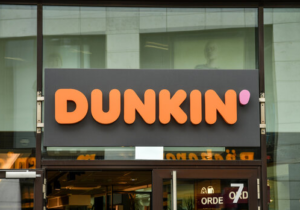
America Runs on Dunkin

Why America Runs on Dunkin. Move over Starbucks


☕ Dunkin’ vs. Starbucks: A Very Boston Love Story

Why Dunkin’ Is Practically a State Symbol

In Massachusetts, “grabbing a coffee” is basically code for “heading to Dunks.” We don’t even bother with the full name anymore — it’s just Dunks, like it’s a cousin we see every day. And with close to 1,100 Dunkin’ locations across the state, outnumbering Starbucks 4‑to‑1, it’s not exactly hard to find one. Honestly, you could blindfold someone, spin them around, and they’d still bump into a Dunkin’ before they hit a mailbox.

Starbucks? That’s for Visitors

Look, Starbucks has its place… mostly in airports and places where people say “cof-fee” instead of “caw-fee.” But here? In Boston? Walking into a Starbucks feels like announcing you think Tom Brady was “pretty good, I guess.” It’s not wrong, but it’s definitely suspicious.

Starbucks drinks come with names longer than the Mass Pike. Meanwhile, Dunkin’ gives you a medium regular and sends you on your way. No dissertations required.

Dunks Is a Lifestyle, Not a Beverage

Dunkin’ is woven into the daily rhythm of New England life — early‑morning commutes, post‑game pick‑me‑ups, and that comforting moment when the person behind the counter knows your order before you open your mouth. It’s the only drive‑thru where you’ll see someone in pajama pants, a Bruins hoodie, and flip‑flops in January, and no one bats an eye.


The Commercials Are Basically Local Cinema

And the ads? Pure gold.
We’ve got Gronk and Big Papi singing like they’re auditioning for a musical nobody asked for.

We’ve got Ben Affleck showing up like the unofficial mayor of Dunkin’, running the drive‑thru, handing out orders, and looking like he’s living his best life. And yes, yes that is Tom Brady.  These aren’t commercials — they’re documentaries of the Boston soul.

So… Who Wants a Dunks Run

Starbucks may have its fans, but here in Massachusetts, Dunkin’ isn’t just coffee. It’s identity. It’s culture. It’s home.

And now I kinda want a donut.


Patriots’ Day 2026

A modern soldier and two Revolutionary War reenactors symbolizing centuries of American service. Taken on the Lexington Battle Green on Patriots Day

A Weekend of History in Lexington & Concord

Patriots’ Day doesn’t always line up neatly with Marathon Monday — and in 2026, it definitely doesn’t. If you live in Lexington or Concord, the celebration stretches across an entire weekend, with events beginning Friday night and continuing through Tuesday morning. Strangely enough, the actual date of Patriots’ Day — April 19 — is the one day with nothing scheduled.

Friday, April 17: The Weekend Begins

The spectaors line up for the Battle of Lexington.. 2011

The Crowd Gathers- 2011

Festivities kick off Friday evening with awards ceremonies and speeches, but the real highlight is Paul Revere’s Ride at 9 PM. Watching the rider thunder into town under the night sky feels like stepping straight into 1775.

Saturday, April 18: The Big Reenactment

Most of the major events happen Saturday. If you’re brave enough to get up before dawn, you can catch the famous 5:15 AM reenactment on Lexington Green. I did it once, back in 2011, and it’s an experience I’ll never forget. I left the house at 4 AM and still found parking tough and the crowd already deep. People even brought step ladders so they could see over everyone’s heads.

When the Redcoats marched down the main street, their uniforms looked astonishingly authentic. And the muskets — I had no idea they were that loud. The smoke from the black powder hung in the air like fog. I’m glad I went once, though I don’t feel the need to repeat the 4 AM wake‑up call.

After the battle, everyone heads to one of the three pancake breakfasts happening around town. I skipped it in 2011 and still regret that choice. If you’re already up before sunrise, you might as well reward yourself with pancakes.

Smoke from the musket fire drifts over the redcoats

Sunday, April 19: The Quietest Patriots’ Day

Here’s the odd part: Sunday is the actual date of Patriots’ Day, but there are no scheduled events. Maybe because it falls on a Sunday this year — who knows. But it creates a natural pause between Saturday’s reenactment and Monday’s festivities.

Monday, April 20: Patriots’ Day Meets Marathon Monday

Events pick back up Monday morning at 9:30 AM, with activities continuing until Paul Revere’s arrival at 12:30 PM on the Battle Green. By the time Revere completes his ride, the Boston Marathon will already be well underway. Two Massachusetts traditions, running side by side — literally.

Tuesday, April 21: A Ceremony Worth Noting

The weekend wraps up with something truly special: a Naturalization Ceremony at 11 AM on the Battle Green. Imagine becoming a U.S. citizen on the very ground where the country was born. If I were one of the new citizens, that moment would move me deeply.