🦃 The Great Turkey Sleep Conspiracy

🦃 The Great Turkey Sleep Conspiracy- Myth or Fact

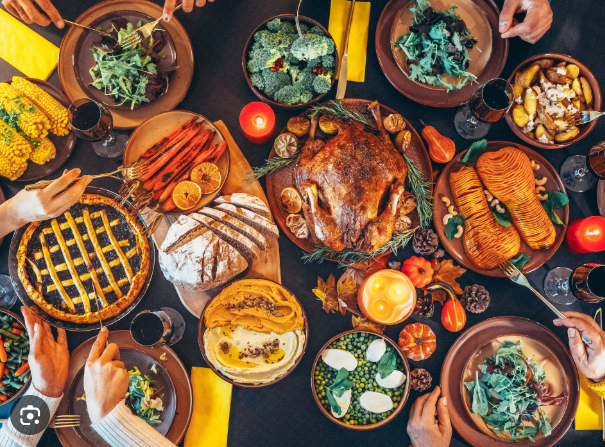
Thanksgiving: a time for gratitude, gravy, and glorious naps. And every year, we blame the bird. “Turkey made me sleepy!” we declare, as we drift off mid-football game. But is this poultry really packing knockout power?

Traditional Thanksgiving Nap

🧪 Tryptophan: The Sleepy Suspect
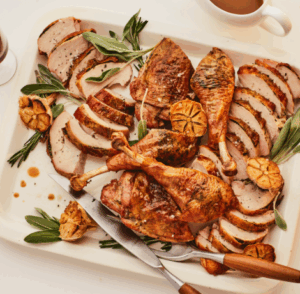
Yes, turkey contains tryptophan — an amino acid that helps produce serotonin and melatonin, the body’s chill-out chemicals. But here’s the rub: you’d need to eat 20 servings of turkey to match a sleep supplement dose. That’s less “nap-inducing” and more “competitive eating event.”

🧀 Other Foods That Should Be Guilty (But Aren’t)

Tryptophan also lurks in milk, cheese, chicken, beef, nuts, and soybeans. Yet no one ever says, “That grilled cheese knocked me out cold.” Turkey’s just the fall guy in this post-feast drama.

🥧 The Real Culprits: Carbs, Booze, and Couch Gravity
Let’s talk about what’s really making you sleepy:

  • Carb overload: Stuffing, mashed potatoes, pie — your blood sugar spikes, then crashes like your uncle on the recliner.
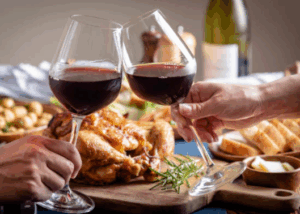
  • Alcohol: That festive drink? It’s a sedative. Combine it with overeating and you’re halfway to hibernation.
  • Blood flow diversion: Your body sends blood to your stomach to digest the feast, leaving your brain wondering where everyone went.
  • Seasonal darkness: Late fall means early sunsets. Melatonin kicks in, and your circadian rhythm starts humming lullabies.
🏃‍♀️ How to Outsmart the Nap Trap

Want to stay awake long enough to dodge dish duty?

  • Eat slowly and take smaller portions.
  • Snack before dinner to avoid overindulgence.
  • Watch the wine — it’s not just festive, it’s sleepy juice.
  • Walk it off after dinner.
  • Get regular sleep and exercise (yes, even outside of holidays).

🛋️ Final Thoughts: Don’t Blame the Bird

Turkey’s innocent. The real culprits are carbs, cocktails, and cozy couches. So this year, let’s stop blaming the bird and start blaming the buffet. Or just embrace the nap — it’s tradition.
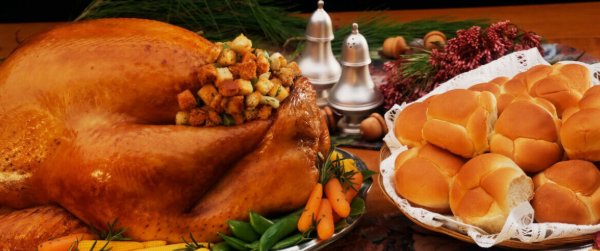

Turkey Ring


A Cozy Twist on Thanksgiving: The Turkey Ring

I was cruising through Facebook, checking in on my Welcoming Haven ads, when a video caught my eye—something about Thanksgiving leftovers. Intrigued, I paused my scroll and gave it a watch. What unfolded was a delightfully clever idea that instantly sparked my curiosity. Why wait for leftovers? Since it’s just me this year, I thought, why not make my entire Thanksgiving dinner this way?

So without further ado, let me introduce you to the Turkey Ring—a simple, savory, and oh-so-satisfying dish that wraps all the classic flavors of Thanksgiving into one golden-brown bundle.

My first Try


How to Make It

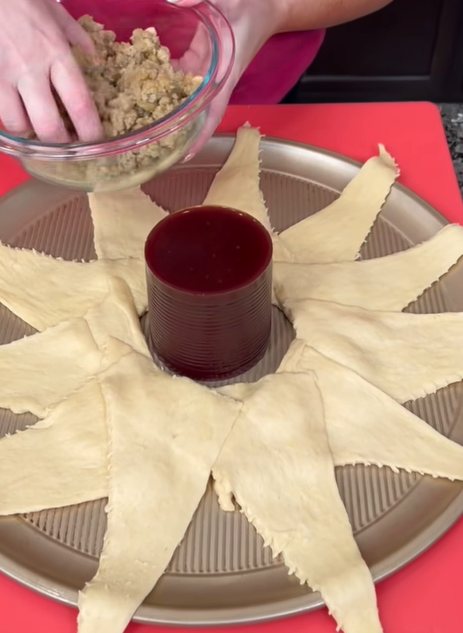
Start by placing a can of cranberry sauce in the center of a sheet pan. The video used a round pizza pan, but I made do with a cookie sheet—use what you have! Then, open a can of Pillsbury crescent rolls and arrange the dough around the cranberry can in a starburst pattern. The wide ends should point inward, overlapping slightly around the center.

the layout

Now comes the fun part: on each triangle, layer a small spoonful of stuffing, a slice of cranberry sauce, and a piece of turkey. Fold the narrow end of the dough over the filling and tuck it underneath to secure. Brush the tops with a light egg wash for that irresistible golden finish.

Bake at 375°F, following the crescent roll instructions, until the ring is puffed and beautifully browned. Be sure you remove the cranberry sauce can before you put the ring in the oven

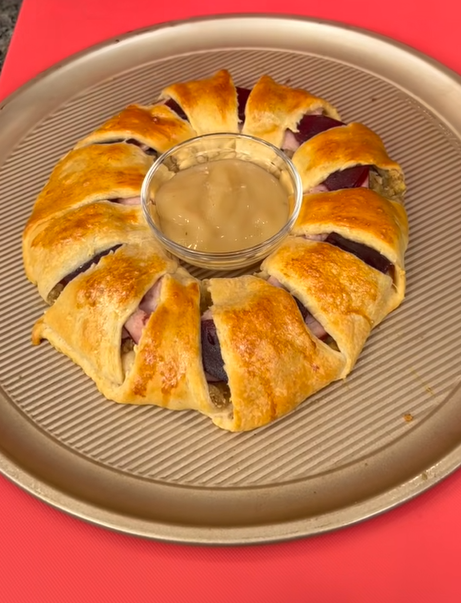
The Grand Finale

Once it’s out of the oven, place a small bowl of warm gravy in the center. The result? A stunning centerpiece that’s as tasty as it is charming. Just slice, dip, and enjoy!

The Professional


Whether you’re flying solo or feeding a small crowd, this Turkey Ring is a festive way to savor the season—with minimal fuss and maximum flavor.

Need to watch the video? Click here

Credit Home Hacks and Easy Snacks

Echoes of Samhain


Echoes of Samhain: Ireland’s Ancient Festival and the Spirit of Halloween

As October winds whisper through Taunton’s trees and jack-o’-lanterns flicker on porches, it’s easy to forget that Halloween’s roots stretch far beyond candy and costumes. This beloved holiday traces its lineage to Samhain (pronounced “SOW-in”), a mystical Celtic festival celebrated in Ireland over 2,000 years ago. At Around Dusty Roads, we love digging into the folklore behind modern traditions—and Samhain is a treasure trove of eerie enchantment.

Samhain: A Portal Between Worlds
For the ancient Celts, Samhain marked the end of the harvest and the beginning of winter. The Celts celebrated Samhain on October 31st, marking it as their New Year—a mystical time when the veil between the living and the dead thinned. They believed spirits roamed freely that night, so villagers took precautions to protect themselves. Animal-skin costumes and bone masks helped disguise the living from the dead, while bonfires blazed to ward off malevolent forces. Offerings of food were left out to appease wandering souls.

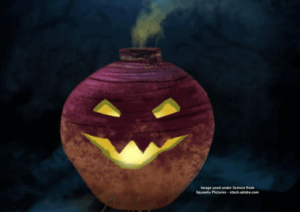
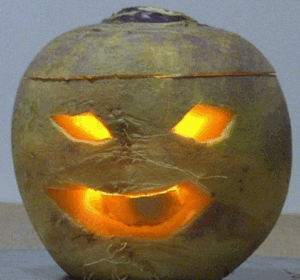
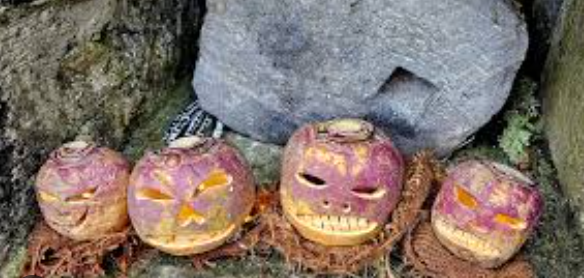
One of the most haunting traditions? Carving turnips into lanterns. These ghostly gourds, lit from within by embers, were placed in windows to scare away evil spirits. They were the original jack-o’-lanterns—long before pumpkins took center stage.


From Pagan Rituals to Pumpkin Patches

As Christianity spread through Ireland, Samhain’s customs blended with All Saints’ Day, giving rise to All Hallows’ Eve. In the 19th century, Irish immigrants carried these traditions to America, where they evolved in new ways. Pumpkins—larger and easier to carve than turnips—became the lantern of choice. Trick-or-treating emerged as a playful twist on ancient offerings, and Halloween transformed into the festive celebration we know today.

Halloween in Modern Ireland

Back in Ireland, Halloween remains a spirited affair. The last Monday in October is a public holiday, and many communities still honor age-old customs. Turnip lanterns, holy water rituals, and fortune-telling games with apples and barmbracks (a fruit-studded bread) echo the past. Families also use the night to remember loved ones, leaving out food and firewood as gestures of welcome.


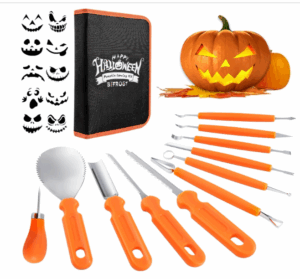
🛠️ Affiliate Disclosure: This post may contain affiliate links for turnip and pumpkin carving kits. If you purchase through these links, Around Dusty Roads may earn a small commission—at no extra cost to you. Every recommendation is chosen with care to match our nature-loving, storytelling spirit.

Order your carving kit here

National Mincemeat Day


🥧 Wait… There’s a National Mincemeat Day?

Who knew National Mincemeat Day was a thing? I certainly didn’t. Honestly, I wasn’t even sure what mincemeat was. Is it meat? Is it fruit? Is it some kind of culinary prank? I vaguely remember my mother making mincemeat pies around the holidays, but I never tried one. (Sorry, Mom.)

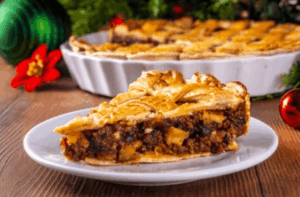
Stock photo

🤔 So What Is Mincemeat?

A quick Google search cleared up some of the mystery. Turns out, the original mincemeat recipe dates back over 500 years and was a hearty mix of diced fruit, meat, and distilled alcohol—because apparently, nothing says “festive” like boozy meat-fruit pie. It was used as a pie filling and featured spices like nutmeg and cinnamon, which are more fruitcake than steakhouse. Speaking of fruitcake… I’m not a fan. So maybe that explains my lifelong avoidance of mincemeat.

🕰️ From Preservation to Pie

Back in the day, bakers preserved meat with fruits and spices. Then, sometime around the 5th century, someone had the brilliant idea to toss it all into a pie. Voilà—mincemeat pies were born. Fast forward to the 19th century, and the meat started to disappear, replaced by raisins, apples, and candied lemon peel. By the 20th century, even meatless versions were still called mincemeat. Because why not confuse everyone?

🧪 A Quick Mincemeat Recipe (That I Will Never Make)

Once again, Google came through with a recipe. Full disclosure: I’ve never made mincemeat, and I don’t plan to. But if you’re feeling adventurous—or just want to impress your great-aunt Mildred—here’s a simple version to try. Or skip the kitchen and grab a jar from the store. If you do try it, let me know how it goes. I’ll be cheering you on from a safe, mincemeat-free distance.

Ingredients:

  • 2/3 cup (90g) coarsely chopped raisins (dark or golden)
  • 1/2 cup (60g) chopped candied orange peel
  • 1/4 cup (60ml) brandy, plus more if needed (for the mincemeat, not your nerves)
  • Grated zest of one orange (preferably unsprayed)
  • 1 teaspoon freshly squeezed lemon juice
  • 2 tablespoons light or dark brown sugar
  • 1/2 teaspoon each of ground cinnamon and nutmeg
  • 1/4 teaspoon ground cloves

Directions:

  1. Mix everything together in a bowl, then pack into a jar. Cover.
  2. Let it sit for 1–3 days before using. If it looks dry after day one, add a splash more brandy.
  3. Add to an apple or pear-based fruit filling for a pie or crisp before baking.

🎉 Final Thoughts from a Mincemeat Skeptic

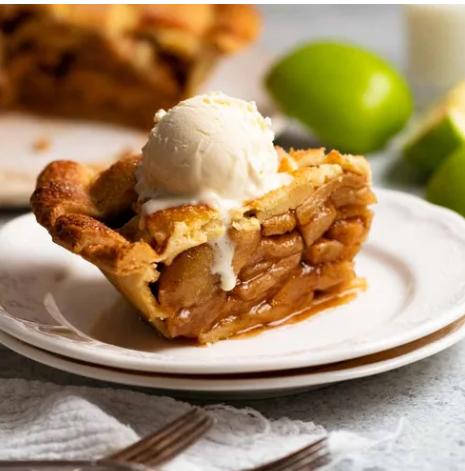
So there you have it—National Mincemeat Day in all its quirky, fruity, slightly boozy glory. Whether you’re a die-hard fan or a curious bystander like me, it’s a fun excuse to explore a centuries-old tradition. Just don’t ask me to taste it. I’ll be over here with my apple pie, living my best life.

Yummy Apple Pie


🎃 The Tale of the Turnip Lantern: Halloween’s Forgotten Glow

Halloween carved turnips, at Aughnanure Castle near Galway

From Pumpkins to Turnips: A Twisted Root of Tradition

Before pumpkins took center stage on American porches, Halloween lanterns had a much humbler—and eerier—origin. In Ireland and Scotland, folks carved grotesque faces into turnips to ward off evil spirits. These pale, knobby vegetables weren’t just spooky—they were downright creepy, with flickering candles casting shadows through their gnarled flesh.

The tradition stems from the legend of Stingy Jack, a trickster who outwitted the Devil but was doomed to wander the earth with only a carved turnip and a coal ember to light his way. When Irish immigrants brought the tale to America, they found pumpkins—larger, softer, and far easier to carve—and the jack-o’-lantern as we know it was born.
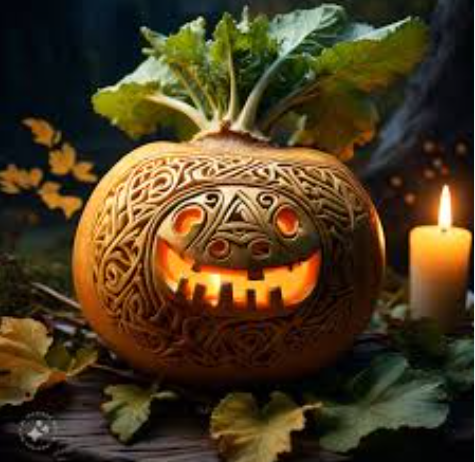
Carving tools available here

Why Turnips Deserve a Comeback

Turnips may not be as photogenic as pumpkins, but they pack a punch of old-world charm. Their ghostly pallor and twisted shapes lend themselves to truly haunting designs. Plus, they’re a nod to Halloween’s folkloric roots—perfect for anyone craving a deeper connection to the holiday’s mystical past.


Want to try it yourself? Choose a large turnip, scoop it out (brace yourself—it’s tougher than a pumpkin!), and carve a face that’s more eerie than cute. Add a tea light, and you’ve got a lantern that looks like it crawled out of a Celtic ghost story.

🛠️ Affiliate Note: Some of the turnip carving tools I mention may be affiliate links. That means if you make a purchase through them, I may earn a small commission—at no extra cost to you. I only recommend tools I genuinely find useful or delightfully quirky for your Halloween crafting adventures.


A Rooted Ritual for the Curious Soul

Whether you’re hosting a harvest party or crafting content for your nature-loving audience, the turnip lantern offers a quirky twist on tradition. It’s a tactile, earthy experience—one that invites you to dig into folklore, embrace imperfection, and celebrate Halloween with a wink to the weird.