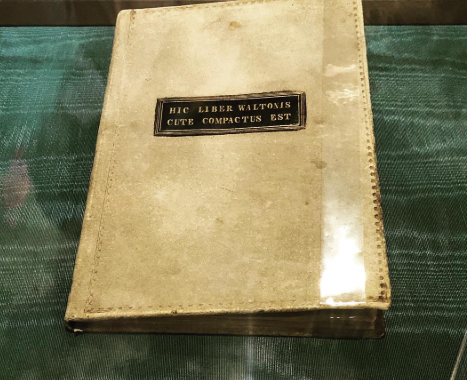
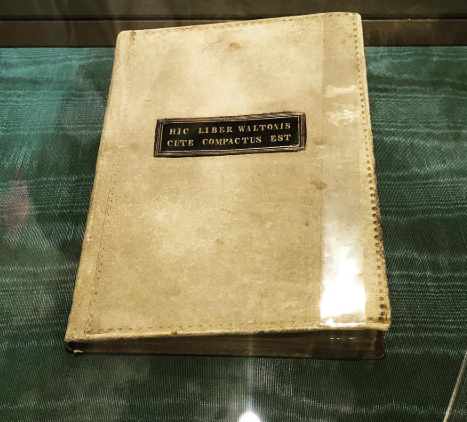
Historic memoir bound in the skin of highwayman James Allen, displayed under glass at the Boston Athenæum

The Book That’s Literally Skin‑Deep

Rare 1837 book bound in human skin at the Boston Athenæum, shown with its Latin‑inscribed cover inside a display case.”


Boston’s Most Macabre Treasure

Massachusetts has no shortage of historic firsts — the first lighthouse, the first subway, the first chocolate chip cookie, even the first telephone call. But tucked away on Beacon Street, inside the quiet, book‑scented halls of the Boston Athenæum, sits an artifact that makes all those milestones feel downright ordinary.

It’s a book.
Bound in human skin.
And yes, you can actually see it.


A Highwayman, a Deathbed Confession, and One Very Unusual Request

The story begins with James Allen, also known by several aliases, including George Walton — a 19th‑century highwayman who spent his life robbing travelers along the Boston Post Road. He wasn’t a glamorous outlaw; he was a gritty, stubborn one, constantly in and out of prison, and eventually mortally wounded during an escape attempt.

On his deathbed in 1837, Allen dictated his life story — a short memoir titled Narrative of the Life of James Allen. But he didn’t stop there. He made a final request that would cement his place in Massachusetts lore:

He wanted copies of the book bound in his own skin.

One copy was to be given to a man who had once fought him off during a robbery attempt — a man Allen respected for his bravery. Another copy went to the Boston Athenæum, where it remains today.

On the cover, stamped in gold, is the Latin inscription:

“Hic Liber Waltonis Cute Compactus Est.”
This book is bound in the skin of Walton.

Subtle? No.
Unforgettable? Absolutely.


Anthropodermic Bibliopegy: A Real (and Rare) Practice

As bizarre as it sounds, binding books in human skin — anthropodermic bibliopegy — was a real, if extremely uncommon, practice in the 18th and 19th centuries. Most examples come from:

  • Medical schools (anatomy students memorializing cadavers)
  • Criminal confessions
  • Personal mementos with a macabre twist

But Allen’s book stands out because it wasn’t done to him — it was done at his own request. A final act of control? A strange attempt at immortality? A criminal’s version of a legacy? Historians still debate it.

What’s certain is that the Athenæum’s copy is one of the most famous examples in the world.


Behind the Red Doors of the Boston Athenæum

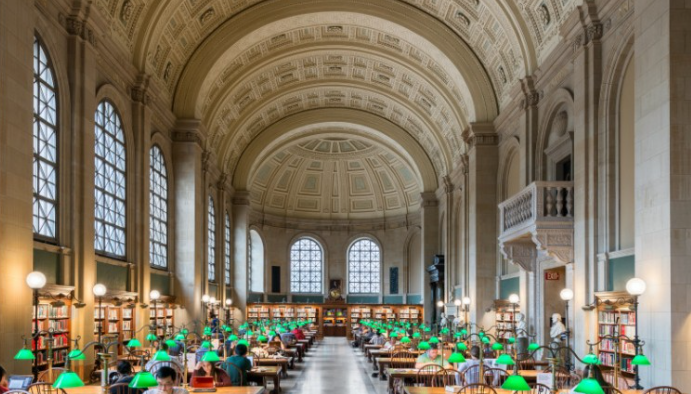
The Athenæum itself is a treasure — one of the oldest independent libraries in the United States, founded in 1807. Its reading rooms feel like stepping into a different century: marble busts, oil portraits, polished wood, and the soft hush of serious book lovers.

The human‑skin book isn’t on open display. It’s kept in a secure, climate‑controlled room, brought out only for researchers or curious visitors by appointment. Staff are used to the request — it’s one of the most asked‑about items in their collection — but they treat it with the same respect as any rare artifact.

In recent years, scientific testing confirmed what the inscription claimed: the binding is, in fact, human skin.

Boston history is full of surprises, but this one still manages to raise eyebrows.

A Story That Sticks With You
What makes this such a compelling Massachusetts tale isn’t just the shock factor. It’s the layers:

  • A criminal who wanted his story preserved — literally.
  • A library that has safeguarded it for nearly two centuries.
  • A piece of history that blurs the line between the macabre and the meaningful.
  • A reminder that Boston’s past isn’t just revolutionary — it’s downright strange.

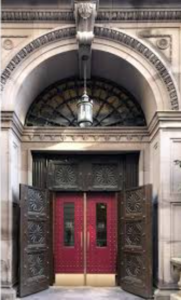
You can walk past the Athenæum’s iconic red doors a hundred times and never guess that one of the rarest, most unusual books in the world sits quietly inside.

But that’s Massachusetts for you.
Just when you think you’ve heard every story, it hands you one bound in human skin.
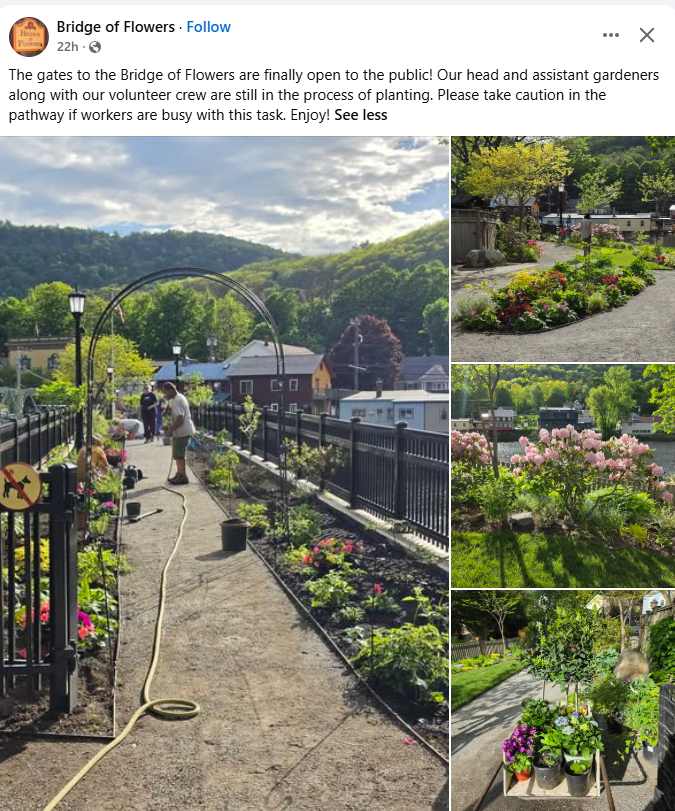


Bridge of Flowers Opens for the Season

The Bridge of Flowers in Shelburne, MA is open for the season. This one‑of‑a‑kind flower‑covered trolley bridge is cared for by skilled gardeners and volunteers, making it the perfect spot for a quiet, restorative stop. Enjoy the blooms — and take care of the environment while you’re there.

The Bridge of Flowers announces it's annual spring opening

The Bridge of Flowers began as a simple trolley bridge, reborn as a public garden in 1929.  The Bridge of Flowers Committee lovingly cares for the floral displays  season after season for everyone to enjoy. Open from May to October.

A Tale of Two Lighthouses

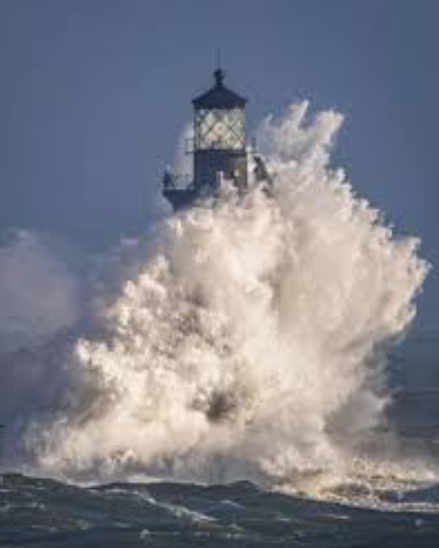
Graves light takes a pounding from the sea at the entrance to Boston Harbor's deep water channel


Graves Light: Boston Harbor’s Outer Sentinel

Lighthouses have always been the quiet guardians of the coast — part warning, part welcome, standing where the sea turns unpredictable. In my last post, Boston Light played the role of the harbor’s warm lantern, guiding ships safely home. Just a few miles away, though, another tower tells a very different story. Graves Light, perched on a scatter of ledges at the edge of the deep‑water channel, wasn’t named for sailors’ graves at all, but for Rear Admiral Thomas Graves, an early Massachusetts figure. Its job has always been the opposite of Boston Light’s: not to beckon ships inward, but to warn them away from danger.


A Lighthouse Built for the Hard Work

Completed in 1905, Graves Light is the tallest lighthouse in Boston Harbor and by far the most exposed. Its granite blocks were quarried in Rockport and pinned into the ledge like a stone corkscrew — because anything less would have been torn apart by the Atlantic. This tower wasn’t built for charm. It was built to take a beating.

And it still does.


Still Active — Even in Private Hands

In 2013, Graves Light made headlines when it was sold at auction for $933,888, becoming one of the most expensive lighthouse sales in U.S. history. The new owners restored the tower itself — floors, windows, dock, solar power — but the light and fog signal remain federal property.

The U.S. Coast Guard still operates:

  • the modern beacon
  • the fog horn
  • the official charted signal: Fl (2) W 12s

So yes, Graves Light is still an active aid to navigation, even though the building is privately owned. The tower belongs to people; the warning still belongs to the sea.


Two Lights, Two Jobs

Graves Light and Boston Light sit on opposite sides of the deep‑water channel — only about 3.5 miles apart, but doing completely different work.

  • Graves Light stands on the outer edge, flashing its stern warning:
    “Danger here — avoid the ledges.”
  • Boston Light waits farther in, offering the softer message:
    “Safe water ahead — welcome to the harbor.”

Mariners once treated them as a sequence: clear the danger, then follow the welcome home.

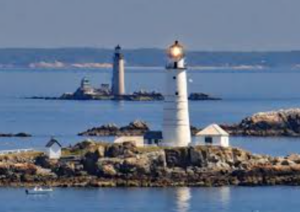
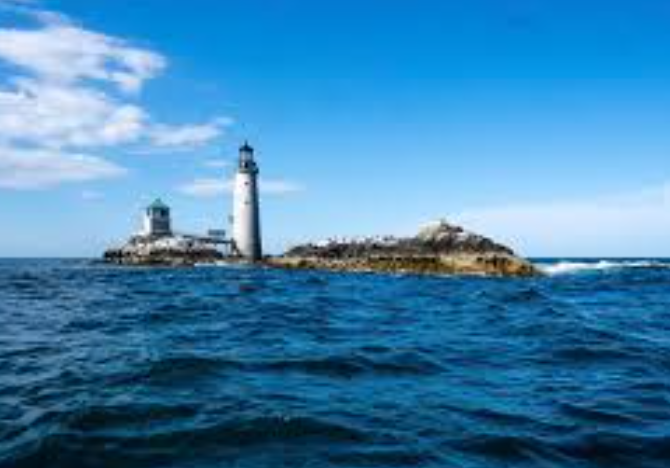
Boston Light and Graves Light, two guardians of Boston harbor


The Zoo Ship Wreck of 1938

One of the strangest events tied to Graves Light came in 1938, when the steamer City of Salisbury ran aground near the ledges in thick fog. Its cargo?
A traveling zoo shipment — monkeys, parrots, pythons, cobras, and other exotic animals.

Most survived, and newspapers gleefully reported “snakes loose in Boston Harbor.” Graves Light has seen its share of storms, but that day it witnessed a circus.


A Hollywood Cameo

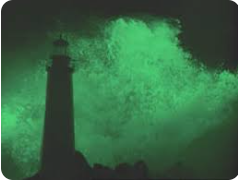
Graves Light even had a moment on the silver screen. It appears in the storm sequence of the 1948 film Portrait of Jennie, where the tower is cast as a brooding, windswept sentinel. Even if you’ve never seen the movie, it’s a fun bit of trivia — one of the few times this rugged lighthouse slipped into Hollywood’s imagination.


A Sentinel You Can Still See Today

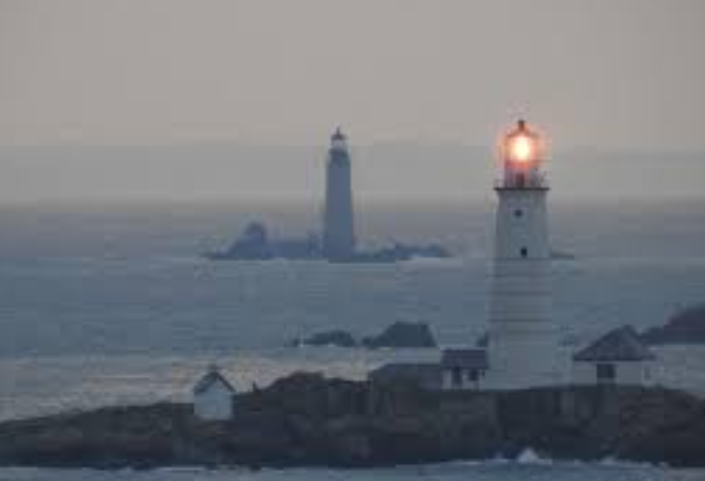
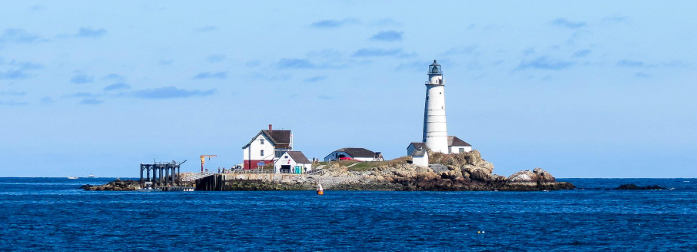
If you take one of the harbor or lighthouse cruises, you’re almost guaranteed to see both Boston Light and Graves Light in a single sweep of the horizon. Coming out from the harbor, you first pass the civilized silhouette of Boston Light, with its keeper’s house and outbuildings tucked neatly on Little Brewster Island. And just beyond it, rising straight from the gray Atlantic, stands Graves Light — taller, starker, and far more ominous. One welcomes you in; the other warns you away. Seen together, they tell the whole story of Boston Harbor in two towers.


Boston Light: Still Standing, Still Shining

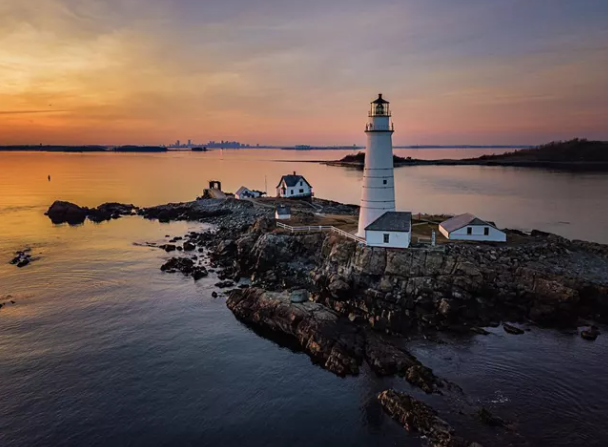
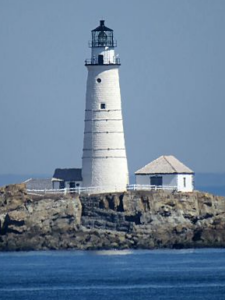
Located on Little Brewster Island, Boston Light: America’s Oldest Lighthouse is Still on Duty


Oh What a Light

(A little wink to the 1960s classic “Oh, What a Night”)

Boston Light is like an old war hero — weathered, stubborn, and full of stories it never quite shares. It has guarded the entrance to Boston Harbor for more than three centuries, and those stones have seen everything from calm seas to cannon fire.

Built in 1716, Boston Light is the oldest continually used lighthouse in the United States. Its history reaches straight back to the Revolutionary War.

The first tower stood about 60 feet high and was made from rough island stones. Workers stacked unshaped rubblestone into a tapering tower and held it together with early mortar. It wasn’t fancy, but it worked.

That original lighthouse didn’t survive the war. In 1776, British forces retreated from Boston Harbor and set explosives that destroyed the tower. (Those darn Redcoats!)  Boston rebuilt quickly. By 1783, the Commonwealth raised a new lighthouse using the island’s rubblestone once again. This version had thick 7.5‑foot walls and reached 75 feet into the air.

In 1859, the tower needed more height to hold a massive 4,000‑pound Fresnel lens. Builders added another 14 feet, giving the lighthouse the profile we recognize today.


The Modern Boston Light

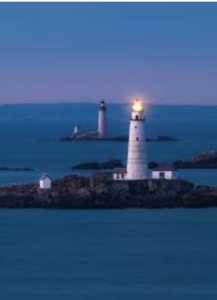
Boston Light glows bright while Graves Light keeps its quiet watch beyond

The lighthouse on Little Brewster Island blends the 1783 rebuild with the 1859 expansion. It rises 89 feet (102 feet above sea level) and still contains the old rubblestone core, now reinforced with brick. Only the bottom 9 to 14 feet include stones from the original 1716 tower, but that small section connects the modern beacon to its earliest days.

Not bad for a lighthouse that once relied on candlelight.

Today, Boston Light is a National Historic Landmark. By law, it remains permanently manned, even with modern automation. The island isn’t open to the public, but several harbor cruises pass close enough for great views.

At night, the beam reaches 27 miles into the Atlantic. After 300 years, it still calls sailors home.


The Great Chowder Divide

Clam laden New England Chowder with it's cream base sets the stage for this culinary debate

Cream vs. Tomato, and the Day Massachusetts Nearly Legislated Soup

Let me start with a confession:
I don’t actually like clams.

There, I said it. Full transparency.
I’ll happily eat around them, enjoy the broth, dip the crackers, and savor the moment — but the clams themselves? They can stay in the bowl and live their best life without me.

And yet… here I am writing about chowder. Because chowder isn’t just about clams. It’s about identity, tradition, and one of the most passionate food debates New England has ever cooked up.

And yes — it was almost illegal to put tomatoes in it.


The 1939 Chowder Crisis: A Massachusetts Original

It didn’t come from rumor or restaurant gossip.
No whispered “my cousin’s friend swears this happened” stories.
This moment lives in the official records of the Massachusetts legislature.

In 1939, Representative Cleveland Sleeper of Rockport, Massachusetts introduced a bill to ban tomatoes from clam chowder. He believed the integrity of New England chowder was under threat, and he was ready to defend it with the full force of government.

Sleeper even staged a chowder cook‑off to prove his point:

  • One pot of classic, cream‑based New England chowder
  • One pot of tomato‑based Manhattan chowder

The cream version won — of course it did — and the bill quietly faded away. But the message was loud and clear:

In Massachusetts, chowder is white. Full stop.


New England Clam Chowder: The Creamy Classic

This is the chowder that tastes like home, even if you don’t like clams. It’s the bowl you want on a cold day when the wind is coming off the water sideways.

What makes it unmistakably New England:

  • A rich, creamy broth
  • Potatoes, onions, and clams
  • Salt pork or bacon for depth
  • Oyster crackers bobbing like tiny buoys

It’s cozy. There’s a familiar nostalgia to it. It’s the culinary equivalent of a wool sweater and a nor’easter warning.


Manhattan Clam Chowder: The Tomato Rebel

Then there’s the red one.

Manhattan chowder swaps cream for tomatoes, creating a broth that’s bright, tangy, and a little bold. It’s lighter, more vegetable‑forward, and honestly? Pretty delicious — even if you have to whisper that in certain Massachusetts zip codes.

What defines it:

  • Tomato‑based broth
  • Carrots, celery, herbs
  • A lighter, almost Mediterranean feel
  • Clams that stand out instead of hiding in cream

It’s not trying to be New England chowder. It’s doing its own thing — and doing it well.


So Which One Wins?

Here’s the truth, clam‑skeptic though I may be:

They’re both good — just in different ways.

  • New England chowder is for comfort, cold days, and tradition.
  • Manhattan chowder is for brightness, lightness, and a little rebellion.

It’s like comparing a snowstorm to a sunny day. Both have their place — though only one requires you to shovel your driveway.


Final Ladleful: You Be the Judge

I may not love clams, but I do love a good food debate — and chowder brings out the best of them. Whether you’re Team Cream, Team Tomato, or Team “I’ll just take the crackers,” chowder tells a story worth sharing.

Now it’s your turn:

Which chowder do you swear by?
Creamy New England?
Tomato‑bright Manhattan?
Or do you have a family version that breaks all the rules?

Drop your thoughts, opinions, and observations — I can’t wait to hear where you land in the Great Chowder Divide.