Welcome to Alabama, Please Claim a Stranger’s Suitcase


America is weird, but Alabama’s Unclaimed Baggage store might just take the crown.

A Tourist Attraction Built on Lost Suitcases

You’ve got to wonder about a state where one of the biggest tourist draws is… lost luggage. America is weird, but Alabama’s Unclaimed Baggage store might just take the crown. Tucked away in Scottsboro, this retail oddity specializes in selling the contents of bags that never made it back to their owners.

If You’re Nervous About Losing Your Own Bag…

I get it—flying to a store full of lost luggage feels like tempting fate. What’s to stop your own suitcase from joining the lonely, unclaimed masses while you’re browsing the racks? If that thought makes you twitchy, good news: they have an online shop. You can treasure‑hunt from the safety of your couch.

A Business Born From a Pickup Truck and $300

The store has been around for more than 50 years, and its origin story is peak American entrepreneurship. In 1970, Doyle Owens borrowed a pickup truck and $300, then bought his first load of unclaimed bags from a Trailways bus station. By 1978, he’d struck deals with airlines—starting with Eastern Airlines—and the volume (and the weirdness) exploded.

When the South Became a Ski Destination

One of the store’s most famous traditions began in 1981: the annual Ski Sale. Alabama isn’t exactly known for snow, but the store had mountains of lost ski gear looking for a home. Winter sports fans flocked in, and the event became so popular that people now camp out in the parking lot on the first Saturday of November just to be first through the door.

A Snapshot of Humanity, One Suitcase at a Time

The inventory comes from airlines and transportation companies across the country, making the store a strange little museum of what people pack for their travels. Clothes, electronics, souvenirs, oddities—you name it, it’s probably passed through Scottsboro at some point.

Detour Worth Taking

So next time you pack a bag and head to Alabama, skip the dolphin cruise and the Civil Rights walking tour just this once. Take a detour to Scottsboro and wander through the land of lost luggage. Who knows—maybe you’ll even spot the suitcase that never made it to Florida on your last trip.


A Curious Day Trip to America’s Stonehenge


🪨 New Hampshire’s Strangest Archaeological Mystery Welcome to America's Stonehenge where you can let your inner Indian Jones wander

Let’s take a little trip over the state line into our neighbor to the north — New Hampshire. The Live Free or Die state has its fair share of quirky attractions, but one of the strangest sits just over the border in Salem.

If you enjoy archaeology, mysterious stone structures, or simply wandering around the woods wondering what on earth happened here, then this place is absolutely for you.

And yes — I’ve been there.
And yes — if you let your imagination run free, it can get a little creepy.

Welcome to America’s Stonehenge.


🌀 Is It Really “Stonehenge”?

Let’s be honest: the name is a bit ambitious. There are no towering bluestones or dramatic circles rising from the earth. But what is here is a sprawling network of stone chambers, walls, and monoliths that spark endless questions.


Who built it?
When?
And why?

No one has definitive answers — which is half the fun.


🔊 The Oracle Chamber: A Voice From the Stones

One of the most intriguing structures is the Oracle Chamber, the largest enclosed space on the site. What fascinates me most is the speaking tube that connects the chamber to the outside.

At the exterior end of the tube sits a grooved stone table that some speculate may have been used for offerings. To whom or what? No one knows.

But picture this:

Primitive people gathered around the stone table with chickens or goats as offerings…
A hidden voice suddenly echoing from the rocks…
A disembodied whisper floating through the air…

Tell me that wouldn’t send a shiver down your spine.


🌅 The Summer Solstice Sunrise Stone

My favorite feature is the Summer Solstice Sunrise Monolith — a standing stone placed to mark the sunrise on the longest day of the year.

It’s not as dramatic as the towering monoliths on Salisbury Plain, but it still warms my heart. I can almost “see” the wise women of the tribe gathering at dawn, welcoming the sun and celebrating the birth of a new season.

Sometimes the simplest stones carry the deepest stories.


🐍 Other Mysteries Scattered Through the Woods

The site is full of curious structures, each with its own personality:

  • The Watch House Chamber
  • The S‑Shaped Serpent Wall
  • The East–West Chamber

Archaeologists and enthusiasts are still documenting the site, and new discoveries continue to surface. It’s the kind of place where every stone feels like it has a secret.


🏺 A Museum of Everyday History

Before or after your walk, take time to explore the small museum. The artifacts range from the Stone Age to more recent centuries — ceramics, eyeglasses, keys, and even half a pair of scissors.

It’s a quiet reminder that human history isn’t just grand monuments. It’s the ordinary objects people leave behind.


🧭 If You Go: Practical Tips for Visiting America’s Stonehenge

📍 Location:
105 Haverhill Road, Salem, New Hampshire — just over the Massachusetts border, an easy day trip.

🚗 Parking:
There’s a small on‑site parking lot right at the visitor center. It’s free, and usually there’s plenty of space unless you’re visiting on a peak fall weekend.

💵 Admission:
Prices vary slightly by season, but expect something around:

  • Adults: about $15
  • Seniors: discounted
  • Kids: reduced rate

Check their website before you go for the most current info.

⏰ Hours:
Open year‑round, with hours shifting seasonally. Winter visits can mean snowy or muddy trails.

🥾 Terrain:
The paths are wooded and uneven — not difficult, but definitely “forest floor.” Wear sturdy shoes.

🕒 Time Needed:
Plan for 1–2 hours depending on how deeply you explore.

🏛️ Visitor Center:
The museum is small but worth a look for context and artifacts.

🐕 Pets:
Leashed dogs are welcome on the grounds.

🌞 Best Time to Visit:
Late spring through fall offers the most comfortable weather, and the solstice markers are especially fun to see around June.


🧭 Be Your Own Indiana Jones

A visit to America’s Stonehenge is a chance to let your imagination roam. You can be your own Indiana Jones for the day — minus the rolling boulders and snakes, thankfully.

Whether you come for the archaeology, the mystery, or simply the peaceful walk through the woods, this quirky New Hampshire site offers a little something for every curious soul.


Celebrating 100 years of the Mother Road

The mother road is 100 years old and still fascinates travelers


Celebrating a Road That Isn’t All There Anymore

Every now and then something pops up in my feed that feels like a tap on the shoulder. Today it was a notice about the upcoming Route 66 Centennial — a once‑in‑a‑century celebration for a road that’s somehow both legendary and, well… missing in places. I was out and about, minding my own business, when suddenly the Mother Road wanted my attention again.

And honestly? I didn’t mind.

A Road That Crosses Eight States… and I’ve Only Seen a Sliver

The article reminded me that Route 66 stretches across eight states, from Illinois cornfields to the California coast. Eight states of diners, neon signs, motels, migration stories, and dusty postcards. Eight states of American mythology.

My own experience? A tiny sliver — the stretch near Flagstaff and the Grand Canyon. A few miles, a few minutes, and yet it still felt like stepping into a vintage travel poster. The kind with a smiling family in a station wagon and a promise that adventure is just one more mile down the road.


It’s funny how a place can be both new to you and instantly familiar.

The Centennial That Sparked This Post

The blurb I saw summed it up perfectly:

The centennial commemorates the original designation of Route 66 on April 30, 1926, celebrating its cultural, historical, and economic impact across eight states. The celebration also highlights preservation efforts, tourism, and the ongoing legacy of the Mother Road.

That’s the heart of it — not just a birthday party, but a celebration of everything Route 66 has meant to travelers, dreamers, and the communities along its path.

Whether you’re attending the kickoff in Springfield, joining a satellite event, or just driving a surviving stretch, the centennial is being billed as a “once‑in‑a‑century opportunity to experience the heritage and spirit of America’s most iconic highway.”

And that’s what got me thinking.

Why Celebrate a Road That Isn’t Whole Anymore?

Route 66 isn’t intact from end to end. Some pieces have been rerouted, abandoned, or swallowed by the interstate system. Some towns faded when the traffic did. Some stretches survive only as cracked pavement and fading paint.

But maybe that’s exactly why it deserves celebrating.

Because Route 66 was never just a road.
It was a promise.
A pathway west.
A symbol of possibility.
A ribbon of stories stretching across eight states and nearly a century.

Even in fragments, it still carries all of that.


My Little Piece of the Mother Road

Standing on that stretch near Flagstaff, I remember thinking how strange and wonderful it was that a simple road could hold so much history. I wasn’t driving cross‑country. I wasn’t chasing the whole route. I was just passing through — and yet I felt connected to something bigger.

And because the universe has a sense of humor, one of my favorite photos from that trip is of Mater the tow truck — yes, that Mater from Pixar’s Cars — sitting proudly along Route 66. A fictional character on a real road, reminding me that Route 66 lives just as much in our imagination as it does on the map. Pixar didn’t just make a cute movie; they captured the heartache and hope of all those little towns the Mother Road once carried.

Maybe that’s the magic of Route 66.
You don’t need all 2,448 miles.
Sometimes a few feet — or a rusty tow truck with a big grin — are enough.

Looking Ahead to the Centennial

The centennial feels like an invitation — not just to celebrate the past, but to appreciate what remains and to honor the communities keeping the spirit alive. To wander a little. To remember that roads don’t have to be perfect or continuous to take you somewhere meaningful.

Maybe I’ll explore more of it someday.
Maybe you will too.

Either way, the Mother Road is turning 100, and that’s worth a moment of appreciation.

Maybe a road doesn’t have to be whole to take you somewhere.


A Connecticut Castle on a Hill


Gillette Castle: A Whimsical Hilltop Hideaway With Paw Prints in the Woodwork

There’s something magical about arriving at Gillette Castle and realizing it’s not just a stone fortress on a hill — it’s a window into the wonderfully eccentric mind of William Gillette, the actor who brought Sherlock Holmes to life. I went in expecting history and architecture. I did not expect to find cat carvings tucked into the woodwork… and only later did I learn that Gillette once lived here with seventeen cats. Suddenly, all those little details I photographed made perfect sense.

Cats of Gillette Castle

As someone who can barely get anything done with two cats “helping,” I can’t imagine managing a castle with seventeen furry supervisors. Banner and Balboa regularly sabotage my productivity — one breaks mice, the other warms his behind on the stovetop grill — so Gillette’s ability to build an entire castle while surrounded by a feline army feels downright heroic.

But that’s the charm of Gillette Castle: it’s grand, yes, but it’s also deeply personal, whimsical, and full of surprises. And once you know the man behind it, every odd detail becomes a clue in the story he left behind.


My First Glimpse: A Castle From the River

Long before I ever set foot inside Gillette Castle, I saw it from the water. I was on a Connecticut River cruise, standing on the deck, when the guide pointed up to a stone silhouette perched high above the trees. From that angle — looking up from the river — the castle feels almost mythical, like something out of a New England folktale. I remember thinking, I need to get up there.

That first glimpse stayed with me. So later, when I finally went searching for a way to reach the castle itself, it felt like following a breadcrumb trail from the river to the hilltop.


The Grounds: Stone Bridges, Quiet Ponds, and Wandering Paths

One of the loveliest surprises about Gillette Castle is that the experience begins before you reach the castle. The grounds are sprawling and peaceful, with winding trails that lead you through the woods and along the hillside. On the way up, there’s a beautiful stone bridge arching over a small pond — the kind of spot that makes you stop, breathe, and take a photo even if you weren’t planning to.

stone bridge over a quiet pond at Gillette Castle State Park in early spring”

The pathways twist and meander, offering little glimpses of the castle through the trees as you climb. It’s the kind of place where you can wander without a plan, discovering quiet corners, scenic overlooks, and bits of Gillette’s personality tucked into the landscape.

By the time you reach the castle itself, you’ve already stepped into his world.


Who Was William Gillette?

Before you can appreciate the castle, you have to appreciate the man — because Gillette Castle isn’t just a home, it’s a personality carved in stone.

William Gillette was a stage actor best known for portraying Sherlock Holmes, and he approached life with the same mix of precision, curiosity, and theatrical flair that made his Holmes famous. He was an inventor, a tinkerer, a showman, and a man who loved comfort just as much as he loved drama. If something could be improved, he improved it. If something could be made whimsical, he made it whimsical. And if something could be designed to amuse his cats… well, he absolutely designed it to amuse his cats.

Gillette didn’t just build a house on a hill. He built a world that reflected exactly who he was — clever, eccentric, playful, and just a little mysterious.


Why It Was Originally Called the Seventh Sister

Before it became “Gillette Castle,” the estate had a quieter, more poetic name: The Seventh Sister. The castle sits on the southernmost hill of a chain known locally as the Seven Sisters, a series of ridges overlooking the Connecticut River. Gillette built his home on the seventh hill — the final “sister” — and named his estate accordingly.

Only later, when the state purchased the property, did the public nickname “Gillette Castle” become official. But the original name still lingers in the landscape, like a whisper from the past.


Inside the Mind of a Whimsical Genius

Once you step inside, you realize quickly that Gillette didn’t build a castle to impress people — he built a castle to amuse himself. Every corner has a surprise, every detail has a story, and every room feels like a puzzle waiting to be solved.

Tiffany Lamps Made From Broken Bottles

Gillette loved color and light, but he didn’t want ordinary stained glass. Instead, he commissioned lamps made from broken bottle fragments, arranged like jewels. They glow with a warm, uneven shimmer — imperfect, playful, and completely unique.

A Heated Bed (Yes, Really)

Long before electric blankets were a thing, Gillette engineered a heated bed. Comfort was an art form to him, and he wasn’t shy about innovating.

Secret Doors, Trick Locks, and Mechanical Oddities

Gillette designed all the castle’s locks himself — and they’re famously confusing. Some doors slide. Some pivot. Some open in ways that make you question your spatial awareness. It’s part stagecraft, part engineering, and part mischievous delight.


🐾 The Cats of Gillette Castle

This is where the castle becomes a home — and where my photos suddenly gained meaning.

Seventeen Cats and a Man Who Loved Every One of Them

Gillette adored cats. Not casually — wholeheartedly. At one point, he lived with seventeen of them, each with their own personality and privileges. They roamed the castle freely, supervised guests, and likely contributed to the same kind of “help” Banner and Balboa provide me.

Cat Carvings and Feline Motifs

The carved woodwork I photographed — the scroll work with cats tucked into the details — wasn’t decorative whimsy. It was intentional. Gillette incorporated feline imagery throughout the home as a tribute to the animals he loved.

Custom Cat Toys and Cat‑Friendly Features

Gillette didn’t stop at carvings. He designed custom toys, cozy perches, and playful features for his cats. It’s the kind of devotion that makes you feel instantly connected to him.


Visiting Today

Gillette Castle is one of those places that feels both grand and intimate. The stone exterior looks imposing from a distance, but inside, the home is warm, quirky, and full of personality. The views over the Connecticut River are spectacular, the trails are peaceful, and the house itself is a treasure hunt of oddities.


It’s the kind of place where you can spend an hour or an entire afternoon, depending on how much you love details — and I am absolutely a detail person.


A Castle With Heart (and Paw Prints)

Gillette Castle isn’t just a historic site. It’s a portrait of a man who loved creativity, comfort, and cats in equal measure. Once you know his story, every odd feature becomes a clue, every carving becomes a wink, and every room feels like a page from his life.

And honestly?
As someone who writes in the early morning and mid‑afternoon — the only times when my own cats aren’t actively sabotaging my workflow — I might appreciate Gillette more than most. He built a castle around his cats. I’m building a blog around mine. It feels like a very New England kind of kinship.


Is the Great American Road Trip Running Out of Road?


**🚗Road Trip, the call of a generation

Rt 66 in arizona has a load of attractions including more modern ones like Mater from Cars

A Cross‑Country Daydream from Route 66 to Route 20**

America’s Love Affair With the Open Road

With gas prices climbing and no relief in sight, it’s fair to wonder whether the classic American road trip is slowly becoming an endangered species. Then again, air travel isn’t exactly a walk in the park these days either.

Still, before we declare the road trip obsolete, it’s worth pausing to appreciate the romance, freedom, and pure Americana that grew out of our national love affair with the automobile.

The Mother Road: Route 66

One iconic road immediately comes to mind — and I’m pleased to say I’ve explored a small slice of it.

Route 66, the legendary “Mother Road,” was established in 1926 and stretched 2,448 miles from Chicago to Santa Monica. It wound through Missouri, Kansas, Oklahoma, Texas, New Mexico, and Arizona, carrying generations of dreamers westward.

Though officially decommissioned, roughly 85% of the route is still drivable. Vintage neon signs, retro diners, quirky roadside attractions, and weathered motels still line the way, offering a nostalgic glimpse into a bygone era.

America’s Longest Road: Route 20

If Route 66 is the most famous, Route 20 is the heavyweight champion. At 3,365 miles, it’s the longest road in the United States — and it starts right here in Boston.

A Route 20 adventure would take you through 12 states and across the entire country, ending in Newport, Oregon. Along the way, you could:

  • Stroll the Boston Esplanade
  • Visit the Basketball Hall of Fame in Springfield
  • Wander the Finger Lakes of New York
  • Detour to Niagara Falls
  • Swing up to Lake Placid, home of the 1980 “Miracle on Ice”

Then it’s onward through Pennsylvania and into Ohio, where Cedar Point awaits with some of the best roller coasters in the nation. Once you catch your breath, Route 20 rolls into Indiana and the Indiana Dunes National Park.

Across the Heartland and Into Big Sky Country

In Illinois, Route 20 carries you straight through Chicago before crossing the Mississippi River into Iowa.

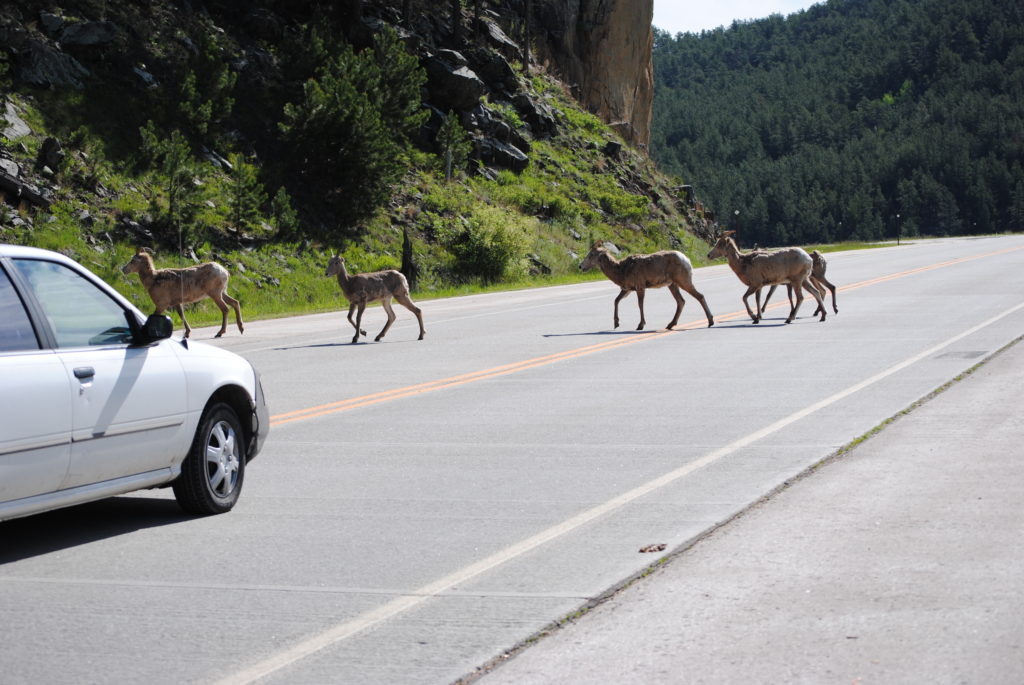
Then comes Wyoming — Big Sky Country at its finest. You’ll pass through Lost Springs, the least populated municipality in America, and you’re just a side trip away from Yellowstone. Keep an eye out for bison; they don’t yield.

Getting ready to pass by

Montana only gets about ten miles of Route 20, but it’s close enough to tempt you toward the famous Going‑to‑the‑Sun Road, a bucket‑list drive if ever there was one.

The Final Push to the Pacific

Idaho brings a breather in Boise before the home stretch. The last state is Oregon, but don’t be fooled — there are still 451 miles to go before you reach Newport and the Pacific Ocean.

Quite the road trip indeed.

And Then… Maybe the Overseas Highway?

Once I’ve conquered Route 20, maybe I’ll head south to Florida for the Overseas Highway — 113 miles and 42 bridges ending at the Southernmost Point in Key West. A completely different kind of road trip, but just as iconic.

So… Is the Road Trip Doomed?

Maybe gas prices will rise. Maybe travel will keep changing. But the American road trip isn’t just about miles or money — it’s about freedom, curiosity, and the irresistible pull of the horizon.

As long as there are roads to follow and stories to chase, I don’t think the great American road trip is going anywhere.