Colorado: Chasing Trains, Mountains, and Maybe Bigfoot (Part 2)

Why I Missed the Durango & Silverton Railroad

Yesterday I mentioned that I wasn’t able to ride the Durango & Silverton Narrow Gauge Railroad during my Colorado trip. I was staying in Breckenridge at the time, and thanks to the pandemic, many of the time‑share resorts I normally used were either closed or operating with limited availability. When my vacation week rolled around, Breckenridge was the only place I could find a room—so that’s where I landed.

Breckenridge sits in central Colorado, not far from Denver and within reach of places like Pikes Peak. Ironically, I managed to miss that too. Meanwhile, the Durango & Silverton is located in the far southwestern corner of the state. From Breckenridge, it would have been a four‑to‑five‑hour drive just to reach the station. Even if I made it in time for a late departure, I’d have no way to return the same day without losing another full day to the commute. In the end, I decided it was better to save the experience for a dedicated trip to that part of Colorado.

A Bigfoot Twist I Didn’t Expect

Of course, now I have even more reason to go back. Do you believe in Bigfoot? As the old X‑Files tagline says, I want to believe. I grew up in Upstate New York, not far from Whitehall—one of the most famous Bigfoot hotspots in the country. Sightings there go back centuries, and a major 1976 encounter involving law enforcement helped cement Whitehall’s reputation among cryptozoology fans. I somehow missed all of this growing up, but the lore fascinates me now.

So when I heard about a possible Bigfoot sighting in southwestern Colorado, right near the Durango & Silverton line, that train ride shot straight back onto my bucket list.

My Love for Vintage Trains

Steam In The Snow, Conway NH

There’s something magical about riding a vintage steam train. It feels like stepping back in time. I’ve taken the North Conway “Steam in the Snow” excursion and ridden the 1880 Train in South Dakota, where our guide kept us laughing as he pointed out scenery—and the “summer cows,” some white, some black.

Filling up with water for steam- 1880 Train SD

I’ve also experienced the Grand Canyon Railway and several modern sightseeing trains, each with its own charm.

Grand Canyon R R

Why the Durango & Silverton Is Still Calling My Name

But the Durango & Silverton is in a league of its own. Durango was founded by the Denver & Rio Grande Railway in 1880, and the line to Silverton was completed just two years later. Originally built to haul silver and gold ore from the San Juan Mountains, the route quickly became beloved for something even more valuable: the views.

This historic steam train winds through rugged canyons, along cliff edges, and past forests where wildlife still thrives. Elk, mule deer, black bears, and bighorn sheep are all possibilities. And if the legends are true—maybe even something a little more mysterious.

Either way, the Durango & Silverton promises a scenic adventure worth waiting for. And next time, I won’t be five hours away.

Looking Ahead to the Next Adventure

Colorado didn’t unfold the way I expected, but sometimes the trips we don’t take end up shaping the ones we will. Missing the Durango & Silverton, battling altitude sickness, and stumbling into a possible Bigfoot mystery have all given me new reasons to return—this time with a clearer plan and a sense of curiosity leading the way. Whether I go for the history, the scenery, the wildlife, or the chance to glimpse something unexplained, I know the next journey will be worth the wait. Until then, I’ll keep dreaming, researching, and adding new pins to the map, because the adventure isn’t over. It’s just on pause.

Colorado: The Trip I Didn’t Expect (Part 1)


Reevaluating Travel After Retirement

I used to joke that I worked so I could travel. Then I got laid off, which quietly turned into retirement, and suddenly that old expression felt very real. These days my “trips” are mostly to the local grocery store.

But that hasn’t stopped me from dreaming. I still read, plan, and binge travel videos while I explore side hustles to support my travel habit.

Why Colorado Became My Last Big Trip

Colorado was the last real adventure I took as COVID wound down and life began to feel normal again. I’ll admit—it wasn’t one of my favorite trips. Even before I left, I struggled to choose which part of the state to visit. Colorado is huge, and the list of iconic destinations is overwhelming.

Colorado’s Endless List of Must‑See Attractions

From sweeping landscapes to historic sites, Colorado is packed with bucket‑list stops:

  • Rocky Mountain National Park
  • Pikes Peak
  • Garden of the Gods
  • Great Sand Dunes National Park
  • Royal Gorge Bridge, the world’s highest suspension bridge
  • Four Corners Monument, where Colorado, Utah, Arizona, and New Mexico meet
  • Mesa Verde National Park, high on my personal list

I even watched Josh Gates explore the Telluride region and retrace the steps of Butch Cassidy, which only added more destinations to my already long list.

Why I Ended Up in Breckenridge

Despite all those options, I landed in Breckenridge. And instead of hiking and exploring, I spent more time lying down than standing up. Altitude sickness hit me harder than expected and slowed me to a crawl.

I searched for bighorn sheep with no luck, but I did spot a couple of moose—small victories count.

The Train Ride I Missed

I managed to squeeze in a train ride, but not the one I really wanted: the iconic Durango & Silverton Narrow Gauge Railroad. That one is still on my list, and it’s going to play a big role in Part 2 of this story.

A Curious Colorado Mystery

That train came back to mind recently when I saw a video clip making the rounds online. It appeared to show a huge, hairy figure striding across a hillside near the tracks. Whether it was a prank, a shadow, or something more mysterious… well, that’s a tale for the next post.


Tower in the Sea

Rising from the waves like a sentinel of stone, Boon Island Light is New England’s tallest lighthouse—and one of its most haunting maritime landmarks. With a nod to my sister’s enduring love of lighthouses and a dash of wanderlust, I invite you to explore the story of this remote Maine beacon, where history, hardship, and the sea converge.


🌊 A Tower in the Sea: Introduction to Boon Island Light

Located 6.5 miles off the coast of York, Maine, Boon Island Light is the tallest lighthouse in New England, rising 133 feet from a barren outcrop in the Atlantic. Its isolated perch and storm-battered silhouette have made it a symbol of resilience and maritime vigilance.

🕰️ From Shipwrecks to Signals: A Storied Past

Drawing of the Nottingham Galley shipwreck

The island’s name may stem from early fishermen who left provisions for shipwrecked sailors—a “boon” in desperate times. But its most infamous tale is the 1710 wreck of the Nottingham Galley, whose crew resorted to cannibalism to survive. This tragedy sparked calls for a permanent warning beacon.

Builders erected the first lighthouse in 1811, but relentless storms repeatedly tore down those early structures. In 1855, they completed the current granite tower, outfitting it with a second-order Fresnel lens and a fog horn that still sounds every 10 seconds.

🛠️ Automation and Preservation

After a devastating blizzard in 1978 washed away all keeper dwellings, the station was automated in 1980. Today, Boon Island Light remains an active aid to navigation, owned by the U.S. Coast Guard and leased to the American Lighthouse Foundation, though it’s in need of major restoration.

🚫 Remote and Inaccessible—Yet Irresistible

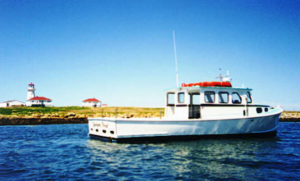
Boon Island is not open to the public, and its rocky terrain makes landings treacherous. Still, its allure draws lighthouse enthusiasts and historians. Scenic boat tours occasionally pass by, offering distant glimpses of this stoic sentinel.

📚 Legacy in Literature and Lore

The lighthouse’s grim history inspired Kenneth Roberts’ novel “Boon Island”, and its stark beauty has been described as “an eternal exclamation mark” by 19th-century writer Samuel Adams Drake. It’s a place where nature, history, and human endurance collide.


🌍 Hidden Gems & Internet Shenanigans: My Accidental Travel Checklist

Surfing the Web, Stumbling into Wanderlust

One of my guilty pleasures since being forcefully retired (yes, I’m still salty) is cruising around the internet. It’s a rabbit hole of weird and wonderful discoveries—and we all know if it’s on the internet, it must be true, right?

I especially love lists. Bucket lists, travel lists, “best of” lists—I devour them like popcorn. I scroll through to see what I’ve done, what I’ve missed, and whether I agree with the writer’s take. Recently, I stumbled across a list of “Hidden Gems.” I expected obscure spots I’d never heard of, but surprise surprise—I’ve actually been to a few!

❄️ Leavenworth, Washington: Alpine Charm Without the Prison

The list kicks off with Leavenworth, Washington—a mountain village with alpine architecture, festive vibes, and wintery fun like sleigh rides and snowshoeing. Sounds magical… if you like snow. I, however, am a blanket-loving, cold-avoiding creature. Sleigh rides? Maybe. Snow? Hard pass.

Oh, and just to clear up a common misconception: the infamous Leavenworth prison is in Kansas, not Washington. So no need to worry about bunking with inmates on your holiday getaway.

🏖️ St. Augustine, Florida: History with a Sea Breeze

Now this one I have visited. St. Augustine is described as “old world elegance meets coastal calm,” and I couldn’t agree more. It’s a dream for history buffs and beachcombers alike.

I wandered through the Fountain of Youth Archaeological Park (Ponce de León sightings: frequent), and explored Castillo de San Marcos—the oldest masonry fort in the continental U.S. It looked nothing like the northern forts I grew up with, and that made it all the more fascinating.

Castillo de San Marcos – Photo Credit Deb Neumann

🏜️ Village of Oak Creek, Arizona: Sedona’s Serene Sister

Been there, done that—and I’d do it again. Oak Creek is often overshadowed by Sedona, but it’s a gem in its own right. Rich red rocks, peaceful vibes, and spa-worthy stays make it a haven for nature lovers and photographers. I’ve visited more than once, and each time feels like a fresh discovery.

Red Rocks –photo credit Deb Neumann

🏞️ Eureka Springs, Arkansas: Victorian Whimsy in the Ozarks

I haven’t made it to Eureka Springs yet, but it’s on the “maybe” list. It’s described as a quirky small town with Victorian charm, winding hills, and upscale cabins tucked into the Ozarks. Kayaking and underground tours sound fun… though my joints might disagree. Still, never say never.

🌊 Mendocino, California: Cliffside Calm and Coastal Cuisine

Now this one has my attention. Mendocino promises cliffside inns, local vineyards, and oceanfront escapes. Food, wine, and waves? Yes, please. I could definitely get into that kind of coastal calm.

✨ What’s Next?

There’s still so much to explore—new places to discover and old favorites to revisit. Maybe I missed something the first time around. Maybe I’ll find a new favorite. Either way, the journey continues… one internet list at a time.


One More Scary Bridge Story


One More Scary Bridge Story: The Final Chapter

After my last post about terrifying bridges, I expected a flood of horror stories. There are certainly enough fear-inducing spans out there—but it seems you, my dear readers, are made of sterner stuff.

Still, a few brave souls shared their tales, and I couldn’t resist digging deeper. Let’s take one last look at some of the world’s most spine-tingling bridges before we lay this topic to rest.


🌉 Mile High Swinging Bridge — North Carolina

This one wasn’t on my original list, but a reader’s story of sheer terror sent me searching.

Located in Grandfather Mountain Nature Park, the Mile High Swinging Bridge is a 228-foot suspension bridge that spans an 80-foot chasm—at more than one mile in elevation. To reach it, you’ll drive a winding two-mile scenic road, climb 50 stairs to the Top Shop, and then take an elevator to the final leg.

The bridge is fully accessible, so yes—you can roll across in a wheelchair. Equal opportunity thrills (or chills), indeed.


🌲 Capilano Suspension Bridge — British Columbia, Canada

This one made my original list and was also suggested by a reader who’s “been there, done that.” Just looking at the photos had my heart in my throat.

Stretching 450 feet across and suspended 230 feet above the Capilano River, this swaying, bouncing bridge connects manicured gardens to temperate rainforest. Steel cables serve as handrails, and wooden planks make up the floor—just enough to keep you wobbling with every step.

The website reassures visitors that the bridge can hold the weight of a fully loaded 747. Comforting? Maybe. But I’ll still be clutching those cables.


🏔️ Trift Bridge — Switzerland

One more for the road—because why not end with a high-altitude thrill?

Built in 2004 and modeled after Nepalese high-wire bridges, the Trift Bridge was designed to restore access to the Trift Glacier, which had receded due to global warming. It became such a tourist magnet that it was replaced in 2009 with a safer version.

Suspended 328 feet above the ground and stretching 558 feet long, this pedestrian bridge is considered one of the most spectacular in the Alps. If you can handle the height, the views are unforgettable.


🧭 There Are More…

Of course, this is just the tip of the terrifying iceberg. A quick search for “Most Dangerous Bridges in the World” will reveal dozens more. But for now, I think we’ve crossed enough chasms together.

If I missed one of your favorites, drop me a note! Maybe we’ll revisit this topic down the road—preferably one with guardrails.