Hummingbirds Are Back: The Tiny Travelers of Spring Migration


✨April Slips Away… and the Hummers ArriveMale Ruby Throasted hummingbirds have a brilliant iridescent red throat that looks dark when it’s not in good light.
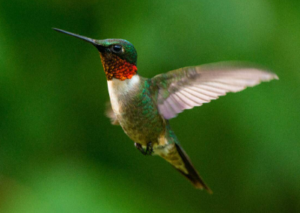
April is winding down and we’re looking May right in the eye. That means one thing for Massachusetts nature lovers: the hummingbird migration has officially begun. The earliest sighting this year popped up during the week of April 20 — a tiny flash of iridescence announcing spring’s true arrival.

These remarkable birds spent the winter basking in Central America or Mexico. Olé indeed.

Daylight Flyers With a Need for Nectar

Hummingbirds migrate during the day, which means you can spot them flitting among early‑blooming flowers in search of energy‑rich nectar. And speaking of energy, these little dynamos are astonishing.

  • They can travel up to 23 miles in a single day
  • During their Gulf crossing, they may cover up to 500 miles at once
  • Their average flight speed is 20–30 mph, and during courtship dives they can triple that

The Physics-Defying Hummingbird Body

To pull off these long‑distance feats, a hummingbird’s body runs like a high‑performance engine:

  • Heart rate: up to 1,260 beats per minute
  • Wingbeats: 15 to 80 flaps per second
  • Breathing: about 150 breaths per minute

Tiny birds, enormous stats.
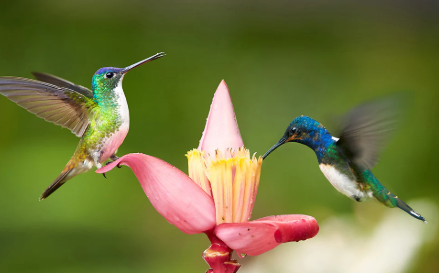
Fun Facts About Our Feathered Friends

A few more delightful tidbits to impress your fellow bird‑watchers:

  1. They remember every feeder they’ve ever visited
  2. “Hummer” is both a giant SUV and a birder’s nickname for hummingbirds
  3. They’re awake during the day and sleep at night
  4. There are 350+ species of hummingbirds
  5. All hummingbirds are native to North or South America
  6. They love sugar (relatable)
  7. Natural nectar is clear — no need for red dye
  8. Make your own nectar: 4 parts water + 1 part white sugar, boiled and cooled
  9. They’re attracted to the color red
  10. They eat insects
  11. They visit 1,000 flowers a day
  12. Their wings beat thousands of times per minute
  13. They can’t walk or hop — their feet are for perching only
  14. They take about 150 breaths per minute
  15. A group of hummers is called a “charm”
  16. You can ID them with the free Audubon Bird Guide app
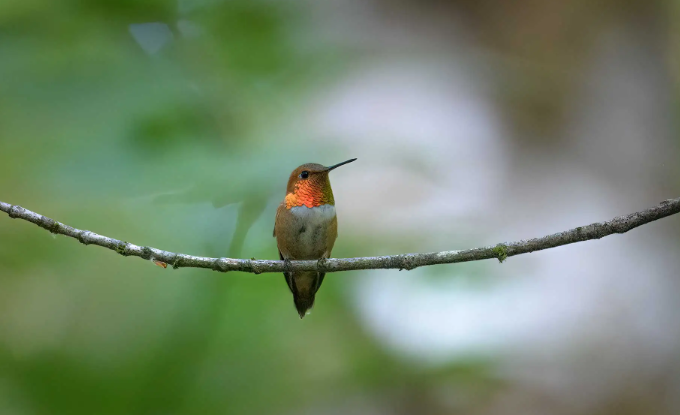
Get Your Yard Hummer‑Ready

So — are you ready for your feathered friends? Clean out that feeder, plant those nectar‑rich flowers, and roll out the red carpet. The tiny hummers are on their way, ready to grace your garden with their zip, sparkle, and charm. The first sighting in Plymouth, right down the raod, was April 22!

They really are happy little jewels flitting through the yard.

Welocme back little Hummers



Welcome to Alabama, Please Claim a Stranger’s Suitcase


America is weird, but Alabama’s Unclaimed Baggage store might just take the crown.

A Tourist Attraction Built on Lost Suitcases

You’ve got to wonder about a state where one of the biggest tourist draws is… lost luggage. America is weird, but Alabama’s Unclaimed Baggage store might just take the crown. Tucked away in Scottsboro, this retail oddity specializes in selling the contents of bags that never made it back to their owners.

If You’re Nervous About Losing Your Own Bag…

I get it—flying to a store full of lost luggage feels like tempting fate. What’s to stop your own suitcase from joining the lonely, unclaimed masses while you’re browsing the racks? If that thought makes you twitchy, good news: they have an online shop. You can treasure‑hunt from the safety of your couch.

A Business Born From a Pickup Truck and $300

The store has been around for more than 50 years, and its origin story is peak American entrepreneurship. In 1970, Doyle Owens borrowed a pickup truck and $300, then bought his first load of unclaimed bags from a Trailways bus station. By 1978, he’d struck deals with airlines—starting with Eastern Airlines—and the volume (and the weirdness) exploded.

When the South Became a Ski Destination

One of the store’s most famous traditions began in 1981: the annual Ski Sale. Alabama isn’t exactly known for snow, but the store had mountains of lost ski gear looking for a home. Winter sports fans flocked in, and the event became so popular that people now camp out in the parking lot on the first Saturday of November just to be first through the door.

A Snapshot of Humanity, One Suitcase at a Time

The inventory comes from airlines and transportation companies across the country, making the store a strange little museum of what people pack for their travels. Clothes, electronics, souvenirs, oddities—you name it, it’s probably passed through Scottsboro at some point.

Detour Worth Taking

So next time you pack a bag and head to Alabama, skip the dolphin cruise and the Civil Rights walking tour just this once. Take a detour to Scottsboro and wander through the land of lost luggage. Who knows—maybe you’ll even spot the suitcase that never made it to Florida on your last trip.


A Curious Day Trip to America’s Stonehenge


🪨 New Hampshire’s Strangest Archaeological Mystery Welcome to America's Stonehenge where you can let your inner Indian Jones wander

Let’s take a little trip over the state line into our neighbor to the north — New Hampshire. The Live Free or Die state has its fair share of quirky attractions, but one of the strangest sits just over the border in Salem.

If you enjoy archaeology, mysterious stone structures, or simply wandering around the woods wondering what on earth happened here, then this place is absolutely for you.

And yes — I’ve been there.
And yes — if you let your imagination run free, it can get a little creepy.

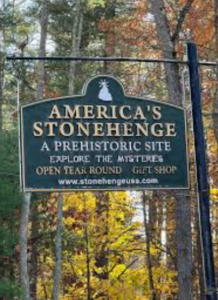
Welcome to America’s Stonehenge.


🌀 Is It Really “Stonehenge”?

Let’s be honest: the name is a bit ambitious. There are no towering bluestones or dramatic circles rising from the earth. But what is here is a sprawling network of stone chambers, walls, and monoliths that spark endless questions.


Who built it?
When?
And why?

No one has definitive answers — which is half the fun.


🔊 The Oracle Chamber: A Voice From the Stones

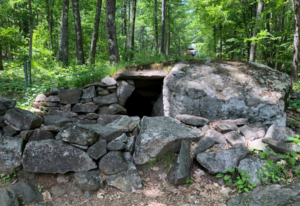
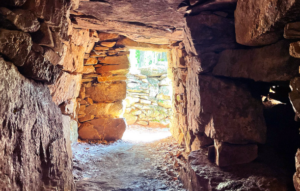
One of the most intriguing structures is the Oracle Chamber, the largest enclosed space on the site. What fascinates me most is the speaking tube that connects the chamber to the outside.

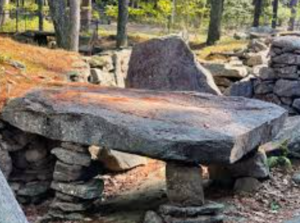
At the exterior end of the tube sits a grooved stone table that some speculate may have been used for offerings. To whom or what? No one knows.

But picture this:

Primitive people gathered around the stone table with chickens or goats as offerings…
A hidden voice suddenly echoing from the rocks…
A disembodied whisper floating through the air…

Tell me that wouldn’t send a shiver down your spine.


🌅 The Summer Solstice Sunrise Stone

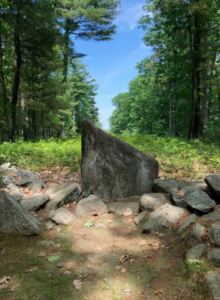
My favorite feature is the Summer Solstice Sunrise Monolith — a standing stone placed to mark the sunrise on the longest day of the year.

It’s not as dramatic as the towering monoliths on Salisbury Plain, but it still warms my heart. I can almost “see” the wise women of the tribe gathering at dawn, welcoming the sun and celebrating the birth of a new season.

Sometimes the simplest stones carry the deepest stories.


🐍 Other Mysteries Scattered Through the Woods

The site is full of curious structures, each with its own personality:

  • The Watch House Chamber
  • The S‑Shaped Serpent Wall
  • The East–West Chamber

Archaeologists and enthusiasts are still documenting the site, and new discoveries continue to surface. It’s the kind of place where every stone feels like it has a secret.


🏺 A Museum of Everyday History

Before or after your walk, take time to explore the small museum. The artifacts range from the Stone Age to more recent centuries — ceramics, eyeglasses, keys, and even half a pair of scissors.

It’s a quiet reminder that human history isn’t just grand monuments. It’s the ordinary objects people leave behind.


🧭 If You Go: Practical Tips for Visiting America’s Stonehenge

📍 Location:
105 Haverhill Road, Salem, New Hampshire — just over the Massachusetts border, an easy day trip.

🚗 Parking:
There’s a small on‑site parking lot right at the visitor center. It’s free, and usually there’s plenty of space unless you’re visiting on a peak fall weekend.

💵 Admission:
Prices vary slightly by season, but expect something around:

  • Adults: about $15
  • Seniors: discounted
  • Kids: reduced rate

Check their website before you go for the most current info.

⏰ Hours:
Open year‑round, with hours shifting seasonally. Winter visits can mean snowy or muddy trails.

🥾 Terrain:
The paths are wooded and uneven — not difficult, but definitely “forest floor.” Wear sturdy shoes.

🕒 Time Needed:
Plan for 1–2 hours depending on how deeply you explore.

🏛️ Visitor Center:
The museum is small but worth a look for context and artifacts.

🐕 Pets:
Leashed dogs are welcome on the grounds.

🌞 Best Time to Visit:
Late spring through fall offers the most comfortable weather, and the solstice markers are especially fun to see around June.


🧭 Be Your Own Indiana Jones

A visit to America’s Stonehenge is a chance to let your imagination roam. You can be your own Indiana Jones for the day — minus the rolling boulders and snakes, thankfully.

Whether you come for the archaeology, the mystery, or simply the peaceful walk through the woods, this quirky New Hampshire site offers a little something for every curious soul.


Celebrating 100 years of the Mother Road

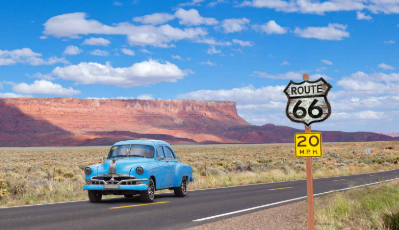
The mother road is 100 years old and still fascinates travelers


Celebrating a Road That Isn’t All There Anymore

Every now and then something pops up in my feed that feels like a tap on the shoulder. Today it was a notice about the upcoming Route 66 Centennial — a once‑in‑a‑century celebration for a road that’s somehow both legendary and, well… missing in places. I was out and about, minding my own business, when suddenly the Mother Road wanted my attention again.
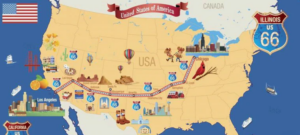
And honestly? I didn’t mind.

A Road That Crosses Eight States… and I’ve Only Seen a Sliver

The article reminded me that Route 66 stretches across eight states, from Illinois cornfields to the California coast. Eight states of diners, neon signs, motels, migration stories, and dusty postcards. Eight states of American mythology.
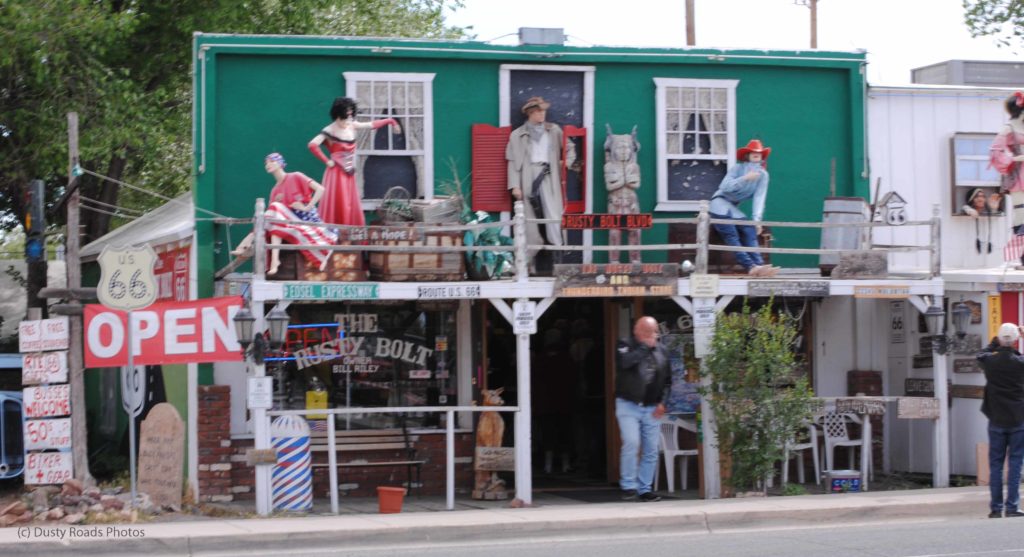
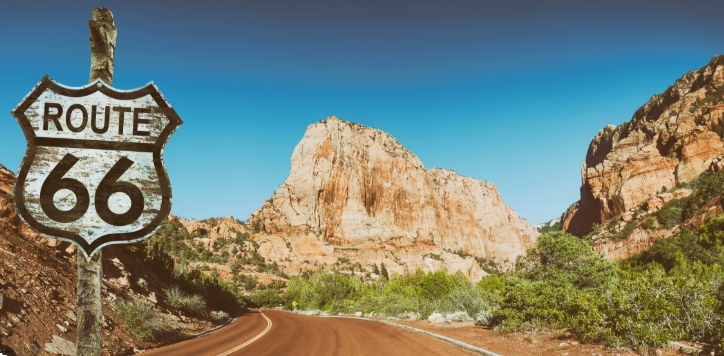
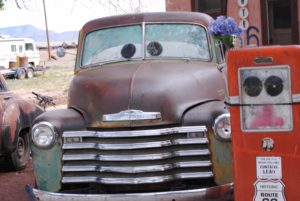
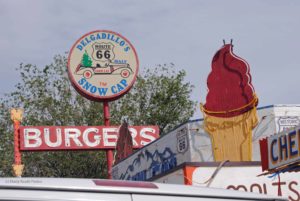
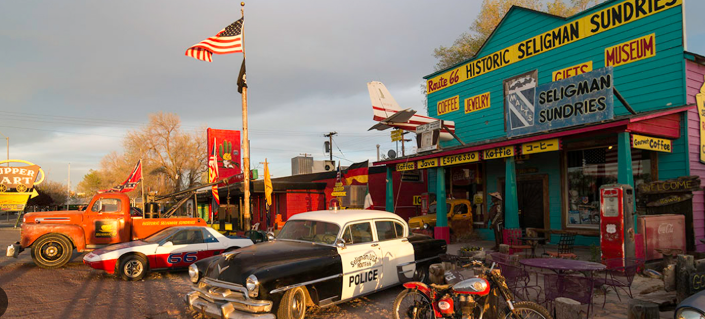
My own experience? A tiny sliver — the stretch near Flagstaff and the Grand Canyon. A few miles, a few minutes, and yet it still felt like stepping into a vintage travel poster. The kind with a smiling family in a station wagon and a promise that adventure is just one more mile down the road.


It’s funny how a place can be both new to you and instantly familiar.

The Centennial That Sparked This Post

The blurb I saw summed it up perfectly:

The centennial commemorates the original designation of Route 66 on April 30, 1926, celebrating its cultural, historical, and economic impact across eight states. The celebration also highlights preservation efforts, tourism, and the ongoing legacy of the Mother Road.

That’s the heart of it — not just a birthday party, but a celebration of everything Route 66 has meant to travelers, dreamers, and the communities along its path.

Whether you’re attending the kickoff in Springfield, joining a satellite event, or just driving a surviving stretch, the centennial is being billed as a “once‑in‑a‑century opportunity to experience the heritage and spirit of America’s most iconic highway.”

And that’s what got me thinking.

Why Celebrate a Road That Isn’t Whole Anymore?

Route 66 isn’t intact from end to end. Some pieces have been rerouted, abandoned, or swallowed by the interstate system. Some towns faded when the traffic did. Some stretches survive only as cracked pavement and fading paint.

But maybe that’s exactly why it deserves celebrating.

Because Route 66 was never just a road.
It was a promise.
A pathway west.
A symbol of possibility.
A ribbon of stories stretching across eight states and nearly a century.

Even in fragments, it still carries all of that.


My Little Piece of the Mother Road

Standing on that stretch near Flagstaff, I remember thinking how strange and wonderful it was that a simple road could hold so much history. I wasn’t driving cross‑country. I wasn’t chasing the whole route. I was just passing through — and yet I felt connected to something bigger.

And because the universe has a sense of humor, one of my favorite photos from that trip is of Mater the tow truck — yes, that Mater from Pixar’s Cars — sitting proudly along Route 66. A fictional character on a real road, reminding me that Route 66 lives just as much in our imagination as it does on the map. Pixar didn’t just make a cute movie; they captured the heartache and hope of all those little towns the Mother Road once carried.

Maybe that’s the magic of Route 66.
You don’t need all 2,448 miles.
Sometimes a few feet — or a rusty tow truck with a big grin — are enough.

Looking Ahead to the Centennial

The centennial feels like an invitation — not just to celebrate the past, but to appreciate what remains and to honor the communities keeping the spirit alive. To wander a little. To remember that roads don’t have to be perfect or continuous to take you somewhere meaningful.

Maybe I’ll explore more of it someday.
Maybe you will too.

Either way, the Mother Road is turning 100, and that’s worth a moment of appreciation.

Maybe a road doesn’t have to be whole to take you somewhere.


Happy Earth Day


A Day to Celebrate Our Shared Planet

Every April 22, the world pauses—just for a moment—to honor the only home we’ve ever known. Earth Day began in 1970 as a national call for environmental protection, but by 1990 it had grown into a global movement, with organized events in 141 countries and a shared understanding that caring for the planet is something we all hold in common.

The Photo That Changed How We See Earth

One of the sparks that helped shape the early environmental movement wasn’t a speech or a law. It was a photograph.

In 1968, during the Apollo 8 mission, astronaut Bill Anders captured the now‑iconic “Earthrise” image: our blue planet rising above the gray lunar horizon. Small. Bright. Fragile. That single picture changed how millions of people saw the world. It reminded us that everything we love—every ocean, every forest, every city, every memory—exists on this one shimmering sphere floating in the dark. It’s hard not to feel something when you look at it.

More than 50 years after it was shot, Earthrise continues to be seen as one of the most iconic environmental photographs ever taken.

Earthrise photo by Bill Anders

Earth Day Close to Home: The Forever Farm

Closer to home, Earth Day feels a little more grounded.

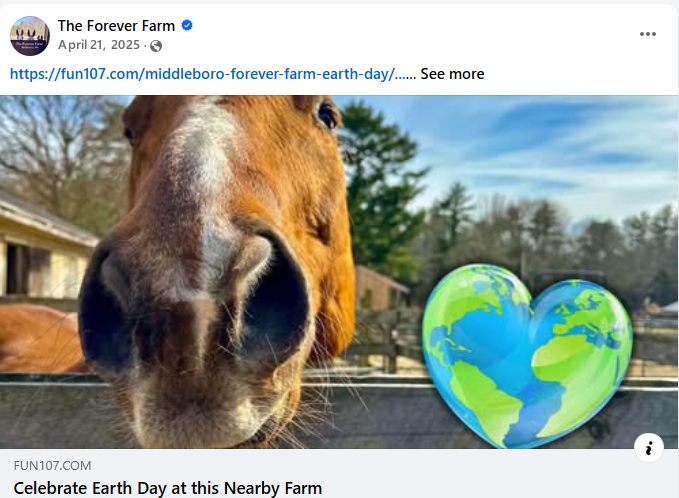
The Forever Farm holds a special place in my heart. It was founded by my friend — and former supervisor — Nichole Botelho, one of those rare people who turns life’s lemons into something far sweeter. When the pandemic brought an unexpected layoff, she didn’t shrink from it. She dreamed bigger. What started as a quiet idea she once mentioned to me has grown into a thriving sanctuary for farm animals who deserve a second chance.

Celebrate Earth Day With the Forever Farm

And these aren’t the typical “cute and cuddly” rescues you see on posters. Nichole opens her arms to donkeys and pigs, chickens and roosters, and even a miniature horse named Miracle. Watching her take a dream and build it into a place of safety, healing, and hope has been nothing short of inspiring. The Forever Farm is a reminder that caring for the planet isn’t just about oceans and forests — it’s also about the creatures who share our daily world.

Small Actions, Big Impact

Earth Day doesn’t ask us to be perfect. It simply asks us to pay attention. To notice the beauty around us. To care a little more today than we did yesterday. And to remember that even small choices — recycling, planting, supporting local farms, protecting green spaces — add up when millions of people make them together.

A Moment to Reflect and Recommit

So here’s to Earth Day.
To the big blue marble in the sky.
To the places we love.
And to the people, like Nichole, who turn compassion into action and make this planet a little kinder for all who call it home.