What if I Won the Lottery

What If I Won the Lottery? Spoiler: Banner Would Demand a Gold-Plated Cat Tree

Chewy

Let’s just say I checked my ticket, fainted dramatically onto a pile of unfolded laundry, and woke up a millionaire. What happens next? Oh, the possibilities.

Real Coffee

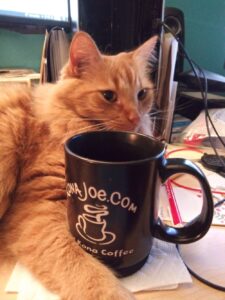
First, I’d upgrade my coffee. No more “mystery roast” from the bottom shelf—I’m talking beans hand-whispered to by monks in the Andes. My mornings would begin with a cup so smooth it sings lullabies to your soul. Balboa would get his own mug, because obviously he’s earned it by knocking mine off the counter every day.

You Cant Buy Love But You Can Rescue It Cat Coffee Mugs, Set of 6

Home Sweet Home

Then there’s the house. Not a mansion—too echoey. I’d go for a cozy haven with a waterfall wall, glowing furniture, and a secret room filled entirely with plush throws and scented candles. Banner would have a biometric paw scanner to access his private sunroom, complete with heated cushions and a live-stream of birds who’ve signed a modeling contract.

EXQUISITE Carmel fairytale Cottage, Huge Private gardens! - Carmel | Vrbo

Travel- You Bet

Utah Landscapes - Utah Top Photography Locations • PhotoTraces

I’d travel, of course. Utah’s Mighty Five? Done. I’d hike with a personal sherpa who also moonlights as a poet, narrating my journey in verse while I snack on lavender shortbread. My blog would explode with tales of enchanted canyons and mystical chipmunks who whisper investment advice.

New England Chipmunk

Photo credit Deb Neumann

What Would Happen to My Store

And the store—Welcoming Haven would become Welcoming Heaven. I’d launch a line of nature-themed tech for kids that glows, chirps, and teaches them how to identify clouds by personality. Every product would come with a haiku and a biodegradable glitter packet.

But let’s be honest: I’d still write. Still chase the perfect tagline. Still tell stories about Banner’s dramatic hairball performances and Balboa’s existential stares. Because even with a vault full of cash, the real treasure is sharing the magic of everyday moments—with a little extra sparkle.

photo credit Deb Neumann


Desert Wings & Coal Mine Shadows

More Creepy Cryptids

Have you heard of the Van Meter Monster? Another flying menace. Is it similar to The Tombstone Thunderbird is Arizona? Could they be the same creature? 

🦅  The Tombstone Thunderbird vs. The Van Meter Monster

In the dusty pages of American folklore, two winged beasts flap their way into legend: the Tombstone Thunderbird of Arizona and the Van Meter Monster of Iowa. Though separated by over a thousand miles and a decade in time, both creatures share eerie traits—massive wings, bulletproof hides, and a knack for vanishing into myth. Let’s dive into their stories and explore what makes each cryptid so captivating.

🌵 The Tombstone Thunderbird: Wild West Wonder

Date: April 26, 1890
Location: Tombstone, Arizona
Witnesses: Cowboys and prospectors
Legend: A giant bird—possibly featherless, with leathery wings like a pterodactyl—was allegedly shot down by six men and displayed against a barn wall. Its wingspan? Said to be 160 feet. The photo of this event? Never found, yet many swear they’ve seen it in old magazines.

In 1886, the Tombstone Epitaph (Arizona) published a ...

internet


Sensory Snapshot: Imagine the dry desert wind, the scent of gunpowder, and the awe of seeing a creature larger than a blue whale sprawled across a barn. The tale is stitched with Old West bravado and a hint of false memory syndrome—where vivid imaginations conjure images never truly seen.

🕳️ The Van Meter Monster: Coal Mine Cryptid

Date: September 29–October 3, 1903
Location: Van Meter, Iowa
Witnesses: Town doctor, banker, teacher, and other respected locals
Legend: A nine-foot-tall creature with bat-like wings, a glowing horn, and a sulfurous stench terrorized the town for several nights. Bullets bounced off it, and it emitted blinding light. Eventually, two creatures were spotted near an abandoned coal mine and sealed inside.

The Van Meter Visitor Greeting Card

Internet

Sensory Snapshot: Picture a quiet Midwestern town jolted awake by beams of unnatural light, the acrid smell of sulfur hanging in the air, and the thud of shotgun blasts echoing through the night. The Van Meter Monster feels more alien than avian—part devil, part dragon, part mystery.

🔍 Side-by-Side Comparison

Feature Tombstone Thunderbird Van Meter Monster
Wingspan Claimed 160 feet (likely exaggerated) Large bat-like wings
Appearance Pterodactyl-like, featherless Half-human, glowing horn, red eyes
Bulletproof? Allegedly shot and killed Immune to bullets
Smell Not mentioned Overwhelming sulfur stench
Setting Desert frontier Small-town coal mine
Legacy Photo legend persists Annual festival celebrates sightings

🧠 Folklore or False Memory?

Both legends thrive on the tension between belief and skepticism. The Tombstone Thunderbird’s tale is tangled in memory distortion—many claim to have seen a photo that likely never existed. The Van Meter Monster, meanwhile, boasts multiple eyewitnesses and consistent descriptions, yet no physical evidence remains.

🎪 Cryptid Culture Today

Van Meter hosts an annual festival celebrating its monster, complete with games, paranormal talks, and themed treats. Tombstone, ever the theatrical town, keeps its Thunderbird alive through ghost tours and Wild West reenactments. Both creatures have inspired books, podcasts, and cryptid merch—perfect for curious collectors or folklore fanatics.


Whether you’re drawn to the desert drama of Tombstone or the eerie glow of Van Meter’s visitor, these legends remind us that mystery thrives in the margins. They’re not just stories—they’re invitations to wonder.


Happy Labor Day!

Honoring Hard Work: Celebrating Labor Day

Each year on the first Monday in September, Americans take a well-deserved pause to celebrate Labor Day. For many, it signals the unofficial end of summer, complete with barbecues, parades, and one last beach trip. But beyond the backyard gatherings and retail sales, Labor Day holds a deeper meaning—it’s a day to honor the contributions of workers who helped shape our country.

Barbecue Clipart transparent PNG - StickPNG

The History Behind Labor Day

Labor Day was first celebrated in the late 19th century, born out of the labor movement. During a time when long hours, unsafe conditions, and low wages were the norm, hardworking men and women stood together to demand fairness and dignity in the workplace. Their efforts led to reforms we often take for granted today—such as the 40-hour workweek, better wages, and safer environments. In 1894, Labor Day was officially recognized as a federal holiday, giving Americans a day to reflect on the value of hard work.

A Day to Reflect and Recharge

In today’s fast-paced world, Labor Day is not only about honoring workers of the past, but also about acknowledging the efforts of those who keep our communities running every day. Teachers, healthcare workers, farmers, service employees, and countless others deserve appreciation for the vital roles they play.

Philadelphia celebrates workers rights and unity - WHYY

Stock photo

It’s also a chance to recharge. Whether you spend the day with family at a cookout, take a quiet hike in the woods, or simply relax with a good book, Labor Day reminds us that rest is just as important as work.

Carrying the Spirit Forward

As we enjoy the holiday, let’s remember that Labor Day is more than just a long weekend. It’s a tribute to perseverance, unity, and the belief that every worker deserves respect. By recognizing the value of hard work—past and present—we carry the true spirit of Labor Day forward.

So, here’s to a day of gratitude, rest, and celebration. Happy Labor Day!


Curse of the Shared Brain Cell

photo Credit Deb Neumann

Curse of the Shared Brain Cell: Life With an Orange Cat

Orange cats have a reputation. If you’ve ever spent time in the cat-loving corners of the internet, you’ve probably heard the joke: all orange cats share one collective brain cell. No one really knows where this idea started, but after living with one myself, I can confidently say—it feels true.

Orange cats aren’t just regular cats. They’re extra. They’re goofy, unhinged, and somehow both lazy and chaotic at the same time. Just look into their eyes—completely empty. Nothing going on in there.

Banner- photo credit Deb Neumann


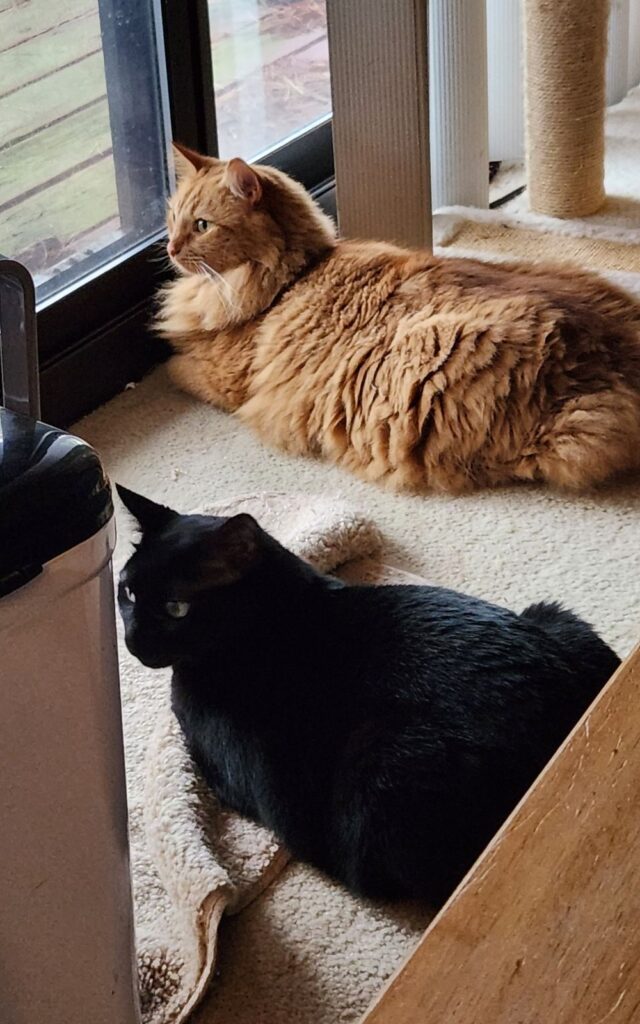
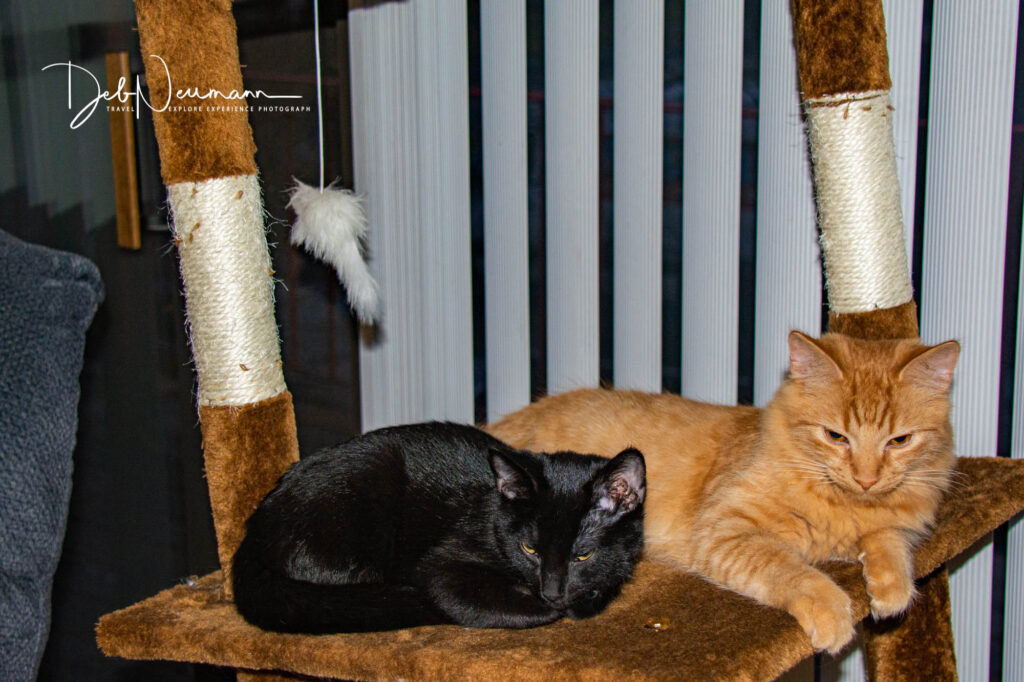
Take my orange cat, Banner, for example. He has recently developed a vendetta against bulletin boards. He cannot stand to see them on the wall. I live in constant fear that he’ll manage to pull out a push pin and try to eat it.

Playtime

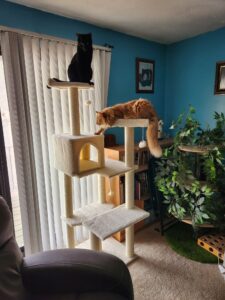
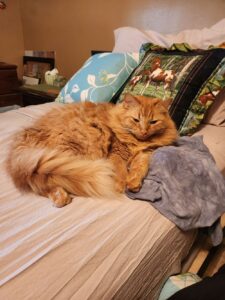
Banner’s approach to playtime is equally on-brand. Most cats love to chase and climb, but not him. He prefers to play from a reclining position, lazily batting at toys that dare to come close enough. On the rare occasion he does chase something, it’s like watching a chonky orange tank rumble across the floor. The cat tree? Fun when it was new. Now? Too much effort. A crinkly paper bag with a hole in the bottom? That’s the real prize.

Cat in the Bag – photo credit Deb Neumann

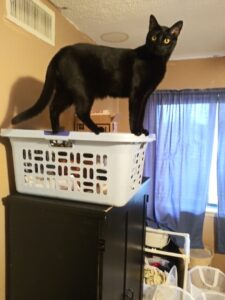
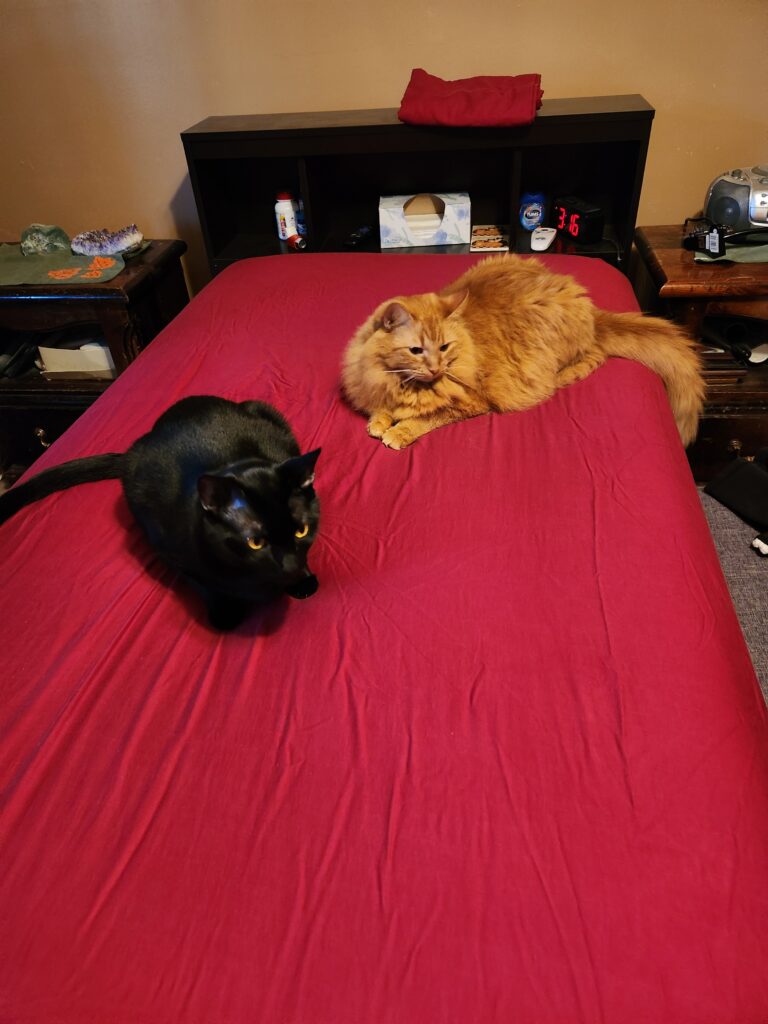
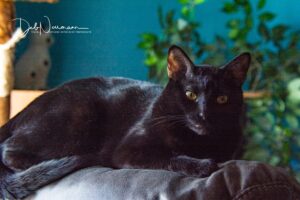
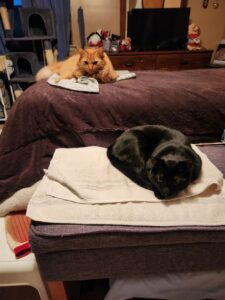
Then there’s his way of “relaxing.” Banner loves to drape himself across tables and ledges with his head hanging completely upside down, as if letting gravity feed the lone brain cell he’s been allotted. My black cat, Balboa, would never be caught in such a position—he has too much dignity for that nonsense.

Just Resting – photo credit Deb Neumann

And it’s not just Banner. The internet is full of orange cat chaos. My personal favorite? The orange cat who only lets his owner carry him upside down. Classic.

So yes, orange cats may have to share that one collective brain cell. But they also share something else—pure entertainment. Today might officially be Orange Cat Appreciation Day, but in my house, every day is. Banner keeps life interesting, and brain cell or not, I wouldn’t trade him for anything.

Kitty Chaos photo credit Deb Neumann


Winged monster in the Wild West—legend or nightmare come to life?


The Tombstone Thunderbird Mystery: 

In the dusty town of Tombstone, Arizona—famous for its Wild West history—there’s a legend that continues to spark curiosity: the Tombstone Thunderbird. The story goes that in April 1890, two ranchers encountered and killed an enormous, birdlike creature near the Huachuca Mountains. According to reports, the creature had leathery wings resembling those of a bat, a body stretching nearly 20 feet long, and an appearance more like a prehistoric pterosaur than any bird we know today.

The tale gained traction when a local newspaper, the Tombstone Epitaph, allegedly published an article describing the capture. Some versions even claim that a photograph existed, showing men standing proudly in front of the creature with its wings stretched across a barn. This photograph has become one of the most enduring pieces of cryptid lore—people swear they’ve seen it, but no verifiable copy has ever surfaced.


Tombstone Thunderbird - True West Magazine

Photo True West Magazine

Skeptics argue that the story is pure folklore, born out of the era’s fascination with tall tales, frontier adventures, and the discovery of dinosaur fossils. Without physical evidence—bones, feathers, or that elusive photograph—the Thunderbird remains firmly in the realm of mystery. Still, the legend refuses to fade. It resurfaces in books on cryptozoology, TV documentaries, and late-night campfire stories told across the Southwest.

Fact, Folklore, or Something In Between?

Why does the Tombstone Thunderbird captivate us so much? Maybe it’s because it touches on something primal: the human desire to believe that the unknown still walks among us. In a world where satellites map every corner of the globe, stories like this remind us that mysteries can linger just beyond the edge of history.

Whether you see it as a piece of forgotten journalism, a tall tale, or a glimpse of something extraordinary, the Tombstone Thunderbird remains one of Arizona’s most fascinating unsolved mysteries.

Legend or Lie? The Tombstone Thunderbird

Legend or Lie