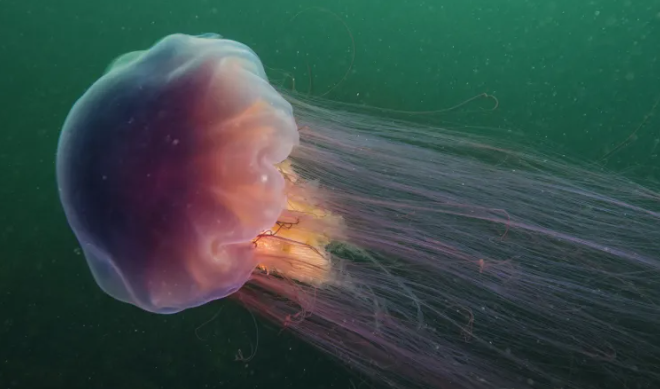
Why Cape Cod’s Lion’s Mane Jellyfish Made Me Remember
Hearing about the invasion of Lion’s Mane jellyfish on Cape Cod had me reminiscing. Remember, I’m old enough, so I’m allowed.
So let me tell you about the time I met what I now think might have been a Lion’s Mane jellyfish.
Cold, Murky New England Diving Conditions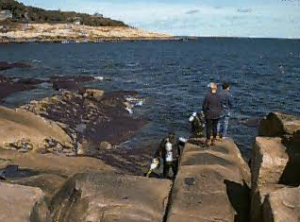
I was scuba diving off Cathedral Rocks in Rockport. The water is pretty deep there, and New England waters are never clear. It’s not like diving in the Caribbean where the water is warm and you can see for 100 feet or more. Diving up here, even in the summer, requires a ¼‑inch to 1/2 inch wetsuit for warmth. Visibility is 2–3 feet, if you’re lucky.
Losing Track of My Dive Buddy
The number one rule is to never dive alone. Hmmm… I’ve been known to ignore that rule, but not on this day. I had a dive buddy, but it was just the two of us, and I’d lost track of him.
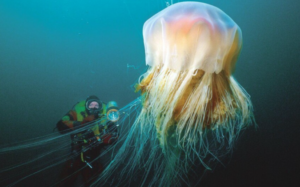 Suspended at 65 Feet in Perfect Stillness
We were in deep water. I was floating at about 65 feet. I’d hit the sweet spot — perfect neutral buoyancy.
At that depth, there’s no top or bottom. The world becomes a vertical void. You can’t look up and see the surface, and you can’t look down and see the ocean floor. The only way to know which direction is “up” is by watching your bubbles rise.
Most sport diving happens in 25–40 feet of water, so you don’t usually get this effect. But at 65 feet, suspended in the water column, you feel like you’re hanging in space. I didn’t need to move. I could just float there, watching my bubbles drift upward and enjoying the stillness.
A Shape Appears in the Murk
While I was hanging there, looking for my dive buddy’s bubbles, I caught a glimpse of something in the murky water. It was just at the edge of my vision, and it was big. I don’t remember being afraid, just curious. So I stayed very still. What a feeling.
The Giant Jellyfish Emerges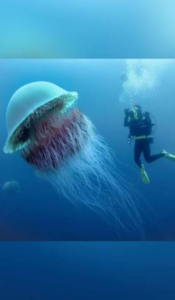
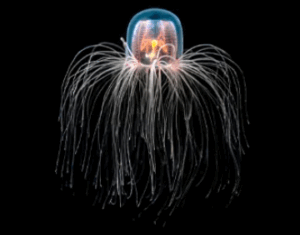
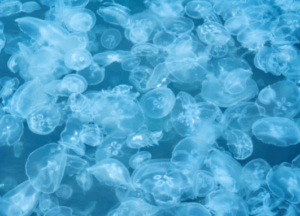
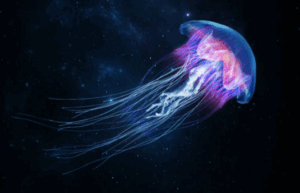
Out of that murk, a huge jellyfish came floating toward me. The bell expanded and contracted like bellows. At the time I thought it was a moon jelly, but if so, it was the biggest one I’ve ever seen. It’s possible it was a Lion’s Mane.
In any case, it was an amazing moment — the stillness, the murky water, and the perfect balance that let me just hang there and watch this thing approach.
A Movie Moment Underwater
I remember thinking it was like watching a scene from a movie where the Blob emerges to terrify the unsuspecting protagonist — in this case, me. But I wasn’t terrified. I was fascinated.
The Unexpected Sting
As the creature floated past me, I felt a sting on my face just under my mask. I’d been tagged by a trailing tentacle. It was just a tiny gossamer thread. I didn’t even see it, but I felt it.
My wetsuit and mask protected me from all but that one tiny thread. I was lucky. If it was a Lion’s Mane, I could have been seriously stung, but it was just the one tentacle, and it left me with a vision I’ve cherished for years.
Why the Moment Stayed With Me
It was one of those things that makes the ocean special to me — not something you see or experience every day. Of course, I don’t want to get stung every day, but this was no worse than a bee sting on land. A moment’s annoyance to see such a beautiful creature in the wild.
Moon Jelly or Lion’s Mane — It Doesn’t Matter
Moon jelly or Lion’s Mane — it doesn’t matter to me. It was a mystical moment.
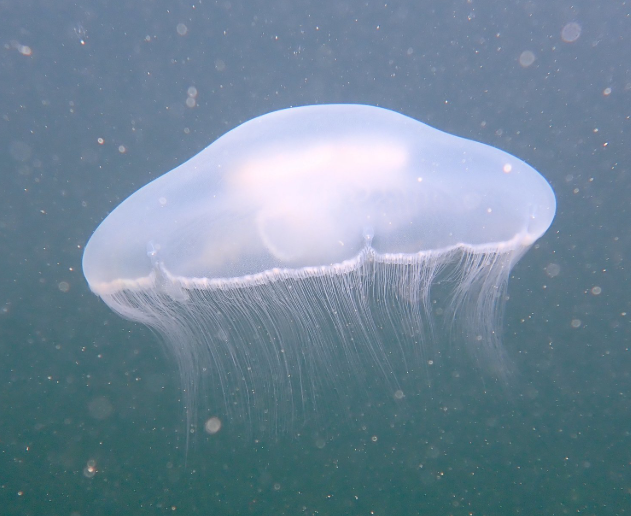
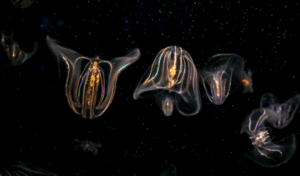
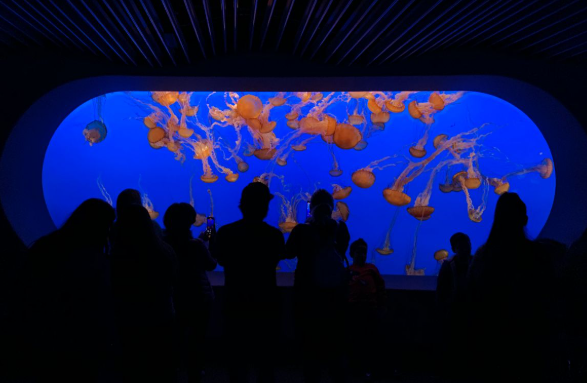
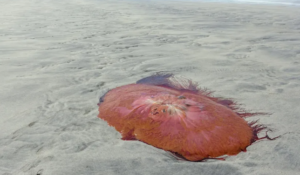
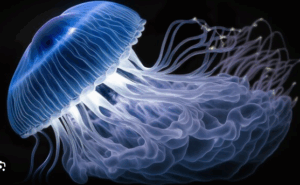
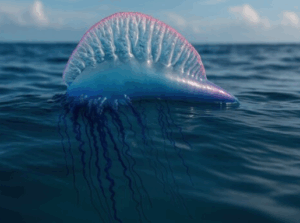
Note: These photos are amazing photos thaken by talented underwater photographers and posted on the internet. No copywrite info was available. My thanks to the folks that shared and posted these images.
Share this:
- Share on Tumblr (Opens in new window) Tumblr
- Print (Opens in new window) Print
- Share on X (Opens in new window) X
- Share on Facebook (Opens in new window) Facebook
- Share on Pinterest (Opens in new window) Pinterest
- Share on Reddit (Opens in new window) Reddit
- Share on LinkedIn (Opens in new window) LinkedIn

 We Meow… You Listen.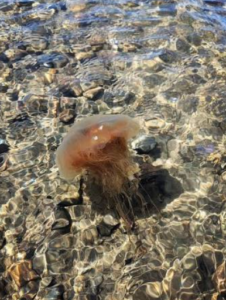
 🩹 What to Do If Stung