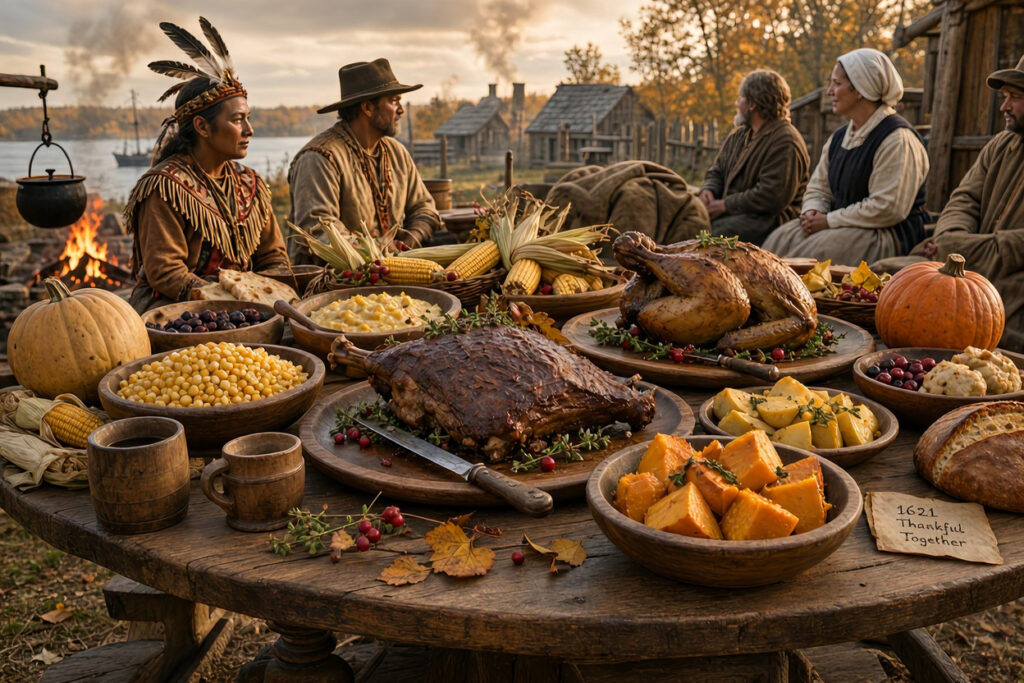
A Visit to the First Thanksgiving… Sort Of
Everyone knows the story.
The Pilgrims landed at Plymouth, struggled through a difficult first winter, received help from the Wampanoag people, and celebrated the First Thanksgiving with a feast of turkey and all the trimmings.
Or did they?
The reality is a little more complicated and, if you ask me, a lot more interesting.
Let’s pretend for a moment that we’ve climbed into a time machine and traveled back to the fall of 1621 to attend that famous harvest celebration. What would we actually find?
Our first surprise would come before the meal even begins. Nobody there would call it “The First Thanksgiving.” That name came much later. To the people gathered at Plymouth Colony, it was simply a harvest celebration marking a successful growing season after a very difficult year.
And that wasn’t the only thing that looked different from the story many of us learned in school.
Where Are the Pilgrims?
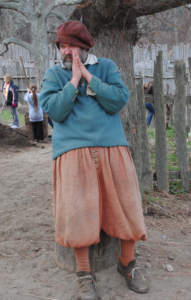 As soon as we arrive, something seems off.
Where are the black coats? The shiny buckles? The tall black hats that appear in every Thanksgiving decoration and elementary school play?
The settlers of Plymouth Colony didn’t generally dress that way. Their clothing included a variety of colors, including browns, greens, blues, grays, and reds. The famous silver buckles wouldn’t become fashionable until later.
In fact, if you were walking through Plymouth in 1621 looking for the Pilgrims, you might run into another problem.
They probably wouldn’t have called themselves Pilgrims.
Most would have thought of themselves as English settlers, colonists, or members of the Plymouth community. The term “Pilgrim” became popular much later and eventually became the name by which we remember them today.
So before we’ve even reached the feast, two familiar pieces of the Thanksgiving story have already been challenged.
Meeting the Wampanoag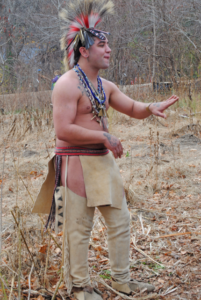
One thing that often gets lost in popular retellings is that this story wasn’t just about English settlers.
Long before the Mayflower arrived, the Wampanoag people had lived throughout the region for generations. They had their own communities, traditions, trade networks, and knowledge of the land.
The harvest celebration itself included not only the English settlers but also Massasoit and about ninety Wampanoag visitors. Far from being background figures in the story, they were an important part of the event and played a crucial role in the colony’s survival.
When I visited Plimoth Patuxet Museums years ago, I found the Wampanoag Homesite to be one of the most fascinating parts of the experience. The English village was certainly interesting, but much of it felt familiar from history books and television programs. The Wampanoag section offered a perspective I hadn’t encountered nearly as often while growing up.
But How Did Everyone Communicate?
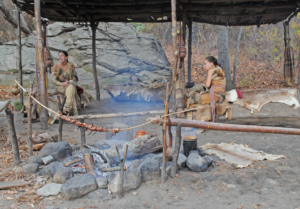 Imagine hosting a three-day celebration attended by people who don’t speak the same language.
Conversation around the table could have been a challenge.
Fortunately, there were interpreters.
One was Samoset, who had learned some English through contact with fishermen and traders along the New England coast. An even more important figure was Squanto, also known as Tisquantum, who spoke English fluently and helped bridge the language gap between the two groups.
Without people like Squanto, communication between the English settlers and the Wampanoag would have been far more difficult.
When you think about it, understanding one another may have been nearly as important as the food on the table.
What’s for Dinner?
Now we come to one of the biggest Thanksgiving myths of all.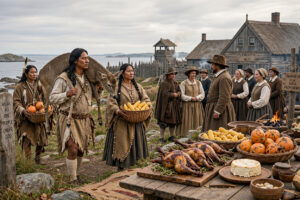
Most of us picture a massive roast turkey surrounded by stuffing, mashed potatoes, cranberry sauce, sweet potatoes, and pumpkin pie.
The truth is that historians know only part of what was served.
Contemporary accounts mention that the settlers gathered “fowl” for the celebration. That could have included turkey, but it might also have included ducks, geese, or other birds. Turkey may very well have been on the menu, but historians can’t say for certain.
What we do know is that the Wampanoag contributed deer to the gathering, making venison one of the few foods we can confidently place on the table.
Ironically, the meat most closely associated with modern Thanksgiving is less certain than the venison that many Americans never think about.
Other foods likely included seafood, corn, and seasonal produce available in the region.
As for pumpkin pie? Not yet.
There would have been pumpkins and squash, but probably not the familiar pie that appears on Thanksgiving tables today.
Experience 1621 Without a Time Machine
Of course, time travel is still a few years away, so there isn’t actually a way to attend the harvest celebration of 1621.
The next best thing might be a visit to Plimoth Patuxet Museums in Plymouth, Massachusetts.
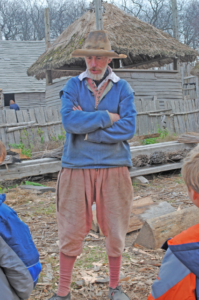 The museum brings seventeenth-century New England to life through a recreated English village, a Wampanoag Homesite, educational programs, and seasonal events. Rather than simply repeating the familiar Thanksgiving story many of us learned in school, the museum encourages visitors to explore both the English and Native perspectives and discover how much of the popular story has been simplified over the centuries.
Each year, the museum also hosts harvest-themed dining experiences inspired by the foods and traditions of early New England. This year’s Harvest Feast menu includes dishes such as mussels cooked with beer and parsley, roast turkey with onion gravy, stewed squash, roast pork, fish, corn pudding, and fruit and cheese courses. While it isn’t meant to be an exact recreation of the 1621 harvest celebration, it offers visitors a taste of seventeenth-century New England foodways and a glimpse into what life may have been like in the colony.
In other words, if you’re curious about the difference between the Thanksgiving of popular imagination and the Thanksgiving historians study, there are few better places to start.
The Real Story
The more I learn about the history behind Thanksgiving, the more I realize that the real story is more interesting than the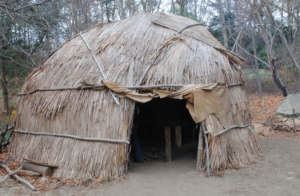 legend.
We arrived expecting Pilgrims in black hats, a giant turkey, and the Thanksgiving story we learned as children. Instead, we found English settlers in colorful clothing, Wampanoag guests who played a vital role in the colony’s survival, interpreters bridging two cultures, and a harvest celebration that looked quite different from the holiday we celebrate today.
Sometimes the legends are good. The truth, however, is often even better.
And perhaps that’s the real lesson of a visit to Plymouth: there’s always more to the story than we first imagine.
Until time travel becomes an option, a visit to Plimoth Patuxet Museums may be the closest we can come to stepping into the world of 1621.
And in a nod to Paul Harvey, I have to say it…And Now You Know The Rest Of the Story.